If you click on a link and make a purchase we may receive a small commission. Read our editorial policy.
Al Ewing on reinventing Green Lantern as cosmic horror — and why the Absolute Universe isn’t afraid of the dark
‘No rings, no lanterns, no fear’: Al Ewing explains the terrifying vision behind DC’s Absolute Green Lantern.


Popverse's top stories
- Avatar creator James Cameron almost made Jurassic Park - and he’s glad he didn’t
- Watch now: Watch The Lost Boys musical panel featuring Patrick Wilson, Zachary Quinto, and Michael Arden from NYCC 2025
- Get your BRZRKR and SIKTC bandanas on, because BOOM! Studios will be at Emerald City Comic Con 2026
Al Ewing is one of the most prolific writers working in comics today. Whether it's his work on books like X-Men Red, Immortal Hulk, Immortal Thor (and Mortal Thor!), Venom, Metamorpho: The Element Man, or We Only Find Them When They're Dead, Ewing has deftly crafted stories across various genres that boldly push the mythology of comics as we know them. Recently, Ewing has expanded into the world of DC Comics as the writer of Absolute Green Lantern and the one-shot, Absolute Evil #1.
Ewing's Absolute Green Lantern is a horror-filled reinvention of the Lantern mythos, following friends Jo Mullein, John Stewart, and Hal Jordan after a mysterious, enormous lantern structure falls from the sky into their small town, trapping them all within its borders. From the lantern emerges an alien named Abin Sur, who possesses power beyond human comprehension and is hellbent on "judging" the humans in this small town. At the same time, Jo and Hal discover that they've become hosts to an alien force that puts them all in danger.
With all this in mind, we spoke with Al Ewing about his experiences working within DC's Absolute Universe, as well as what's in store for Absolute Green Lantern and beyond.
Popverse: You've spoken about how Absolute Green Lantern is a book that's exploring the unknown. And I think that we see that in a lot of different areas with the book. Obviously, Abin Sur is this alien, so he's an unknown within that sense, but his presence on Earth also brings up a question of what happens to us when we die. And I suppose that's kind of the biggest unknown of all. What made you want to explore such an existential question like that within a superhero book?
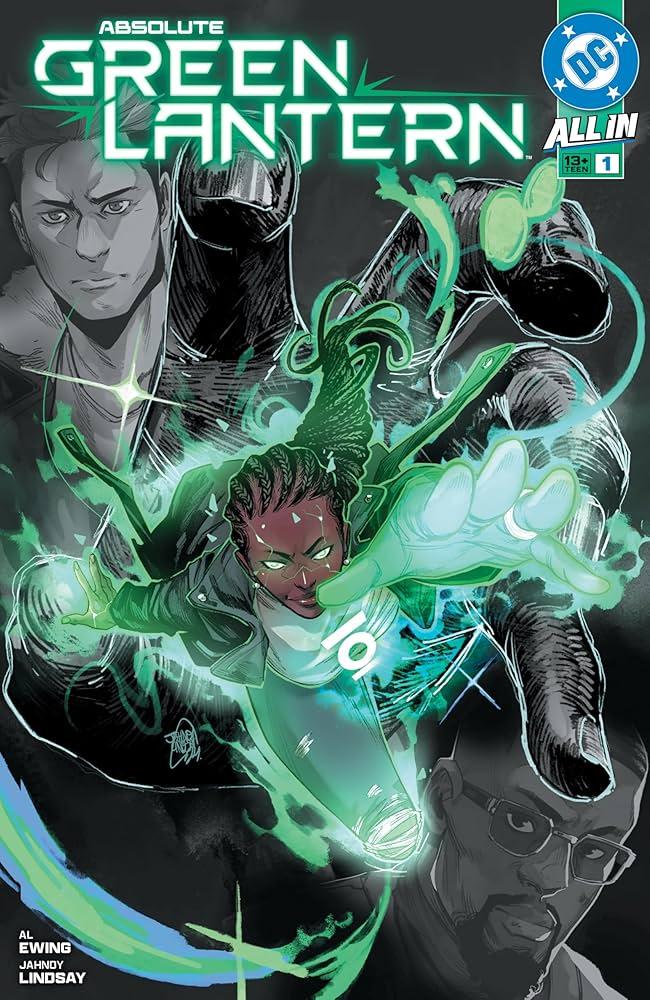
Al Ewing: Man, I guess the first time I was thinking about it, the idea of the Absolute Green Lantern was very much kind of pitched to me in terms of this, ‘What would you do if you were doing Green Lantern today?’ But also the Absolute Universe was pitched to me [as] built on Darkseid. And I think I got a little bit of the taglines, what's Batman's one? It's 'Without the cave, without the butler, without things.' What are these heroes? Obviously, the first thing I thought of was, ‘No rings, no lanterns, and if we can do without the color green, that'd be great as well.’
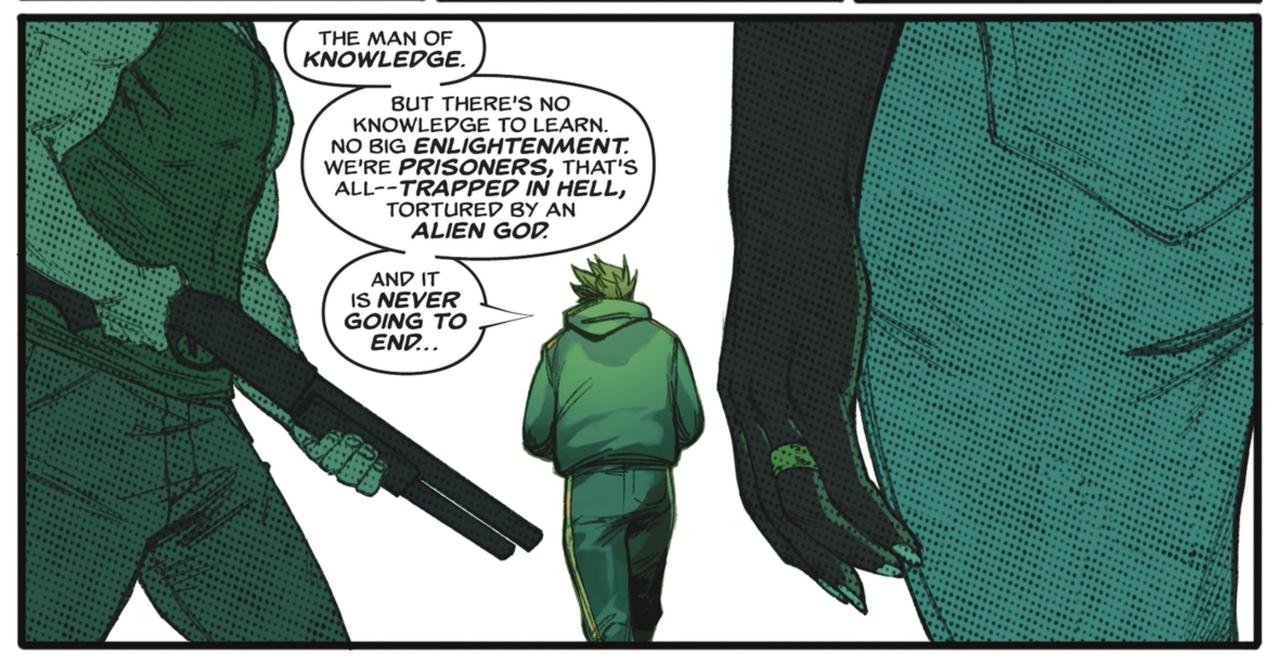
But the thing that Green Lantern has is that he's known. He's known throughout the universe. Anytime somebody sees a Green Lantern, they know what that is. … He’s only unknown when he was just getting started on Earth - or I guess when Alan Scott was first getting started on Earth - that people didn't really know what that entailed… But everybody in space knew all about it. So, we're kind of doing something a little similar here, in that people in space do know what's going on, but we want to make it a completely unknown alien thing to your average humans, including the human who's been exposed to the green power, Jo.
And Hal is also there. He's been exposed to other powers. John Stewart issue 5 dropped, so we've got a rough idea of what happened to John Stewart. We've got kind of an idea that some of the [deaths] maybe weren't as death-y as we'd assumed. Issue 6 is the big revelation issue for a lot of that stuff. One thing I've been trying to do is make sure that every time we answer a question, we ask two new ones. Just to keep that sense of the reader not knowing exactly what's going on. Hopefully [we will] do the Lost thing better than Lost. Hopefully sew this up. I'm thinking very far ahead. I know where a lot of this stuff is going.
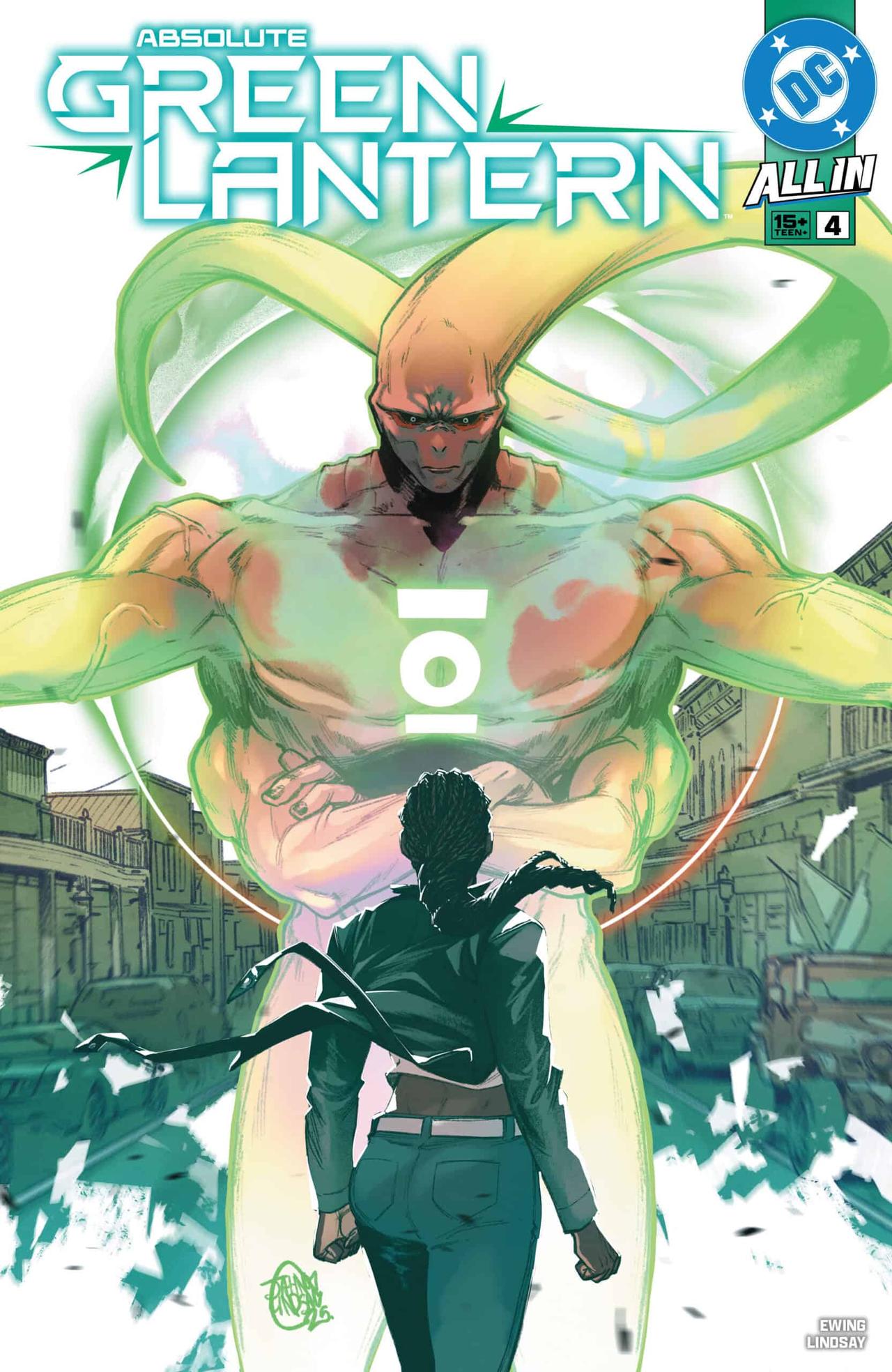
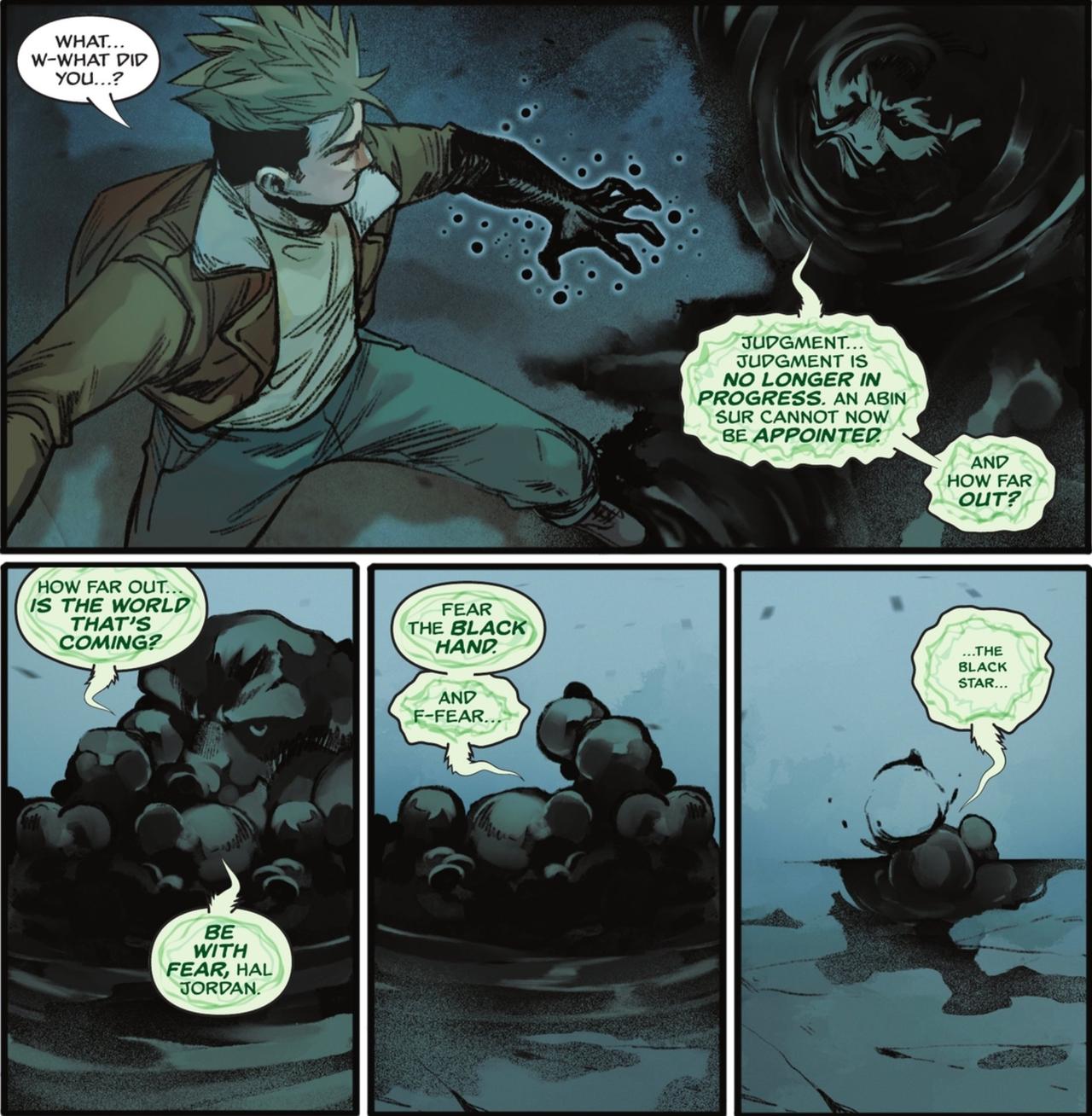
To get back to your original question, I was thinking about Green Lantern, I was thinking about what it would look like if Abin Sur descended and gave this power to a human being. And it looked biblical, and I just sort of remembered the Sodom and Gomorrah thing, where the angels just sort of arrive, and all God’s representatives arrive, and it's this whole bargaining thing. You know, ‘Oh, I will not destroy the city for 100's sake, I won't do it with 10's sake,’ They sort of just haggle it. And that's where the idea came for Abin Sur coming down and judging this town, judging this community, and what that would look like from the point of view of a bunch of people within it, or sort of slightly outside of the center of it.
It's kind of telling that we don't really get Guy Gardner's perspective on it, we get the perspective of these three people and plus Todd Rice, who we don't meet till later. But all of these people who are literally on the outskirts of the town when it happens. They're the first to see the shield, because they're right on the outskirts of the town. They're ‘The Outside,’ kind of. So yeah, that's kind of where it was from. It sort of came from this quite biblical place? I've always been agnostically fascinated with the Bible and various religions. And yeah, this sounded like a story that I could really get into that.
For sure. You know, I think this idea of answering a question, but then also leaving two new ones left open in its place, got me thinking. If knowledge is power, then not knowing within the realm of Absolute Green Lantern, it's almost contrary to the superhero genre in a way. Because we always think of superheroes as empowered in one way. And thinking of Abin Sur within a biblical angel idea, and enacting judgment, it puts it into context for me. Because he comes down to Earth, and he's saying, 'Do not be afraid,' or he's saying, 'Do not fear,' whereas, in the Bible, I remember angels saying, 'Do not be afraid.'
Yeah, 'be without fear.'
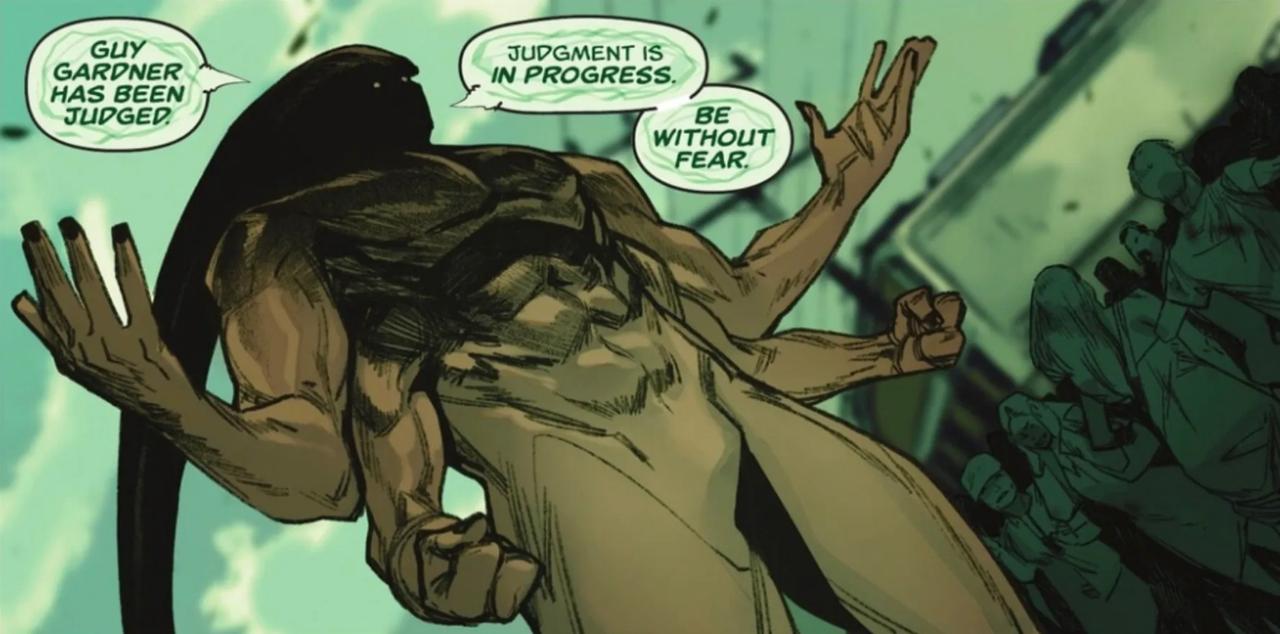
Yes, 'be without fear.' And I feel like if he said that to me, I would just reverse psychology it.
Yeah, yeah, yeah! But it's that thing of, like, back in regular continuity, Abin Sur kind of selected who got the power on whether they could be without fear. And there's a sort of ghost of that in how our Abin Sur does it, and he's constantly telling people to be without fear. And it's like it's an instruction. It's advice, it's part of the judgment in ways we can't quite understand, which is deliberate. In terms of what you're saying about, like, knowledge is power, I don't want to spoil too much, but that does come into it. And that's something else that'll be revealed in issue 6, exactly what makes Jo Mullein an anomaly, what the word for ‘anomaly’ is in the alien language, and are there any other anomalies out there? We're still getting these questions answered very, very quickly.
I'm looking forward to it. And so to go forwards with this. You've spoken about how you've borrowed a Golden Age sense of weirdness from Alan Scott's Green Lantern comics, and reworked it for Absolute Green Lantern. What about that Golden Age sensibility felt fresh and relevant for you?
I guess when I said that, I must have been thinking of how just fundamentally 'out there' the origin is. Almost like a fable, that Alan Scott origin. It's sort of a flame that burns three times, to bring life, to bring death, to bring power. It feels religious, it feels inexplicable. And the Golden Age kind of did that a lot, from what I've read, from what I understand, these are things that sort of had to be out the door yesterday. You hear stories like whole issues being done over the weekend at an apartment with people peeling the tiles off the walls to mix the paints. And everybody at the time, like, comics had only just been kind of invented. Every time somebody did a thing for the first time, it was the first time. The first splash page was the first of those, the first kind of circular panel, the first weird storytelling trick. People were just coming up with stuff on the fly. So that's the kind of energy I think it's good to bring back in if you possibly can.
Obviously, it's in the year 2025. It's vastly more difficult. We've come up with so much. There's an entire storytelling language, an entire grammar. I asked somebody to do the thing with the panels with the same background, and the action is consistent across it. I forget what it was, but it's got a name, somebody named it. There's the thing where you've got multiple figures, all at one panel, but it's multiple figures over the same background. That's got a name. All of these things have been invented, they all have names. Trying to summon up that kind of Golden Age energy where you just play in this enormous field of ideas. It's tricky.
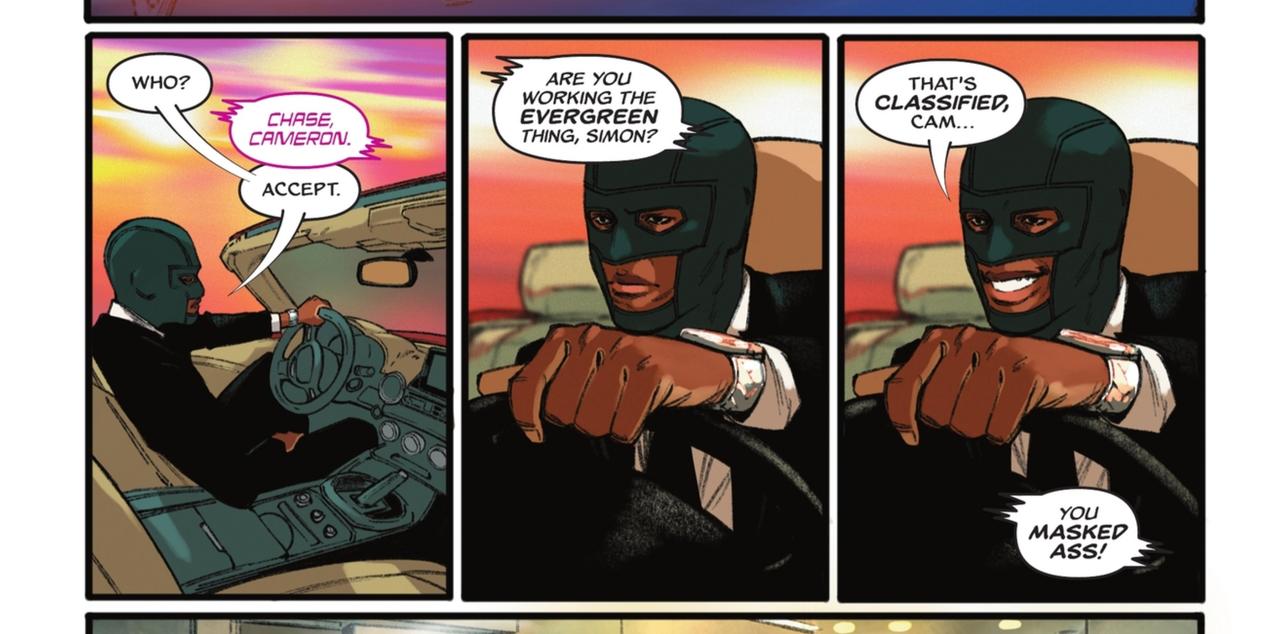
I think [Absolute] Green Lantern, it's quite a seat-of-the-pants book. I told you I had plans very far ahead. Are there sort of waypoints? I kind of know where we need to be by this issue. I know where we need to be by this issue... I'm still gonna sit down and, like, start writing a new issue. I'll suddenly think, ‘Oh, what if I threw this in there?’ I threw Terry Long into an issue. Not for very long. Nobody needs to worry. But I threw him in it for an issue. There’s all kinds of weird cameos. When Simon Baz turns up. He's wearing the mask, he’s wearing a Lantern mask. And it's like, wait, he's not a Lantern in this continuity, why is he wearing that mask? And there's a reason. But it originally came to me as I was like, 'Wouldn't it be so weird to have this guy just masked up like a Luchador?' And then we explain why that is, and it’s ‘Oh, and that could be connected to this thing, and that could be connected to this other thing.’ So it's a mixture of keeping the ability to have the characters just come to you. There's no such thing as an unhappy accident kind of thing. There is such thing as a sort of, ‘Everything is meant, a little serendipity kind of thing.’ But also, you know, make sure that you're not just flying off the rails, the train is staying on the tracks. Even if the scenery passing outside the windows, it’s new every time.
So one thing that strikes me about your work is that you lean into terror with books like Absolute Green Lantern, but then you also lean into this sense of wonder, with books like Immortal Thor. As a writer, how do you balance writing vastly different stories each month, and do you find, like, a particular vibe for a story is easier to write than another?
Each book and each character suggests a vibe. I do do both [horror with Absolute Green Lantern and wonder-filled books like Immortal Thor]. I also do comedy quite a lot. And I'll blend the two a lot. With the Thor thing, it’s very much tempting, that kind of sense of wonder. With someone like Metamorpho, it’s much more of a straight-ahead humor book. By the end of that, I was getting, I think, the entirety of my sense of humor on the page, and thankfully it gelled very, very strongly with Steve [Lieber’s]. Great time. Every book suggests [a vibe]. It's like when you're making pottery. To an extent, you go in knowing roughly what you want to do. But while you're doing it, the clay will tell you how it wants to be shaped. The book will tell you how it wants to be written. That’s very true of Green Lantern.
That first issue was set in stone for a long time. I [knew] beat for beat, page for page, what was gonna happen. But, as I continue to write it, it's told me how it wants to be shaped... I've never been one of these people who's been able to go in with a plan that absolutely cannot be changed, that has to be completely set in stone from issue 1 to issue 12. I envy people who can do that, because if I could do that, I could do things like having stuff reverberate through the comic, the proper way, by coming up with it all ahead of time. Rather than, like, latching onto specific words and phrases that have a certain kind of magic, and just hitting those words until they create something. There's a method, but a lot of it is improvisational, a lot of it seat-of-the-pants as I go.
It's like jazz.
A little bit, yeah. Yeah, I heard once that Kirby called how he wrote, ‘word jazz.’ I don't know if that's an actual quote from Kirby or a quote from somebody else about Kirby, but it's always stuck with me, my whole life. Because I always found Kirby's work very poetic, very musical, beautiful. Not realist dialogue, the same way that his art isn't strictly realist art. But in both ways, a higher truth comes out of it. I think that's what we're all kind of going for. Or trying to.
For sure. And so for one last question about Green Lantern. Hal is having a bit of a rough go of it. I don't want to put words in your mouth, but for me at least, Hal Jordan has this darkness in him that I find really compelling. Do you also feel the same way about Hal, and is that why he's embraced fear and darkness in Absolute Green Lantern?
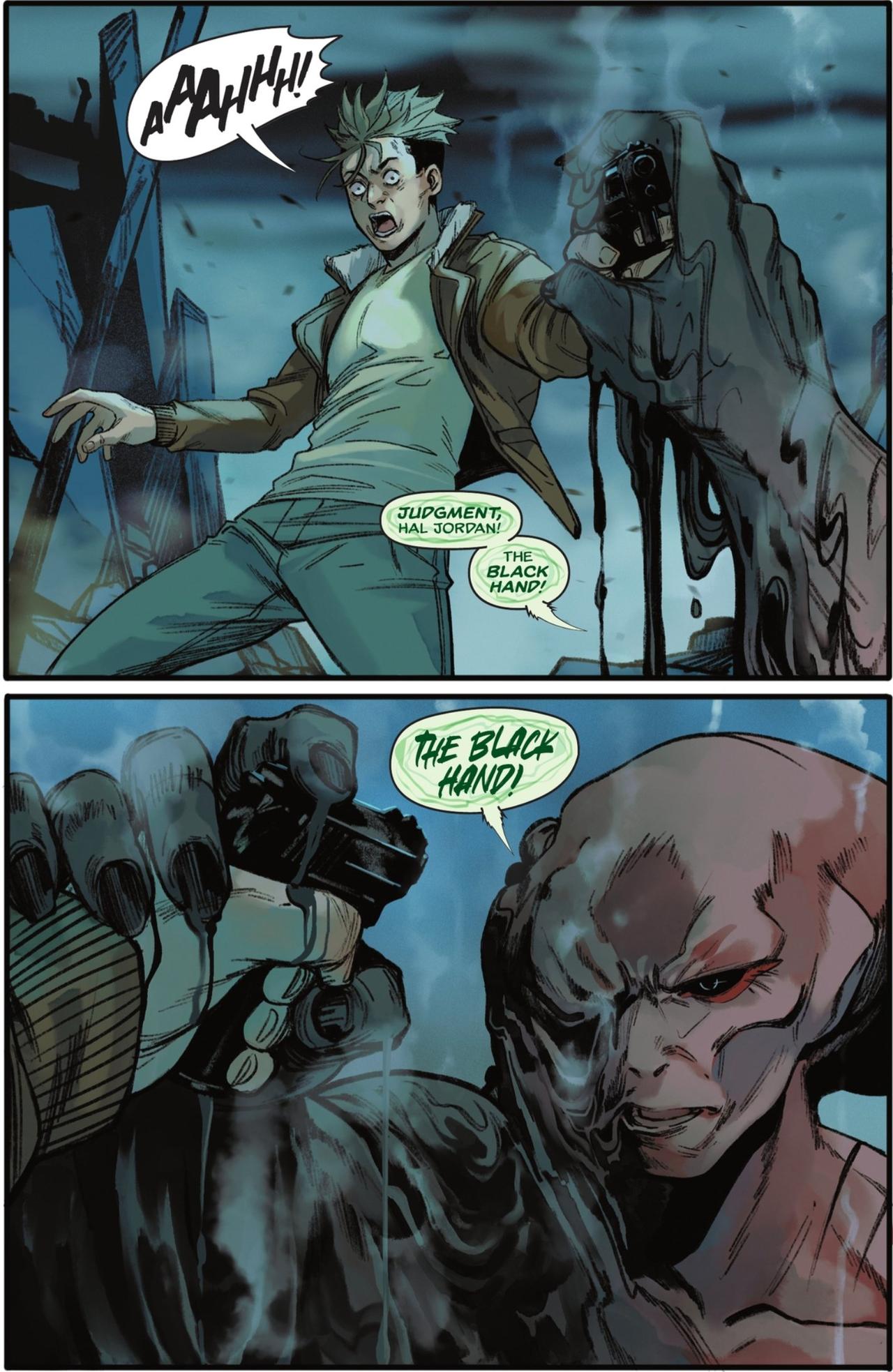
It's two things. One, I think Hal Jordan can take it. This is one of the oldest characters at DC, he's been around since 1959. If Hal Jordan can't take being knocked around, if Hal Jordan's, like, too precious to be around this kind of [situation], I just think better of the character than that. I have more respect for the character than to treat him with kid gloves. So there’s that.
The other thing is that I do think there's a darkness in him. I think Grant Morrison brought this out in their recent run on the character. Constantly being referred to as, like, the biggest bastard in the universe… He’s sort of this space weirdo. I think there's an element of that in him. He's got a bit of darkness about him. He's somebody who you could imagine going a little rough. I think our Hal Jordan is a bit more... he's a different character, he's not had the breaks because of the Darkseid universe, the evil energy of this universe.
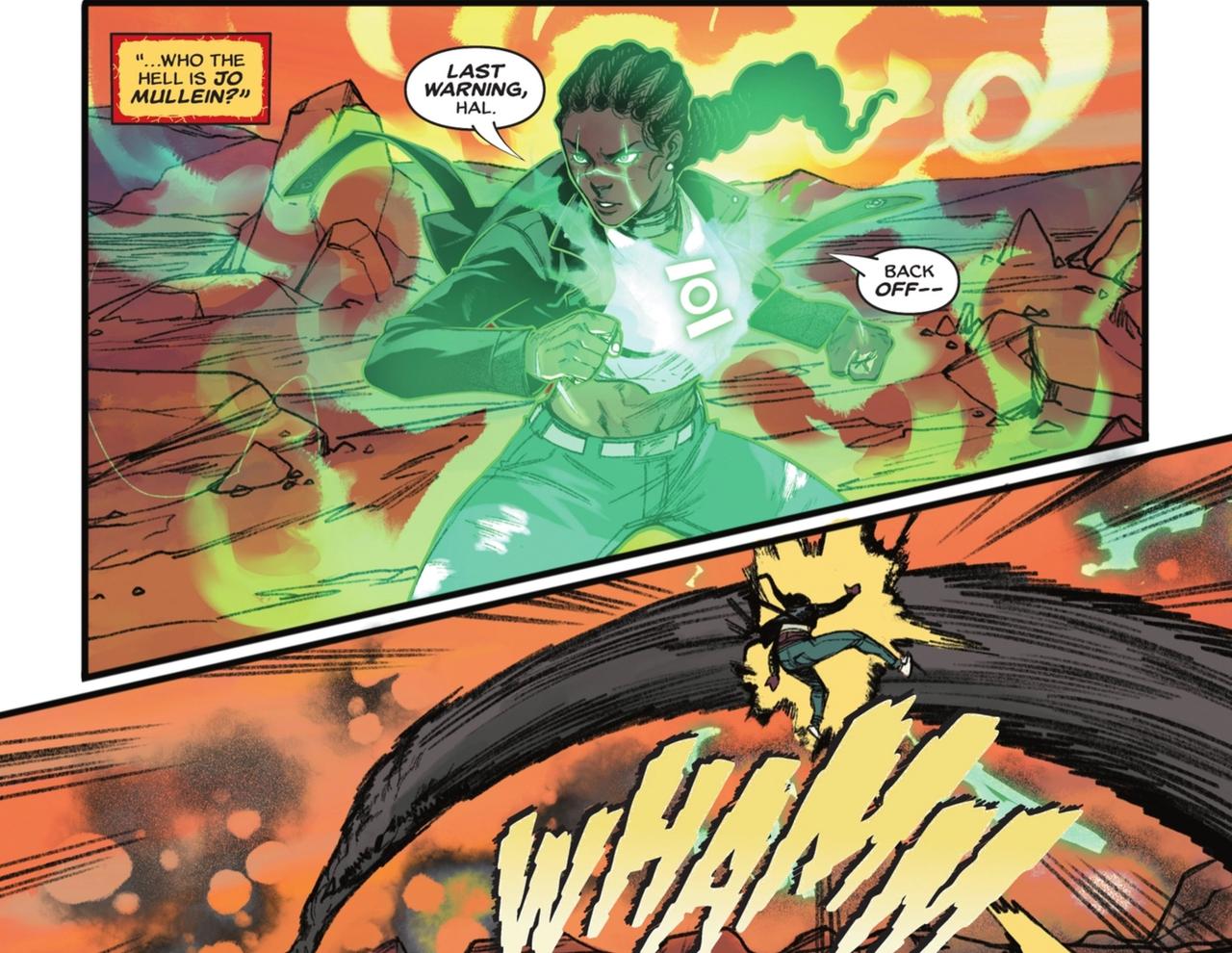
He was born in this dying town that he never got out of. He never became a pilot. He spent his whole life as, like, Hal Jordan the toy salesman. So, he's sort of, I think, weaker spiritually than regular universe Hal Jordan is. He's less of that military guy, he's got less iron in him. I think maybe that there's gonna be stuff we get into that our Hal Jordan can handle that I think maybe the regular universe Hal Jordan couldn't. And it's the same thing with Jo Mullein. I think at one point, our version of Jo was like a box of secrets. And it's like, she's the opposite of the detective. She doesn't find things out, she keeps things in. She's, like, this very kind of private cagey… similar figure, but different. And it’s the same of John, really. John's, like, much more of the sharing and amount of knowledge, the esoteric guy. The guy who's studied all this weird stuff. I think we got a glimpse of that in a regular universe John, but I think in the regular universe he’s much more of a straight arrow.
But again, with all of these characters. There are gonna be things they come up against, and we're already seeing it with John. There's gonna be things they come up against that only these Absolute versions of the characters could handle. The regular universe characters, because they're regular universe, wouldn't be able to deal with it. I don't know, maybe you can extend that out to the whole Absolute Universe[’s] weirdness.
And so, I think going along with that idea of the Absolute characters being able to handle things that the other ones can't, I suppose the flip side of that with Absolute Evil is, are the villains here capable of doing things that their mainline counterparts couldn't do?
Oh, yeah. I think definitely. We've already seen with the Absolute Joker, we've seen hints of what he's capable of. I definitely lean into him as a sort of terrifying figure. We see that Hector Hammond's been successful at being Hector Hammond in a way that the regular universe version wasn't. If you go way back to the 60s, he started as this great sort of society man, and this great business person. Very quickly, all of that fell apart, because Hal Jordan found him out as the phony he was. And then the next time you see him, he's got a giant head, and, you know, that's his life now. So in some ways, our Hector's, like, more successful than the regular first one. We'll see if he manages to keep that up.
There are others. There's Veronica Cale. She certainly gives me the impression of being incredibly dangerous. There are other people who happen to be in that book. I'm having to be a little bit cagey, I don't want to serve the wine before it's time. But there are other people, oh, Ra's al Ghul? Just a brutal figure. There are other people in that book who seem capable of things that their regular universe counterparts can’t, and part of that is existing in the Absolute Universe. It gives them that ability, gives them that reach. Because of what the Absolute Universe is built on. You know, the book's called Absolute Evil for that.
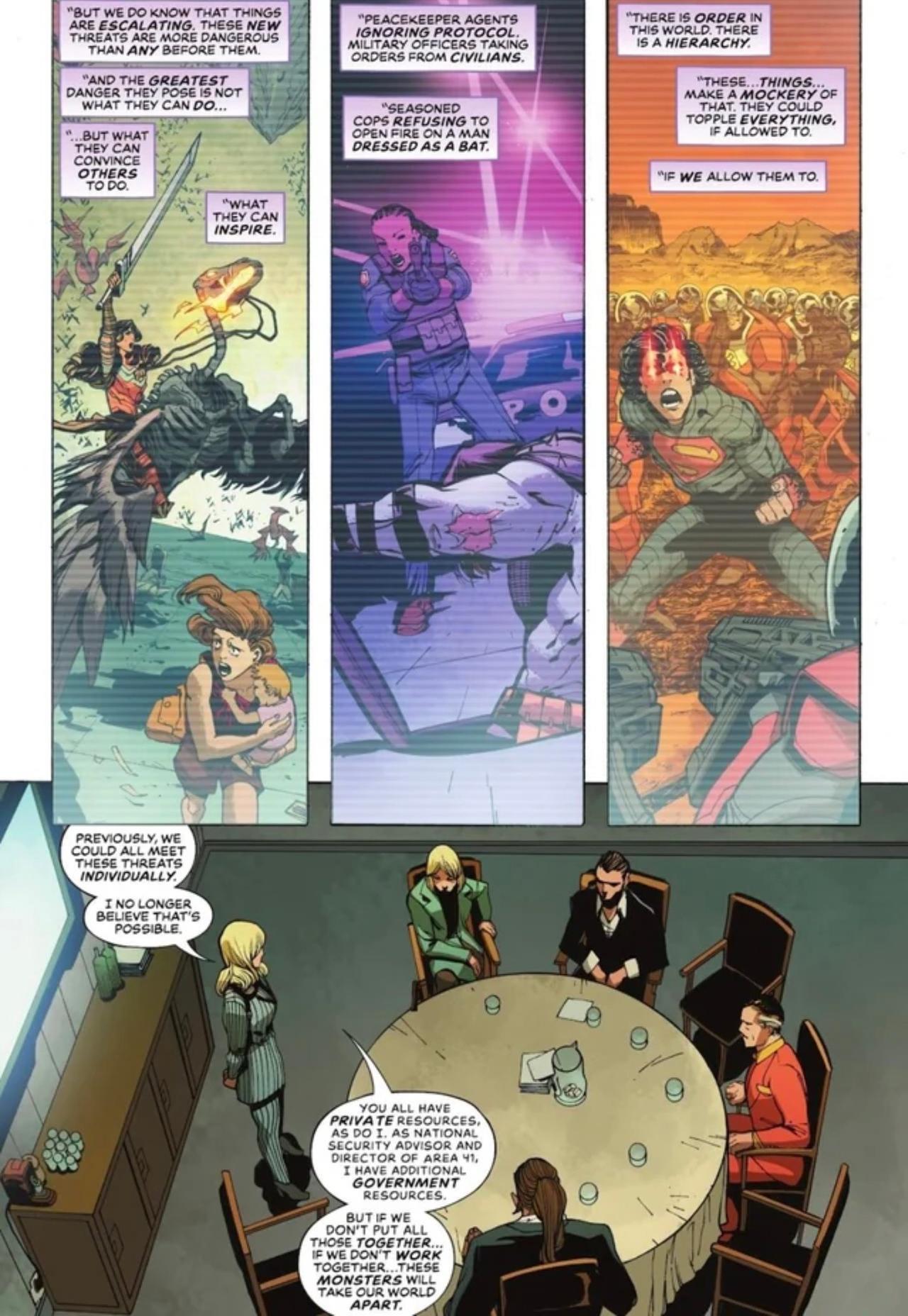
And going off of that, you know, Absolute DC is about new versions of heroes, but the first big team-up here isn't the Justice League or anything, it's the villains. Why do you think that's so important to this vision of the DC Universe?
I think people are definitely hungry for the heroes to start teaming up. I feel like there was a cover that whetted a lot of appetites. But I think in just the nature of the world, this is not a world where the heroes get together and decide to form a group, and then the bad guys come to them. This is a world much like our own where the bad guys are making the alliances. And getting together and deciding, ‘Yeah, we can further our goals, as a group, better than we can just [alone].' And the heroes, they're still, at this point, everybody's still on their individual journey. We're all sort of starting to think about 'when are these worlds gonna start to touch?' Because it's a shared world, it's a shared universe. Eventually, those worlds are gonna start touching. The bad guys, that moment happened a long time ago. And, you know, they're not just starting, they’re fully in concert. And the heroes should be afraid, if they knew about it. So, you'll have to see exactly how it all plays out, and what's coming next. And, maybe there's a hero who does know better.
Right? So to wrap up here, there's a cover where we notice Hawkman seemingly in his Silver Age outfit. Is there anything that you can say about an Absolute Hawkman?
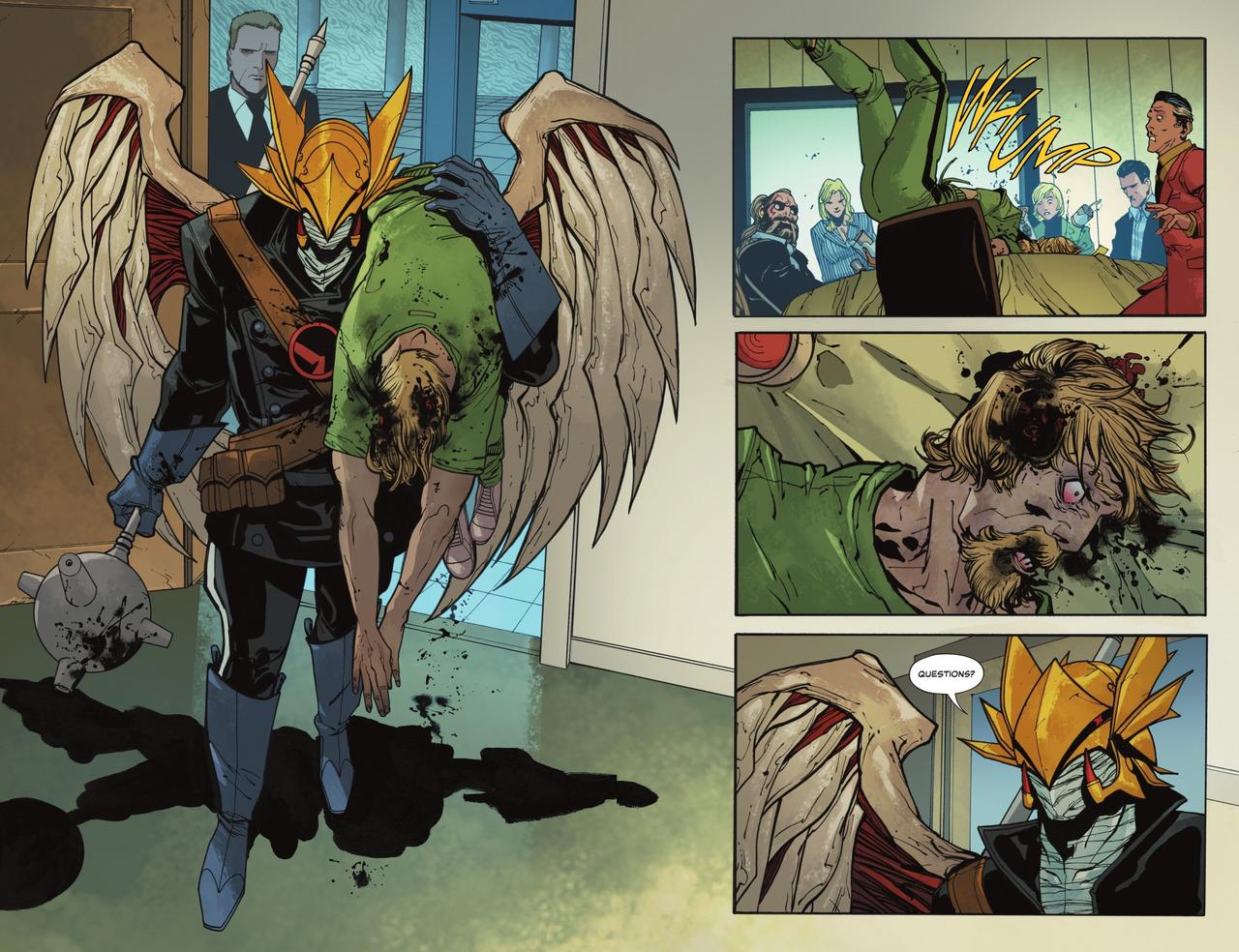
Well, I'll say that he's probably the character we've thought the hardest about the design of out of literally all of them. Before we could do the design, we had to go in and consider the entire history, the entire personality. So when you see him, in all his glory, so to speak, that's gonna be a moment. Yeah that's one of those cast iron bodices I feel a thousand percent confident in making. You're gonna get a little glimpse of Absolute Hawkman. But when you really see him, your jaw will drop, it'll be a shock to you.
Absolute Evil #1 and Absolute Green Lantern #1-7 are available now wherever comics are sold.
Get ready for what's next with our guide to upcoming comics, how to buy comics at a comic shop, and our guide to Free Comic Book Day 2025.
Follow Popverse for upcoming event coverage and news
Find out how we conduct our review by reading our review policy
Let Popverse be your tour guide through the wilderness of pop culture
Sign in and let us help you find your new favorite thing.



Comments
Want to join the discussion? Please activate your account first.
Visit Reedpop ID if you need to resend the confirmation email.