If you click on a link and make a purchase we may receive a small commission. Read our editorial policy.
Bill Griffiths talks the life and legacy of Ernie Bushmiller
"If you want to appreciate Nancy on a sort of kitsch level, feel free, but you’ll be missing what’s really going on"
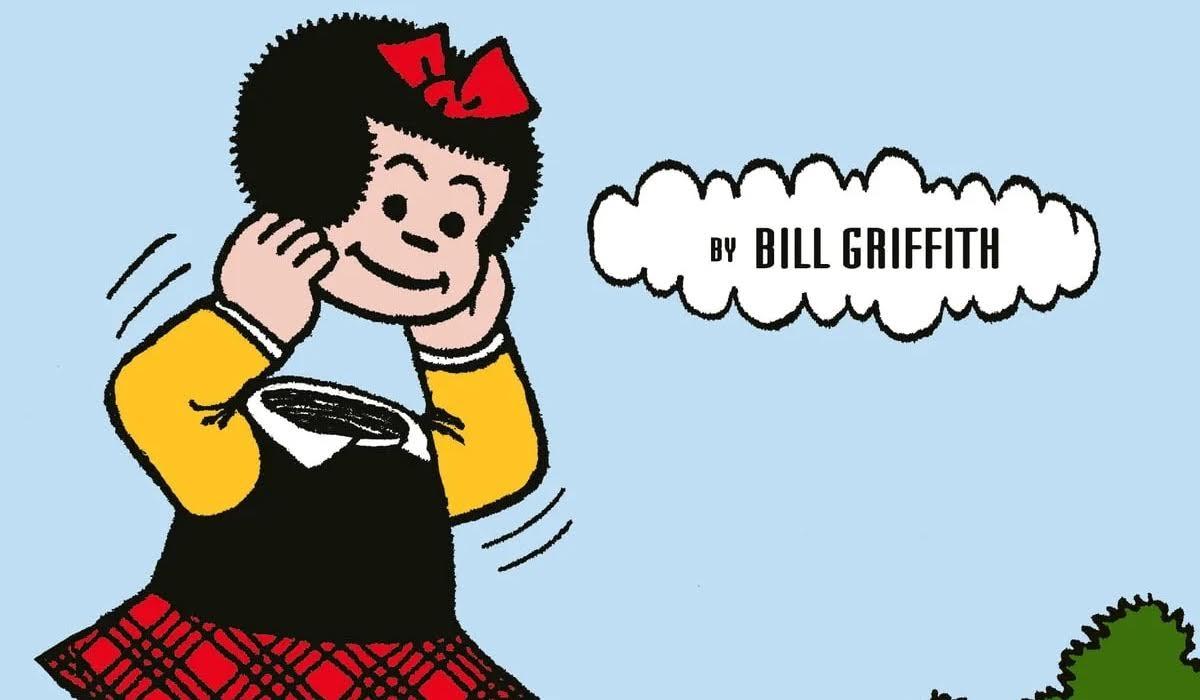

I think it’s fair to say that there’s a pretty big disparity when it comes to comics’ relationship with biographies. There are plenty of graphic novel biographies on the lives of film stars, historical figures, activists, sports legends — even the guy who invented Tetris, for God’s sake. What there is a shortage of, however, is comics about…well, the people who make comics. For that matter, there are even fewer about the great minds of the near-bygone era of newspaper strip comics.
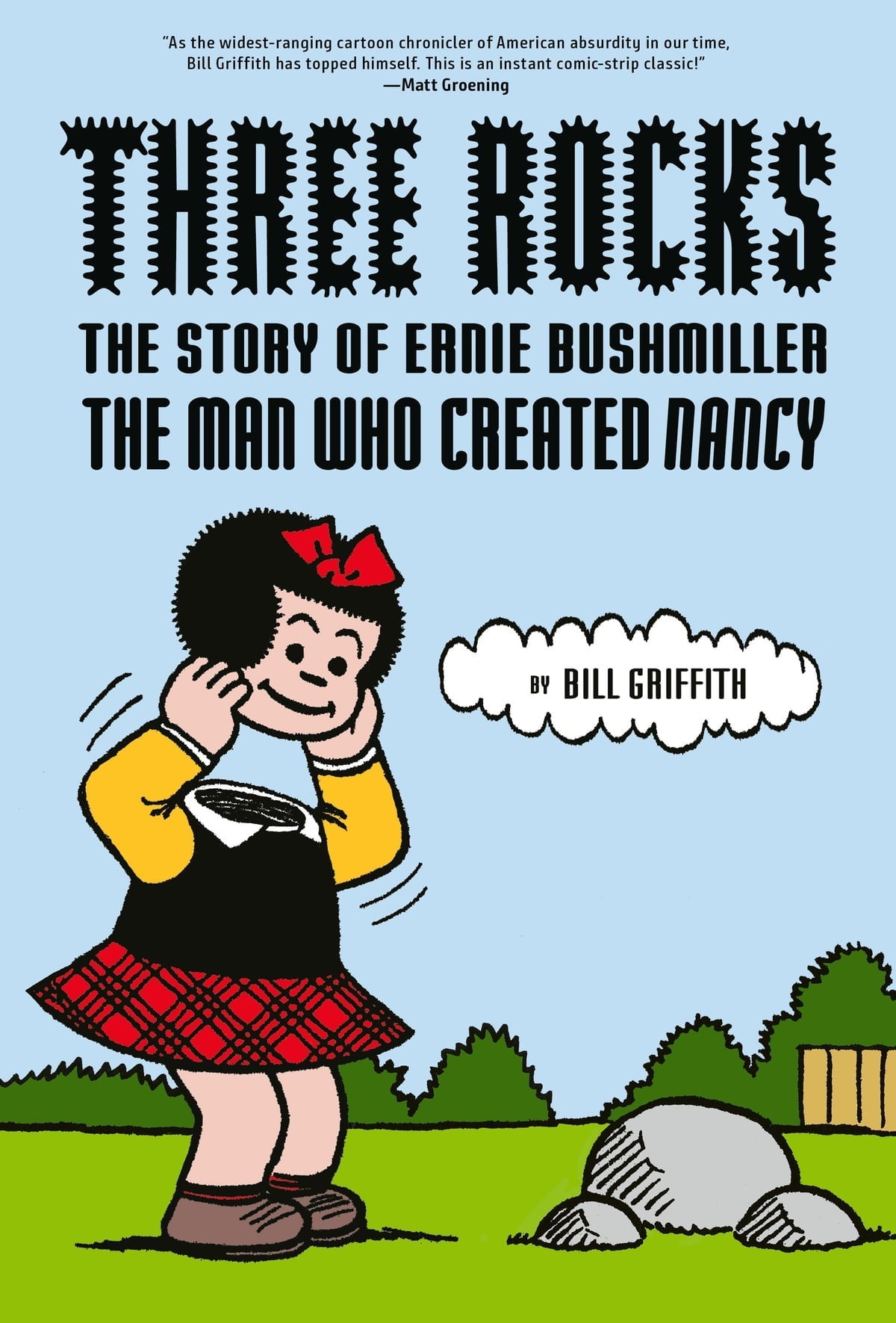
As fate would have it though, there are people like cartoonist Bill Griffith — creator of Zippy the Pinhead, and one of the few cartoonists who has been churning out hilarious, poignant, and clever daily comics strips for nearly half a century — whose obsession with Ernie Bushmiller’s Nancy has lead to the publication of Three Rocks: The Story of Ernie Bushmiller, the Man Who Created Nancy.
For readers and fellow cartoonists alike, Bushmiller’s Nancy has been widely regarded as one of the cornerstones of formalism, humor, and entertainment in comics history, and Griffith’s personal passion for the cartoonist and his work shines bright through the new biography. Following Bushmiller from his teenage roots as a copy boy for the New York World newspaper to his soaring legacy through the panels of Nancy, Griffith unpacks a life of a cartoonist that offers a nuance akin to the same eponymous three rocks of it’s title. Following its debut at Comic Con International: San Diego just this year, Popverse was able to catch up with Hall of Fame inductee Griffith post-convention via email to ask about the process of researching — and cartooning in his own right — such an iconic life and strip.
Popverse: I know that you’ve been a massive Bushmiller Nancy fan for ages — that much is clear. But what was it about Nancy that hooked you? What, way back in the day, said “This is it. This is the strip I’m obsessed with”?
Bill Griffiths: Before I could really follow the strip, as a five-year-old kid reading Nancy in the Sunday newspaper, I focused on the lettering. It contained no punctuation and was very easy to read. I just felt compelled to read it. Mad artist Wally Wood accurately said, “It’s harder not to read Nancy than to read Nancy.”
Nancy is the boiled down essence of what comics are. For me, the quirky characters, the timeless cartoon landscape, even the casual surrealism, are all in service of Bushmiller’s treatise on the nature of comics and what they do best. What only they can do. Other comics may take you on flights of fancy or pull you into dramatic adventures. Nancy makes you aware ofsh the three or four panels it takes to reach its inevitable sight gag ending, what Bushmiller called the “snapper.” Nancy doesn’t tell you what it's like to be a child, like Peanuts. Nancy tells you what its like to be a comic strip.
Nancy is one of those strips that paved the way for — at the risk of sounding condescending — having comics be a little surreal and a little bit dumb for the sake of entertainment. In your opinion, what is it about Bushmiller’s approach to these little vignettes sets them apart as a complex piece of comics, different from any other humor strip that was prevalent for the era?
Nancy is sui generis. It didn’t pave the way for anything. It’s “the thing in itself.” The “dumb” thing that some people throw at Nancy actually comes from Bushmiller himself. In giving wannabe cartoonists advice from his years in the business, Ernie often said. “Dumb it down.” In my extensive interviews with Jim Carlsson, Ernie’s right hand man and close friend during the last 12 years of his life, I was told that , to Ernie, “dumb” meant “basic” or “simple,” not stupid. If you want to appreciate Nancy on a sort of kitsch level, feel free, But you’ll be missing what’s really going on in the depths of Bushmillerland.
What was it like for you to dig into Bushmiller as a creative talent for this project? Where does that kind of work even begin when you’re setting up a book like Three Rocks?
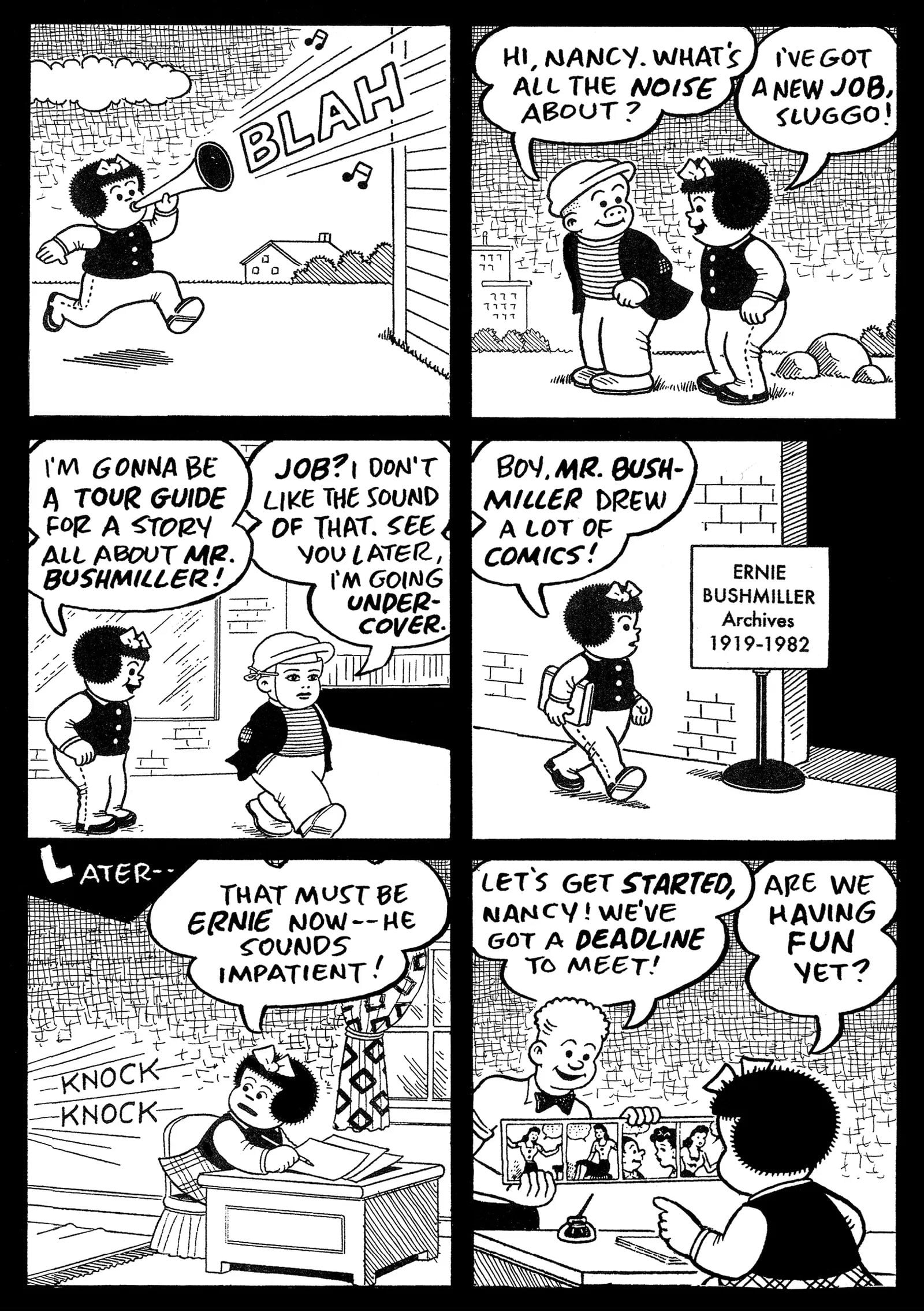
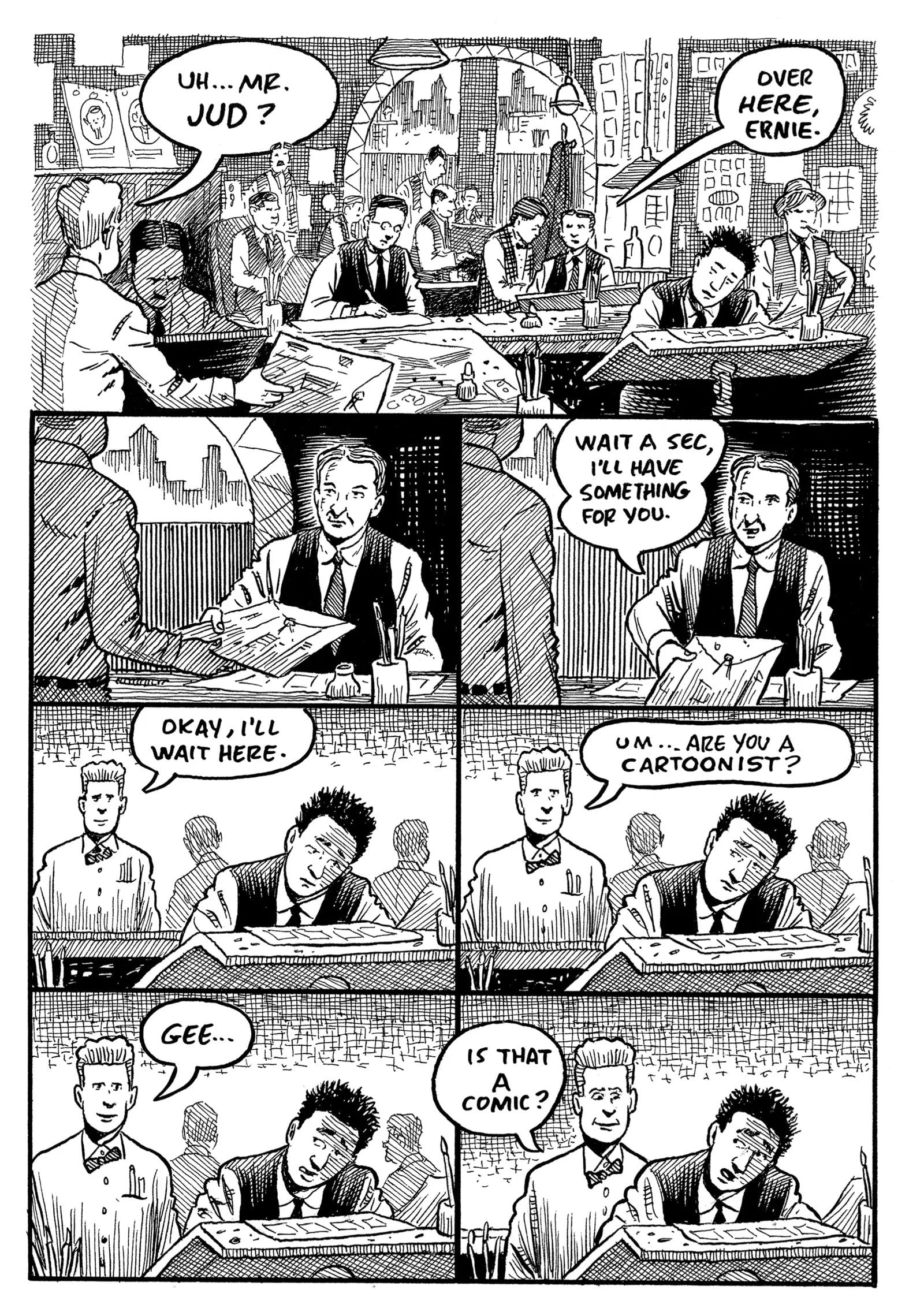
Well, I had two books to prepare me for the venture. Brian Walker’s Best of Nancy in 1988, with its first real stab at a biography of Bushmiller, and How To Read Nancy, by Mark Newgarden and Paul Karasik, with its more detailed Bushmiller life story. Mark and Paul gave me unfettered access to all the interviews they conducted with people who knew or worked with Bushmiller which helped flesh him out for me. When I began the project, I assumed Ernie was something like his comics—a simple man who stumbled into a rich vein of comic reality and occasional weirdness. I quickly found that to not be true. Jim Carlsson gave me the full picture of an uneducated but still well-read and sophisticated man. I learned that Bushmiller’s favorite artist was Diego Valazquez. His favorite music was Fats Waller. Astoundingly to me, he was friends with my favorite painter of all time, Reginald Marsh! They both attended the same art school and went to burlesque houses together to sketch the strippers. Biography gold!
It seems that the idea for this book has been percolating in your head for ages and riding on the back of your delightful obsession with the Nancy strip. With all of that info in your head, how long did making this book actually take?
Two and a half years, plus another two years waiting out the pandemic and the shipping container shortage.
Did you run into any speed bumps in the process of creating the book?
There was one interview I really wanted to do but couldn’t make happen ethically. Ernie’s nephew is alive and well and not hard to find, but he wanted to be paid to talk to me. That’s a no-no for me, not to mention of questionable accuracy. A number of Ernie’s assistants gave interviews to Mark and Paul, so I used their remembrances quite a bit.
What about Bushmiller’s experience as a cartoonist resonated with you most when uncovering more about his life? You’re a massively influential cartooning talent in your own right when it comes to newspaper strips— did you see any parallels between yourself and his experience?
I did feel a kinship with Bushmiller as I worked on the book. We may not have a lot in common, but Bushmiller and I both toiled in the fields of the daily grind. If you read the few all-inclusive volumes that Fantagraphics published of Nancy a while ago, you notice that a daily strip has an up and down rhythm. Great strips are often followed by lesser ones. The pace of the daily strip is roller coaster like. The peaks and the thrills don’t happen every day. In the Nancy strips I used in my book, I tried to show Ernie at his best. I showcased some of his best work in a section of Nancy strips in the book I got from an ebay auction. In this anonymous scrapbook I bought were strips pasted in from the early and mid 1960s. After reading them, I came to the surprising conclusion that these were Bushmiller’s best years.
When you were doing Zippy the Pinhead as a newspaper strip specifically, were you conscious at the time of the influence that Bushmiller’s Nancy had on your work? Did you do Zippy as a newspaper strip because of your love of Nancy?
Not really. Zippy occasionally drops into Nancy reality, but in a similar way that he drops in on other realities that appeal to him. Most of my Zippy/Nancy strips involve Zippy speaking to Bushmiller’s iconic “three rocks,” kind of like communing with an oracle.
I had the pleasure of watching you accept your Eisner Hall of Fame award in San Diego this year, and your speech resonated with me a lot — specifically that, when coming to Comic Con, you felt that your people weren’t there. And while, no, we didn’t see any Nancy and Sluggo cosplay, do you feel differently about that after having spent a few days among such a large crowd of comic fans? And for that matter, do you feel that the audience that comics are being snatched up by now are people who will have a new appreciation for books like Three Rocks and for Nancy overall?
What made the San Diego con different from other cons, for me (since I mostly avoid them) was its size. On my little table in Artist’s Alley at the con, thousands of costumed weirdos walked by, ignoring my portfolio of Zippy originals and my display copy of Three Rocks. But simply due to the sheer number of people there, quite a few did stop and talked or asked for a sketch or bought an original. I didn’t think “my people” attended cons. I was happily wrong this time!
Finally, do you feel like the world is ready to catch up with your obsession with Nancy? Is this a place that you can see comics pivoting back to finally?
I hope people who think of Nancy as “dumb” or kitsch will be open to a reassessment. I’ll make one last analogy to bolster my case: Charlie Chaplin was a genius of silent film comedy, albeit sometimes sentimental. He made you like him when he was pitted against obstacles, human or man made. David and Goliath. Buster Keaton, on the other hand, didn’t care if you liked him or not. He just wanted to show you, entertainingly and thrillingly, what only film can do. Bushmiler is all Keaton, no Chaplin.
Three Rocks: The Story of Ernie Bushmiller, the Man Who Created Nancy by Bill Griffith is available on Amazon, through Abrams Books, and where books are sold.
Gene Luen Yang on Books of Clash, identity, and finding your community
Follow Popverse for upcoming event coverage and news
Find out how we conduct our review by reading our review policy
Let Popverse be your tour guide through the wilderness of pop culture
Sign in and let us help you find your new favorite thing.










Comments
Want to join the discussion? Please activate your account first.
Visit Reedpop ID if you need to resend the confirmation email.