If you click on a link and make a purchase we may receive a small commission. Read our editorial policy.
The Walking Dead Clementine author Tillie Walden shares her "surprisingly hopeful" outlook on life
"It's all about surviving and it's all about living through the worst possible outcome." Tillie Walden talks at length about The Walking Dead: Clementine, Book One.

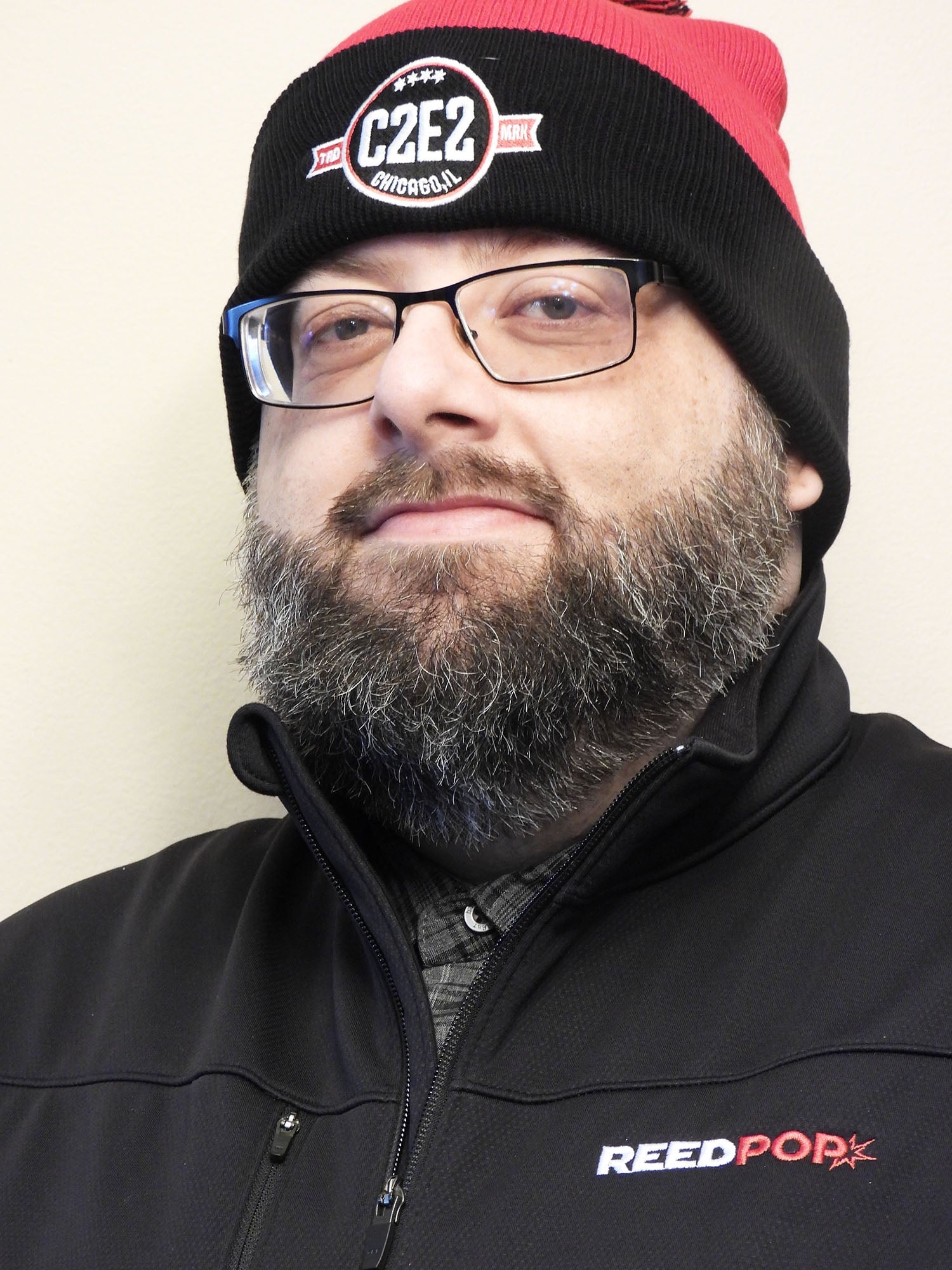
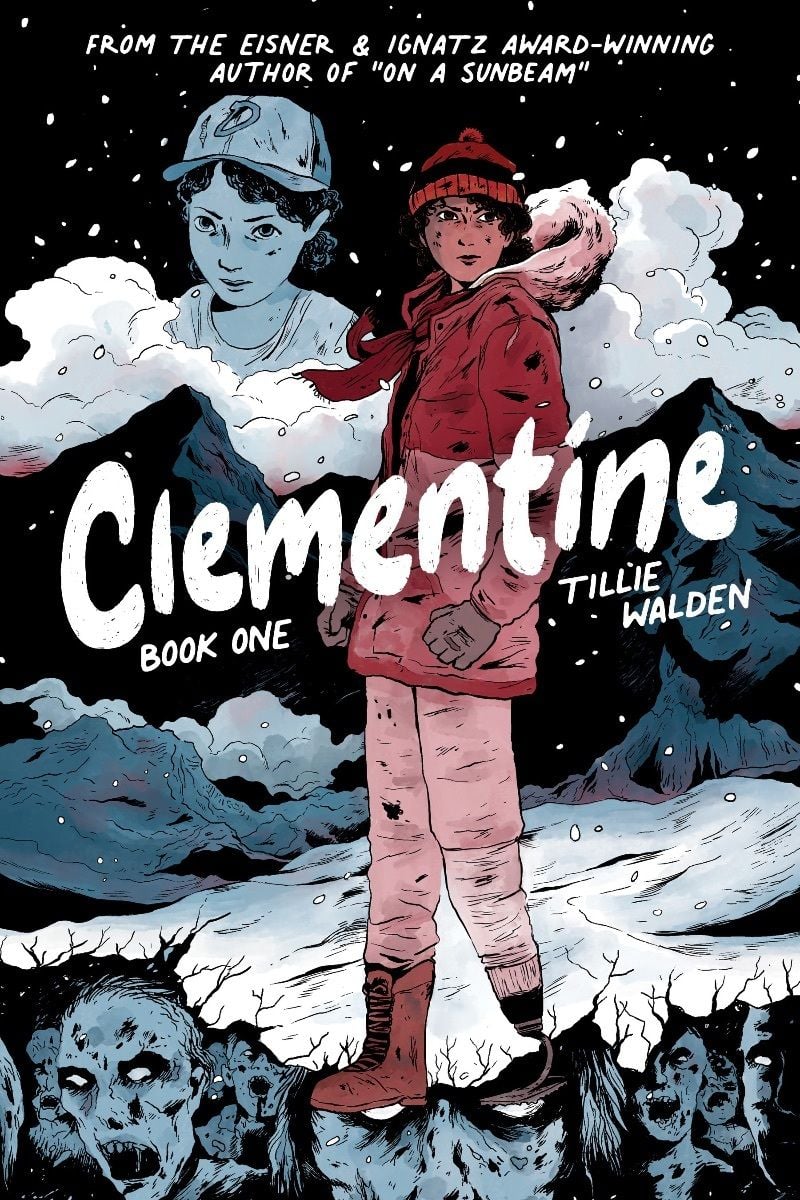
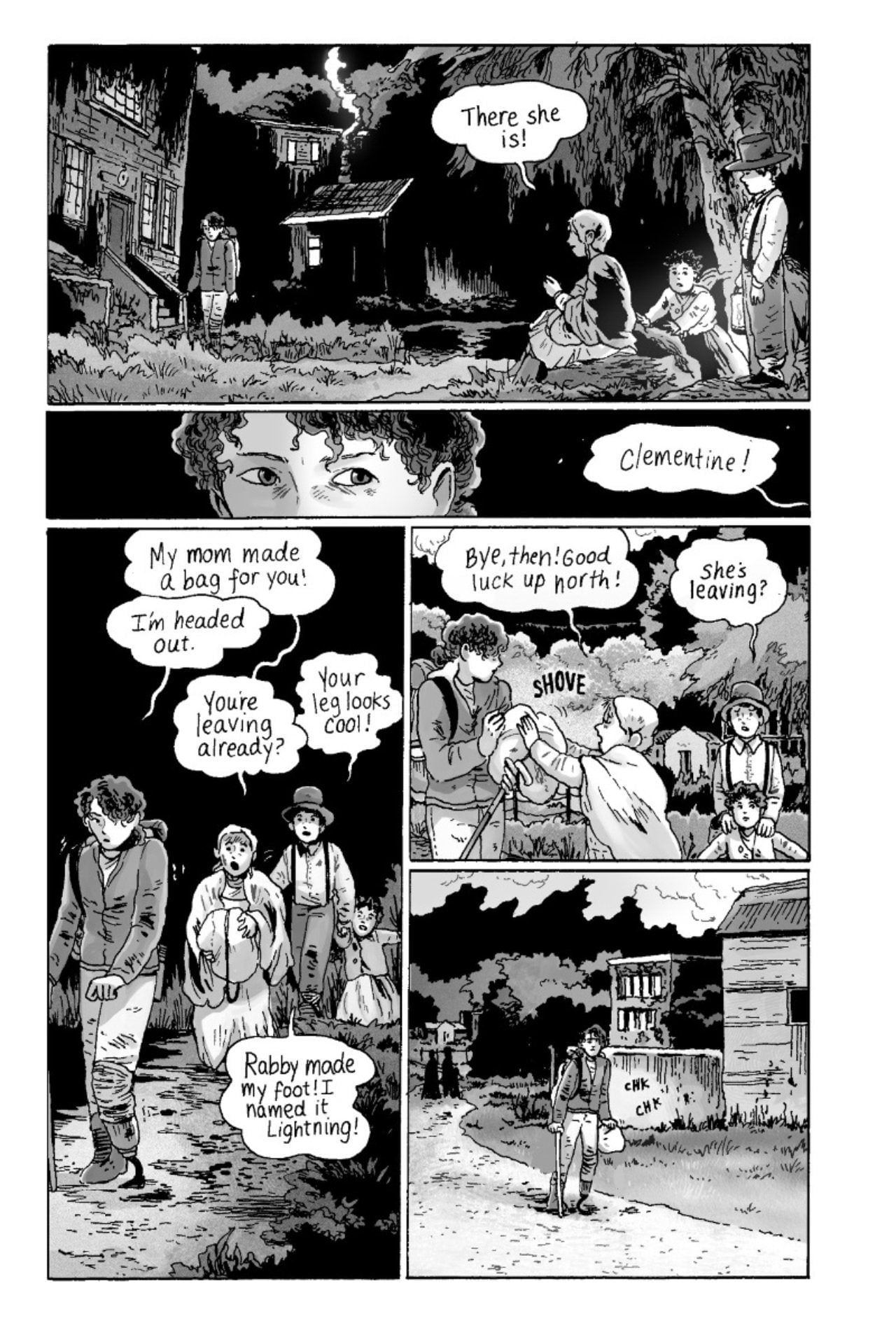
Is there a bright side to an apocalypse? That's a question I found myself asking after talking with cartoonist Tillie Walden about her upcoming book Clementine Book One, the first in a three-part graphic novel trilogy set in the world of The Walking Dead.
Walden is best known as the singular writer/artist behind a string of subtly insightful creator-owned graphic novels like such as Spinning and On a Sunbeam. "Sad gays" and "Dreamy gay space stuff" as she described it to me. But with Clementine Book One, she's entering the daunting world of zombies - and a franchise that grown to be more than just a little indie comic by two Kentucky boys named Robert Kirkman and Tony Moore. It's grown up, and it's grown big - becoming the cornerstone of Image Comics, a hit TV (and soon to be movie) franchise, and even a popular video game series.
In talking with Walden in her secluded home in Vermont however, I've discovered disaster prep can have its benefits. When you immerse yourself into a multi-year project based on zombies and survival, it can help someone re-assess what's truly important in the larger scheme of things - to take time for special moments, and also to not take yourself too seriously.
As Professor Tillie Walden tells her students at the Center for Cartoon Studies (and now me), "It's also just ink on paper."
What follows is an hour-long conversation with Walden about the upcoming zombie trilogy, what she's learned in the course of making it, and also what makes now the right time to change from being an 'indie darling' into comics' next big author.
Popverse: My first question is the easy one, Tillie. What are you working on today? Feel free to be as detailed or as general as you want… or mysterious?
Tillie Walden: I cannot describe what exactly I was drawing, but I was downstairs. Normally I work in this room that we're talking in, but it's really hot in Vermont already. So, I was downstairs where it's a little cooler. We're penciling digitally chapter six of Clementine Book Two; chapter six of eight, so right at the meat of a lot going on in the story.
I was just trying to figure out some very important dialogue while also drawing a lot of blood everywhere, but I can't… You know, I can't say much about Book Two.
What’s your process like?
I've been in the midst of drafting out the book, and then once the pencils are done, I'll print them out as blue lines and ink it traditionally. I'm looking forward to the point when I can be, like, really drawing with pens.
I don't normally pencil digitally, but because Clementine is on a pretty tight schedule that’s what we’re doing.
So digital is fairly new to you?
I’ve done both Book One and Two on the iPad. That's what I was doing this morning and as soon as this call is done, I'm going to continue doing that. I will figure out the dialogue today. I have to.
[Laughs] That's great. Has there ever been a case where you've waited… what's the most last-minute change you've ever made?
Oh my God there have been. [Laughs]
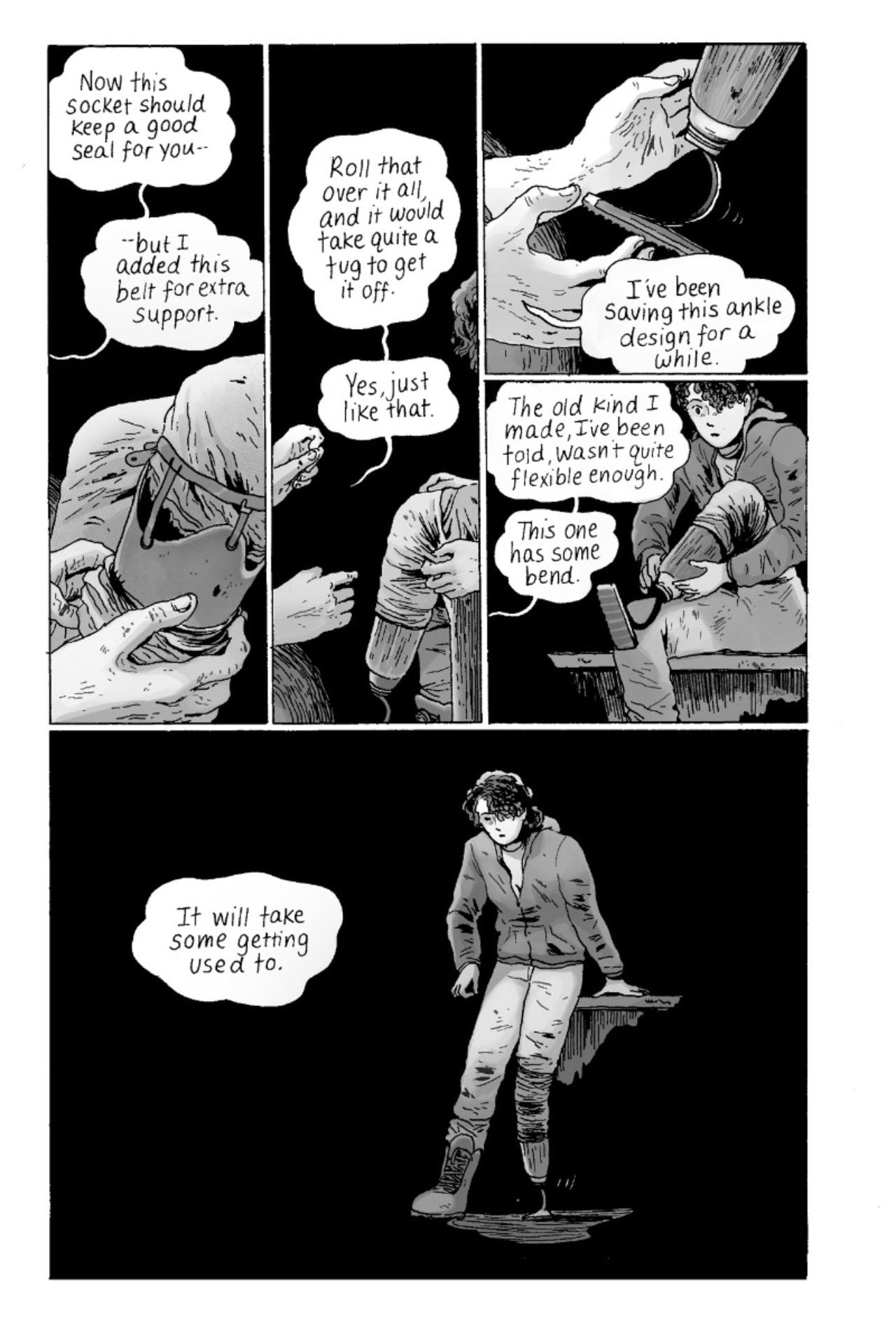
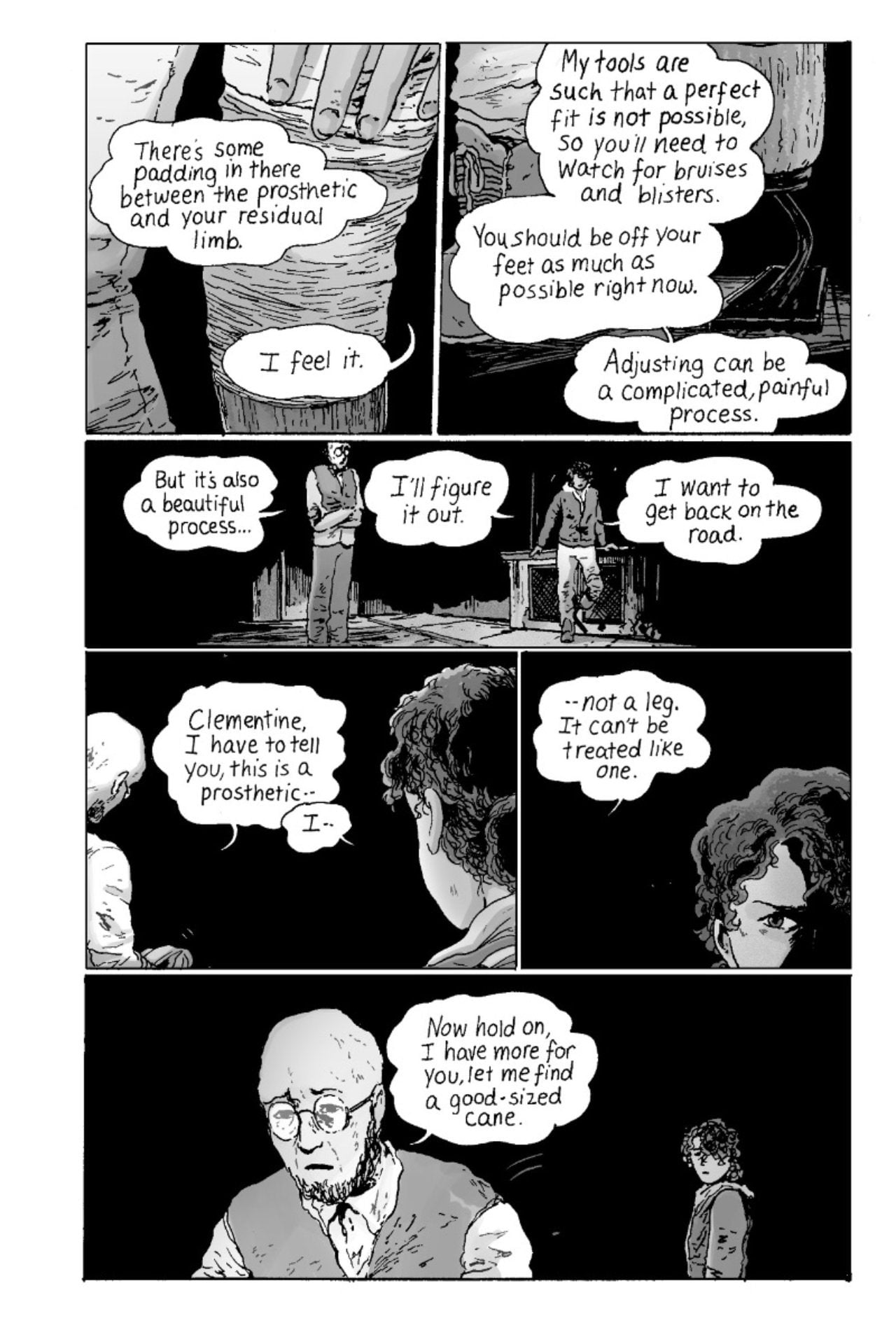
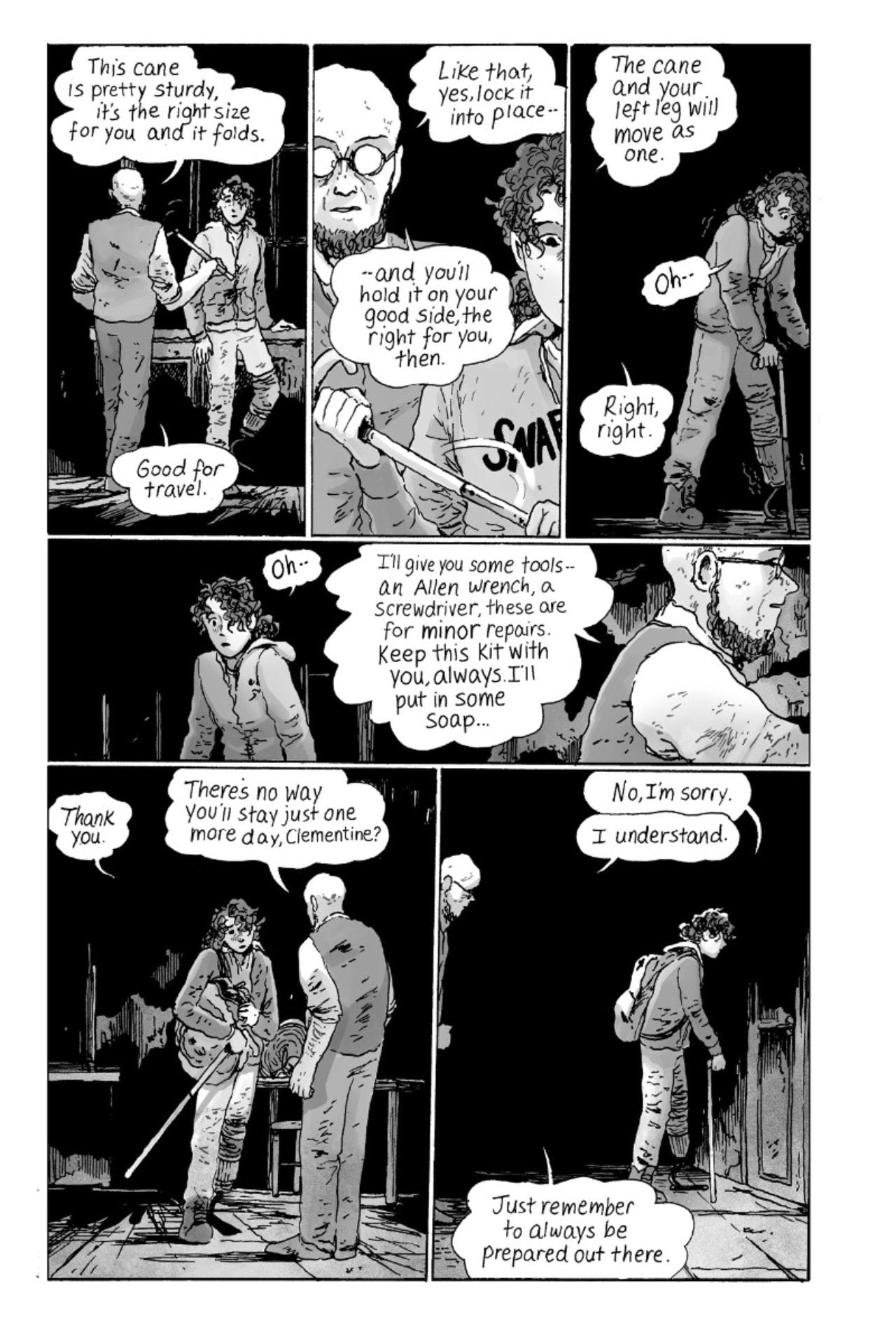
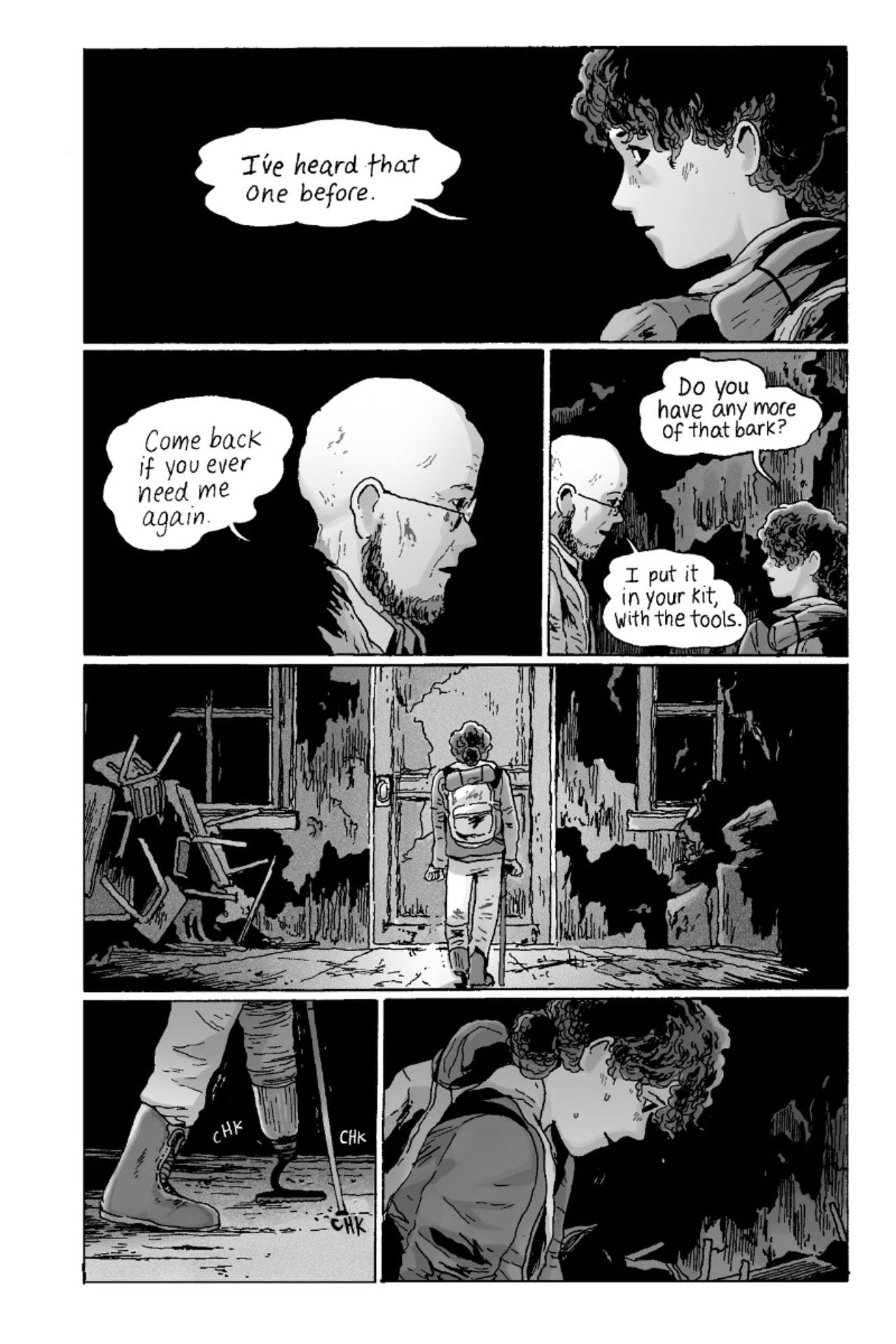
There were a couple of last-minute changes in Book One where we did some adjustments to Clementine’s cane. And we've also done outfit adjustments… and it was like ‘these characters are on every page of the book!’ So we’re running in there and trying to fix that sort of stuff, the normal last-minute changes.
I got a change yesterday for Book One, which is remarkable because it comes out very soon.
We are recording on May 12, and the book comes out June 22 in comic shops.
Yes! But there was a slight bit of gray in one of the speech bubbles. And I think there was a question mark missing. So don't worry, everybody. Those are fixed.
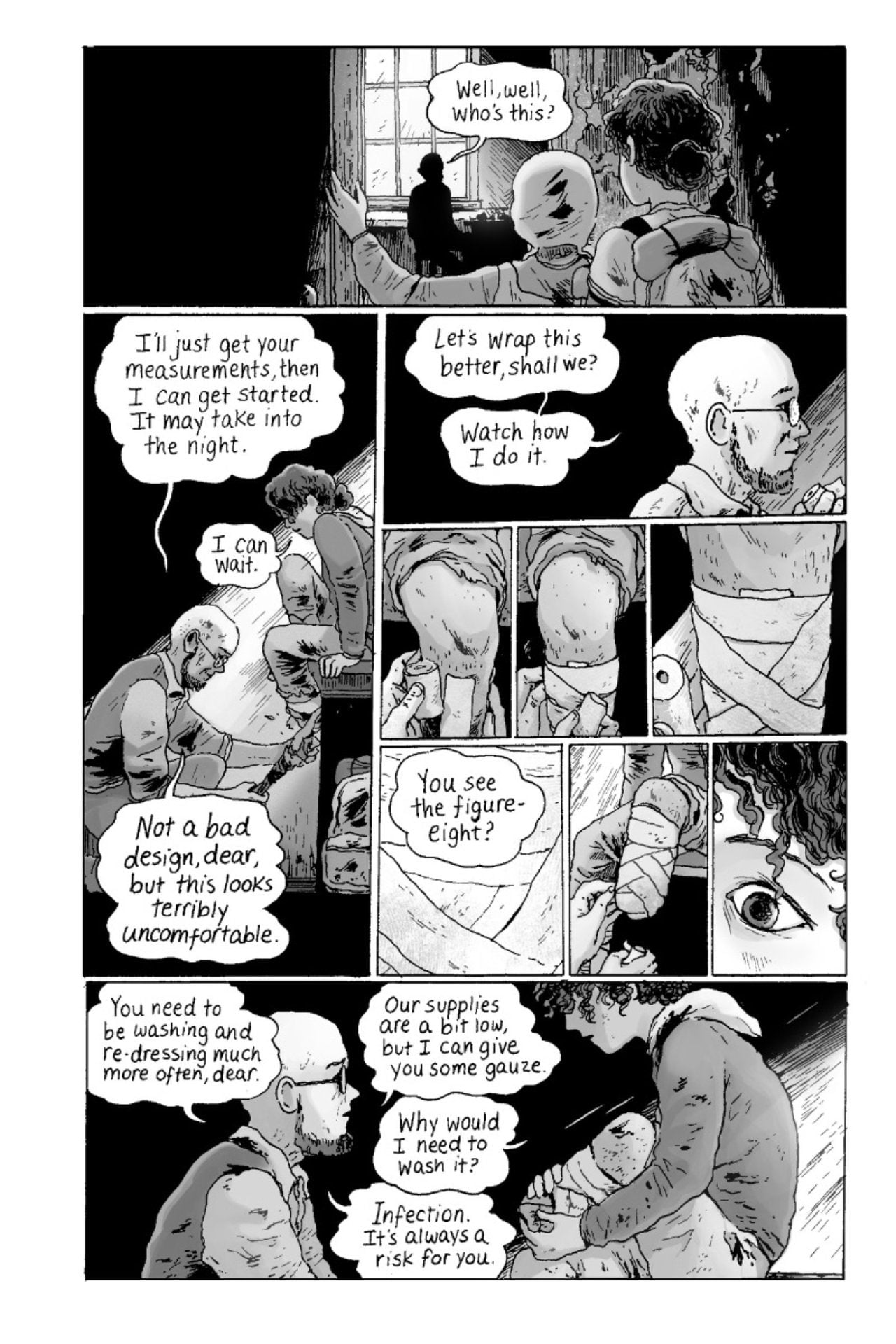
Now we’ll be looking at those question marks pretty quizzically.
[Laughs] All these fiddly things that show up… it's so hard to edit graphic novels. There's so much that goes into it.
With such a big project, that makes the small details even smaller. I like metaphors way too much… but you're building this immense thing.
It’s good you’re building this for three interconnected books, and not three standalone books with completely different casts, settings, and visual language. Now midway through Book Two, you can kind of thank yourself for the work you did on Book One – figuring out details you carry with you for all three books.
That is so true. It's so true. There's so much double-checking that happens when I'm physically drawing the book, especially from page to page, where I'm just like, ‘Where was that chair?’ ‘What was she was she wearing?’ ‘How was this character's hair parted today?’ ‘Which angle was I at?’ And just sort of always making sure.
I wish in comics that I could just build a set and put the characters in it and call it, call it a day. But having to redraw that set over and over again... It doesn't help that I have a tendency in my books to change locations frequently.
But yes, there's definitely some stuff that I figured out in Book pne that it's like, ‘Great, this is how it's gonna go for the rest of the series.’
Some artists, especially in serialized superhero work, use programs like SketchUp and if there's a set a set they're going use, they'll just build that and be like ‘I'm good for like a year,’ but --
Oh God, yeah. I don't know how to do that.
It seems really complicated, and you have to learn this whole system just to build one set. It almost seems like only worthwhile if you're, I don't know, maybe doing like a monthly comic or something like that.
So we're here today to talk about Clementine Book One, which will come out in just over a month. How does it feel to be on the precipice of such a big book launch?
I'm feeling like I need to refresh myself on what actually happens in Clementine Book One!
[Laughs]
Oh my God, I'm talking to people about this book!
We waited until May to start doing a bunch of interviews because I teach at a school and my semester just finished. Now I have the time to start doing interviews, and I was like, ‘Oh my God, I'm talking to people about this book!’
It's coming out in, I mean, a little more than a month. I feel excited. I feel a little nervous. It always is, it feels a little like being in 3rd grade during the school production. It's your turn on the stage, your mom and dad and the audience are watching, but also your friends’ parents are watching as well.
That first moment when the book comes out is really daunting. But then this amazing thing happens that I've experienced with my past books, and I know it'll happen again… where you just sort of let it go. You're like, ‘The book is out there now. It's up to the readers to decide what they want to take from it, whatever that is.’
And luckily the blessing of working on a trilogy is I'm already so busy on Book Two, and I'm already thinking about Book Three. So my focus really is more on continuing the series than it is on how book One will do. I feel like I did my best with it, and now it has to go walk in the world on its own. I'm like, ‘Go off! You go, honey. Take care of yourself.’
I feel like I did my best with it, and now it has to go walk in the world on its own. I'm like, ‘Go off! You go, honey. Take care of yourself.’
This isn't your first serialized comic, as you’ve done webcomics before, but since you're working on the second book while people will be reading the first book, will the response affect Book Two and Book Three? Do you prepare yourself, or do you just kind of let it just wash over you?
I don't want it to influence it. I do really believe that.
I know the direction I want to take the series, and I worry sometimes about too many cooks in the kitchen. I already have my editor, and a lot of other people at Skybound, and people who worked on the games, and [The Walking Dead writer/creator] Robert Kirkman who helped edit the book. So, I feel really confident in the team. We have to help make them good, but it is hard because there's going to be so much input, especially with traveling and with meeting people and talking to them about the book.
I feel like my strategy is going to be that when I get on that plane to go out there in the world and talk about Clementine, that's one mode. And then when I fly home and come back to my house in the woods, and my cats and my wife and my desk, I come back to center and really think about why I wanted to do this series. To think about my own motivation and just try and follow that.
To follow that lead.
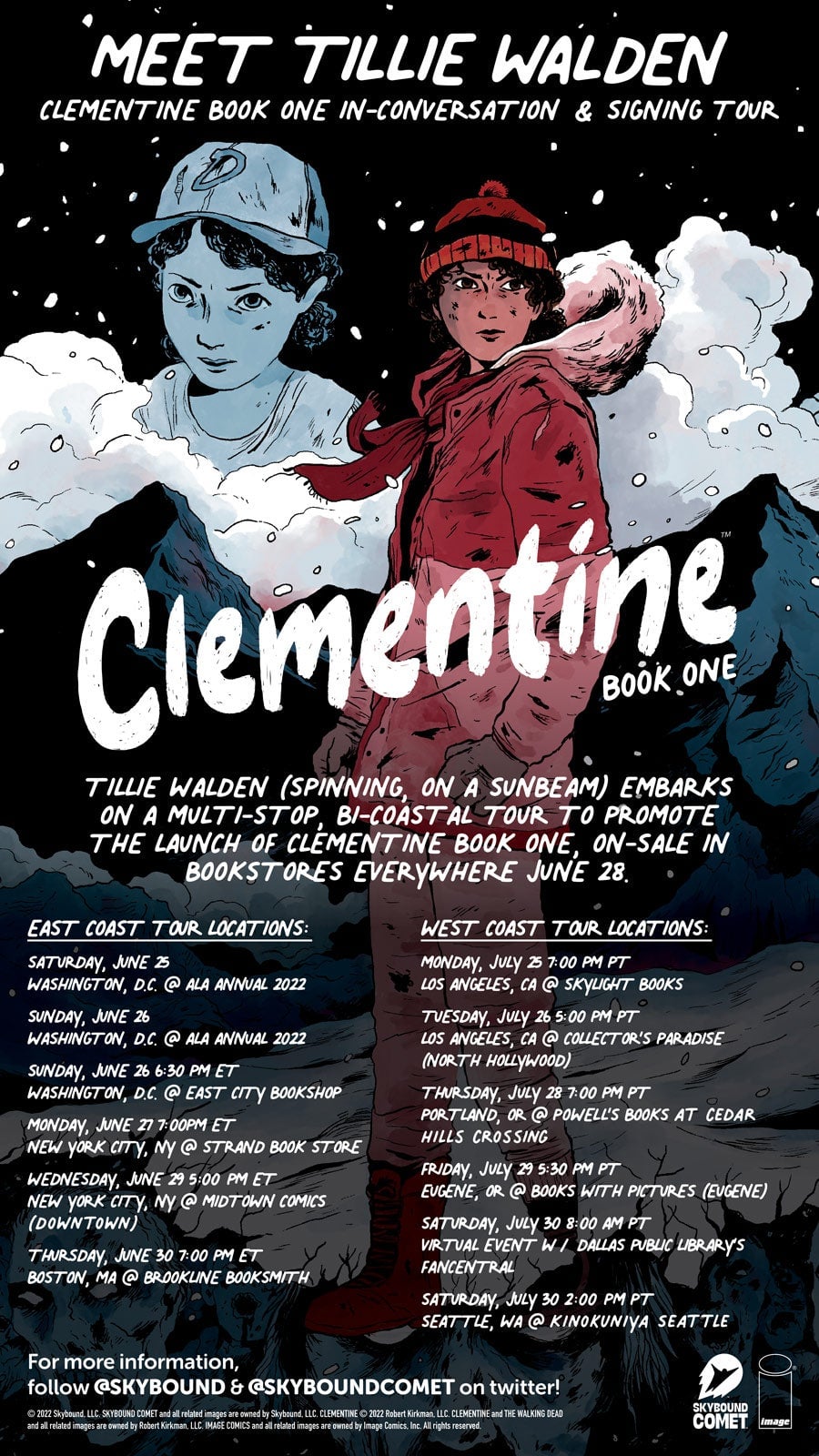
Are you going to try to do any art on the books while on the release tour? I imagine writing – or at least thinking about the writing – is a forgone conclusion during spare moments of time during that publicity tour and all that, but will you try to do any drawing during then? Are you bringing some kind of kit?
Definitely. I’ll have a clipboard and my pens, and will likely be doing a lot of thinking in airports and hotels. I've done it before, but I should be careful not to bring any pages that reveal too much, and because I'll probably be spilling spoilers all over the place everywhere I am.
Correct me if I'm wrong, but this is the first work-for-hire / ‘work on someone else's characters’ big thing you've done. How has that been? I am projecting, but I imagine it’s like adopting a child – you didn’t necessarily give birth to them, but at a certain point you become a parent.
Yeah. It's interesting, it’s like taking in a kid who had a life before me. And it's all about the balance between contending with Clementine’s past with Clementine’s future. And I go really back and forth when I'm writing; Sometimes I feel really beholden to the life she lived in the games and with, you know, who worked on her before me. And then there are other times where I feel really inspired and open towards what her future will be.
It's a daunting task. It's definitely been a really challenging project in a lot of ways because I've never done work like this. It's helped [that] a lot that the folks at Skybound – especially Robert and my editor, Alex Antone - all reassured me that one of the reasons they asked me to do Clementine is because they really wanted to see what I would do, not someone else. And so there is a little layer of trying to feel confident and trying to feel assured in that I can do my best with her.
I think.
If anything, it is also a creative challenge to write a story that honors the past she did have in the games.
If anything, it is also a creative challenge to write a story that honors the past she did have in the games.
But there was also another layer of challenge where I've never done an apocalyptic story before. I've never done anything with a big property like The Walking Dead or anything even close to a zombie. There was a learning curve about how to best write in that world. But it's fun to think that I get to take a chance to try to reinvent these kinds of stories, because a lot of post-apocalyptic stories have similar themes, and it's been fun to try and do my own spin on those themes.
… I realize I'm rambling far away from your question.
No, keep going. Lead the way.
At this point, after having finished Book One, I feel pretty confident with having Clementine as a character and working with her. Working on Book One, I think there were a lot more ups and downs because it's the first book in a series. It’s the first one where I’ve had to decide where to take her. She's 17. She's lived this crazy life in the games. She's got so many scars. She's pretty screwed up. If you played the games, you know she's been through a lot.
She's 17. She's lived this crazy life in the games. She's got so many scars she's pretty screwed up.
And it was actually interesting to try to think about how I could relate to her. I do think that anyone who has grown up has their own trauma; anyone who's been a young girl, anyone who's queer, could find their way to relate to Clementine. So the process of working on the first book was about me forming a relationship with her as a character. And I think we did it. Now with books two and three, it's my job to try to follow it through. To take her to where she needs to go. I know where she needs to go. But I'm not going to say.
Was there a particular moment when it became not just the book you're doing for somebody else, but you felt … ‘ownership’ is the wrong word, but ‘Yeah. I get it . I get Clementine now. I really get this character. I get everything.’ Was there a particular moment?
You know, there was, but it may seem a bit circuitous as to how I would connect to them.
I wrote Clementine Book One. We drafted it all out. Lots and lots of editing. Lots of reworking. Lots of ‘Could we do this?’, ‘Could we do that?’, ‘How do we make this character work?,’ ‘How do we really make sure the reader knows what's going on inside of her?’ All sorts of stuff. And then right before I decided I was ready to start inking the book, I realized that the setting of the story, which is this, this mountain in Vermont, isn't that far from where I live. I just turned to my wife, and I was like, ‘Let's get the camera. Let's go. Let's go to the mountain. Let's go. Let's go experience this.’
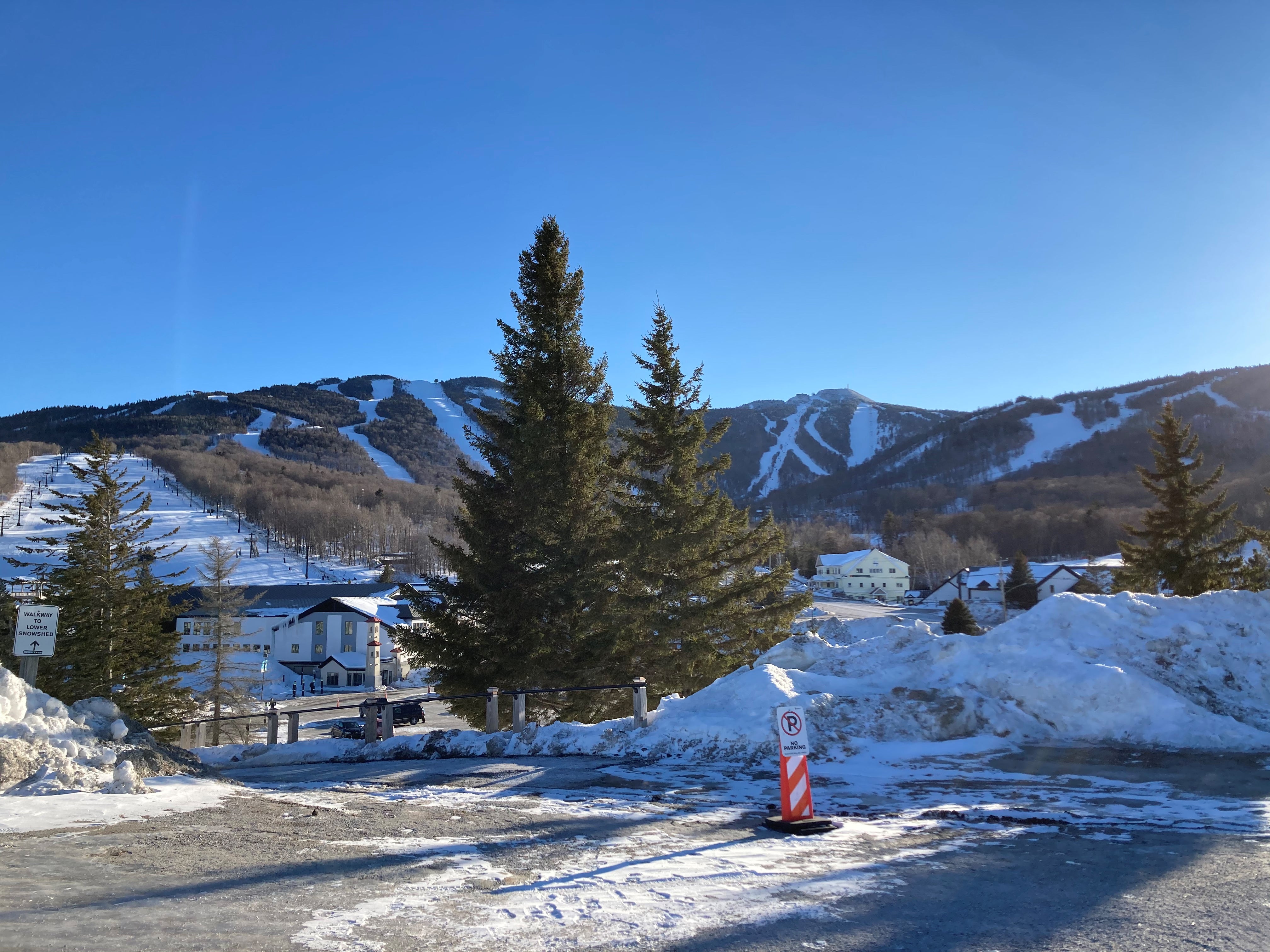
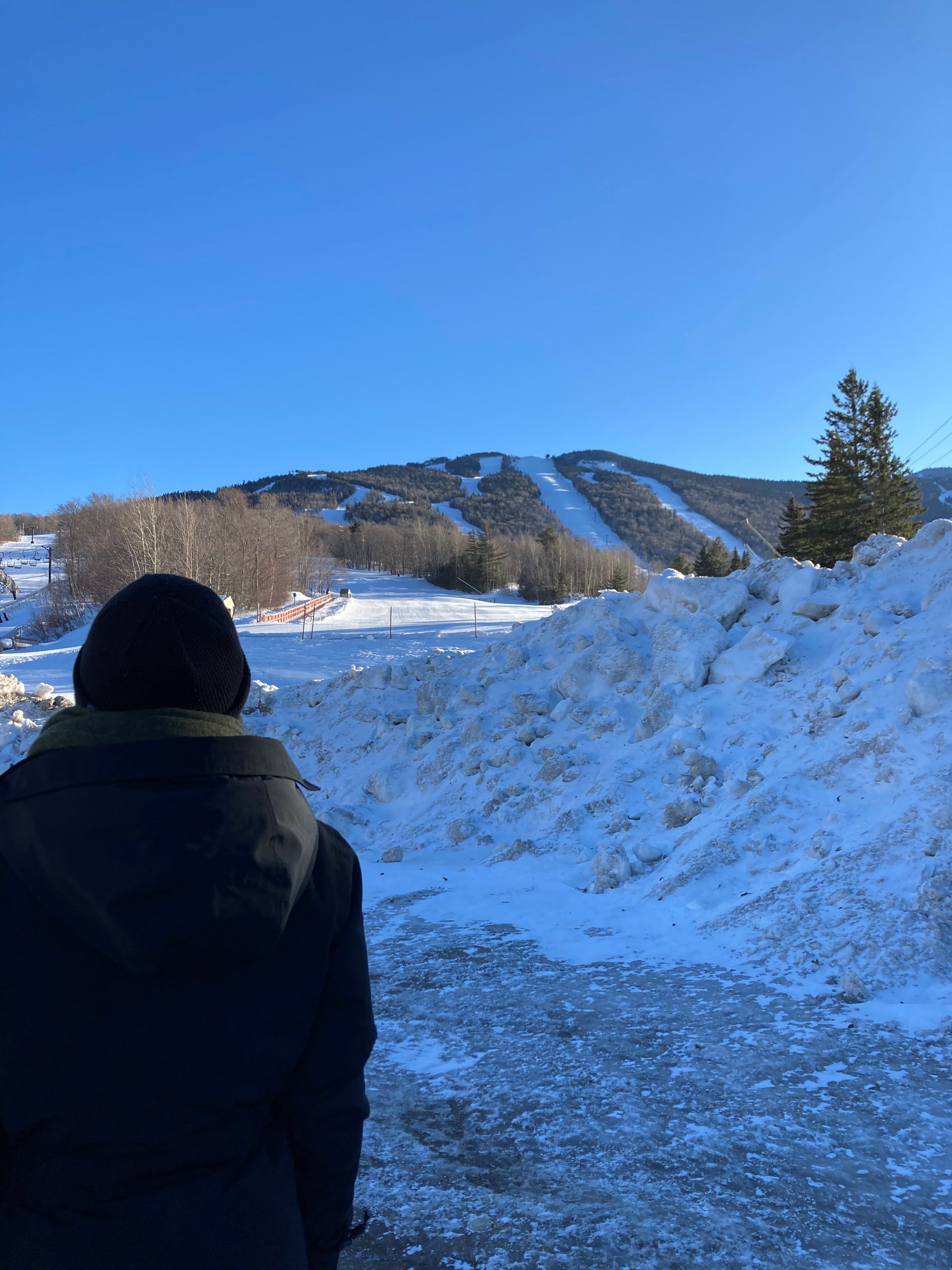
We drove up to Killington and walked around, took pictures. I was like, ‘OK, I'm where she is in the story.’ Some connection just happened in my head, and kind of in my heart. ‘This makes sense now; this is where I want her to be for this story. And I know I can make it work.’
So, interestingly, it was the setting that really helped me feel connected to her.
That’s great. As a long-time freelancer, I have to ask ‘Did you save those receipts? You can claim this on your taxes.’
[Laughs] Oh, totally. You know I did it for the gas, and I took pictures on my phone, and I got them printed at CVS. Also a write-off!
[Laughs]
All our write-offs.
I mean, what else are we supposed to do? Freelancing is. I mean, we get no support.
Anyway, that's another conversation.
Speaking of jobs, this – being writer/artist of the Clementine trilogy – has been your main ‘job’ for the past year at least, and assume the next few in writing, drawing, promoting, signing, etc. In all this, mentally it must be taxing to be subsumed by this apocalyptic kind of thinking. How are you handling the subject matter, and being deep in it for so long?
I actually think it's a surprisingly hopeful world and concept to immerse yourself in because it's all about surviving and it's all about living through the worst possible outcome.
So if anything, it's made me think a lot about how my wife and I really do live in the forest. We live on a dirt road, very removed. I’m in this great spot. I think doing these books has made me think a lot about how to protect our own house from walkers, so maybe that’s not the most mentally sound reaction – but I do think about that a lot.
It's actually been really healing to think about how the world can remake itself, especially how Clementine can help remake the world.
It's actually been really healing to think about how the world can remake itself, especially how Clementine can help remake the world.
The general onslaught of being a person in 2022 is certainly overwhelming. Something changes every day, and it feels like something goes wrong every day. But in this world of the Walking Dead, I do feel a surprising amount of optimism when I think about Clementine and when I think about her story.
I don't want to ever have to kill a zombie. I’m just going to put that out there right now. I think it would be so hard. I think The Walking Dead TV show did a really good job with grappling with that, which you didn’t get in the comics much. I don't think I'm ever going to have to do that. I really think global warming is probably my zombie apocalypse.
But yeah, it's been fine to immerse myself in it and I wonder how I'll feel.
As I start drawing Book Two and as I get into Book Three, I do think right now I'm still not quite 50% done with the series, and I wonder if when I cross that threshold I'm going to be like ‘Too much death, too much blood and guts! I can't take it anymore.’ But I also have other projects that I work on outside of this, which is helpful.
That's good.
It’s surprising, considering how fast I'm making these books. I probably shouldn't have other projects, but I do. And I also teach, so it does sort of get me out of it. It gets me out of the zombie zone when I have to go to my students and be, like, ‘Clean up your panel borders,’ ‘Fix this dialogue.’
Not to spoil anything from the book, but just in general I can see how working on a zombie book does force you to re-assess what’s truly important in life. The apocalypse probably doesn’t have alarm clocks. It's OK to ‘just’ survive, and not check things off a to-do list. I don’t want to project, but does that ever impact you – the idea of changing your expectations?
Oooooh yeah.
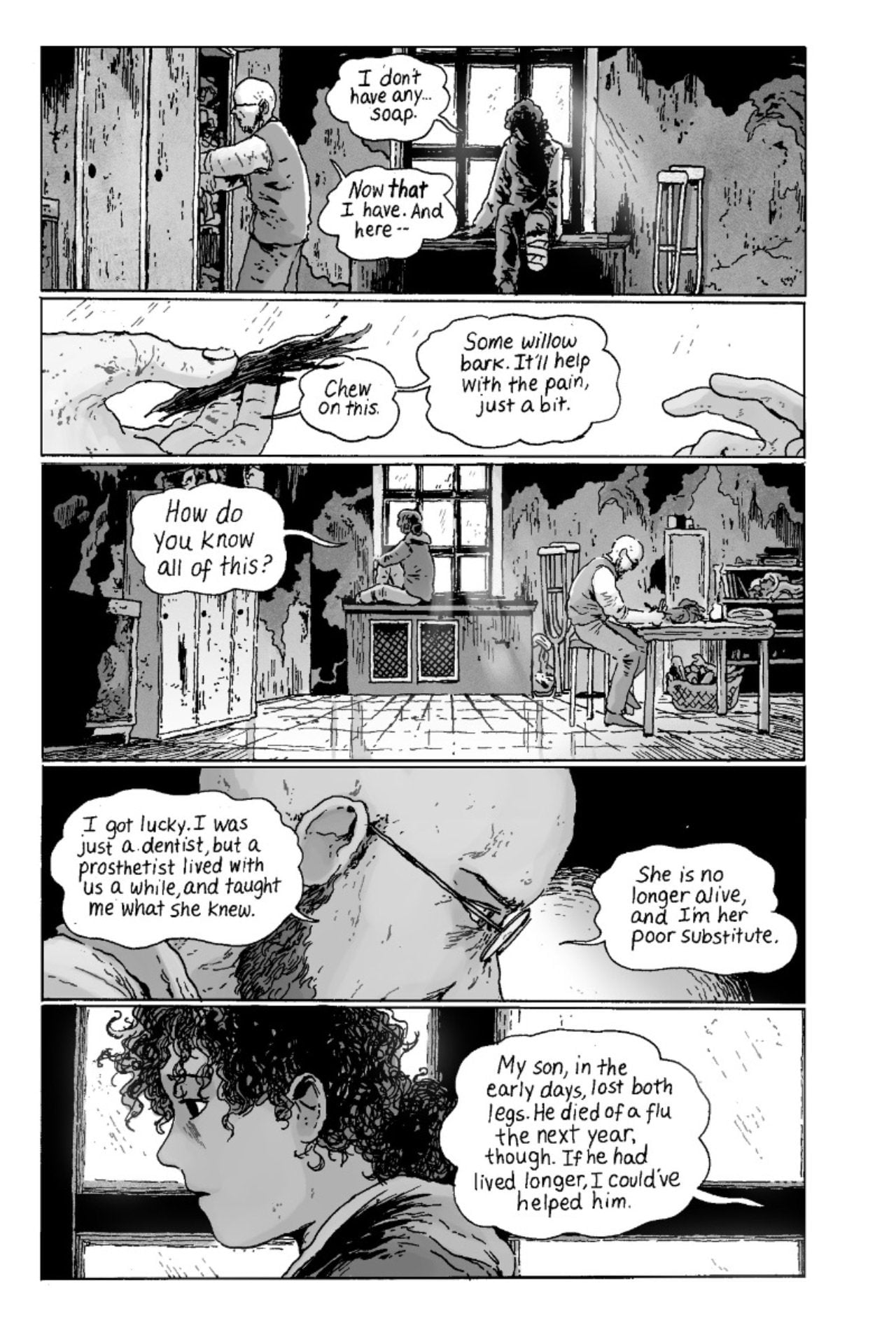
I mean, I think so much about how if you were a young teenage girl in the zombie apocalypse, how much more your life would be driven by you than by other forces. I also think about how much downtime you really might have because especially if there are no walkers around you (or you've killed them all), you could be happy just somewhere safe for a little while.
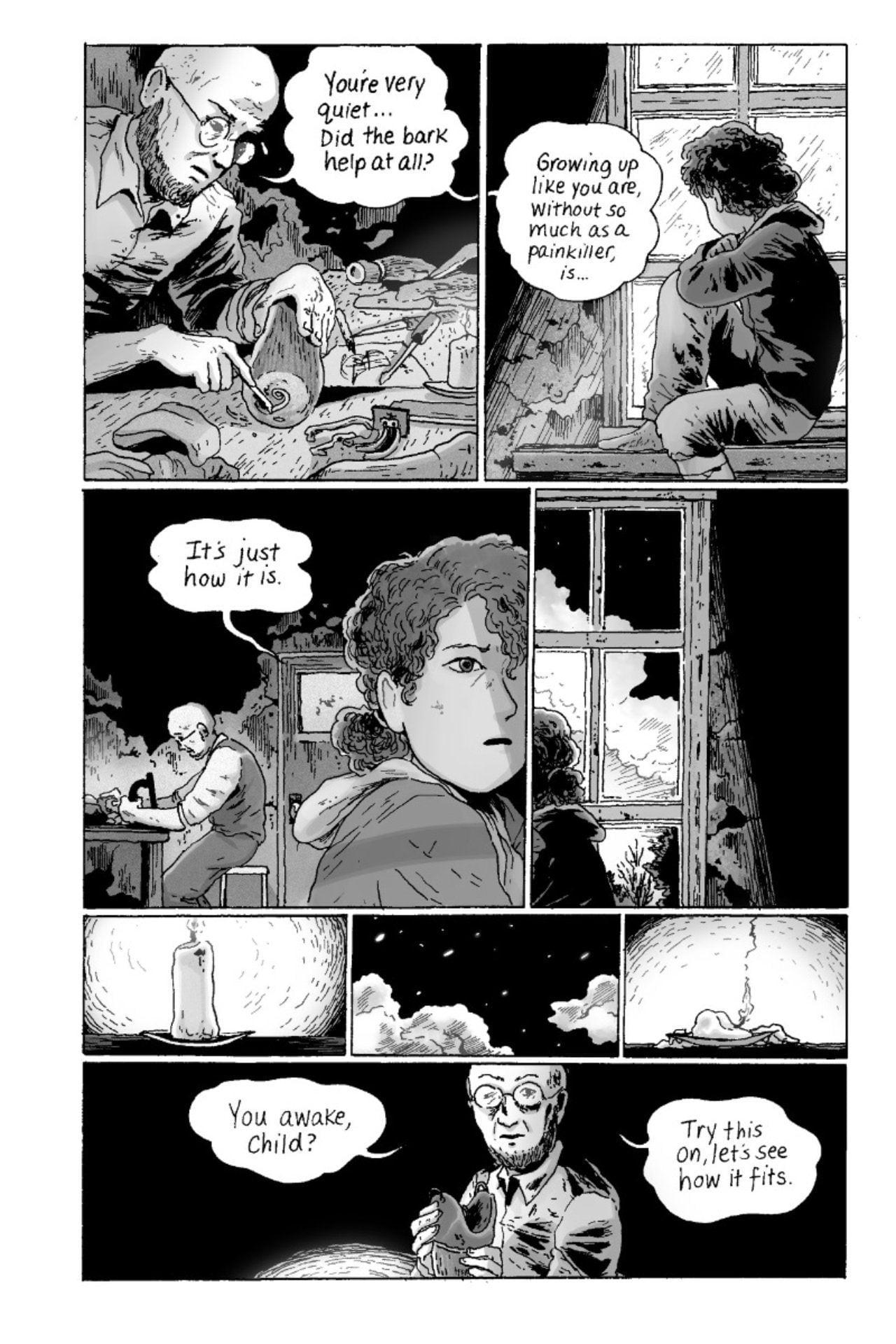
You don't have an Xbox… you probably don't even have a light source or even much food. But I think there would be a surprising amount of rest and contemplation that happens. Certainly, these kids in my book are not checking their phones. They have a lot of time to think about and consider everything that's happened to them. Something I've thought about too is how crazy her dreams must be, and how crazy the dreams would be of everyone; trying to fall asleep with the potential of death all around you.
I don't know. I think I think about how I’m writing stories about people living through the zombie apocalypse. They would all have so many stories to tell, but they don't have the time to tell it because they're too busy surviving.
It’s not a zombie movie, but there's this apocalyptic movie called Reign of Fire where in absence of movies, they retold movie plots as an oral tradition based on their memories. I can imagine oral storytelling being a popular activity during a zombie apocalypse.
Yeah, I constantly think there are so many little scenes that I want find a way to fit into this series about how they kill time. I've become really obsessed with the idea of what life would be like if you stop school at age 7 and then had to start killing things. So I spend a lot of time thinking about how much education… like what was the last thing Clementine learned in school? What would have it have been, second grade? Did she even get to fractions?
And I've become really obsessed with the idea of what life would be like if you stop school at age 7 and then had to start killing things.
But also, she's so good at knives. How do you balance these things?
She knows school lunch trays from school, like how hard they are and how she could use those.
Speaking of memory, The Walking Dead comics have this immense and super-focused artistic legacy. There’s Tony Moore, there’s Charlie Adlard, and now there’s Tillie Walden. I know I’m discounting the TV shows and the game, but how do you feel about at that level – and being the The Walking Dead artist for some people?
It's cool, it's exciting. I never thought I could get this far. Really.
I believe this is the first time a women's ever drawn and written The Walking Dead, so it feels like a huge milestone. I think maybe the first gay person too.
In one respect, it's a huge honor. And in another, it feels like I think it feels good because I've never asked myself to try to be Tony or be Charlie. It’s because it's not possible. We're all just different. It feels like my own Walking Dead.
But it is also... drawing it with this kind of legacy behind you, which could be the road to madness. I think if I thought about it a little too much I'd be like, ‘Oh my God, how am I going to live up to all this’, ’How is this all going to work?’
But when I remind myself that really the only person I have to do a good job for is myself, then it feels OK. I know I can do it. I know I can. I can do my best on this series.
And you are. From what I've read, it’s great. Like on the artistic side, but also the writing. In talking comics writers, it’s Robert Kirkman, then Brian K Vaughan, and now Tillie Walden. That sounds like a really good line-up.
That's… thank you. It's strange to hear my name in there.
I realize I omitted Marcos Martin from the artistic line-up.
For a lot of people, you will soon be the first person they read in The Walking Dead. For them it’s going to be Tillie Walden’s The Walking Dead.
That's crazy. That's crazy.
It’s exciting on so many levels.
It's not a match I would have ever, ever anticipated, but it’s great.
How did the idea of you doing The Walking Dead first come up to you? I would assume that other publishers would have reached out to you to write and draw their characters? You probably got offers from Marvel, DC, and the like…
Yeah, that’s funny. I had plenty of offers to do a lot of different things, and I've turned, I think, all of them down except Clementine. I really thought that my career would just continue to be me making graphic novels about whatever dreamy gay space stuff, or I don't know, sad gays.
'I really thought that my career would just continue to be me making graphic novels about whatever dreamy gay space stuff, or I don't know, sad gays.'
Then… I don't know. Something… something special happened. Skybound asked me to do this, and I felt like I really needed to consider this as a potential job. What did it for me was playing the games, and I was like ‘Yeah, OK, let’s go for it. This sounds good.’
Do you remember when and how specifically it first came up? Was it a phone call? An email?
They used email. It was very, very general. It was basically, “I don't know if you've heard of Clementine. We've heard of you. Can we talk?”
And then I was in the car when I first talked to Alex Antone (my now editor), and my agent was also on the call. I took the call while I was driving through a place I've never been before, and it was really chaotic. I remember going over this bridge and I was like, ‘I'm going to drive off this bridge. This is really stressful.’ This was all while Alex is trying to tell me about the glory of Clementine.
I remember going over this bridge and I was like, ‘I'm going to drive off this bridge. This is really stressful.’
Needless to say, I was convinced. The concept of doing a series was really exciting to me, because I’ve never done a three-book series: a trilogy.
And when they first asked me, I was like, ‘Why would they ask me? This doesn't make any sense!’ But now, as time has passed, I'm really glad they asked me. I think it was meant to be.
When this was originally announced, I remember my reaction to it. Above the fact of actual comics reading, but I was impressed by the scope of what it was – a three-book series by a writer/artist, announced upfront before even the first sales numbers had come in. It seems really thought-out in a long-term way, and it had the potential to become a fundamental comics work that could be on shelves for decades to come.
God, I hope so. That's great.
I imagine Skybound has already thought of those cardboard boxed set holders for the three books once they’re all released.
[Laughs] I really look forward to the day when I see all three books next to each other. That is going be a very special day. Then I'm going to need to take like a year or two off. I'm going to be tired.
From everything I've read of your work in about your work, you seem like a very industrious person. You were previously involved in competitive ice skating, which I imagine encourages similar working traits. How is that for you as a person? Do you feel like you're a diligent person?
Very much so. And it really is-- it's straight from ice skating. You have a coach who at 5:00 AM is telling you to do 50 things that you really don't want to do. And you do them.
I learned very early on how to kind of quiet myself inside and focus on what's right in front of me. And in a way, it's a blessing and a curse because I'm really good at making myself do things I don't want to do, which can be a tricky road. Because it's definitely led to a lot of experiences where I haven't listened to the fact that I was like, ‘I don't wanna do this.’
But working on Clementine has made me really realize I am this really industrious person. But I’ve been checking myself, and asking myself, ‘How can I go into this series and work really hard but not screw myself over completely?’ ‘How can I still be myself?’ And it's been it's been a learning experience, but I really think I've found I found this way to handle it.
So much of it is listening to myself when it's like, ‘I don't need to work today, I'm doing fine.’ ‘Clementine is fine,’ or ‘Clementine can be a little late. It’s OK.’
The same when it comes to press for the book. I’m doing a lot, but there’s a lot that I’ve turned down. I have to say that so much of that is everyone at Skybound. I mean, I think my editor would take a bullet for me. I think they all would. Anytime I say I need something or that something is ‘too much,’ they are so ready to help me. They have helped me get through things or helped out when I’ve asked to take the thing away that’s causing me stress.
I don't think I would even go on a book tour for Clementine if I didn’t feel secure in the fact that I have Skybound behind me so fully.
That's great.
It’s good to feel supported, and to feel like it's OK if there's something you can't handle. The same is true for Clementine as a character. She’s a badass, but she can't handle everything. I feel like I share that with her.
It’s good to feel supported, and to feel like it's OK if there's something you can't handle. And the same is true for Clementine as a character. She’s a badass, but she can't handle everything. I feel like I share that with her.
I went to college for art and I was intensely fascinated by the tools that artists used, to the point of obsession. What are your normal tools for drawing?
Oh God, it's so ridiculous. It changes every book. You're going to laugh about how I drew Clementine Book One. So here is the pen that I used. It's an OHTO pen. And what's interesting about it is it's got a metal tip, but it is a fine line pen. So all the lines are the same length, but it has a metal tip.
If you use a Micron or a Faber-Castell, the felt-tip gets pushed in over time. In past books, I’ve used Faber-Castell pens, but I murdered them. So the OHTO pen almost resembles more of a rollerball.
Then I use a Pentel brush pen for all the spot blacks, and then for the really crazy dark scenes I get an enormous brush and a pot of ink. I just get it on the page, because Clementine is a very inky book.
And paper-wise, this is where I should be embarrassed. But you know what? It’s what I did. I use $3 packs of cardstock from Staples – 50 pages in a pack. It’s one step above printer paper.
I drew on it because that’s what fits in my printer, for printing out my digital layouts – even if I don’t always adhere to my layouts.
I stopped drawing seriously before the heavy use of digital, but I hear comic artists talk about buying specific printers that fit wider paper. I haven’t heard of one that can fit comic boards, but…
I know! I need a really big printer, then I can put bigger pages in it.
I would love to draw Clementine Book Two a little bigger because that was rough on the old wrist.
And I imagine working at a smaller size, you subconsciously lean in a little closer.
[Laughs] So much. I set up an angled desk so I can lean in and go for it.
But the pain, yes… Oh my God, I have to stand up so much and I have a desk that has a crank so it can go up and down to adjust where I'm at. But cartooning is terrible for your body if you want to live a healthy life, go be anything but a cartoonist.
I remember Stuart Immonen being one of the early proponents of standing desks for drawing comics.
Ahead of the curve. I feel like now people are talking more about it.
I do sit more than I stand because I'm lazy and sitting is so nice.
You mentioned before about doing some drawing while you travel, so what’s your travel kit?
Probably a backpack. I have a clipboard that I draw on, and a travel-size ruler. I love buying travel-size rulers. I have, like… 50! I don't need more, but I'll keep buying more. I just like them. I really like rulers. I have a lot of thoughts about rulers.
And then I'll bring a couple of OHTO pens. I'll maybe bring a pencil and an eraser in case I need to rework something. And probably a brush pen. No pots of ink on the plane, though. I've had too many things explode. But I always worry about bringing the brush pens. So sometimes I take the cartridges out and keep them separate in a zip-lock bag. Explosive-safe.
If we were to take money out of the equation-- I know money helps everything make easier, but what's the most rewarding part of being a cartoonist/educator right now for you?
How do I describe it…? I get the opportunity to follow through on all the creative intuition that comes up in my mind. I have plenty of ideas that seemingly don’t apply to Clementine, but if I really want to find a way to put it into one of my stories, I will. I think that’s being able to be self-directed and to be driven by what I decide my motivations are. There are so many lines of work where your own personal motivation just does not get to play a part in it, but in comics-making, every project I take on is really motivated by what I want, what I feel, what I’m looking for, and what I’m hoping for. Cartooning is possibly the most fulfilling job around, because I never have a day where I feel like I’m not steering my own ship.
Cartooning is possibly the most fulfilling job around, because I never have a day where I feel like I’m not steering my own ship.
On the flip side of that, it can be very lonely. It can be difficult to have less structure in my life. What my weekends are is totally up to me, which is good – but I also never take a weekend off. I'm always working. I'm sure you can relate to this.
When you can set your own hours, it can lead to you seeing every moment as work time.
Right. There's always something to do. It's a huge grind, and these books really do take a long time, but in so many ways I get to just do what I want every day. And on top of that, when you draw a ton of comics, you just keep getting better, and it's incredible.
It's so incredible to see stuff I drew in Clementine Book One where I'm like ‘I didn't know how to draw this last year.’ ‘There was no way I could have done that!’ And now I’m whipping out drawings of Clementine for Book Two, and drawing things I could have never done in Book One. And that’s going to happen in Book Three.
If you draw page after page after page every day, your hand and mind… it’s like something happens where all of a sudden new worlds open up. It's so cool to feel like I get to keep improving, and I never have to be stuck in one place.
I imagine being able to draw for a living and then teach art must help as well. You’re not just teaching art, but you're teaching art after having created art – graphite and ink stains are encouraged.
Oh my God. Totally. I show up to teach on Mondays, and I show up having spent the entire previous week wrestling with my own pages. Then I see my students wrestling with what I’ve assigned them to do.
And one of the best parts is just the amount of empathy I have for how hard comics can be and how much time it takes. I have a ton of empathy for everything my students go through, and they keep me honest.
When I teach them a lesson about character or we're talking about pacing or composition, and I’m like ‘You can never do this in a comic!’ and I come home and I look at my own comic, I'm like, ‘Oh shit, I did it. I can't believe it.’
I remember telling a student to never have a speech bubble cut off just on one side. You can put it in a corner or cut off the top or bottom, but not one of the two sides. Then I came home and looked at the page I was working on, and I had absolutely done it. And I fixed it. I fixed it because I was like, ‘If I'm gonna ask my students to do their level best in their comics, I have to do my best too.’
And it's nice to get out of your own head.
It’s nice to get outside of the house.
It’s great. It helps to have people you can talk to about the work.
You're using them as a sounding board to basically talk to yourself, to help you process your thoughts. I’m not encouraging people to use their friends or their class or their students as like therapists, but talking out loud helps. And even better when it’s with someone who can talk back at that level.
It's amazing how many times in the last year I've had students ask how I am, and I'm like ‘I'm having a really hard time, Glenn. Time is really hard.’ And we talk about it.
I don’t mean to project, but your work reminds me a lot of Studio Ghibli – not just the popular stuff like Spirited Away or My Neighbor Totoro, but pieces like Grave of the Fireflies and, my sentimental favorite, Whisper of the Heart.
Ohh yeah. That's my favorite too.
Like this is just a ‘me’ question, but can you talk about Studio Ghibli? Like what it means to you?
It means a lot to me. We had a VHS of My Neighbor Totoro, Kiki's Delivery Service, and the ultra-rare Panda! Go Panda!, which not a lot of people have seen.
Yes! [sings ‘Panda! Go Panda!’ quietly]
You know it. I knew you'd get it.
Studio Ghibli taught me a lot of different things. One being aesthetics. I saw Spirited Away in the theaters, and there’s a magic in the way those movies are made. Especially when you think about how much time is spent in those movies where you see a character who is small around a very large and sort of all-encompassing world. Castle in the Sky has so many sequences like that. Even the later movies like Ponyo do as well.
The Miyazaki movies are made in such a way that there’s never a point where the world itself is justified. I’m thinking of Castle in the Sky or Spirited Away; at no point is anyone like ‘Bathhouse full of spirits? That’s crazy! I don’t believe it. How is that possible?’ Same with Castle in the Sky; at a certain point, they’re just like, ‘There’s a castle in the sky. It’s up there. That’s it. We’re going to go see it.’
The Miyazaki movies are made in such a way that there’s never a point where the world itself is justified.
It's really affected how I write. When it comes to world-building and when it comes to story elements, I’m never thinking ‘How can I justify this?’ or ‘How can I explain this to the audience?’ If I make it real to myself, it will be real for the audience. That is a concept that has found its way in everything I've written.
I’m presuming most people know Studio Ghibli mostly for Hayao Miyazaki’s work, but there’s other works in there that are amazing.
Yeah, My Neighbors the Yamadas, The Tale of Princess Kaguya… I mean it’s all over the place.
I really appreciate that. Reading Clementine Book One reminded me of this story I heard about the original theatrical debut of My Neighbor Totoro in Japan. When it was originally released, it was a double feature – that sandwiched back-to-back with Grave of the Fireflies. Imagine that.
Ohh…
I’m not a parent, but I wouldn’t recommend parents take their kids to that.
Oh my God. I love those two.
Grave of the Fireflies doesn’t shy away from any of the darkness. I love that it does that, while still being, kind of, for kids. I think kids can certainly be traumatized by plenty of stuff, but I think a lot of kids are game for it. They want to know about all the different sides of the world.
I don’t want to call it ‘kid’s horror,’ but it does appear to destigmatize being scared as part of a healthy emotional landscape.
Totally.
What would you say are your inspirations now? What’s on your metaphorical bedside table that you’re not referencing specifically, but is in the mix?
That's a good question.
When I'm working really in-depth on a project, I actually sometimes think I have a tendency to get overly inspired by things. I’m like ‘This is great. I should change my book to be just like this thing!,’ so I'm very cautious about what I take in. I haven't read or watched anything apocalyptic since working on Clementine because I’d be too influenced.
But what have I been inspired by?
… or is there something that’s become a part of your life during this time that maybe you haven’t made a connection to? Maybe there's something new you picked up from Trader Joe's that you started eating that you're gonna for, like, forever associate with like Clementine.
Ohh you know what…. That's a really interesting question. I mean, it's kind of goofy, but it’s the time I spent with my spouse. During work on Clementine it went from we were girlfriends, to marrying the gal that is across the hall from me right now. I will always sort of remember Clementine and connect that with getting married and buying this house. The two are sort of inextricably linked.
That’s so cute.
It’s too cute. I can’t handle it.
It’s great. I’m glad you two found each other.
I mean I love Trader Joe's too, but there's no Trader Joe's around us.
I feel like this leads to my next question. Graphic memoirs (or autobio comix as people sometimes call them) are really coming into maturity now. Not here or there with Maus, Blankets, Smile, but… everywhere. What do you think of this format becoming so popular as comics in bookstores take off? I think it encourages writer/artists… nothing against writers who write for artists and artists who adapt scripts into comics, but graphic memoirs seem to encourage the writer/artist mindset.
How do you feel even about ‘Graphic Memoirs’ becoming the accepted name for autobio comix?
I know there's always another name. Part of me is hoping that the comics industry will continue to grow exponentially and that we can just start to call everything ‘comics’ because they are all comics.
Preach on.
My graphic memoir is a comic, but it's interesting how there are so many books now in this category. It does sort of warrant a name.
As for the trend, I think it's delightful. For anyone who makes a graphic memoir, I think there's a reason behind it. I think there's something they need to express both visually and with words. And I think comics are the best way to do it.
I think anyone who reads comics knows that comics tend to inspire a lot of empathy. I think comics also inspire multiple readings in ways that other books don't.
I think anyone who reads comics knows that comics tend to inspire a lot of empathy. I think comics also inspire multiple readings in ways that other books don't.
Nothing makes me happier than when more comics are being made. And I think comics are also a really accessible medium to get involved in. There's certainly plenty of gatekeeping and issues in publishing, but it's not like making a movie. In comics, you can sit down and you can tell your story however you want to in whatever format. And I love that.
I love that it’s writer/artists who are making graphic memoirs. It’s different from prose where there’s a bit of a disconnect. It’s a font, and its words, and I am consciously reading their inner voice. But with comics, everything is usually made by that person’s hand; from the panel borders to the speech bubbles. So the amount of ‘you’ on the page is completely overflowing, which for a personal story is ideal. You can just open a comic to any page, and tell who that person is just based on how they draw; how it feels, how it looks, etc.
So the more the merrier. I would love to see more graphic memoirs, more comics for kids, more comics for teens. Just more comics in general. The comics section at bookstores is usually still pretty small; I’d like it to be bigger.
I have an immense empathy for people that draw graphic memoirs, because I can imagine having to specifically live and re-live experiences that are sometimes (not always) bad momeents. Not only do you have to write it, but you have to draw it, revise it, tweak it, ink it, letter it, and stare at it. It’s on your desk when you leave for the day, and it’s there when you get back.
Not to speak for you, but I'm glad you're not just doing graphic memoirs. That would be really taxing on someone. How do you feel about the emotional toll doing a memoir, especially in comics, can be?
Breaks are important. It’s funny; even when you’re writing fiction, you can still get a similar feeling that you get when you're writing a memoir, which is just that, ‘This art feels like it's me, and I have to now put it out in the world, and people are going to judge it. So, it feels like they're judging me.’ But I do think with time, the toll has really lessened, and it helps, too, that I'm not creating a graphic memoir now.
But in general, I’ve managed to get to a place (and I hope other artists get here) where I realize that you and your art are two different things. And even though everything about the page sitting on your desk looks like it's you, actually, it's just a piece of paper.
I tell my students a lot when they're working on their comics; when you're sitting down and you're drawing, the stakes feel really high. But when you remember that it is just a drawing, and it doesn't actually have any power over you, it can feel a little easier sometimes.
I have a ridiculous job. I just draw pictures and boxes. It’s not nuclear science. It has nothing to do with the United Nations. So I try to help my students (and help myself) be balanced in how we approach it, where it's like… it's important we have to try our best. It's also just ink on paper.
It's also just ink on paper.
Okay, last question.
I've been interviewing people for almost two decades and there's always this inevitable question. As soon as a creator finishes something, the question is, ‘Well, what are you working on next?’ I'm not asking that question. Instead, I’m going to metaphorically clear that off your mind, and ask you this – if I could clear your schedule and your list of obligations off clearly, maybe even pay your mortgage, what would you want to work on right now? No deadlines. Anything you wanted. What would it be?
…. I want to make a book that’s really big.
Awesome.
I want to make Sunday pages. I have Little Nemo over there. I would love to make giant books. Giant books are the best.
No one wants to print giant books. No one wants to make giant books. But if I had a clear schedule, I would just put down a giant piece of paper and make a comic about whatever was going on in my head. It would be totally non-narrative, totally disjointed… but it would be comics, and they would be giant, and they would be beautiful. That is what I would do.
Follow Popverse for upcoming event coverage and news
Find out how we conduct our review by reading our review policy
Let Popverse be your tour guide through the wilderness of pop culture
Sign in and let us help you find your new favorite thing.
Comments
Want to join the discussion? Please activate your account first.
Visit Reedpop ID if you need to resend the confirmation email.