If you click on a link and make a purchase we may receive a small commission. Read our editorial policy.
How Daredevil and Thor’s romances in Marvel Comics challenged disability stereotypes
Early Daredevil and Thor stories in Marvel Comics were quick to establish their leading men's busy romantic lives
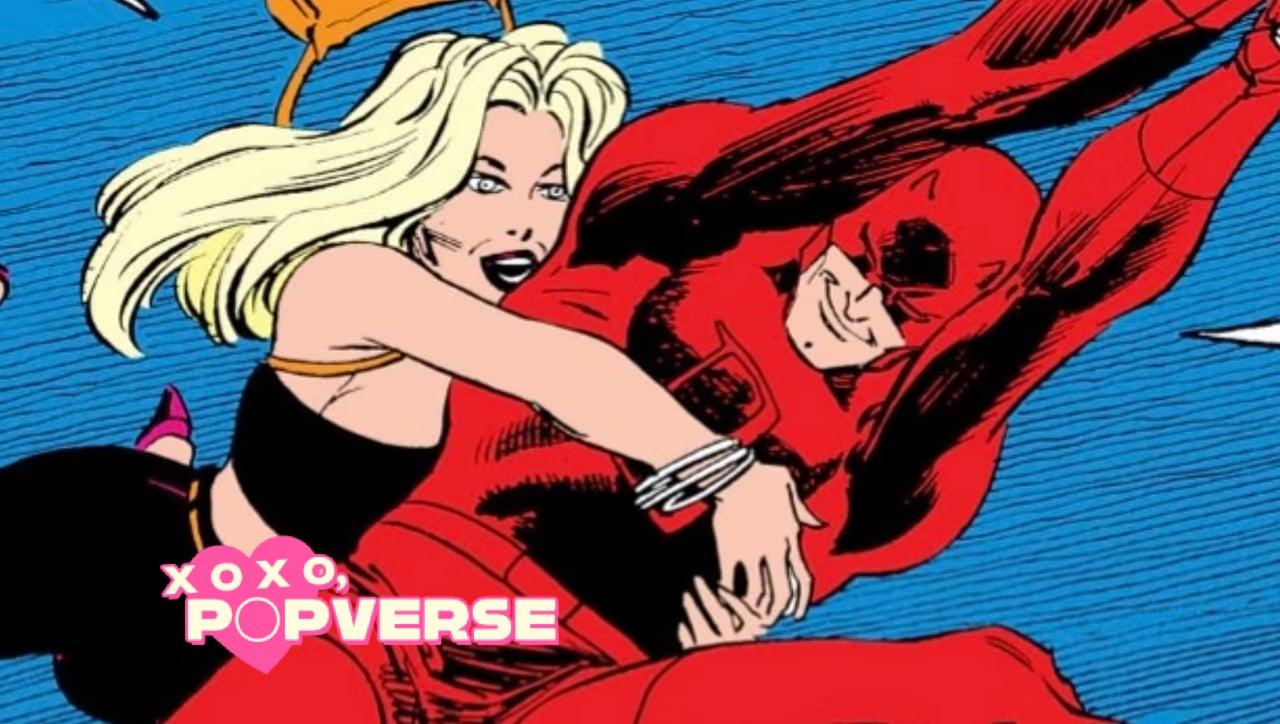
Welcome to XOXO, Popverse! Our Valentines gift to you this year is a week-long celebration of all things love and romance in pop culture, from our favorite couples to which superheroes would make the worst dates. (It's the X-Men.) Find our love notes to you right here.
Today, it's nearly impossible to talk about Daredevil and Thor from Marvel Comics and not also bring up the romances they've had over the years. As the Netflix Daredevil show and the MCU quickly established, Matt Murdock and Thor (whether in his godly form or his more frail, human Donald Blake identity) are popular with the ladies - and for good reason! They are adoring, protective, well-spoken, charming dudes with physiques that fall somewhere on the Dorito Bod matrix. Green flag material. It's even a part of Thor's current life as a human named Sigurd Jarlson in The Mortal Thor by Al Ewing and Pascal Ferry.
What's more interesting about both of these characters, however, is how Silver Age Marvel Comics established this romantic baseline for Daredevil and Thor while also highlighting the fact that both characters had disabilities. (To address the elephant in the room real quick, yes, Thor was originally a disabled doctor named Donald Blake when he was initially created by Jack Kirby. Donald used a cane to help him walk, and by slamming the cane into the ground, he could transform into the God of Thunder.)
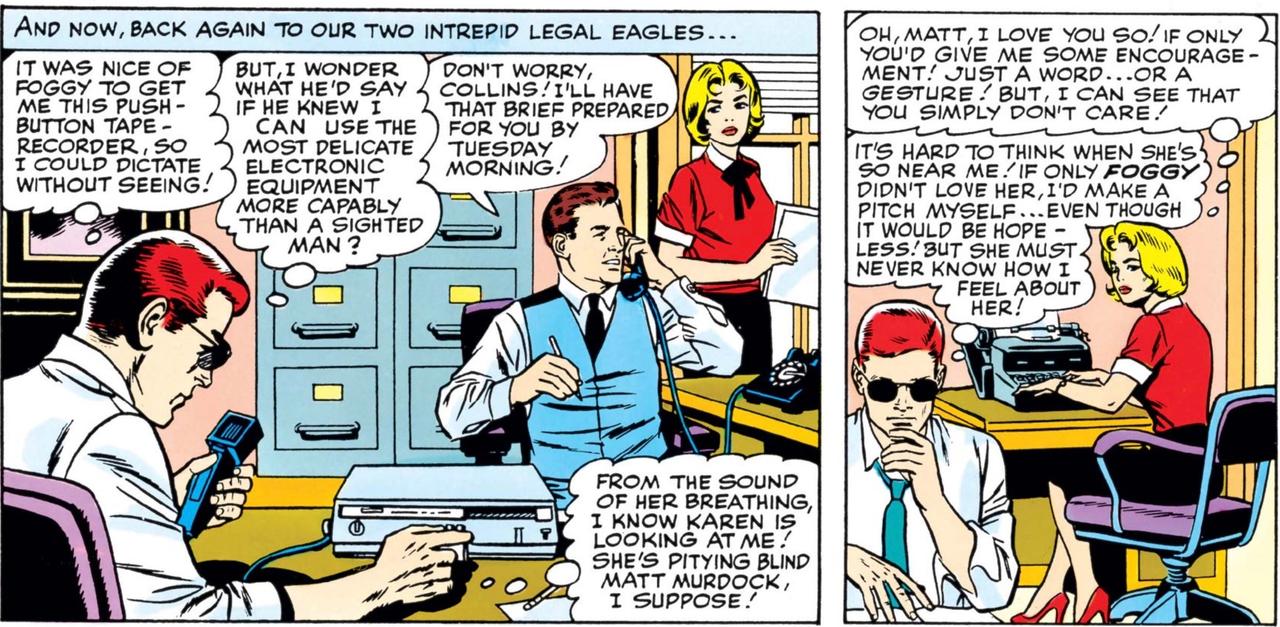
Both Thor and Daredevil were unusual in 1960s comics - and in 1960s pop culture more widely - because they defied stereotypes of disabled people being asexual, unattractive, or incapable of being in romantic relationships with other people, disabled or otherwise. Even though the women around them were very aware of both men's disabilities, they still pined for them, and vice versa. In that sense, Thor and Daredevil weren't shut out of the "yearning via thought bubbles" romantic conventions of Silver Age Marvel Comics, seen in contemporary books like The Amazing Spider-Man and X-Men. For Daredevil in particular, the romantic life ushered in in his early comics set him up to become one of pop culture's most well-rounded disabled characters. I see a lot of myself in Daredevil, in part, because of the heartbreak, grief, and loves he's had over the years.
Before I go any further, it should be stated that during the 1960s, the bar was in hell when it came to disability representation in American comics. And indeed, when I began my journey of reading every issue of Daredevil, I guffawed when he was called things like "The Sightless Adventurer" in the comics' narration. Personally, I don't think there was anything malicious behind these nicknames for Daredevil, but they're certainly phrases we wouldn't use today.
Likewise, Donald Blake is described as "lame" because he has trouble walking, a term that can feel charged to some disabled readers because of its negative connotations. Just because these early comics subverted expectations of disabled people doesn't make them free of being products of their time.
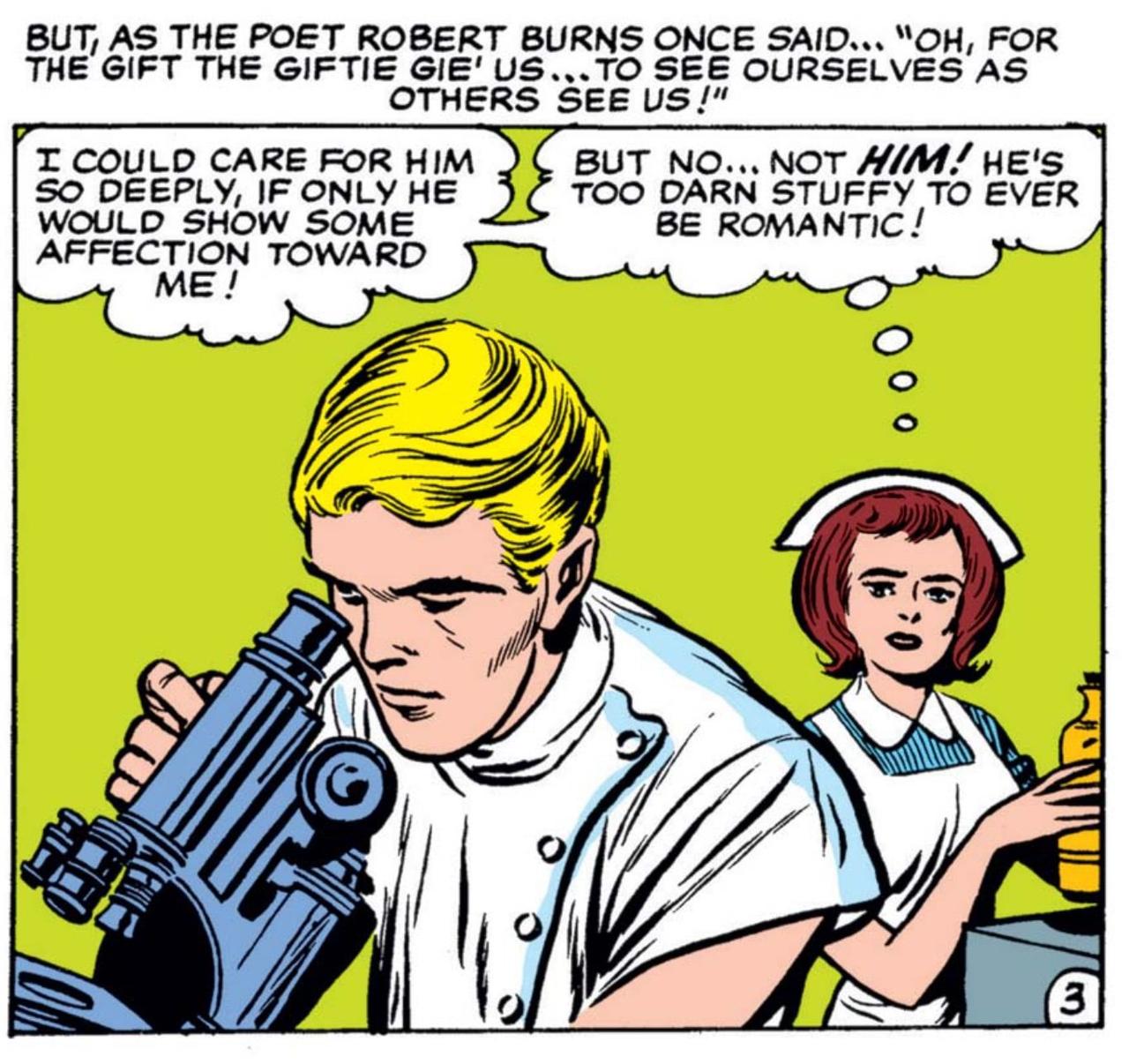
This is precisely what makes analyzing early Daredevil and Thor books so compelling: you can see the other characters grappling with how the leading man is both attractive and disabled. While space aliens and unstable molecules and mutants populated the Marvel Universe, characters like Jane Foster (initially called Jane Nelson) and Karen Page weren't strangers to the real world's perceptions of disabled people as "lesser." For instance, in Daredevil #4, Karen eyes a dapper Matt and thinks to herself, "Mr. Murdock is so handsome... so capable... It's hard to believe he's blind!" Here, Karen isn't put off by Matt's blindness, and her infatuation with him has led to her reckoning with her perceptions of blind people.
Of course, Daredevil and Thor are fictional superheroes. Matt Murdock's sensory abilities are far higher than any blind person's would typically be in our world. Me slamming my cane into the earth at a comic con isn't going to magically give me long blond hair, a sick outfit, and rid my body of autoimmune disease (though I will admit, I've never tried doing this). But exceptionalism is at the heart of the superhero genre to begin with. It's refreshing that, for once, being disabled marked the beginning of a story shared with the public, instead of the end.
Early issues of both Daredevil and The Mighty Thor are available to read on Marvel Unlimited.
Interested? Here's where to find your closest local comic store, courtesy of Sweet, and here's a guide to how (and where) to read comics online. If you're looking for the best comics in recent memory, check out the Eisner Awards winners and the Harvey Awards nominees. And if you like free comics, here's everything we know about Free Comic Book Day 2027.
Follow Popverse for upcoming event coverage and news
Find out how we conduct our review by reading our review policy
Let Popverse be your tour guide through the wilderness of pop culture
Sign in and let us help you find your new favorite thing.






Comments
Want to join the discussion? Please activate your account first.
Visit Reedpop ID if you need to resend the confirmation email.