If you click on a link and make a purchase we may receive a small commission. Read our editorial policy.
Marvel's heroes costumes are fantastic, right down to the molecular level
Unstable molecules are the secret to what keeps Marvel's characters from going nude anytime they use their powers


Popverse's top stories
For a fictional reality filled with impossible beings and heroes (and villains) with almost unimaginable abilities, perhaps the greatest invention in the Marvel Universe is an accidental by-product of a publishing reality that no-one really gave that much thought to in the first place. Which is why, in this week’s Marvel-ous — the column where we celebrate the small things that we love so much about Marvel, in comic books, movies, or any media whatsoever — we’re celebrating unstable molecules.
What, some might be asking, are ‘unstable molecules’? In Marvel comic book canon, they’re officially a synthetic molecule responsive to specific energy and matter it comes in contact with, mimicking the properties of said energy and matter. What that means in practice is that unstable molecules can, essentially, be programmed to have multiple purposes, whether it’s data storage, camouflage, or… well, making sure that your clothes do what you want them to in important everyday situations.
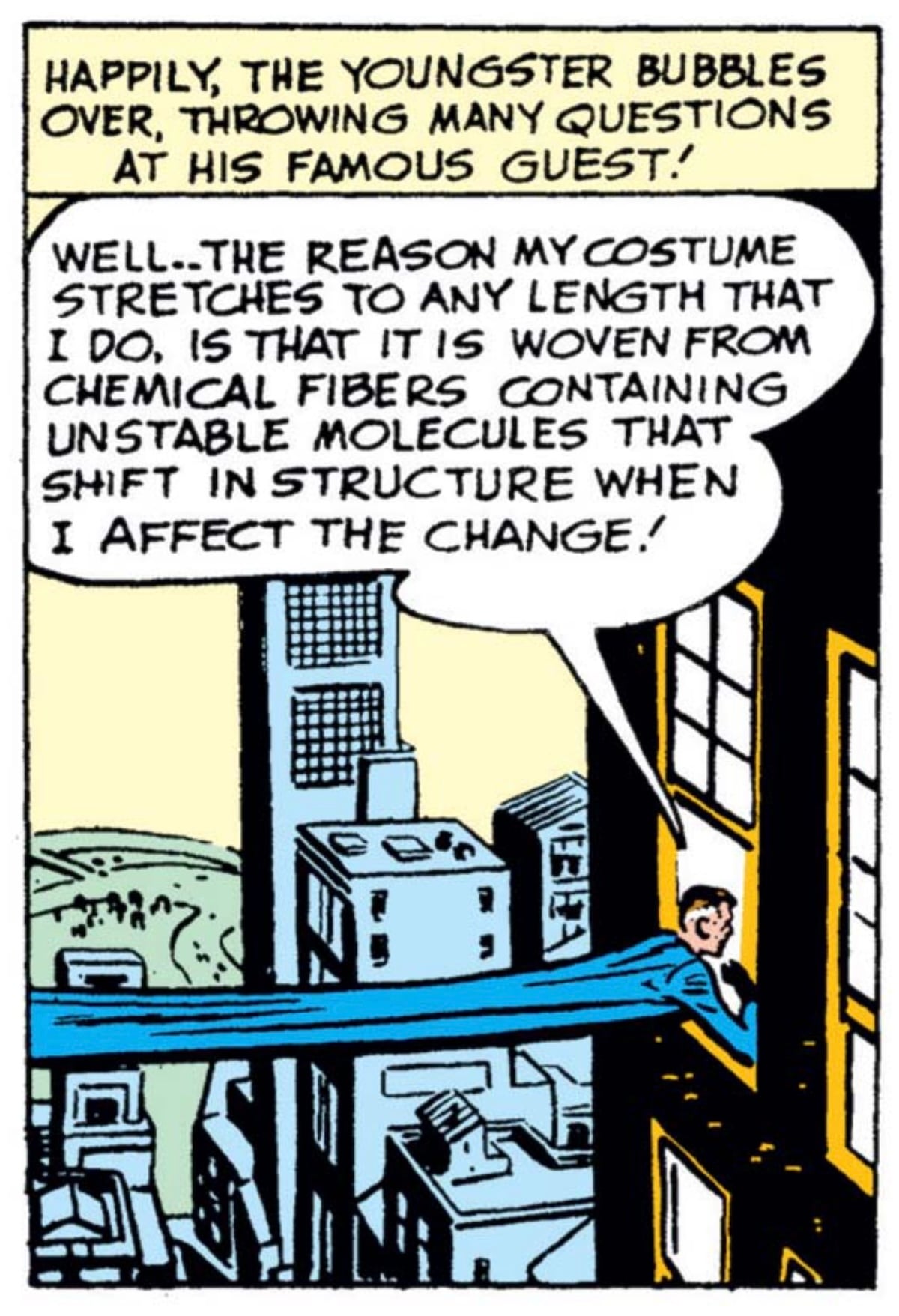
It’s that last part that’s behind the secret origin of unstable molecules as fans know them today. Inside the fictional Marvel Universe, they were the creation of the Fantastic Four’s Reed Richards, yet more evidence of that man’s specific, casual genius. In the real world, they come from the gestalt creative mind of Stan Lee and Jack Kirby, who needed a speedy explanation for a fan question that kept being asked in the earliest days of the Marvel Universe: why do the Fantastic Four’s costumes act the way they do?
It is, to be fair, not the worst question: the Fantastic Four, after all, include members who go invisible, burst into flames, and stretch to unlikely lengths without warning, and their clothes somehow managed to do exactly the same thing. For Marvel’s competitors DC, such events could be — and often were — explained away with handwaving about alien materials, magic, or mysterious chemicals that had treated specifically their superhero uniforms, but for the Fantastic Four, it seemed as if all of their clothes knew just what to do, leading some fans to ask… well… why?
The real answer was, of course, “because no-one wanted to publish naked superheroes and get pulled from the stands as a result,” but to state that so bluntly would be to give the game away and ruin the illusion for readers. Even if the question is somewhat persnickety in the first place — I’m reminded of comic writer Grant Morrison’s response to such questions, some years ago: “Who pumps the Batmobile’s tires? It’s a fucking made-up story. No-one pumps the tires!” — it still required a response, and so “unstable molecules” were brought into service. Why did the FF’s clothes behave like their wearers? Because Reed Richards is a genius, that’s why.
In the years since their debut in 1962’s Fantastic Four #6, everyone in the Marvel Universe seems to have adopted them in their everyday wear. Let’s think of it as a sign not just of Reed’s smarts, but his generosity — and the usefulness of an all-purpose get-out-of-actually-explaining-things explanation for all manner of problems. Who doesn’t love science when it can be this ridiculous and useful all at the same time?
Find yourself in the Marvel U with our MCU watch order, best Marvel Comics list, all of the MCU movies ranked, and our weekly column on all things Marvel - Marvel Matters.
Follow Popverse for upcoming event coverage and news
Find out how we conduct our review by reading our review policy
Let Popverse be your tour guide through the wilderness of pop culture
Sign in and let us help you find your new favorite thing.













Comments
Want to join the discussion? Please activate your account first.
Visit Reedpop ID if you need to resend the confirmation email.