If you click on a link and make a purchase we may receive a small commission. Read our editorial policy.
Why Charlie Brown never wins the red-haired girl — and why she hoped he would
Failure is part of Charles Schulz's formula for the iconic Peanuts newspaper strip, but the inspiration behind its famous unrequited love wished there could be a happy ending

Welcome to XOXO, Popverse! Our Valentines gift to you this year is a week-long celebration of all things love and romance in pop culture, from our favorite couples to which superheroes would make the worst dates. (It's the X-Men.) Find our love notes to you right here.
For all that audiences might want their favorite characters to head towards happy endings, one iconic unrequited pop culture romance will forever be unfulfilled — because its creator knew that unhappy endings are something that can be more meaningful to fans than the alternative, sometimes.
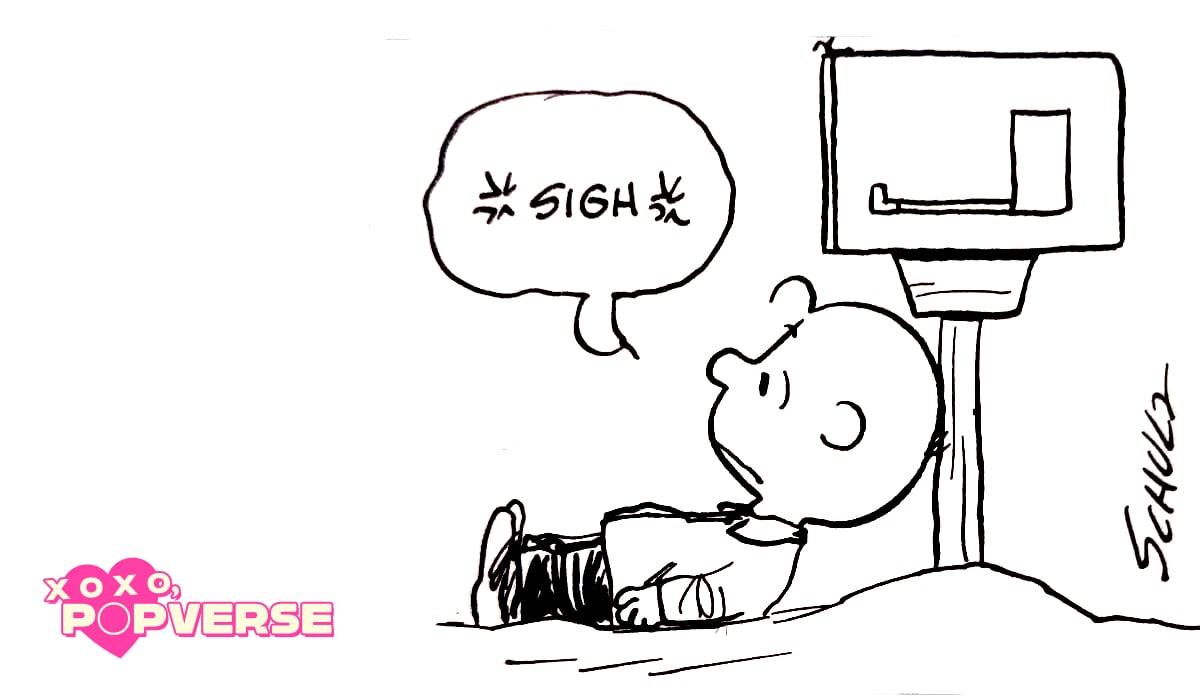
Peanuts is a strip filled with unrequited love, whether it’s Lucy’s pursuit of the seemingly disinterested Schroeder, Linus being the frustrated “sweet baboo” of Charlie Brown’s little sister Lucy, or Charlie Brown’s own unrequited feelings for the Little Red-Haired Girl who doesn’t even know he exists — a character (and situation) based on his own experience with a romance that didn’t quite work out. “I can think of no more emotionally damaging loss than to be turned down by someone whom you love very much,” he shared in the 1995 book Good Grief: The Story of Charles M. Schulz.
That said, Schulz was being very intentional in ensuring that none of the romances in Peanuts would ever come to fruition. As he once explained, “There’s something funny about unrequited love – I suppose it’s because we can all identify with it.”
It’s in keeping with Schulz’s overall approach towards Peanuts, which he summarized in a 1985 interview: “All the loves in the strip are unrequited; all the baseball games are lost; all the test scores are D-minuses; the Great Pumpkin never comes; and the football is always pulled away.” What makes Peanuts magical is that, despite the lack of obvious ‘wins,’ the characters remain optimistic in their own way — something else that we can all identify with, really.
If there’s a happy ending for this story, it might be this: Schulz’s inspiration for the Little Red-Haired Girl was someone called Donna Mae Johnson, whom he worked alongside in the 1940s and dated briefly. When Schulz announced his retirement in 1999, someone thought to ask her what she thought about the strip. “I’d like to see Charlie Brown kick that football, and if he gets the little red-haired girl, that's fine with me,” she replied.
Want more Snoopy? We've got you covered right here.
Follow Popverse for upcoming event coverage and news
Find out how we conduct our review by reading our review policy
Let Popverse be your tour guide through the wilderness of pop culture
Sign in and let us help you find your new favorite thing.








Comments
Want to join the discussion? Please activate your account first.
Visit Reedpop ID if you need to resend the confirmation email.