If you click on a link and make a purchase we may receive a small commission. Read our editorial policy.
Oral History: The story behind Spider-Man’s Brand New Day and Marvel’s radical Amazing Spider-Man overhaul
In 2008, Marvel turned its flagship book Amazing Spider-Man into a TV-style experiment, with rotating writers, weekly issues, and the creative chaos that defined a new era of Marvel storytelling

Popverse's top stories
- The Amazing Digital Circus's Sean Chiplock credits the explosion of indie animation to companies like Warner Bros. & Disney treating their shows so poorly
- X-Men, Spider-Man, and more get absolutely dark, monstrous, and ultimately bloodthirsty in new Marvel Comics initiative
- The Boys S4 left Karl Urban restless, so he signed up for Mortal Kombat II
In 2008, Marvel Comics' Amazing Spider-Man took a big swing.
The long-running Marvel superhero title tried a new format, replacing its one writer/one artist system with a TV-style format, with a group of rotating writers and artists working together to produce a new issue each week. The rotating team of creators, known as the Brain Trust and later the Web-Heads, was made up of some of the best writers and artists in the industry, who each took turns crafting stories. Marvel also took the bold step of switching the title’s publishing schedule to at least three times a month - sometimes even more with specials and spinoffs. This new direction was called 'Brand New Day.'
This was done during a time when the comic industry was plagued with numerous delays (not to mention a nationwide recession). However, Amazing Spider-Man defied expectations and kept its thrice-monthly schedule during the entirety of the 'Brand New Day' era. Oh, and they also had the honor of publishing the highest-selling comic book of the decade (thanks to then US President Barack Obama).
Amazing Spider-Man's 'Brand New Day' era was more than a new direction; it was an experiment. It was an attempt to try a television-style approach - with a writer's room at the center of it - for a superhero title. The result was 101 memorable issues published from 2008 to 2010 (in addition to specials, miniseries, and spinoffs). While the 'Brand New Day' branding only appeared on the first few months of the publishing initiative, Marvel, its various creators, and the fans have come to refer to the entire three-times-a-month writers' room era as 'Brand New Day.'
This is the story of one of Spider-Man’s riskiest moves. This is the story of Brand New Day.
The day before Amazing Spider-Man's 'Brand New Day'
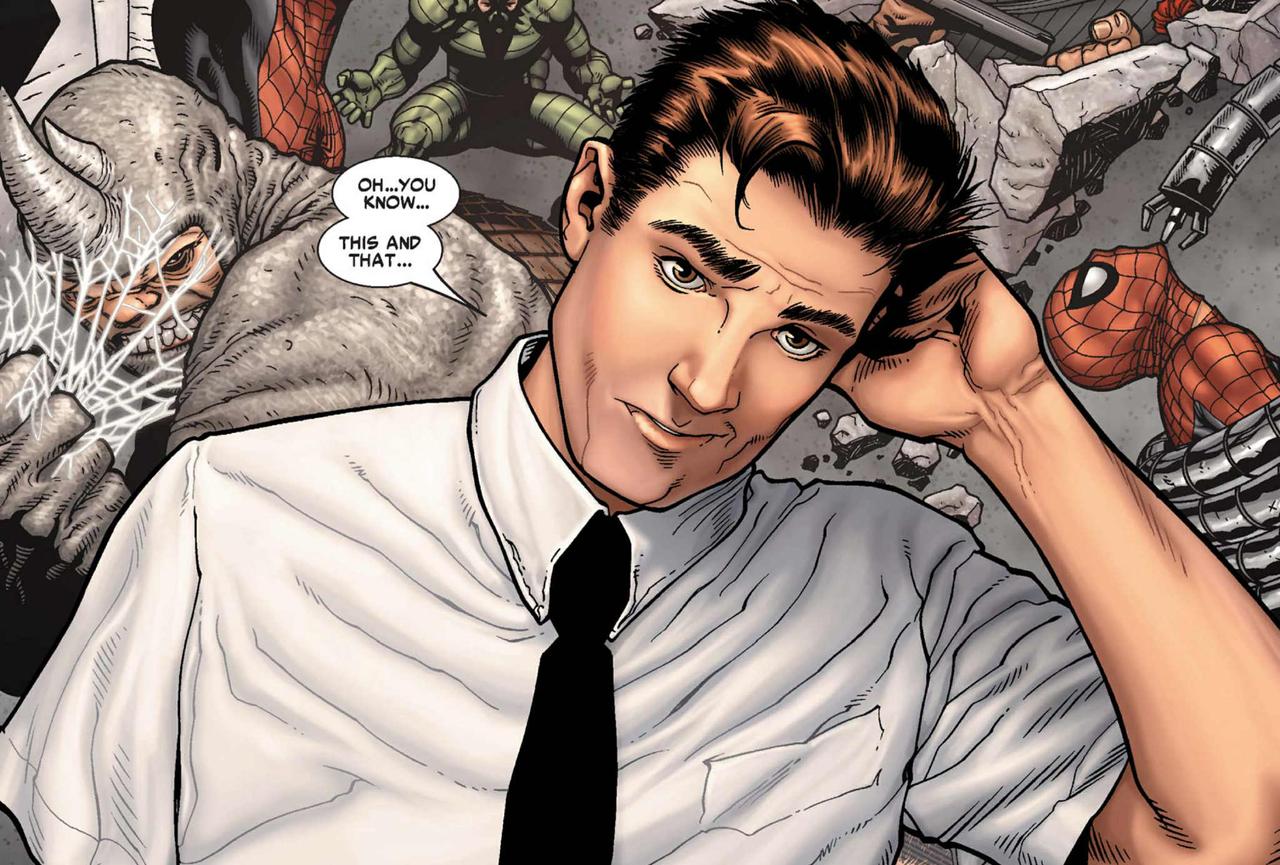
'Brand New Day' happened for a simple reason – sales. While Spidey’s main adventures were published in Amazing Spider-Man, readers made it clear that they wanted Spidey more than once a month. As a result, Marvel has published numerous Spider-Man spinoff titles over the years, including Spectacular Spider-Man, Web of Spider-Man, Peter Parker: Spider-Man, Spider-Man Unlimited, and numerous others.
In 2006, Spider-Man had three monthly titles: Amazing Spider-Man, Sensational Spider-Man, and Friendly Neighborhood Spider-Man. Tom Brevoort was serving as executive editor and overseeing the Spider-Man titles, and he began to wonder if there was a way to raise sales.
“My predecessor Axel Alonso was running the Spidey books, and there were three Spider-Man books at the time,” Tom Brevoort tells Popverse. “Amazing always sold the best of the three because Amazing was seen as the real book. The other two books sold better or worse, depending on who was doing them and what the story happened to be that month. But generally speaking, they sold a little bit less, or sometimes a lot less than Amazing Spider-Man. And so, at times, there was a lot of loose talk about the easiest thing to do would be just to make it Amazing Spider-Man all the time. And wow, suddenly you're selling better.”
“One of the first things I did was to go to editor-in-chief Joe Quesada and our publisher Dan Buckley, and say, 'I think we ought to do this three times a month Amazing Spider-Man idea. Rather than having three separate books, I think we should have one, and we should run it with a team and figure out how to do that, and that would be better.' This had been floating in the ether. Because I was going to have to do the hard part of figuring that out, they went along with the idea. On the most fundamental level, it was purely a mercenary idea. If I do three Amazings, that will bring in more revenue than doing an Amazing and a Sensational, and a Friendly Neighborhood."
To make this work, Brevoort needed an editor who could handle a high-profile title and the demanding publishing schedule. Marvel had been trying to poach Steve Wacker from DC Comics for some time, and the Amazing Spider-Man revamp seemed like the perfect opportunity. Wacker had recently served as editor on DC's 52, a weekly series that detailed the ‘missing year’ in the DC Universe between two events. The maxiseries shipped weekly for a year and had a team of multiple writers and artists. If anyone had a template for how to make Spider-Man’s new direction work, it would be Wacker.
“I had worked with Steve,” Brevoort says. “He had been the assistant editor on JLA/Avengers, the DC/Marvel crossover. I met him during that and found him to be pretty excellent. I had one or two unsuccessful attempts over the years of getting him to come over to Marvel. And in this case, the attempt was successful.”
“At the time, Steve was editing 52, DC's weekly book. The mechanics for 52 were very similar to what you were going to need to do a three times a month Spider-Man title," Brevoort continues. "52 had to come out four times a month, and you couldn't miss an issue, and you had to manage a big crew of people. And so, he seemed like somebody that had exactly the skill set that would be necessary to make this all work, and the practical experience with having done it.”
As Marvel began to assemble the new team for Amazing Spider-Man, Tom Brevoort wrote a document detailing his vision for Spider-Man’s new direction. The document, which became known internally as 'The Spider-Man Manifesto,' was later reprinted in The Amazing Spider-Man: Swing Shift Director’s Cut #1 after 'Brand New Day' had begun. The essay is a fascinating behind-the-scenes document that explores how Marvel viewed Spider-Man at the time, and what needed to be done to ‘fix’ the character.
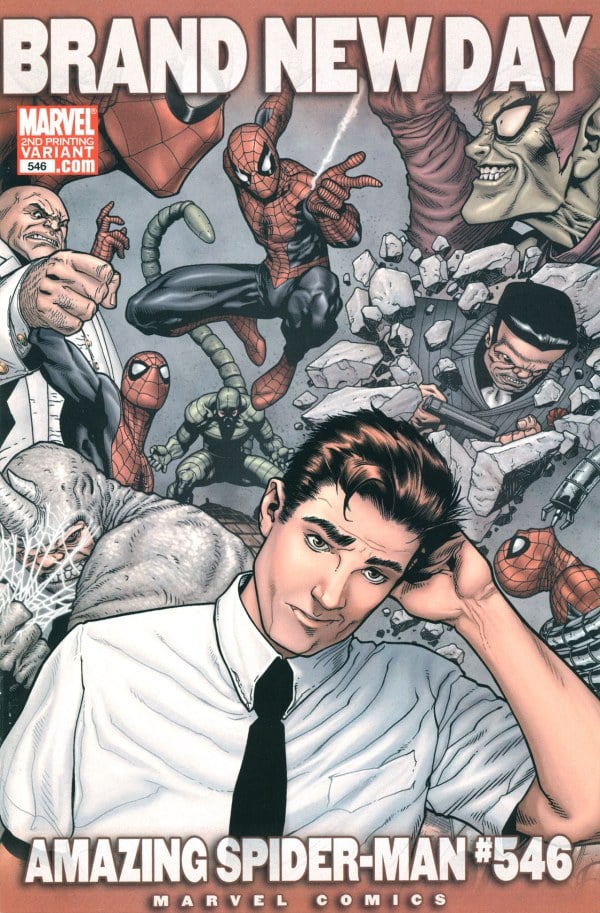
In addition to switching to a new publishing format, Brevoort wanted to use the new direction to give Spider-Man a back-to-basics approach. The new era would be coming off the heels of One More Day, a major turning point for the character (more on that later). In 'The Spider-Man Manifesto,' Brevoort writes how Spidey had moved away from what makes him work as a character, and how it can be fixed. For example, Spider-Man is about Peter Parker and his struggle to balance his double life, while maintaining the soap opera of his personal life.
Brevoort also wrote that Spider-Man’s villains had become watered-down versions of who they once were, and they needed to be rebranded with new purpose and motivation. The document also suggested some storylines that never came to pass, such as Mary Jane returning to New York with a new fiancé and Peter falling into bed with Betty Brant.
“As with most of those documents, none of it was absolute,” Brevoort says. “There was a lot of flexibility in a bunch of it. The document is not intended to be law. The document is intended to be a vector and a starting point. The best idea wins, and things change over time. It was really about setting the table more than anything else.”
Building the Amazing Spider-Man 'Brand New Day' Brain Trust
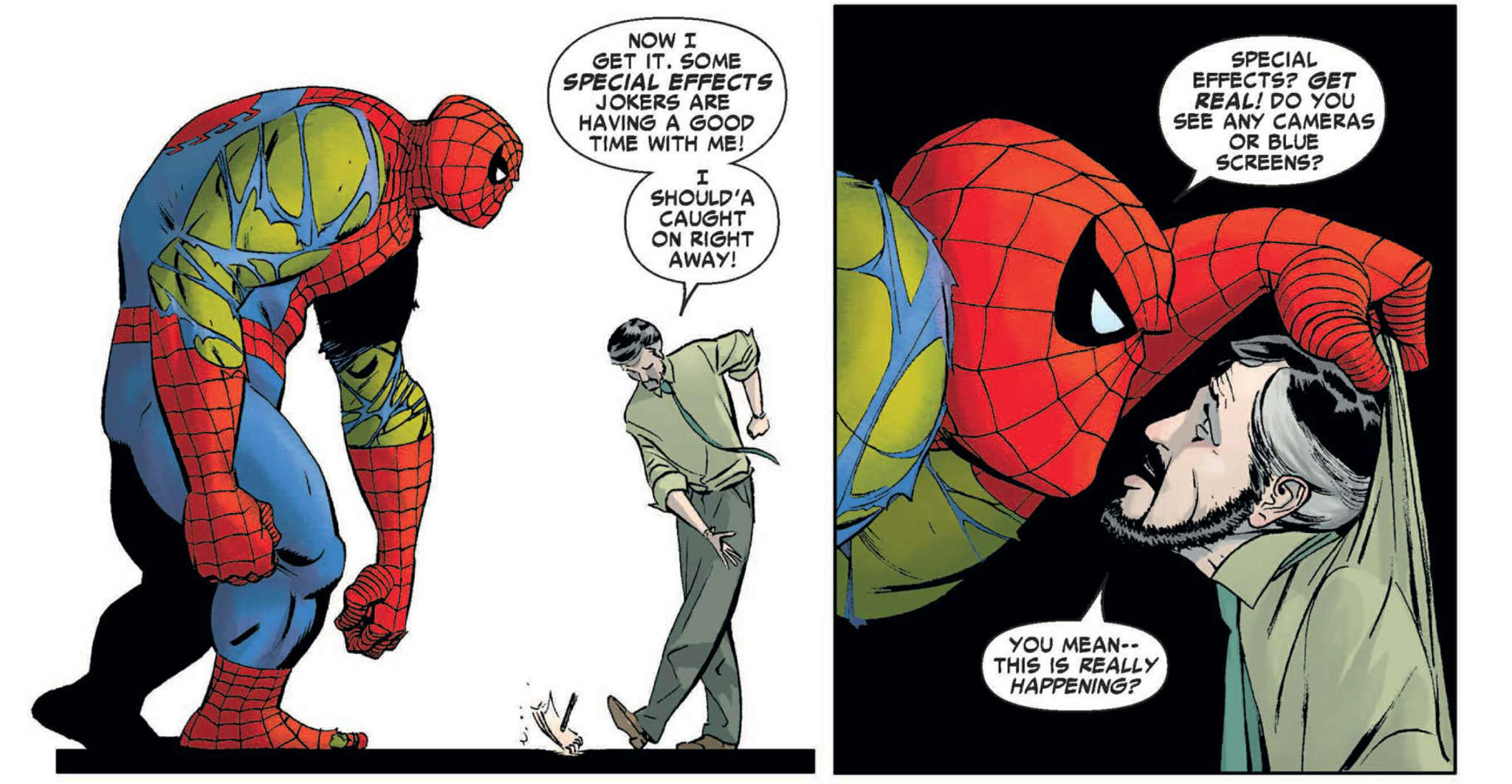
Now that former DC editor Stephen Wacker was on board as the main editor for the 'Brand New Day' era of Amazing Spider-Man, it was time to put together a team of writers. The first wave of writers included Dan Slott, Marc Guggenheim, Zeb Wells, and Back to the Future creator Bob Gale. Mark Waid, Joe Kelly, and Fred Van Lente would join later in the run, in addition to some guest work from Tom Peyer, Roger Stern, and Joe Quesada. The core team was christened as the Brain Trust, but would later be rebranded as the Web-Heads after the first year. Joe Kelly jokes that this might’ve been because some of the writers were afraid the name made them seem pretentious. Since it was clear Brevoort and Wacker would need a lot of help to keep the trains running, Tom Brennan was brought in as associate editor.
Amazing Spider-Man was Brennan’s first major editorial job, so he had no frame of reference for what a typical schedule was. Today, he jokes with Popverse that it’s one of the reasons the intense publishing schedule didn’t break him.
“It was a really interesting way to learn how to edit a comic, because not a lot of other comics were or still are being edited that way. I think of numerous times years after, where I was working in comic book editorial, and I didn't have a book going to press that week. And I’m like, 'What do I do?’” Brennan says.
“Of the four initial writers, I think I hired Dan, and I think I hired Marc Guggenheim,” Tom Brevoort says. “Both of them were in place as part of what would eventually be the Brain Trust team at that point. And there are other people that we were talking about as well, including at least one person who was offered it and declined. By the time Steve came in, those writers were in place. And then Steve was involved along with me and Joe, and everybody in bringing on the other two and the rest of the crew.”
“With Dan, working on Spider-Man was his dream project,” Brennan says. “I think Marc and Zeb were really hot new up-and-comers. And Bob Gale is the kind of person like you put in a room and a million ideas pour out, all of which are like ready-made to be worked on.”
Since Marvel was trying to assemble their own version of a television writers room, they looked to writers who were familiar with that environment, such as Marc Guggenheim - at the time had been a writer on TV shows such as Law & Order, The Practice, and CSI: Miami.
“I got an email or a phone call from Tom Brevoort basically saying, 'Hey listen, we're planning on doing something with Spider-Man. We're putting together something sort of like a writers room. You're very familiar with writers rooms,'” Guggenheim says.
Mark Waid was brought on by Wacker, as the two worked together on the aforementioned DC weekly series 52.
“Editor Steve Wacker approached me,” Mark Waid says. “we'd had a lot of success and a lot of fun working together at DC Comics, so when he made the shift over, we stayed in touch.”
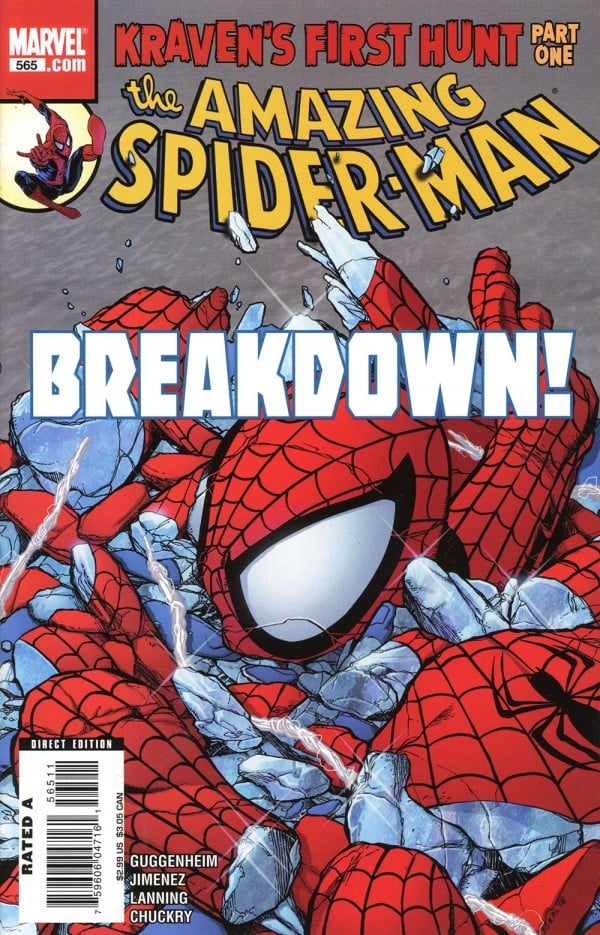
The first four arcs of Amazing Spider-Man's 'Brand New Day' era were penciled by Steve McNiven, Salvador Larroca, Phil Jimenez, and Chris Bachalo. Over 'Brand New Day'’s 101 issues, artists like John Romita Jr., Mike McKone, Barry Kitson, and many others would contribute.
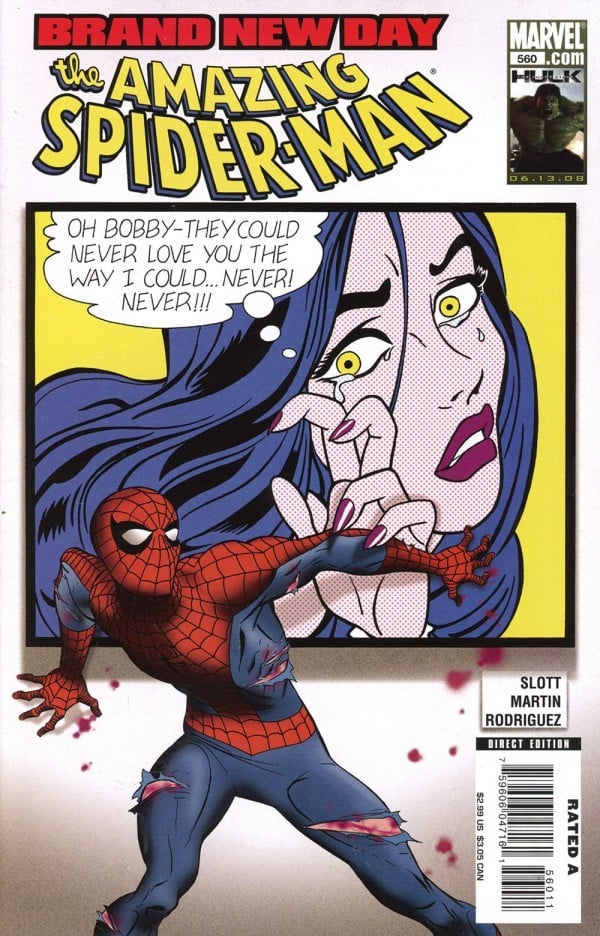
Today, Marcos Martin is considered one of the best artists to work on Spider-Man, but prior to his Spidey debut in Amazing Spider-Man #559, Marvel wasn’t sure if his style was write for the title. Wacker went with his gut and convinced editorial that Martin’s style not only suited Spider-Man, but that he would be a great asset to the book.
“I know Steve had to fight a little bit to get Marcus Martin put on that book,” Tom Brennan says. “Not because people didn't like Marcos or anything, but there was anxiety about whether or not his style, which was a little more offbeat at the time, and people weren't sure if Amazing Spider-Man was the right place to put him. Steve fought and won that fight. And after the fact, everyone who said, 'Oh, I don’t know about this,’ made a point to come tell him they were wrong, he was right. Marcos is perfect.”
The day 'One More Day' began in Amazing Spider-Man
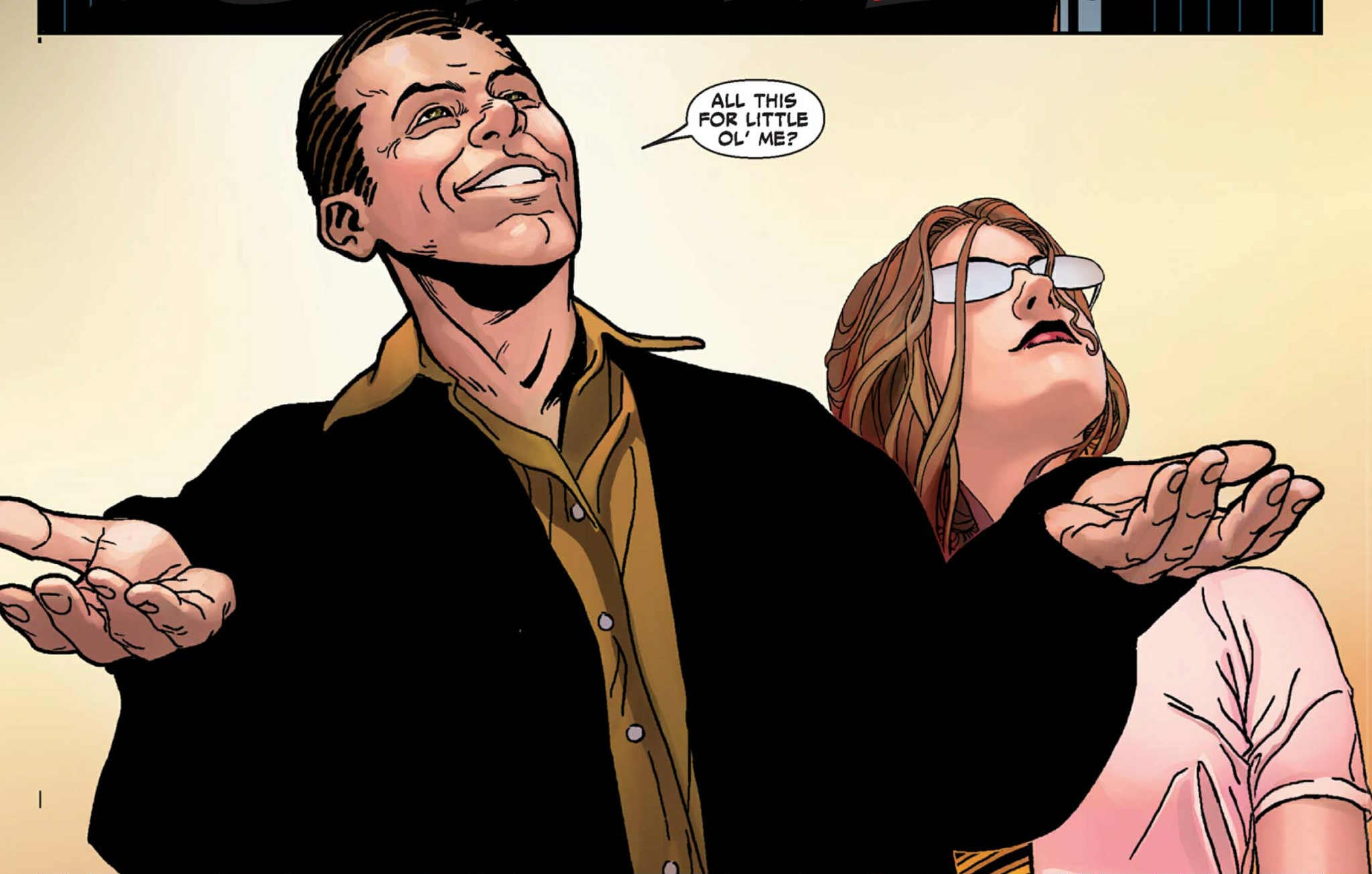
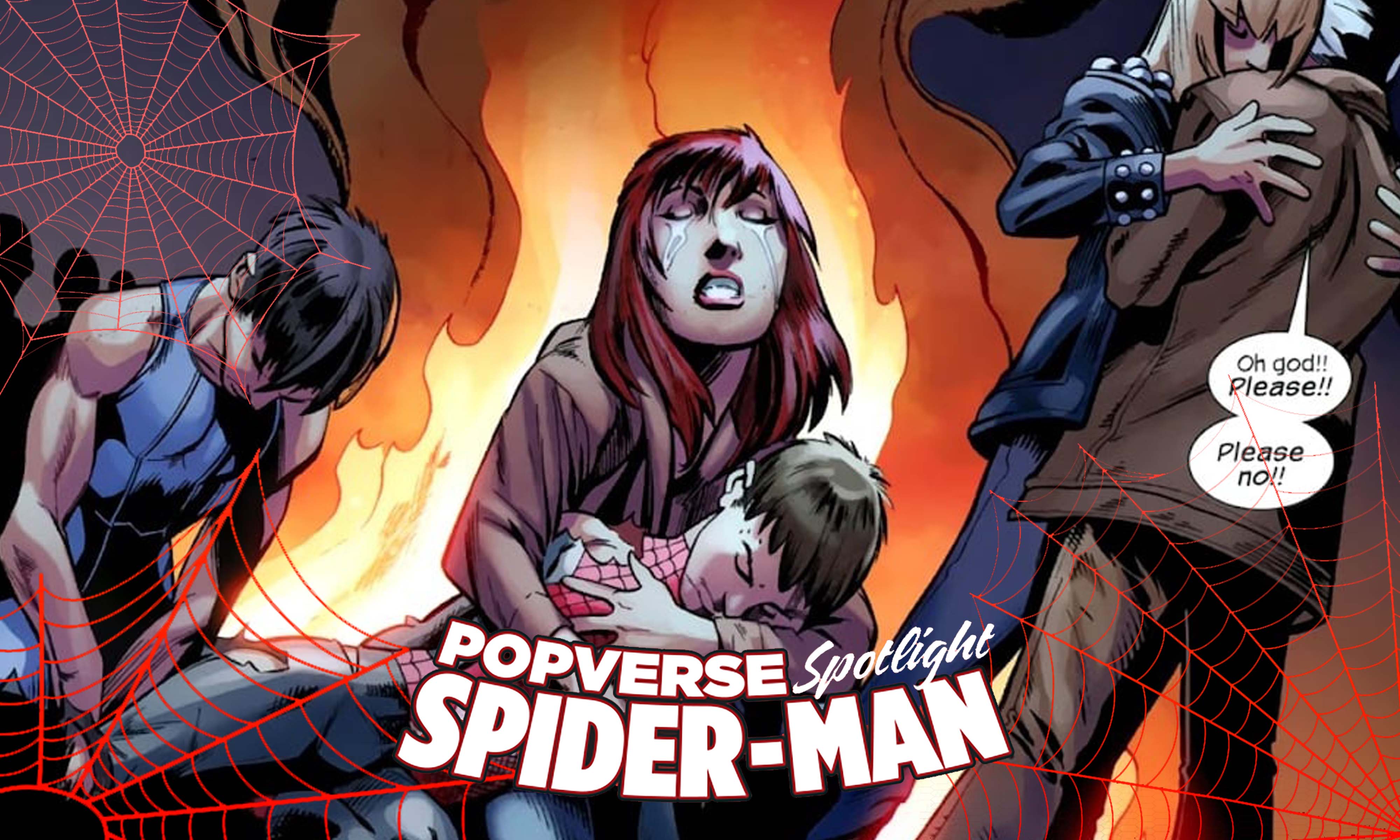
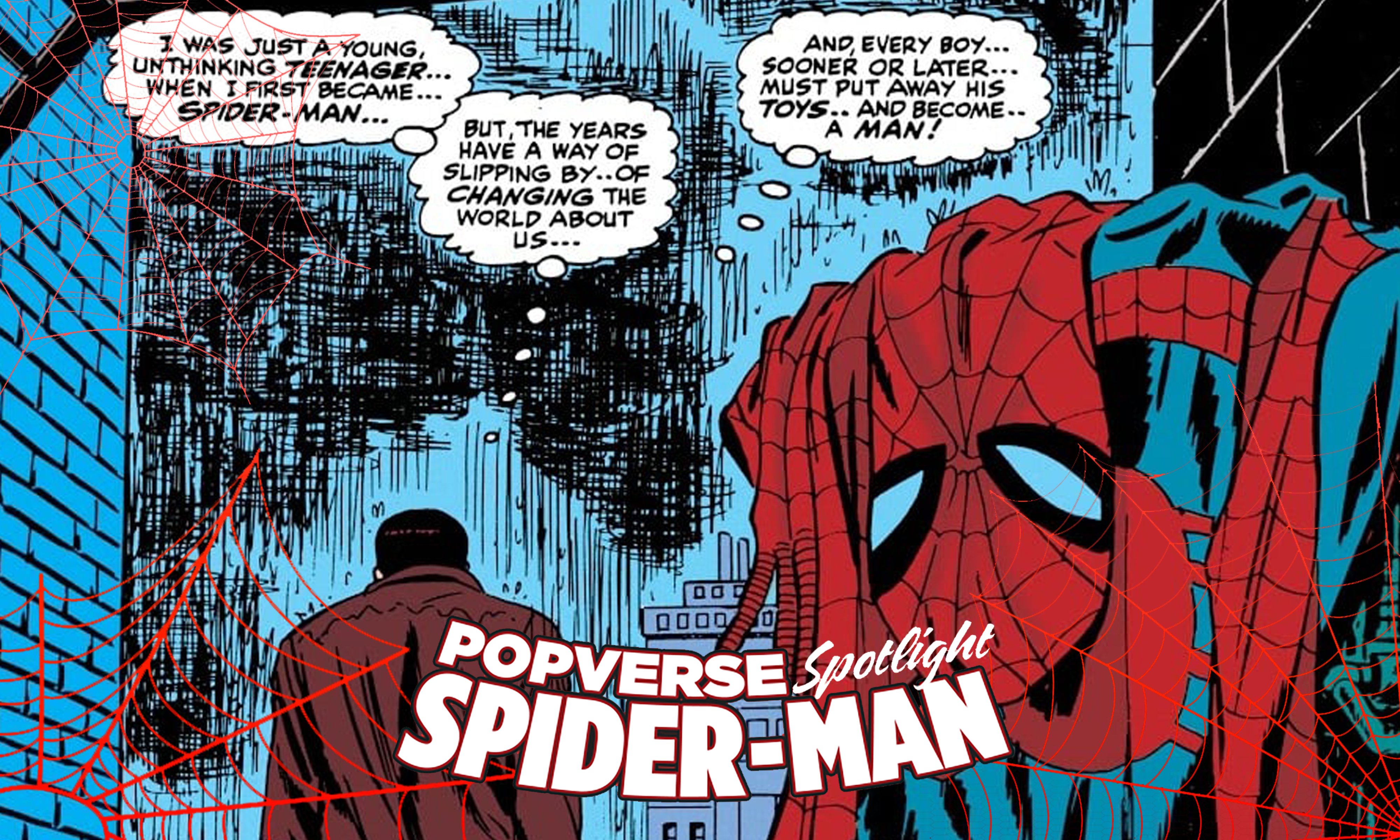
It’s impossible to talk about 'Brand New Day' without talking about One More Day. The 2007 storyline served as the conclusion to J. Michael Straczynski’s six-year Amazing Spider-Man run. The storyline ends with Peter Parker and Mary Jane’s marriage being erased from the timeline, something Marvel had their eye on for a while.
“It's not just the marriage that was aging Peter up,” Guggenheim says. “It was a marriage to a supermodel. He's suddenly this adult with all these responsibilities. I think Ultimate Spider-Man, Hickman's run, proves this, there's something interesting about a married Peter Parker. But I understood the counterargument, which is that Peter being married aged up the character beyond what Marvel was interested in doing with him.”
The marriage erasure was caused by the Marvel demon known as Mephisto, who used his cosmic powers to erase the union as part of a deal with MJ and Peter to save Aunt May’s life. Some of the Brain Trust writers knew that some readers wouldn’t like the storyline and were nervous about following it.
“Our first summit was all of us in a room together. And it began with Joe Quesada taking us through what became known as 'One More Day,'” Guggenheim says. “We knew that 'One More Day' was going to take away the Peter/MJ marriage. But what we did not know was how it was going to get done. And I think after Joe finished pitching, I think we all sort of looked at each other going, 'What did we get ourselves into?' Because I think we instinctively knew that it was not going to be well received by the fans.”
In addition to erasing Peter and Mary Jane’s marriage, the end of One More Day would also feature the return of Harry Osborn, Spider-Man regaining his secret identity (he had unmasked during the Civil War storyline), and the return of his mechanical web-shooters (he had been using organic web-shooters for the past few years). One More Day didn’t give an explanation for some of these developments, opting to tell those stories at a later date.
Wacker and the Brain Trust decided that if 'Brand New Day' wanted to stand on its own, it couldn’t be burdened by the shadows of its past. That meant that the classic villains were left off the board for some time, Mary Jane would stay away for a while, and the mysteries from One More Day would be tabled for later.
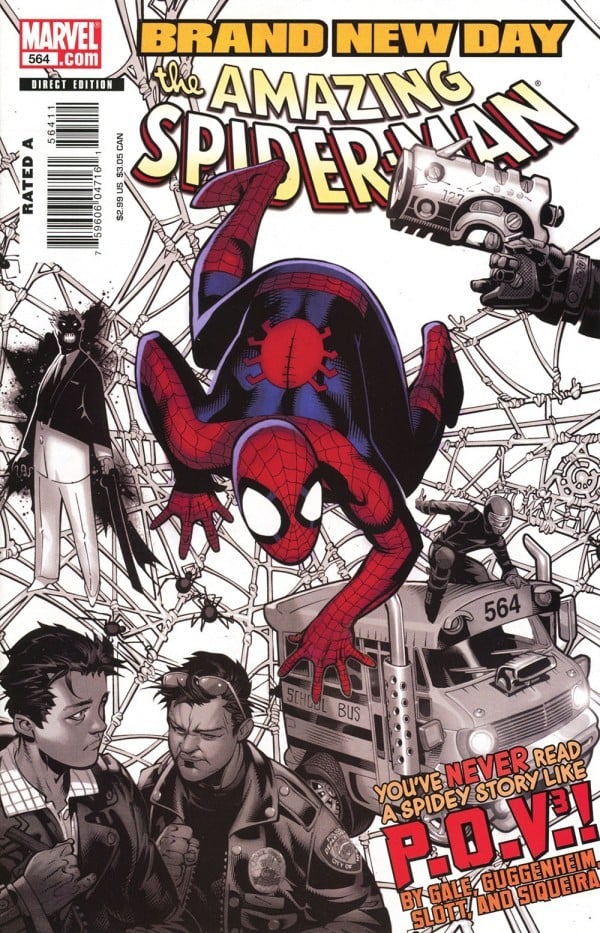
“The idea was, don't worry about feeling you need to explain that,” Brennan says. “The desire was to start in the middle. Let's trust the audience to be patient, to understand that if you don't know who all these new friends of Peter Parker are, but at the same time, you can put together the kind of relationship they have, and, you know, we'll get there.”
“I think we all kind of had the same collective instinct, which is, let's not worry about [the bargain with Mephisto] right now,” Guggenheim says. “We have bigger fish to fry. We have to set up this new status quo. I think the way you do that most effectively is by looking forward rather than backwards. It would not feel like a 'Brand New Day, 'if we were talking about One More Day.”
“There was an awareness that Lost wore out everyone's welcome in the sense that you could only keep mysteries dangling for so long before the fans start to turn on you. We were certainly aware of that, but how do you move forward if you're looking backwards?”
Harry Osborn’s return was explained in Amazing Spider-Man #581, while the nature of Peter’s deal with Mephisto and the restoration of Spider-Man’s secret identity was explored in the Quesada-penned One More Day sequel One Moment in Time, which ran in Amazing Spider-Man #638-641.
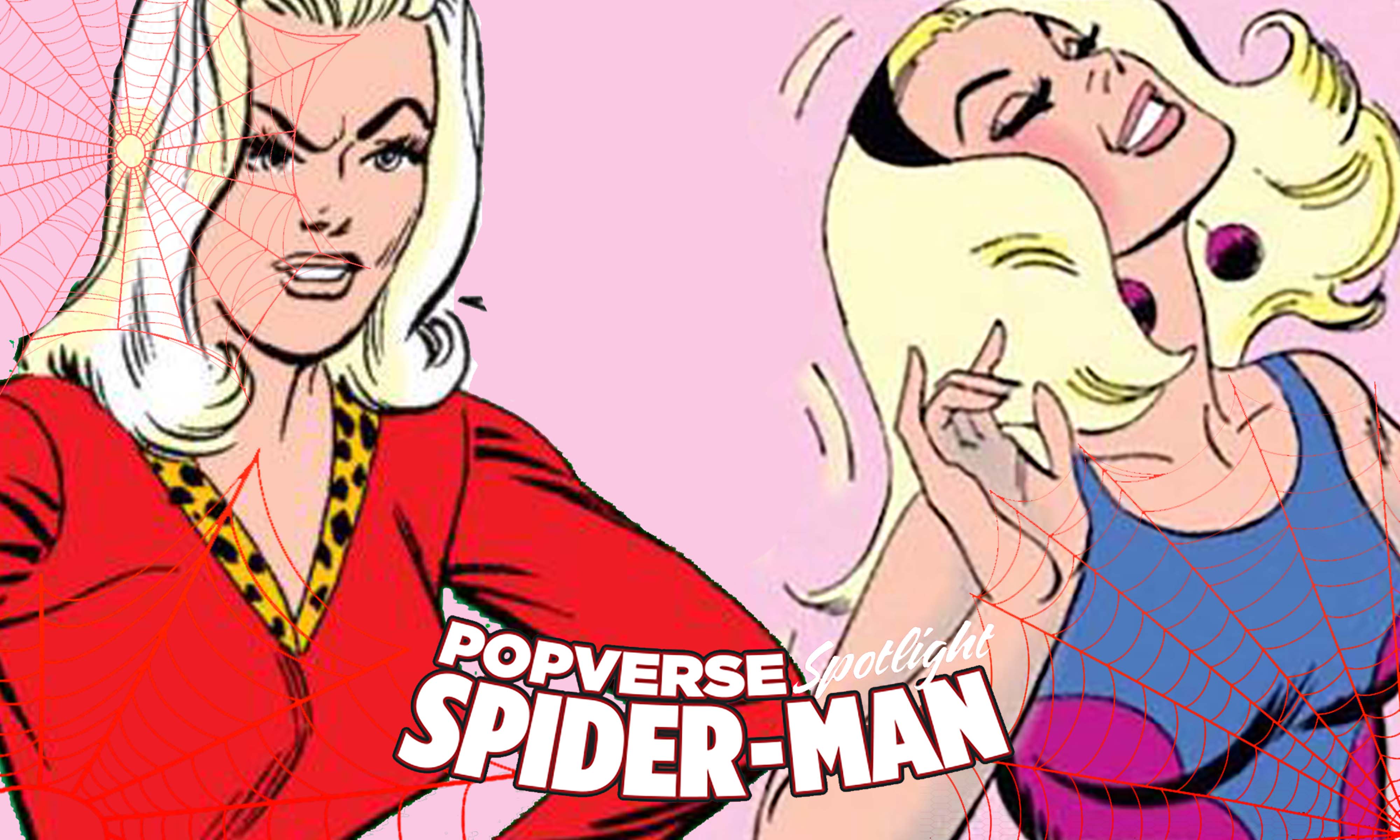
Straczynski’s original outline for 'One More Day' also featured the return of Gwen Stacy.
“We knew that when we were going to inherit the titles, a couple of things were in place,” Brevoort says. “Spider-Man wasn't going to be married anymore. And then as part of that story, Joe and Joe Straczynski had intended to bring back Harry Osborn. And there was some back and forth at the time of, 'Are they going to bring back Gwen Stacy?.' I kind of put my thumb on the scale and said, 'No, don't do that. That's bad.'”
“We wanted to bring in some cast members, and Gwen was one of those cast members that I remembered fondly as a kid,” Joe Quesada told me in a 2010 interview for Spider-Man Crawlspace. “Both JMS and myself were vehement; we wanted to bring her back. We passed this piece of paper around a room of 50 creatives, and we put Gwen, and no Gwen. And we asked people anonymously to check one box. By the time it got back to me, bringing Gwen back had won out by one vote. One single vote. So, we were going to bring Gwen back.”
A few months later, Brevoort approached Quesada and convinced him to keep Gwen in the grave.
“Tom walked into my office, closed the door, and he said, 'It’s a mistake. Bringing Gwen back is a mistake.' And we talked about it. One of the things that he said that was poignant was she’s been dead longer than she was alive in the comic books. So, the only people that really remember her with that sort of affection are fans that have been reading the books for that long a period of time. So, he questioned me and said, is it something that you want to bring back because you emotionally like the character or is it really going to be good for the cast?”
In the end, Quesada concedes that Gwen’s revival would’ve felt too cosmic for a Spider-Man comic.
“It felt a little too magical to bring her back. It felt a little too heavy-handed by Mephisto,” Quesada says. Instead, the supporting cast was fleshed out with new characters, such as Harry Osborn’s girlfriend Lily Hollister, forensic scientist Carlie Cooper, and Vin Gonzales, a police officer who became Peter Parker’s roommate.
'One More Day' gave the Brain Trust a significant advantage as they prepared for their new run – time. OMD was penciled by Joe Quesada, but due to his dual duties as artist and editor-in-chief, the storyline had several delays. This gave Wacker and the Brain Trust some lead time to put some issues in the bank and prepare for the marathon that was ahead of them.
“We had a pretty good lead time as I recall,” Brevoort says. “We started well before 'One More Day' was coming out. We probably had a good six months of run-up time to having to start producing issues that quickly. Coming out of that first summit, we would have set up the first four months, everybody would have kind of known what their stories were, and known, at least in general, what the subplots are, and so forth.”
“Dan, Marc, Bob, and Zeb could all pretty much start writing their three issues. So, every third issue is being scripted and then being drawn by the initial artists, McNiven, Salvador, Phil, and Bachalo. That gives you a certain amount of lead time. But the trick of it is that machine really eats lead time like crazy. Once you get to the point where issues are coming out, it's a wild machine. And Steve was really good at understanding that.”
Assembling the Amazing Spider-Man 'Brand New Day' writers
In the days before Slack and Zoom, the Amazing Spider-Man team planned their stories at in-person summits, which were held in New York every six months or so. The idea would be to brainstorm stories, set the schedule, and coordinate various aspects of the 'Brand New Day' machine.
“We would gather in New York at the Marvel offices every few months. That was where the big decisions were made. In between, there were a million email chains in play and scripts were shared freely,” Waid says.
“During the in-person conferences, we'd lay out general character direction and the big story beats for the upcoming months, then divide them up in the room so we could be working simultaneously on different stories. It was up to Steve, working with us, to make sure that everything flowed smoothly if there were any hiccups.”
“We would set up shop in a conference room in one of the Marvel company's lawyers offices in Midtown, just to be away from the craziness of the bullpen,” Brennan says. “Steve really ran it like a writer's room. He would have the whiteboard up. He would sort of lay out where we were, where we're going, and then have that sort of big blank spot of what we're going to do next. Unlike those broader companywide Marvel summits where there was a lot more direct competition, because you want your book to be number one, they were all part of the same team. There was much more of a spirit of, ‘That's an awesome idea. How can I top that? How can I build on that? How can I take what you're doing and add it to my story to make it all the more powerful?’”
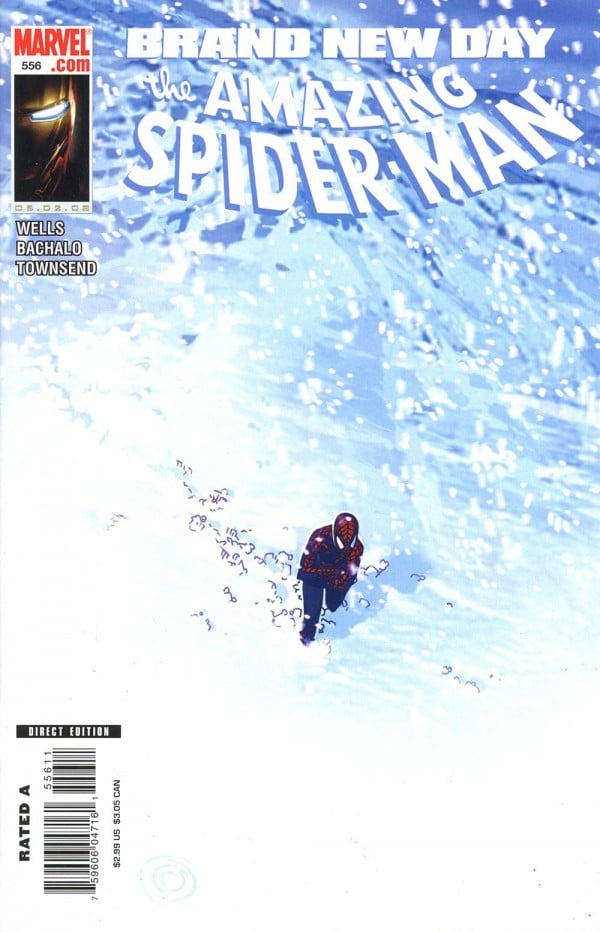
"It tended to be the four writers, myself, Steve, Joe, the assistants at the time, who would have included Tom Brennan past a certain point, and often artists,” Brevoort says. “I think Phil Jimenez was at the first one, because Phil was going to do the Free Comic Book Day issue and be one of the initial artists. And we wanted to get the artist's point of view in as well. It was relatively free form in that nobody had ever really done a thing like this before, and so we had to figure it out. A lot of it was just getting people comfortable with one another and then throwing a whole bunch of ideas onto the table and then starting to block out the stories."
“I feel like they happened every six months, and they lasted a couple days,” Van Lente says. “I was a cheap date because I live in New York City anyway, but they flew out a bunch of guys and put them up in hotel rooms, and we all met usually at Marvel. I think one time we met at ABC. I've never worked on a TV show, but as I understand, it's basically identical to how a TV series works. I guess there was no technical showrunner. I guess technically Steve. We basically pitched our stories, and we all got sort of assigned topics.”
“Dan, on the first day that we were all together, he brought in a mixtape of Spider-Man and gave everybody this CD of all Spider-Man music. And it was a very sweet gesture, and it set a tone. His enthusiasm, I always respected and continue to respect,” Kelly says.
After the summits, the writers would go off and write their respective stories simultaneously. For example, Bob Gale would be writing Amazing Spider-Man #552 at the same time as Dan Slott was writing Amazing Spider-Man #546. This ensured that everyone was able to maintain the calendar and the book could meet its three times a month schedule. In order to make sure subplots and other bits of continuity were maintained, the writers and editors kept in touch with massive email threads.
“We had a lot of ongoing email chains,” Brennan says. “Here's the ideas email chain, and then here's the scripts email chain. When a new script comes in, it usually just goes to the editor, but we made a point to have the Brain Trust on so that everyone could take a look. And then Steve had semi-regular conference calls with the whole teams just to check in.”
“It was all email threads. Long email threads, because this is pre-Slack,” Guggenheim says. “Coming out of those summits, we tried to have very clear marching orders for all of us. Of course, there would be follow-up questions. I give all the credit to Steve Wacker for herding all the cats and making this all make sense. We could never have done it without him. He had the secret sauce in terms of how do you make all these clocks chime at once.”
One challenge with this formula meant that it was hard to change direction if a better story idea came along. For example, if a comic writer realizes that a storyline or plot beat isn’t working out or needs to go in another direction, all they have to do is call their editor and change plans. For Amazing Spider-Man, Joe Kelly can’t change a subplot he’s doing in his issue if Dan Slott has already written the resolution ten issues later.
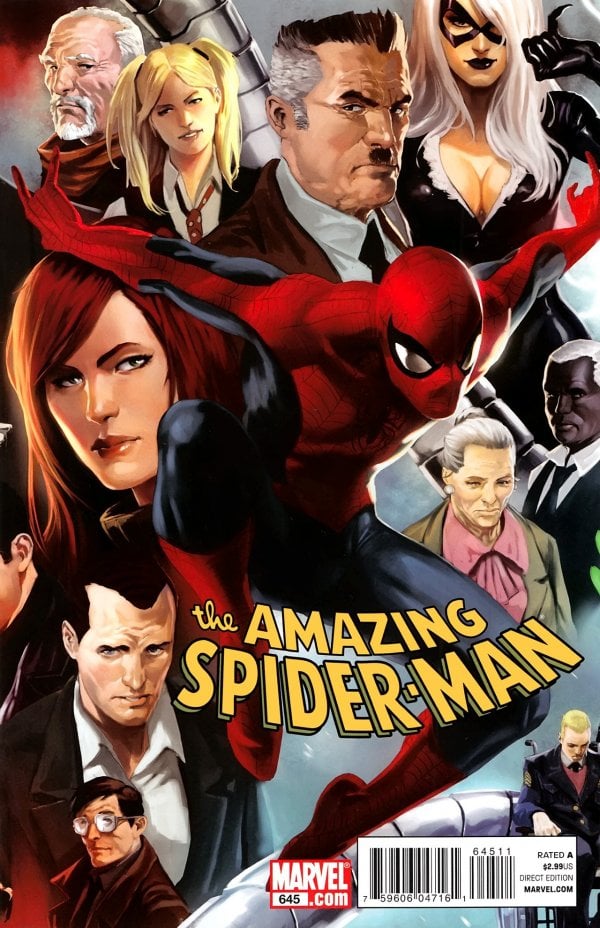
“If they had some last-minute inspiration, the first thing they would do is email the rest of the group and be like, 'Is this okay? if I do this, is that going to screw you up?' I think 'Brand New Day' worked so well because we were all very considerate of each other's time, work, voice, and what we were trying to each accomplish individually,” Guggenheim says.
“Sometimes you get caught up in the heat of something in the room, and it seems really cool, and then you sit down to work on it, and you go like, oh, wait a second, we didn't think of this. When you're sitting with it in the cold light at three in the morning, you're just like, this was not a good idea, and it has to be fixed. And sometimes people come up with something better once they have a chance to dwell with it and bathe in it for a little bit of time,” Kelly says.
However, Kelly and Guggenheim say that Wacker and the other Brain Trust writers were flexible, and thanks to their check-in calls and emails, they were able to change course if a story needed to go in another direction.
“It has to be done with the understanding that if a better idea comes along three weeks later, people are willing to pivot. Just because we agree to something in a room, doesn't mean that it's automatically now and forever,” Kelly says.
“I remember a few email threads,” Van Lente says. “Someone wanted to put Mary Jane in Red Hook, and I think I had too much coffee that day and raised a big stink, because I'm like, 'Mary Jane would not live in Red Hook. It's in the middle of nowhere. There's no subways.' Red Hook being a hip Brooklyn neighborhood at the time. Sometimes people were just sort of asking stuff like that.”
Van Lente recalls an amusing experience where one disagreement resulted in a new backup story. In Amazing Spider-Man #647 Van Lente wrote a scene where Vin Gonzales threatens Harry Osborn, causing Harry to leave a party.
“Someone didn't like that. I can't remember if it was a writer. One of the other Webheads objected. So, they wrote a whole backup story where Harry comes back and beats the fucking shit out of Vin. And I was like, 'All right, you could have just asked me to change the bit if you hated it that much [laughs].' I never got asked to change anything,” Van Lente says.
However, Van Lente maintains that the Harry/Vin thing wasn’t a big deal, and for the most part the writers worked well together without any egos involved. "That was really the only time I can think of off the top of my head. It wasn't a lot of that. Some of it was like correcting continuity and stuff like that. But it was fine.”
“Truly, in my view, nothing didn't work,” Waid says. “All credit to Steve, seriously--not only did he run the room, but he took care to assemble creators whose egos, by and large, would never get in the way of collaboration. That's not easy to do.”
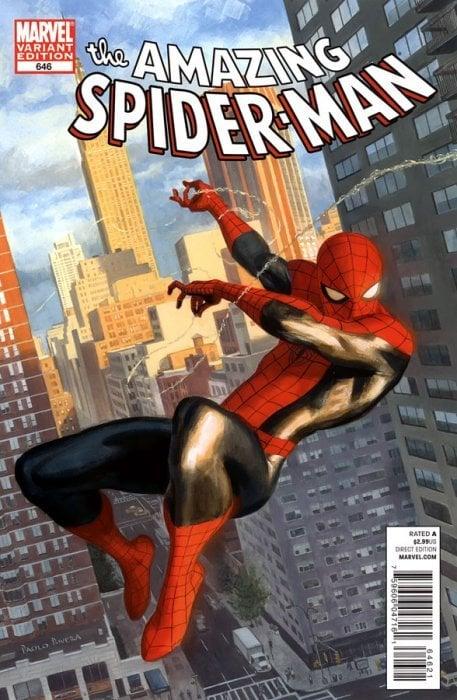
“There would be a lot of calls,” Kelly says. “You would certainly be on the phone a lot. And I always felt comfortable picking up the phone and talking to anybody on the side. Everything didn't have to go through editorial. But those guys were so good at keeping all the balls in the air that for me, you feel like you're a spoke in a wheel. I can talk to editorial, talk to Steve, talk to whoever, and then I have confidence that that's going to go out to the rest of the wheel and it's all going to work and stay coherent.”
To help maintain continuity, each writer would also be included in email chains for the scripts the other Brain Trust members had written.
“The biggest challenge for me was keeping up with all the other writers scripts,” Guggenheim says. “Halfway through my time on 'Brand New Day,' I was co-running a show that was a big, heavy lift for ABC, and was taking up an inordinate amount of my time. And I was just drowning in all the emails and the scripts.”
“The original thought was the comic book was about 22 pages at the time, let's plan to hold two pages per issue, and we'll use that as a spot to, slip in the bits of continuity, and add this thing or that thing,” Brennan says. “I think eventually that just wasn't feasible because it's more important that Dan Slott tells a good story, than we shoehorn in something. And he needed those full 22 pages. But I do think that instilled in people this notion of let's be sure to check in on these various characters.”
However, the email threads, phone calls, and editorial coordination ensured that the continuity still felt seamless.
“Steve would say, 'Well, this thing just happened where J. Jonah Jameson lost control of the Daily Bugle. Can you add a scene where Jonah and Robbie Robertson are hanging out in front of the Daily Bugle building?' Stuff like that,” Van Lente says.
“The story of 'Brand New Day' is a testament of Steve Wacker's ability to make really good, close, personal connections with these writers and artists. He's an editor who is a friend and ally to these creators,” Brennan says.
The dawn before 'Brand New Day'
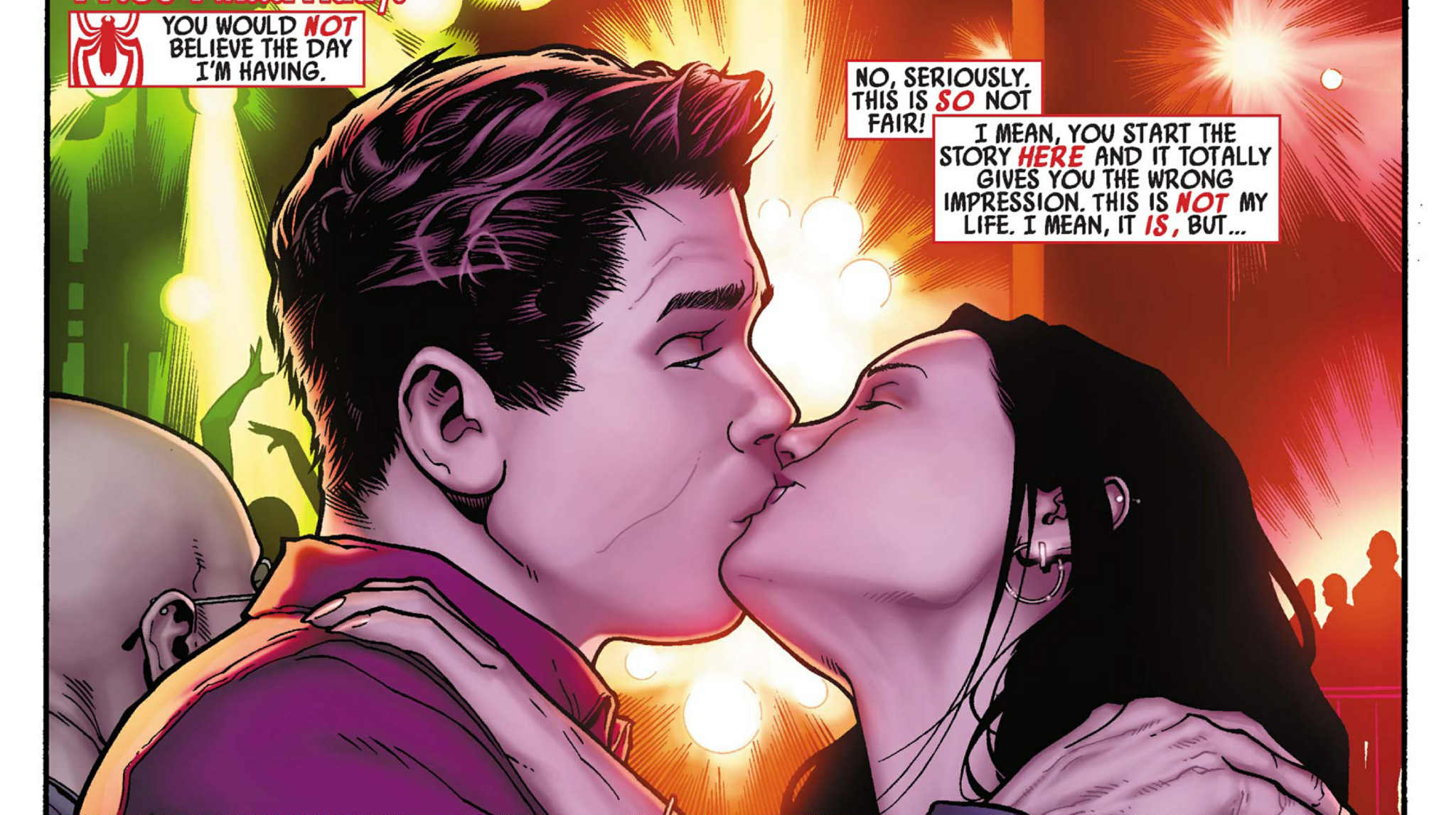
Technically, Brand New Day actually began before One More Day.
‘Swing Shift,’ a story from Dan Slott and Phil Jimenez was included in Marvel’s 2007 Free Comic Book Day issue. At the time, Marvel and Slott promoted the story as a ‘timeless’ tale set outside of current continuity where Spider-Man was currently dealing with the fallout of Civil War and his unmasking. Little did readers know that this was a preview for how Peter’s life would look in 2008.
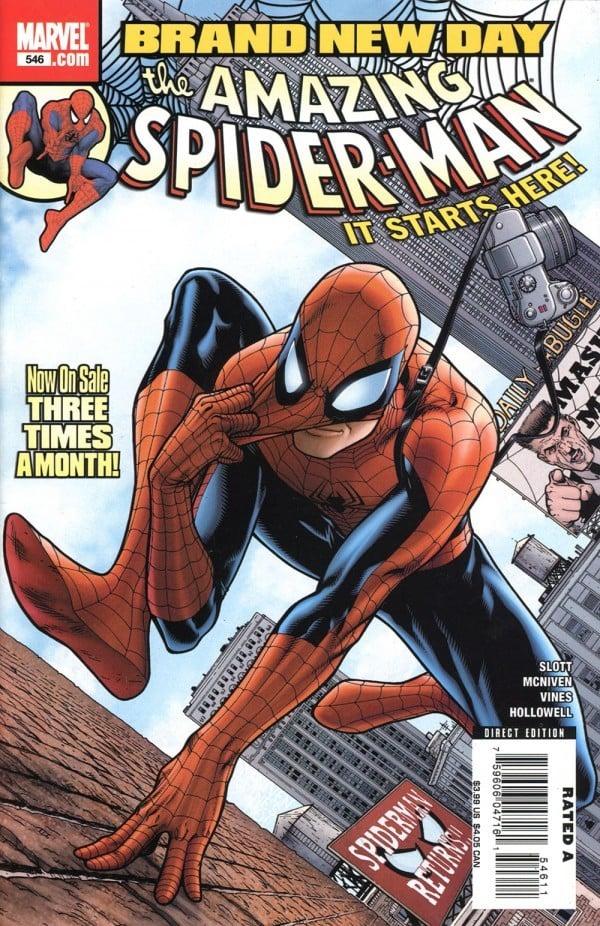
After 'One More Day' concluded, 'Brand New Day' officially began in Amazing Spider-Man #546 with a story from Dan Slott and Steve McNiven. While some fans were disappointed by 'One More Day'’s conclusion, readers and retailers were interested in seeing how the new direction played out, causing the first issue to sell over 125,000 copies in its first printing.
The issue opened with Peter being kissed by a woman at a nightclub, signaling to readers that the marriage era was truly over. However, despite the spontaneous kiss (which the club girl initiated), the Brain Trust purposely had Peter stay away from dating for the first year of 'Brand New Day.'
“We wanted Peter to be respectful,” Guggenheim says. “Kissing the woman on the dance floor was a good jolt to the system from a reading standpoint. But we all recognize, don't have him jump back into the dating pool too soon or readers are going to lose respect for Peter.”
"[The kiss] was Joe Quesada’s idea, and he pretty strongly insisted on it being done, realizing that it would stir readers up and get them talking," Brevoort says.
“I remember that when we came on to the books the big Mephisto story had already happened, and people were still mad. And I was like, that story was like 16 months ago guys. Now it's 17 years ago,” Kelly says.
The discourse about Peter’s single life was loud online, but Guggenheim notes that the internet distorted things, and it wasn’t until San Diego Comic Con when he realized just how successful the new era was.
“There was just so much backlash against 'One More Day' that we felt going into Comic Con doing our 'Brand New Day' panel, we just felt like we were lambs to the slaughter,” Guggenheim says. “We thought it was going to be a disaster. And we get in there, and it's the warmest room, it's the warmest reception. Everyone was loving what we were doing, and it was incredibly encouraging and really a relief. It was a good reminder that all those vocal people on the internet, they're a vocal minority. They don't speak for the fandom at large. That was just really nice. It was great to sort of be embraced by the fans.”
New characters were brought in, such as J. Jonah Jameson’s father Jonah Sr., and a reporter named Norah Winters.
“I was just wanting to have a character that was really like a good foil for Peter,” Norah Winters co-creator Joe Kelly says. A little bit stubborn and ruthless, but also really fun. I didn't want her to be so much of a romantic interest, as much as like competition for Peter. The kind of person that would challenge him, and he would challenge her, and we would see whether or not this kind of friendship could evolve and last because she was tough. She was the tough cookie, and we're always looking for ways to bring new blood into the cast.”
“Of all the things I ever did at Marvel, [Jonah Sr. is] my favorite creation by far. I'm still annoyed that he was senselessly killed a few years later. I thought his presence allowed a fresh new perspective on JJJ after 60 years of existence,” Waid says.
In addition to keeping Mary Jane off the board, the Brain Trust held off on using classic villains like Doctor Octopus, Vulture, and Rhino. The idea was that when those villains returned, they would be revamped with new purpose so that they would no longer be husks of their former selves.
“I think it was a little bit longer than we planned before we started bringing the various villains and supporting cast back into the story. That was no small part due to the fact that just audiences were responding to this new world we had created,” Brennan says.
“The goal was to try to remotivate all these characters, give them something that felt fresh, that wasn't just a new visual,” Kelly says. “Certainly that was the case with the Lizard. Literally in the room, we were like, every time there's a Lizard story, it's like, it feels like Spidey pulls out Billy, and it's like, 'Oh, come on Doc, remember Billy.' So we're like, what happens if you take Billy off the table? What are you left with? And that became the Shed story. That was the goal. It was very intentional. I think it was the thinking at the time to try to undergird these characters with more stuff.”
“A lot of stories would get floated out by the group, and there was not a lot of ego about who should do what. The Rhino story, which I'm very proud of, that I got to do with Max Fiumara was originally a Guggenheim story, and then he got really busy, and I was like, 'Oh, I would do that one. That would be fun.’ Some stuff that's in Zeb's Lizard story was stuff that him and I talked about. It didn't matter.”
The Jenga tower that is the 101-issue 'thrice weekly' 'Brand New Day' release schedule
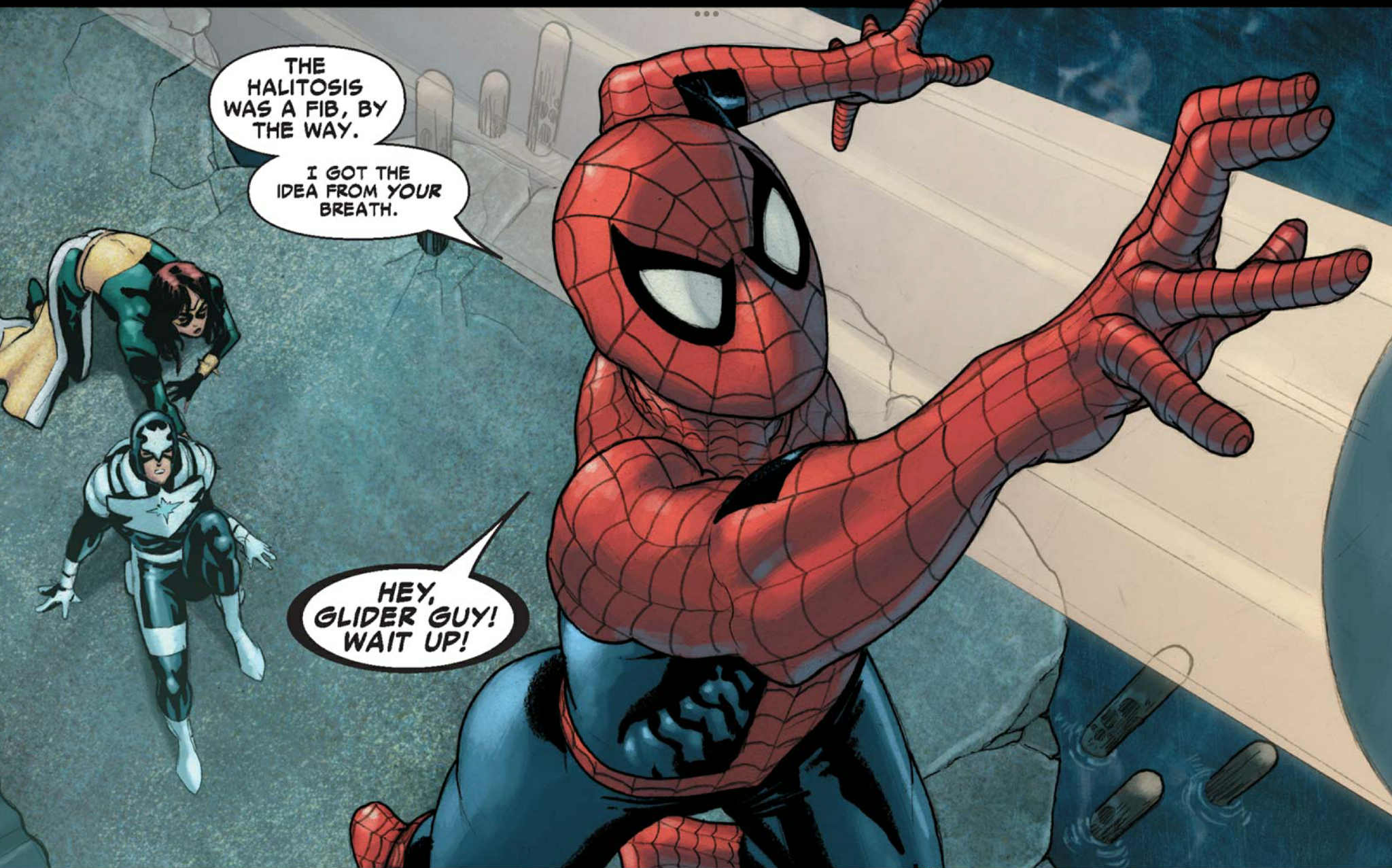
The most amazing thing about 'Brand New Day' was that Amazing Spider-Man never missed a release date. The title maintained its thrice monthly publishing schedule for the entirety of its 101-issue run.
“There was no shortage of close calls. By the technical definition of late, we were never late,” Brennan says. “I have to praise Steve, because just the sheer amount of work that you had to do to keep that all coordinated was really superhuman,” Van Lente says. “The whole thing was a big Jenga tower and it did not have the right to work out nearly as well as I think it did,” Guggenheim says.
“Once that train started, every week, a comics got to go out. You've got that little breath of air Friday night after you put it out, and then next week you’ve got to get the next one out,” Brennan says.
“Coming off of 52, [Steve Wacker] probably had a better sense of it going in than any of us did. And he was not afraid when things were looking tight to get an issue done by Roger Stern or get an issue done by Fred Van Lente or something, just to buy the rest of the crew the additional time that was needed,” Brevoort says.
The downside of the treadmill that was 'Brand New Day's publishing schedule was that Amazing Spider-Man would typically be planning out stories six months ahead of Marvel’s other books, making it difficult to coordinate crossovers.
“It's a hard machine to wrangle,” Brevoort says. “The scheduling on it and everything is very different from the scheduling that we use on a regular monthly book. You have to be so far ahead, it's difficult at that point even for that title to interact properly with the rest of the Marvel Universe. In Avengers, I was working on a January issue, and Amazing Spider Man would be working on a June issue. If there was a story that was going on in January that would be really great for Amazing Spider-Man to be a part of, or an event story, a Secret Invasion, or a Fear Itself, or something, well, that's just not going to happen other than doing side books.”
How President Obama helped Spider-Man save Marvel
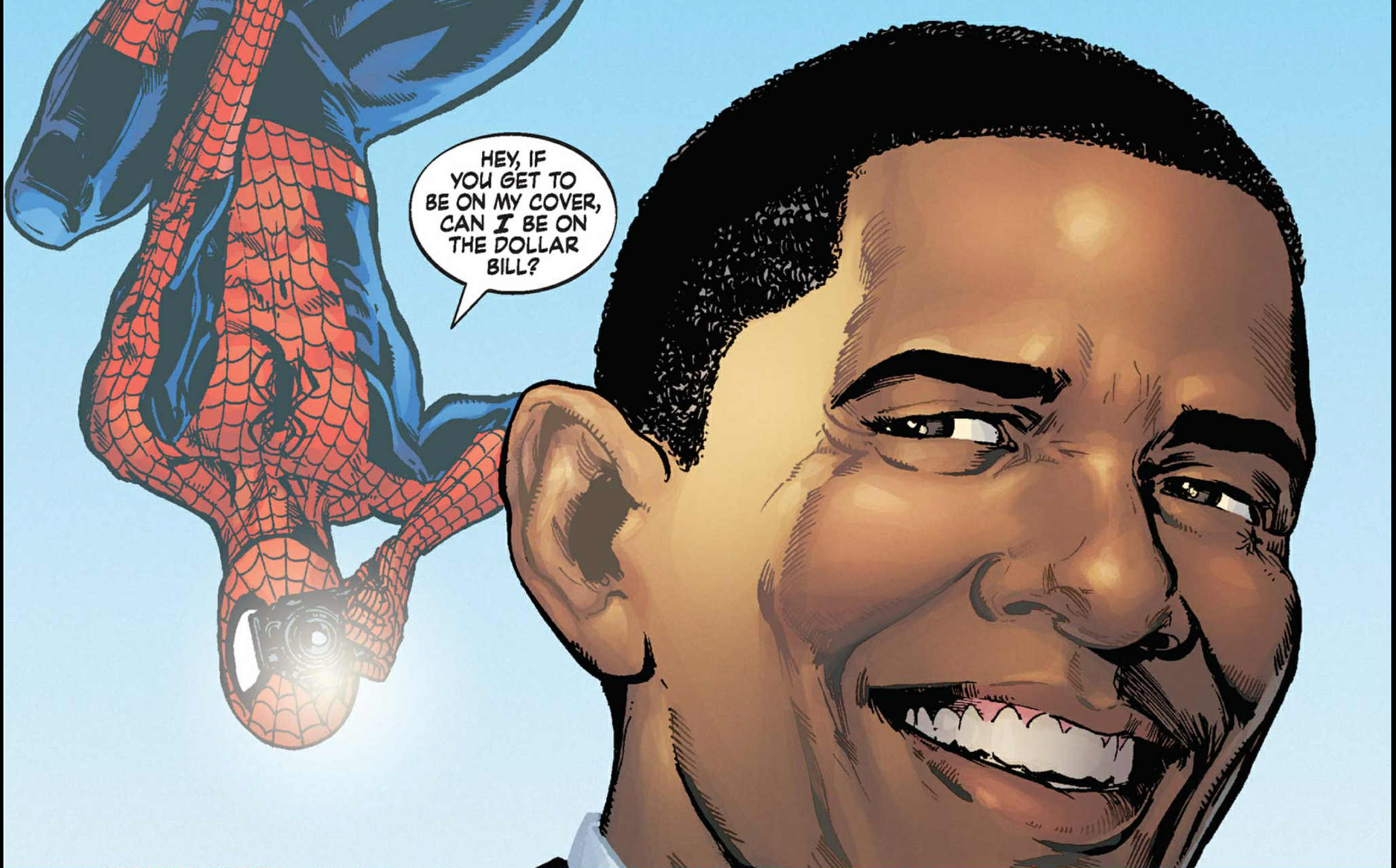
One of the most notable chapters of the 'Brand New Day' era was Amazing Spider-Man #583, aka ‘The Obama issue.’ Not only did the special issue break records, but it also helped save Marvel during a rough financial period.
It’s been so long since Barack Obama’s 2008 presidential campaign that it’s easy to forget the intensity of Obamamania. Think of Taylor Swift, multiply it by four, add in a dash of Beatlemania, and that should give you an idea of how big Obama was in 2008. That’s one of the reasons Marvel sat up and took notice when Barack Obama said he grew up reading Spider-Man comics during an August 2008 interview. When Obama was elected that November, Marvel wanted to capitalize on the momentum by having the president-elect appear in a comic alongside Spidey.
“The idea for that was generated maybe 15 days out from the deadline,” Brennan says. “It was right at the beginning of December, and we had two comics that would have come out before Inauguration Day, which would have been the most bang for your buck.”
In order to get an Obama comic ready before Inauguration Day without disrupting Amazing Spider-Man’s publishing schedule, the story was done as a backup tale. Zeb Wells wrote the script and Todd Nauck penciled and inked it. Amazing Spider-Man #584 would’ve been the natural place to put it, as it was being published on January 21, 2009, the day after Obama’s inauguration.
However, that issue was the first part of a storyline called ‘Character Assassination,’ which featured a mayoral election and candidates being targeted for assassination. Needless to say, the optics wouldn’t have been good. This meant they had to get the story completed sooner in order to get it out before the storyline began.
“The much more convenient option would have been the issue that was part one of a story-arc called 'Character Assassination,' which is not a super ideal place for doing a comic about the President. So, we had to go back a week and do Amazing Spider-Man #583. I think it was probably like two weeks at most to create that story, and that is me being generous. I was sweating that one,” Brennan says.
Amazing Spider-Man #583 hit the stands on January 14, 2009, less than a week before Obama’s inauguration. The Wells and Nauck story featured Spider-Man unmasking the Chameleon when he attempts to replace Obama during his inauguration. Phil Jimenez penciled a special cover, which depicted Obama giving the readers a thumbs up as Spider-Man looks on in the background.
Readers and retailers couldn’t get enough.
“I think there was just a lot of energy and zeitgeist,” Brevoort says. “It sold out, and we went back to press, and it sold out again. We did that four or five times because people were just charged up about the idea of this incumbent presidency and the fact that it was being showcased in Spider-Man. And I remember after that issue hit, other publishers and other comics started doing their Obama issues. I seem to recall that Erik Larson did a Savage Dragon comic to jump onto that bandwagon too.”
Amazing Spider-Man #583 went through five printings and would go on to sell an estimated 530,500 copies, making it the highest-selling comic of the decade.
“Highest-selling individual comic book of the 2000s my friend,” Brennan proudly says. “Check the sales numbers. I remember being exhausted when we got that comic out. And I believe Steve may have said, 'I don't want to deal with anything with Barack Obama again for at least two weeks.' And we were joking, what a wrong time to think that.”
“That was right around the height of a recession, and a recession that was particularly hitting publishing across the board very hard. Marvel had been projected to have a budget shortfall, and because of that one comic, we actually ended up with a budget surplus, which meant no one got laid off. There were job freezes, but no one from publishing got laid off. That is the thing I am most proud of in my career. This fun goofy little story we did literally saved jobs.”
In other words, President Barack Obama was saving jobs before he was even sworn into office.
The end of 'Brand New Day;
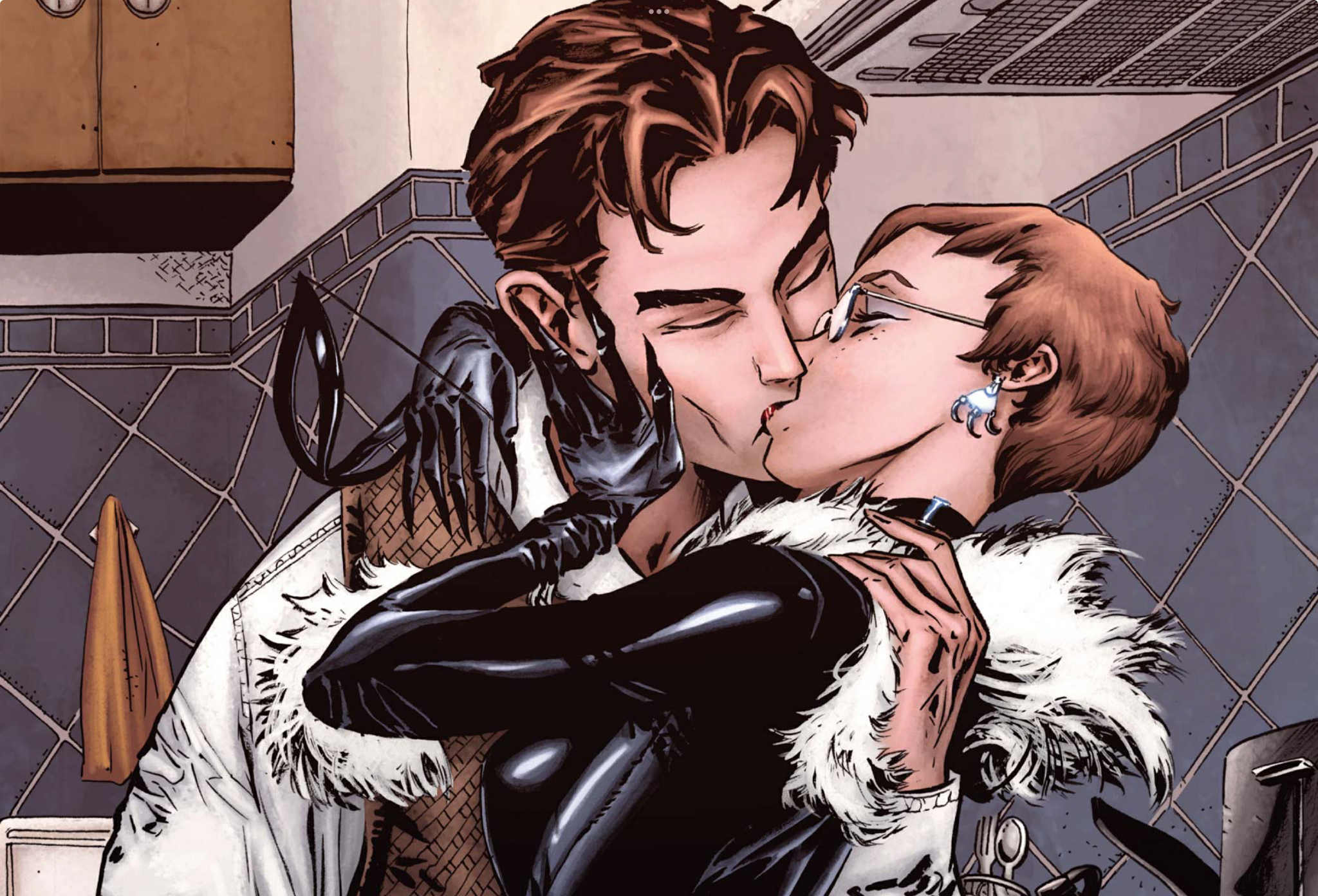
All days must come to an end, and by 2009 the Spider-Office was feeling burned out. The stress of coordinating multiple teams and putting out three issues a month was weighing on the creators and the editorial team. Marvel began to look at switching to a twice-monthly schedule.
“We’ve been talking about going down to twice a month for the longest time,” Dan Slott told me during a 2010 interview for Spider-Man Crawlspace. “It’s just so hard to schedule the book and it’s so demanding on everybody to coordinate all of it. It really takes someone like Steve Wacker to make it all work. And if you guys could see Marvel on a Friday night, how many hours Steve and Tom Brennan put in, and poor Joe Caramagna lettering at home in the wee hours and then compiling the book. The Spider-Office is usually the last office to leave. It’s all about this book which has to come out three times a month.”
“Everybody, and particularly Steve, was tired,” Brevoort says. “It ran as a three times a month comic for at least two years with the rotating group of writers. And it got to the point where everybody was getting burned out. You know, two of the guys, Bob and Zeb, sort of fell out after the first nine months or year and were replaced by Joe Kelly and Mark Waid. But even there, Steve was having to lean on Fred Van Lente and one or two other folks, and it was a hard beast to ride.”
“There was a moment where Dan Slott was ready to come off the book. It was like, 'I can't manage this anymore. The system is making it too difficult for me to figure out what I'm doing, and I don't want to do that.' He came to me because he was writing Mighty Avengers at the time for me to say, 'Yeah, I got to tell Steve I'm coming off of this book.'”
“It all came down to the pressure of that and doing that and everyone was like, ‘Oh man, we need a break,’’ Slott says. “So, we’ve been talking for some time about going down to twice a month. And I knew that was coming up. I actually did a lunch with Steve where I pitched him a satellite book. And I said, ‘I’d like to leave Spider-Man and go over here and do Spectacular Spider-Man or Spider-Man Marvel Team-Up. I would like to do a once a month Spider-man book.”
Wacker came back with a counteroffer.
“Steve turned it around on him and said, 'Well, what if you were the only writer on Amazing Spider-Man? And what if we only did it two times a month?' And Dan was up for that. And so, Steve went back and talked to people and arranged that,” Brevoort says.
Marvel broke the news to the other writers during a conference call. Van Lente, who had also been contributing to Web of Spider-Man, was also feeling burnout, so the news wasn’t a surprise.
“I do know that Steve had been talking about burnout, and I think the whole Spider-Office was talking about burnout. When we got the conference call firing all of us except Dan, I was kind of relieved. I was like, I'm so Spider-Maned out man. I can't take it anymore.”
“It was a weird combination of disappointment and relief, because I was actually running out of ideas quite honestly. As much as I love that Black Cat Mary Jane team-up story from Web of Spider Man, you know when you're pitching the Mary Jane Black Cat team-up, you may have started to run out of ideas for Spider Man,” Van Lente continues
“After the triple threat of 'Gauntlet,' 'Grim Hunt,' and 'Origin of the Species' culminated a lot of our long running storylines, it seemed like the right time to move on the next stage. At the point we're done, it will have been 101 issues since the Web-Heads took over the book and I simply liked the idea of stopping at that number,” Wacker told IGN in a 2010 interview.
“Nothing too surprising beyond that the idea that it's a good idea to shake things up every few years. However, everyone's exhaustion from the thrice monthly schedule also played a part.”
“It's never not fun putting a Spidey issue together, but we got hit by one impossible to avoid scheduling snafu after another over the past year and we had definitely taxed the machine about as far as it could go. Though thanks to the hard work of Brennan and Caramagna along with the writers and artists pulling in the same direction together… we still stayed on time with just a couple issues moving a week here and there. That said, going to twice a month—with each issue being 30 pages—doesn't really get us that much of a break. It's almost as many pages every month,” Wacker continues.
Although the decision was made in 2009, the nature of Amazing Spider-Man’s scheduling meant that dozens of issues were already being written and penciled, taking the title to mid-2010. The plan was made to officially end 'Brand New Day' in Amazing Spider-Man #647, 101 issues after it had had begun. This was perfect timing, since it was one issue after a storyline called 'Origin of the Species' brought closure to many of the era’s ongoing storylines.
“It was also very organic,” Van Lente says. “Most of the major storylines had wrapped up. They had done the Grim Hunt, which was something they've been building. I think it had just run its course.”
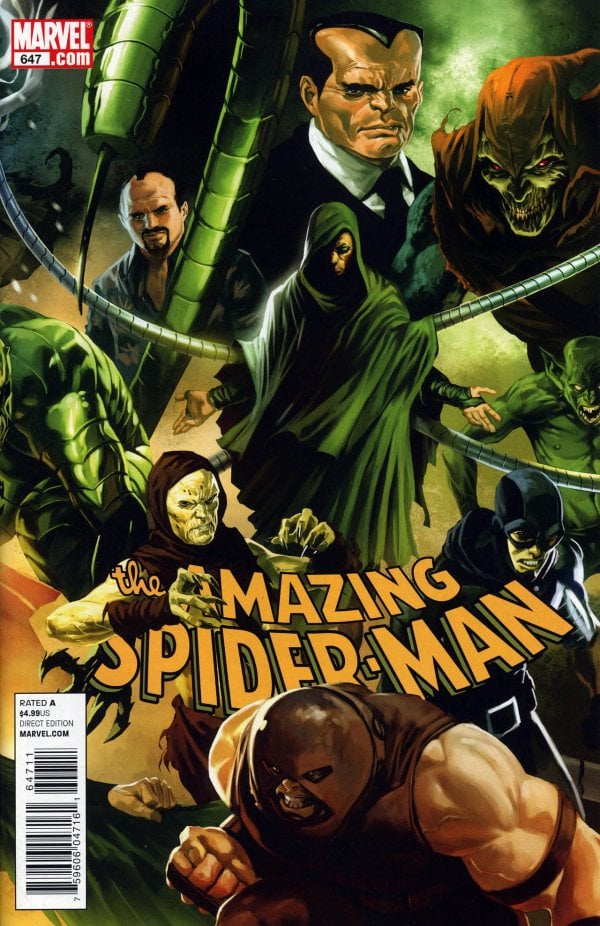
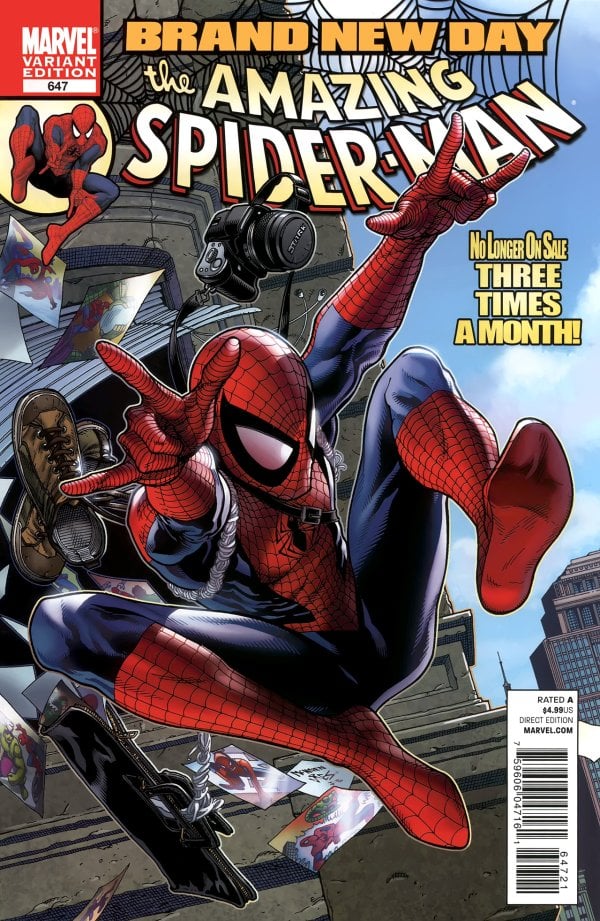
Amazing Spider-Man #647 was a triple-sized issue that featured seven stories from many of the era’s various creators. The issue served as an epilogue to the era, with many homages and callbacks to moments from Dan Slott and Steve McNiven’s opening arc. The issue’s lead story ends with Peter working through his insecurities and asking Carlie Cooper (who is dressed as the Black Cat for a costume party) to be his girlfriend, signaling the end of one era and the beginning of a new one. With that, Brand New Day was over, and the table was set for Dan Slott’s new run.
“You can only do that for so long,” Brennan says. “The goal is always end it before the audience wants it to end. And I think we did two and a half years worth, 101 issues. That's a good number. That's a good run to do. The only comparable machine I can think of was 52 which Steve worked on, and that had a definite end date. I think it ended at the right time. I think the story had been told. The goal was to rejuvenate Spider Man and his brand, and I think the mission was accomplished.”
The legacy of 'Brand New Day'
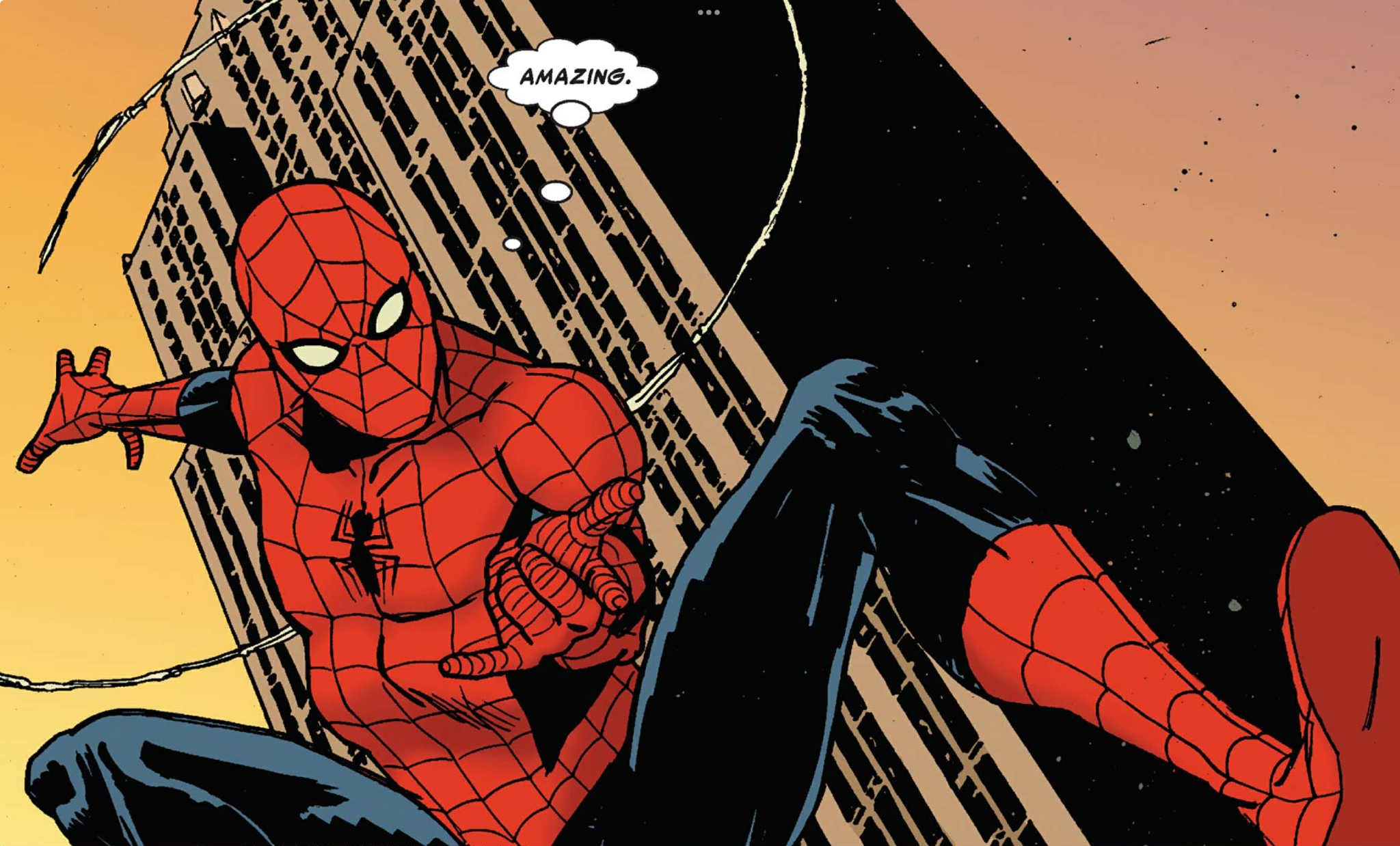
It’s been 15 years since Spider-Man’s 'Brand New Day' era ended, but the legacy of that era can still be felt in his current books. Characters like Norah Winters and Carlie Cooper still have a presence in modern books. Of all the new villains introduced, Mister Negative has had the highest profile, partially due to his large role in Sony’s Spider-Man video games.
In superhero comics, status quo is king, but some of the major changes that occurred during Brand New Day have remained. One of the biggest and most surprising examples is J. Jonah Jameson separating from the Daily Bugle. It’s hard to believe, but the main continuity version of J. Jonah Jameson hasn’t been the Daily Bugle’s publisher since 2008.
Since 'Brand New Day' ended, three members of the Brain Trust/Web-Heads have gone on to do solo runs of Amazing Spider-Man. Dan Slott’s run began with Amazing Spider-Man #648 in 2010 and ended with Amazing Spider-Man #801 eight years later. His time on the title included many pivotal moments, such as the first Spider-Verse crossover and Superior Spider-Man. Zeb Wells wrote a 60-issue run that spanned two years, and Joe Kelly is the current writer of the title.
When you look at 'Brand New Day''s strong sales, critical acclaim, and fan enthusiasm, it’s easily a success. So, why hasn’t Marvel tried replicating the three-times-a-month writers room format? According to Tom Brevoort, it’s not that easy. The executive editor notes X-Men and Avengers have both done temporary weekly formats, but nothing at the same scale as 'Brand New Day.'
“It's a grind. Nobody else, not even just at Marvel, nobody else anywhere I think ran it that way as long as Steve did. Maybe Mike Carlin, back when the Superman books were the Triangle era. That's kind of the same thing, although even there, I think there were gaps where for a couple of months, we'll let them all do their own thing, but then we'll bring it all back together.”
While everyone remembers the chaos and stress of the 'Brand New Day' publishing schedule, everyone I interviewed for this retrospective couldn’t help but smile and recall the fun they had. Each writer and editor took great pride in what they accomplished and had nothing but positive things to say about the people they worked with.
“It was a lot of fun,” Van Lente says. “It was really fun hanging out with the guys. I really enjoyed the summits. Joe Kelly and Zeb Wells are hilarious. Dan is super fun and just is really unrivaled in his love of those characters. Marc knows everything. I had fun talking to Bob Gale. I loved Bob Gale, I had never met him before. Mark has great stories from working at DC, and working with Mike Wieringo, and all that stuff. It was just super fun.”
Comics are comics, and television is television, but for two and a half years Marvel tried the television writers room approach for Spider-Man, and the result was simply Amazing.
Marvel's most reliable superhero has proven he can do a whole lot more than just 'whatever a spider can.' Swing into Spidey's history with Popverse's...
- Best Spider-Man comic books
- The best Spider-Mans (or is it Spider-Men?)
- Spider-Man movie watch order
- Spider-Man's actors, ranked
- The best Spider-Man suits
- and the Spider-verse explained!
Just watch out for that radioactive blood.
About Popverse Spotlight: Spider-Man
Listen, bud... Spider-Man is the definition of a modern superhero. From his comic books to his TV shows, movies, games, and more, he is the epitome of the superhero genre — even without a cape! In Popverse Spotlight: Spider-Man, we celebrate all the facets of Marvel's wallcrawler, across all major media, and even include other people who have been Spider-Man in addition to Peter Parker. Face it tiger, you just hit the jackpot!
Dates
-
Location
Popverse
Follow Popverse for upcoming event coverage and news
Find out how we conduct our review by reading our review policy
Let Popverse be your tour guide through the wilderness of pop culture
Sign in and let us help you find your new favorite thing.


Comments
Want to join the discussion? Please activate your account first.
Visit Reedpop ID if you need to resend the confirmation email.