If you click on a link and make a purchase we may receive a small commission. Read our editorial policy.
Dr. Stone anime creators discuss upcoming season 3 finale and "foreshadowing" the end of the entire series
In a roundtable interview with Popverse at Anime NYC, the creators of the Dr. Stone anime dish on adapting the bombastic New World arc.
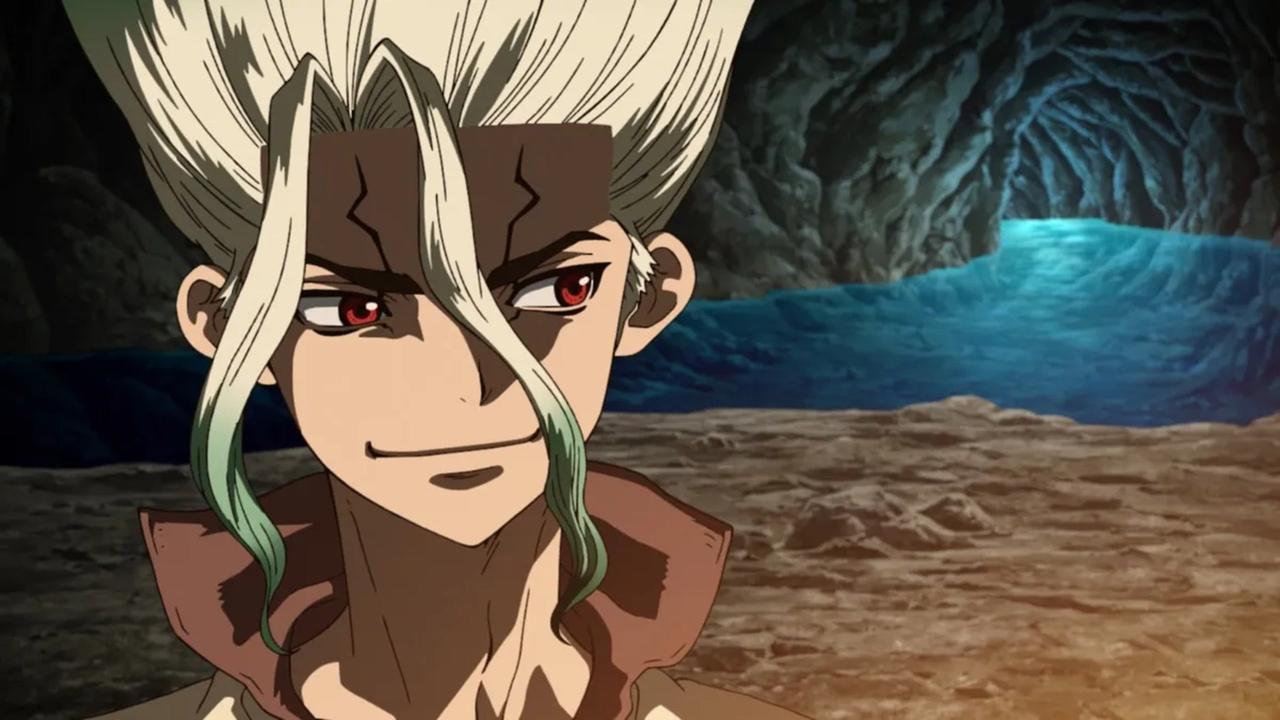

The best-selling manga series Dr. Stone, created by Riichiro Inagaki and Boichi, has spawned a popular anime adaptation of the same name, which is in the midst of wrapping its third season. Carrying the subtitle New World after the manga story arc of the same name, the characters discover the source of the global petrification that kicked off the series. Split into two cours, Dr Stone: New World expands to a global scope as its characters cross the ocean to learn more about the cataclysmic event that impacted humanity.
Dr. Stone is set in a far-future where humanity was mysteriously petrified into stone for over three millennia, with teenager Senku Ishigami suddenly revived in the year 5738. Navigating a world where all major traces of civilization have since become overwhelmed by nature, Senku begins studying the petrified humans to learn what occurred over 3000 years ago and develop a cure to save the human race. However, as Senku begins to revive humans, some people act less than nobly as humanity attempts to rebuild in the face of this extended ordeal and collapse of modern society.
In a roundtable interview at Anime NYC 2023 attended by Popverse, Dr. Stone director Shuhei Matsushita, producer Shusuke Katagiri, and character designer Yuko Iwasa reflected on twists and turns throughout Dr. Stone: New World. The creative team talks about the characters introduced in Season 3, explain how they brought the manga story to life for the anime series, and reflect on the big moments concluding the season.
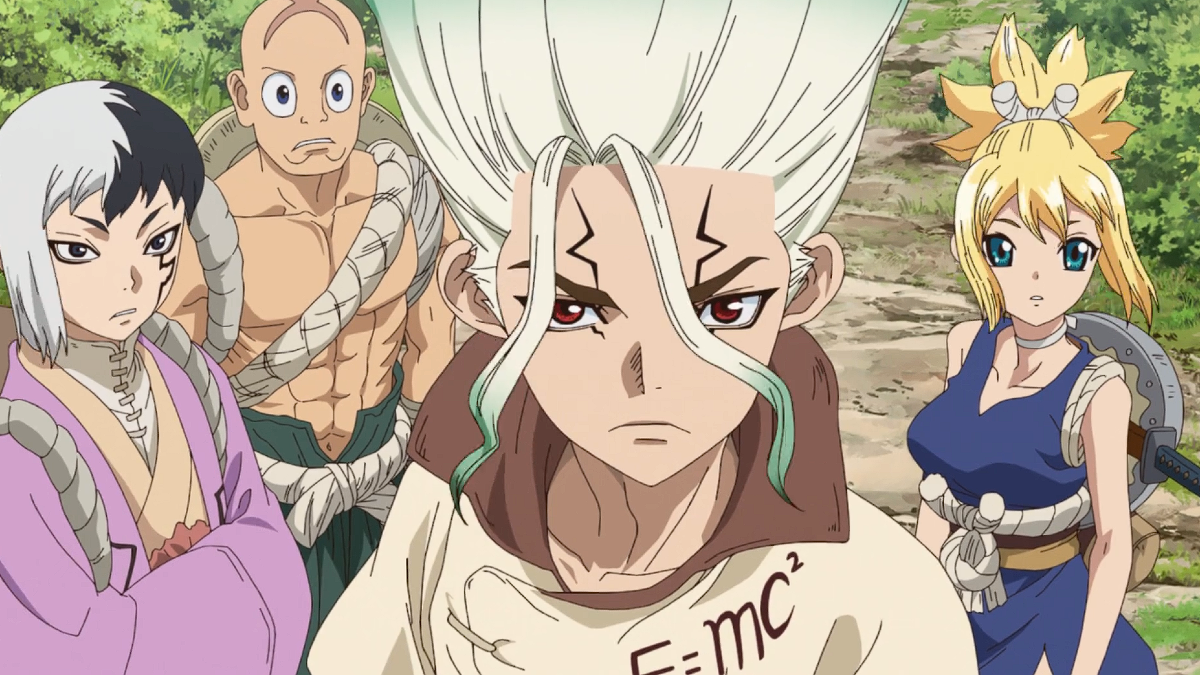
A previous interview with the manga’s editor regarding the manga was cited, which noted that Dr. Stone reflects evolving audience sensibilities in terms of shonen stories popular worldwide. For the creative team behind the anime, that distinction isn't that clearly defined, though it's something they keep in mind during production.
“Personally, I don’t know if the trend has actually changed but, since it’s a long-living title, because of that, the target audience has expanded,” the team observed. “With something like this, that means a difference in taste a little bit. We’re handling slightly different themes and tastes than other shonen manga styles – there is no magic or things like that – but the genre is also celebrated. We’re able to offer a bit more options for shonen manga.”
Matsushita comes from a boating background prior to directing Dr. Stone Season 3 and, with a significant portion of Season 3 set on a boat, he pointed out that environments are very important to creating anime. “If an audience detects a little untruthfulness, that gets caught and you can’t fully dive into the narrative, story, and characters,” he explained. “Especially with Dr. Stone, we want to be truthful with the scientific elements and things like that. We pay attention to make what you see on-screen as authentic as possible.”
The team did field research, including visiting boats and their interiors, when developing Dr. Stone Season 3 and were happy with the results. The season itself was divided into two cours, with the team paying special attention to how the first cours of Season 3 ended and how the second cours began to ensure a consistent “sense of continuity to the story.” With the first cours, the production wanted to keep the audience engaged to return, especially keeping the larger season narrative in mind. “Something happens and that concludes, but there needs to be something else that needs to be set up so that everyone is interested to watch the next cours.”
Though there are certainly fights and superpowers to be had in Dr. Stone, the creative team points out that one of the major underlying themes is “everyone is good at something,” possessing their own unique talents. There is a balance between intelligent characters who aren’t as physically inclined, and vice versa, which makes the characters and series more relatable and “adds a little realness to it.”
Three seasons in, the creative team loves the sense of visible progression behind the story and its world, that “what they create leads to something next and that something next is always bigger.” As the scope and story scales up, the team is always trying to do something bigger and better, which is an appealing quality for them creatively. Because the length of some other manga series, anime adaptations have to understandably drop material as they adapt stories for television audiences. Because of that sense of progression in Dr. Stone, “if you cut something out, you can’t lead to the next arc.” A lot of time is spent on storyboarding to ensure narrative coherence and that grand scale as they build the world and story up.
“With the Treasure Island arc, every chapter is so exciting and there’s no lagging with the story and tempo,” shared the creative team after admitting they looked forward to adapting the entire New World arc for Season 3. “The anime can capture that rhythm and exciting speed with the animation.”
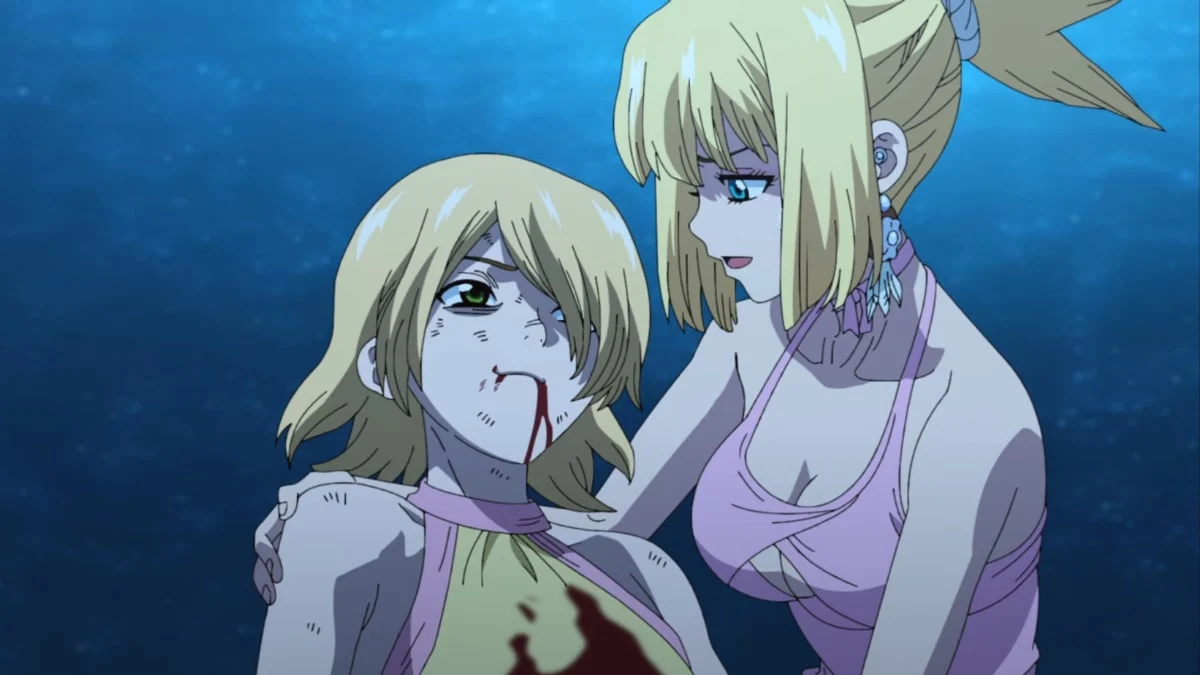
“I’d say Episode 13, at the end, when Kohaku and Ginro get petrified, it was a shock to read it in the manga,” the team recalled. “When I saw it, at first I didn’t want to animate it but, of course, I had to, but it was like I had to get to this point. With Episode 13, there was a lot in it and it was difficult to edit and it took a lot of time to edit as well.”
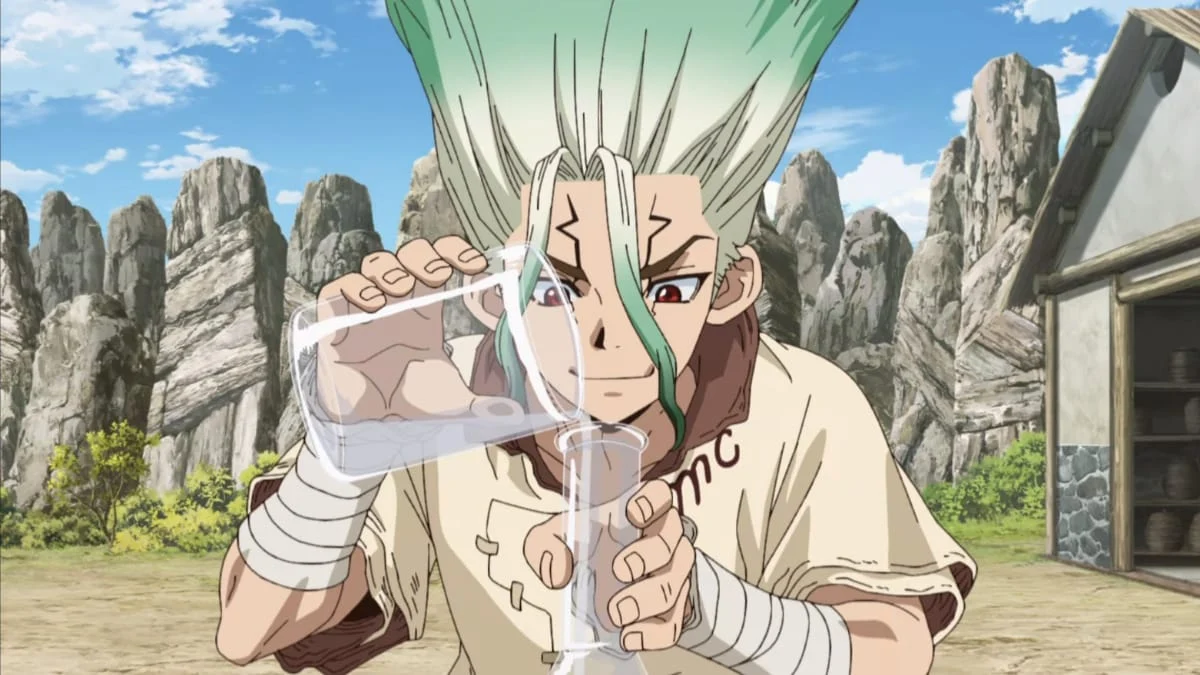
Other creative challenges the production faces is adhering to the story’s tendency to go into scientific elements, including researching how to properly display liquids and gasses flowing for animation, as opposed to the static images in the manga. “As the story continues, there are different fields of science that get introduced, so we had to keep studying and get more knowledge about science.”
When adapting a manga series that ran for well over 200 chapters, the creative team strives to maintain as much of the source material in the anime adaptation as possible, “as a basic principle. The TV special released in July 2022 presented its own unique challenges, as it ran for a full hour rather than the standard anime episode’s 30 minutes, noting that it took approximately “15 hours” to edit it down to the proper length for television broadcast.
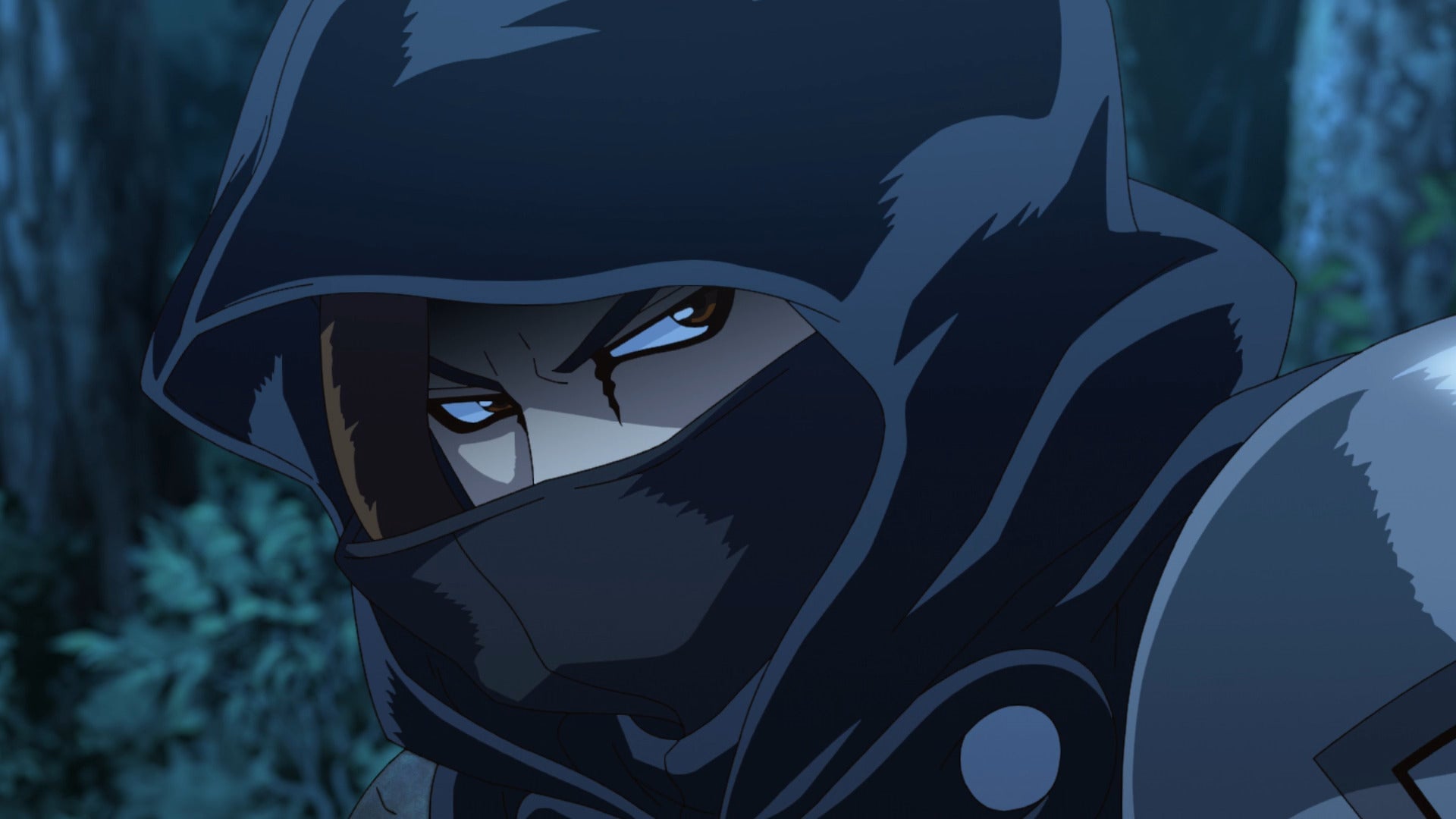
Every story needs a good villain, and Popverse was particularly curious about Season 3’s antagonist Moz, who takes on Senku and his allies.
“If you look at the original manga, he has lots of muscles and is very intimidating,” the team observed. “We just made sure to replicate that. With facial close-ups, maybe you can see more from Moz compared to the other characters as we try to make him intimidating.”
Since the anime series began, the main manga series came to its natural conclusion in March 2022. While the production has the full breadth of the main narrative at their disposal, they are not slowing down their own work “because what the anime series brings to the table feels a little different than the completed manga.” Knowing that there are fans who only watch the anime, in addition to those who also read the manga, the team wants the anime-only fans to also “experience those thrilling moments as much as the manga readers do.”
However, because the team now knows the ending, they can plan ahead “to afford foreshadowing, we do have that luxury.” Matsushita had began his work on Dr. Stone after the anime series had already begun, with his first Dr. Stone project being the aforementioned television special. Fortunately, the crew from the special largely continued on to work on Season 3, with Matsushita crediting the episode directors from teaching him a lot about the series. “Luckily, the editors and sound directors, I had worked with before, so they were familiar faces and they really helped me get used to and accommodated with the existing team.”
The team observed that there is a large number of characters in the series that they work diligently to incorporate into the story. “We can’t drop anybody, so we want to make all the characters as attractive as possible,” the team explained. “Even if a character only speaks one line an episode, it may seem like we can cut that character, but the voice actor comes in and it’s the accumulation of those little moments that make the story, so we can’t drop any of them. They’re all important.”
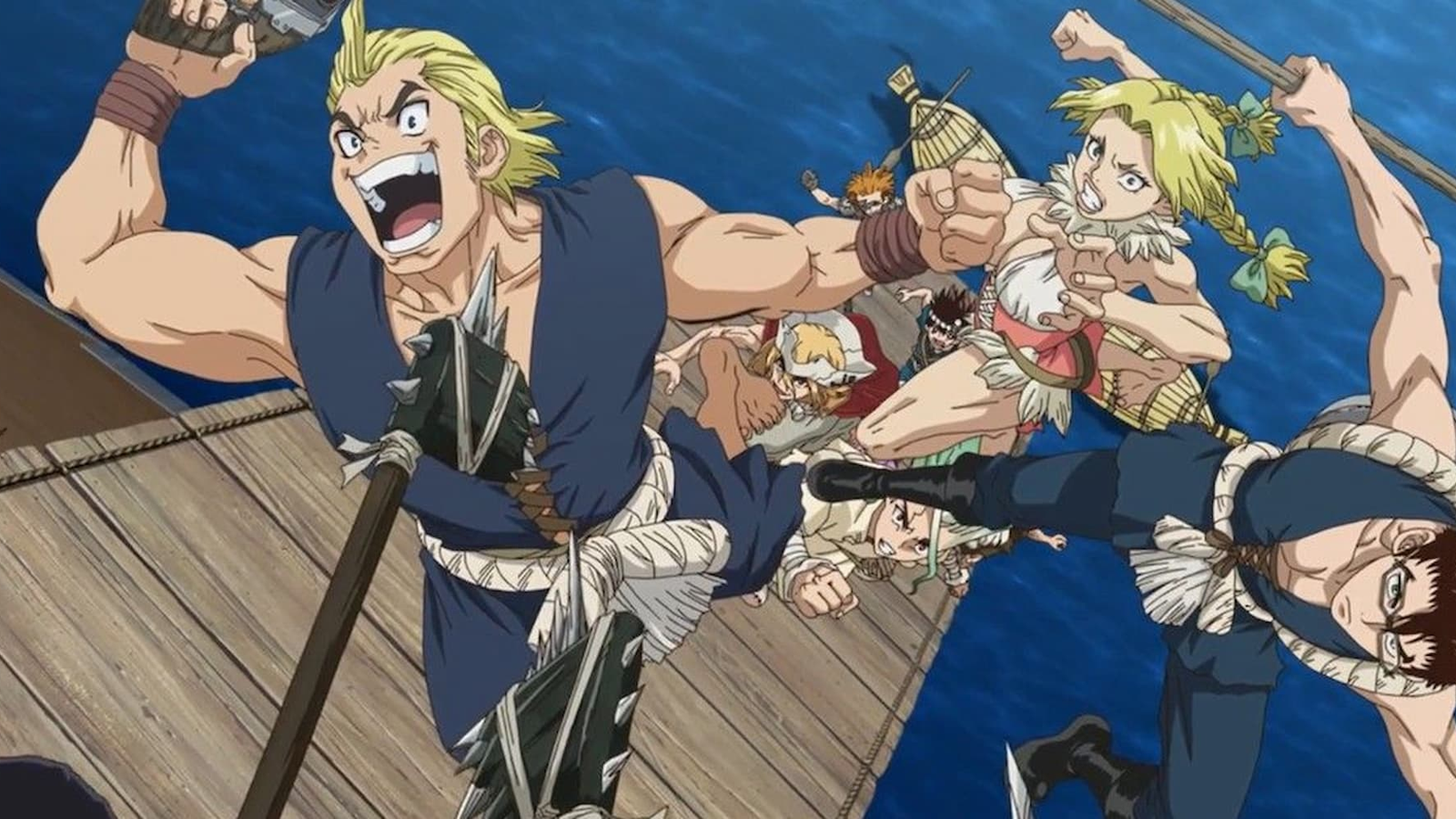
Over the course of Season 3, Senku has to make increasingly difficult decisions as he tries to maintain order while gradually reviving people from petrification to rebuild civilization. This begins to weigh heavily on Senku, but the team is careful in how to depict this inner turmoil from the protagonist. “Something shocking happens and we see his facial expression sometimes, but the director has made the intentional decision to not show his face,” the creative team pointed out.
“Sometimes we see his back and, when he hears the news about Kohaku, we only see his mouth,” They continued. “There is definitely something going on, we can tell. With that said, I feel like, in the anime, you see Senku’s emotional expressions a little more then you see in the manga because, in animation, I think you want to make the characters relatable.”
The first three seasons of Dr. Stone are available to stream on Crunchyroll, with the Season 3 finale set to release on Thursday, November 30.
Follow Popverse for upcoming event coverage and news
Find out how we conduct our review by reading our review policy
Let Popverse be your tour guide through the wilderness of pop culture
Sign in and let us help you find your new favorite thing.







Comments
Want to join the discussion? Please activate your account first.
Visit Reedpop ID if you need to resend the confirmation email.