If you click on a link and make a purchase we may receive a small commission. Read our editorial policy.
Critical Role’s Daggerheart team explains what makes a great TTRPG adversary in new monster pack reveal
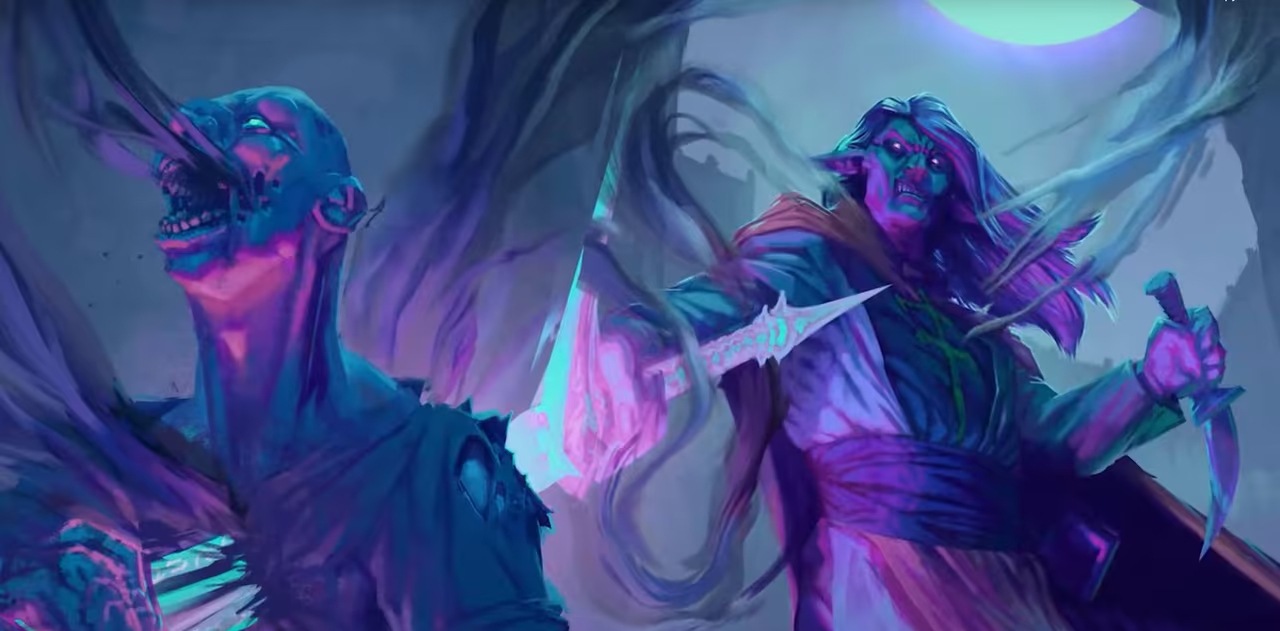
Specifically, we asked designers Rowan Hall and Spenser Starke, plus producer Elise Rezendes, what makes for the best beast. And it isn't the "tiny numbers" on their stats page

Popverse's top stories
- Where to find Popverse at Seattle's Emerald City Comic Con 2026
- The Traitors US alum Bob the Drag Queen drops a piece of advice for future players: "You are not as good at this game as you think you are"
- Bridgerton season 4 ending explained - did Benedict and Sophie make it work, and who's leaving the show for good?
Maybe this is a hot take - but I'd argue a massive part of a fantasy TTRPG's success comes down to its adversaries. Of course, you remember the player characters (you made them, after all), but would they have grown without those goblin hordes? Would they have formed relationships if not over the body of a slain gorgon? I'd say "Hardly," and at PAX Unplugged '25, I got the sense that the Daggerheart creators might agree with me. Or at the very least, that they agreed enough to tell me all about what makes an adversary great.
In case you don't know, we were talking about beasties and baddies because a new adversary pack has just been announced for Daggerheart, the still-new RPG created by Critical Role publisher Darrington Press. I had a moment to chat with some of the studio's core members - that is, designers Rowan Hall and Spenser Starke, plus producer Elise Rezendes - about what makes a bag guy good.
Er, you know what I mean.
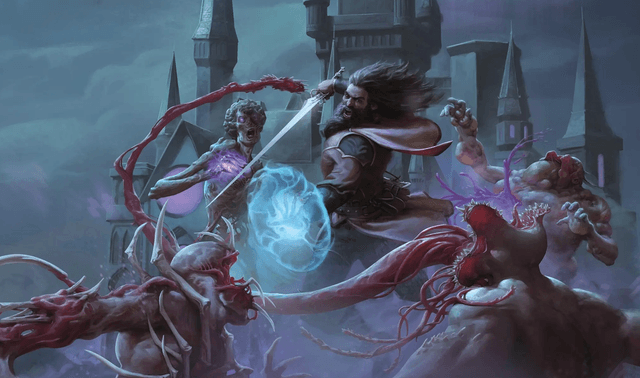
"For me," began Starke, "The thing I focus on when I'm building an adversary is: 'How do I make something that feels alive?' [...] When we released [the core Daggerheart book], it was like, 'This is about conveying what this living being is, rather than focusing on all the tiny numbers that you might have to track. So when I'm fighting a huge mountain troll as a GM, I want the stat block to remind me that this is a thing that is protecting its home. It grabs rocks and throws them at people far away, and then if people get too close, it grabs those people and tries to pull off their heads.
"And eats their heads," chimed in Hall.
"And eat their heads," agreed Starke, "When you're playing the game, you're thinking as a GM that, like, these are the impulses or the motives that this thing has; this is the way it's going to act. Then it has the mechanics to reinforce that, if you need it. But, like, how do we drill down to thinking about these things from a story perspective first, instead of just: 'This is a thing that does this much damage, and is this hard to hit, or whatever.' When we're building it, it's always going back to those building blocks of like, 'What does this thing want? And what is it doing to either protect that thing that it wants, or to get the thing that wants so it doesn't have it already?'"
Hall picked up the thread from here.
"I finally figured out how to say this concisely during our World-Building panel," she said. "A huge amount of Daggerheart effort is put towards the idea that the planning is in service of the play; the play is not in service of the planning. Which is to say - you make pointed decisions before you get to the table. You build pillars so that by the time you get to the table, everybody can build a beautiful house. It sets up systems so that people, ideally, don't have the experience of writing this really detailed plan of what the players are going to do, only for the players to make a completely opposite decision. And you just throw out all 20 pages that you crafted. So when we're looking to adversaries, we always start from the place of, 'What do they want? What are they doing? Why do they live this way? What cool features do they have?' And then we go to the mechanics."
Which is, we assume, where the head-eating starts.
With two animated series on Prime Video, Campaign 4 in full swing, and so much more Exandrian lore to come, Critical Role is showing no signs of slowing down. That's why the adventuring party at Popverse are here to bring you everything we can from those nerdy-ass voice actors & Bo., including:
- How to watch Critical Role in order
- Travis Willingham on the differences between The Legend of Vox Machina and The Mighty Nein
- Taliesin Jaffe on playing Mollymauk Tealeaf for Campaign 2 vs. playing him for Prime Video
- Matt Mercer's homebrew warrior class (created originally for Vin Diesel)
...and much, much more. Roll initiative, player. Magic awaits.
About PAX Unplugged 2025
Dates
-
Location
Philadelphia
United States
Follow Popverse for upcoming event coverage and news
Find out how we conduct our review by reading our review policy
Let Popverse be your tour guide through the wilderness of pop culture
Sign in and let us help you find your new favorite thing.







Comments
Want to join the discussion? Please activate your account first.
Visit Reedpop ID if you need to resend the confirmation email.