If you click on a link and make a purchase we may receive a small commission. Read our editorial policy.
An afternoon with the archbishop of fun: In conversation with Howard Chaykin
"I'm not going to compete for the attention of an audience that is perfectly happy with a template"


Warning: This interview includes swearing and language some readers may find offensive.
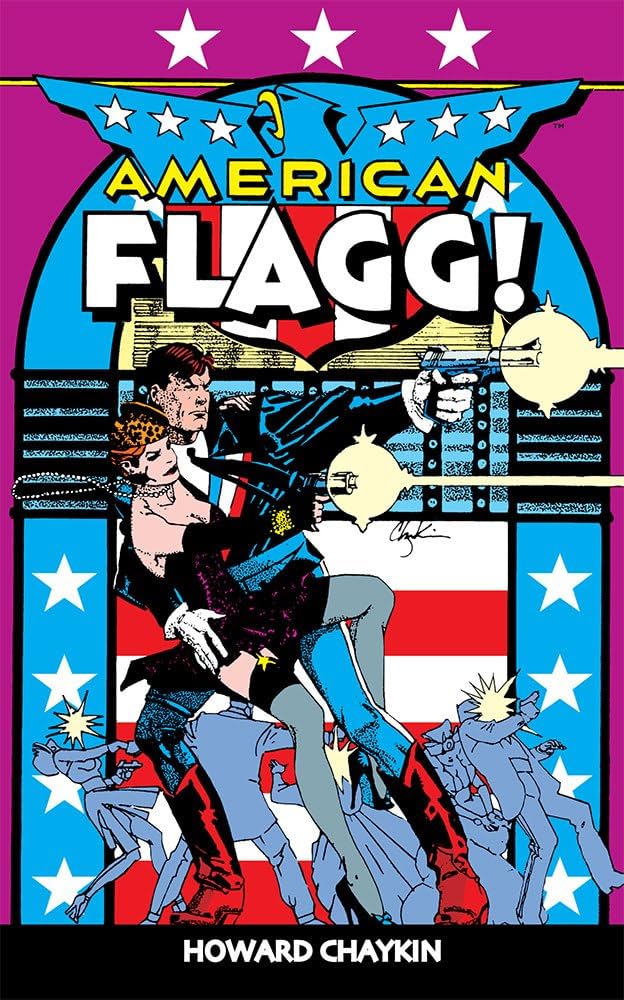
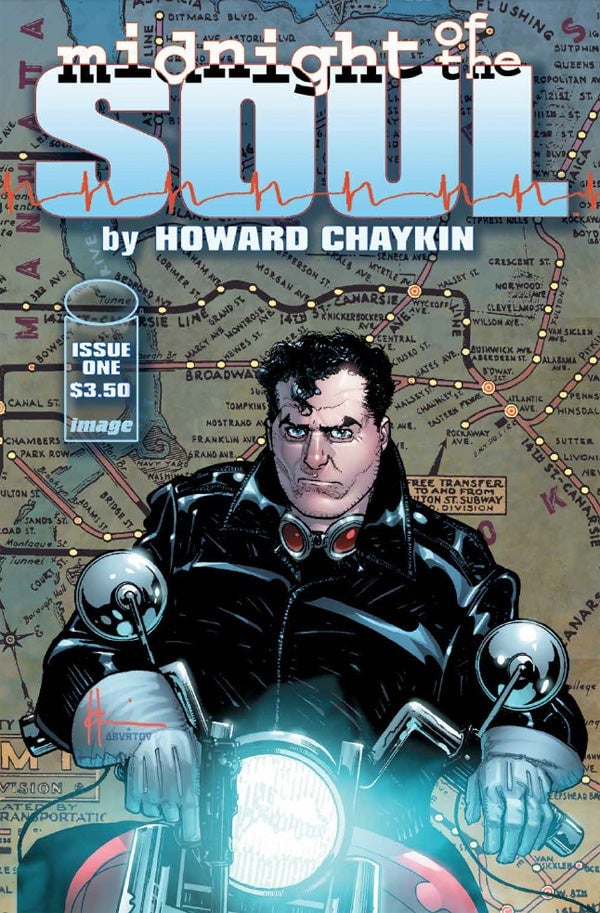
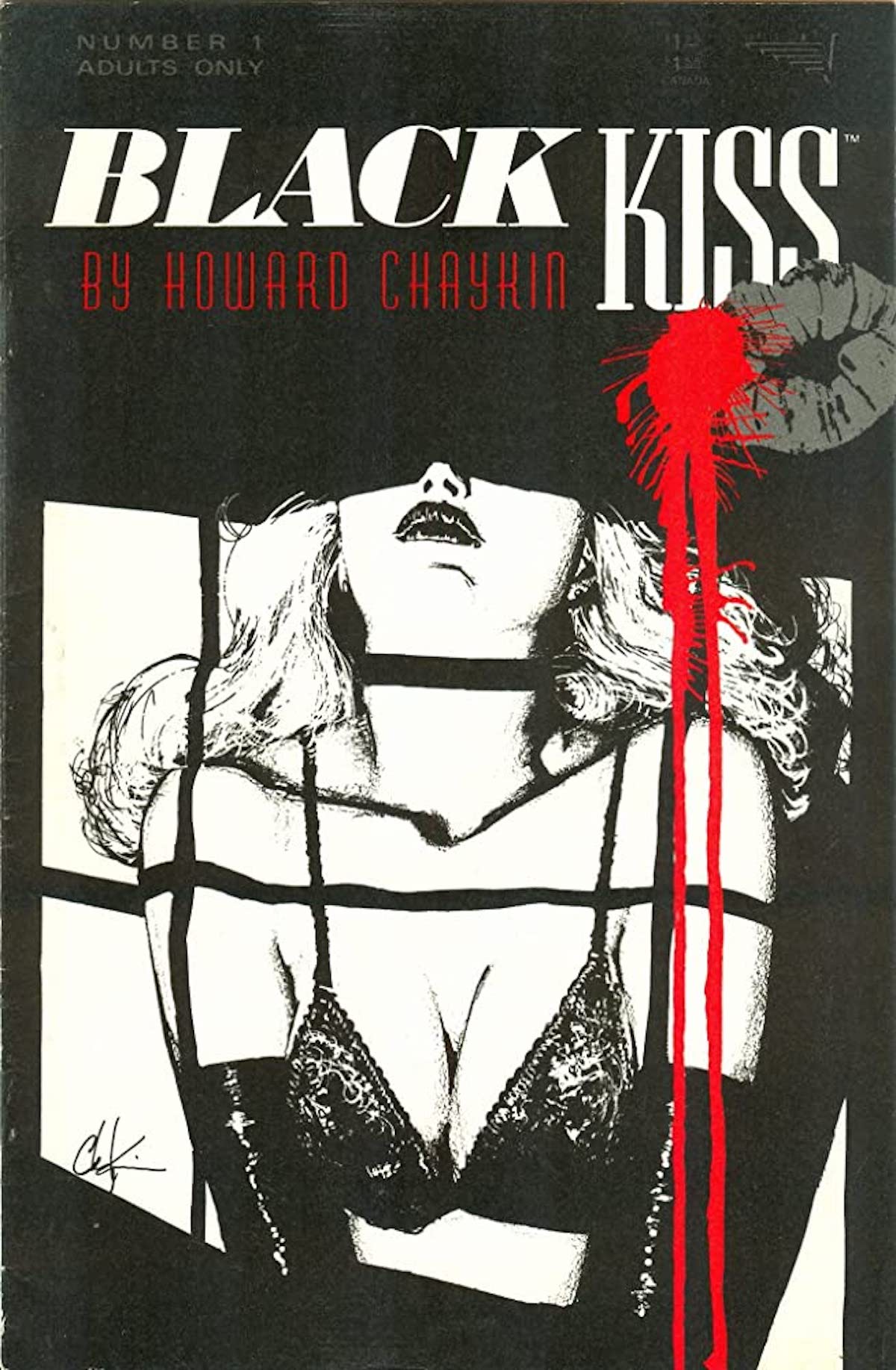
There’s a saying in comics that goes a little something like this: if you want an opinion, go ask Howard Chaykin. Okay, it might not be something official yet – but after a conversation with the seminal mind behind American Flagg, Black Kiss, and The Divided States of Hysteria at his GalaxyCon Richmond table this year, it’s a sentiment that could stick pretty well, whether fans and readers like it or not when it’s all out on the table.
Over the course of a half-hour conversation, Howard Chaykin shared with Popverse his thoughts on conventions, rock star status in the comics industry, and the state of comics vs. the state of what we wish comics still were.
Popverse: How’s things going? What’s this show been like for you?
Howard Chaykin: In what sense? What do you mean? Like…how do I feel about the people involved?
Sure. Let's start with that.
My experience is that the convention is my client and the conventioners are my clients and my customers. I’m here to be of service to them in that regard. Which means — well I mean it's a subjective and sliding scale — but I believe that what the conventioner who comes to my table is entitled to is engagement. I treat them like people. I'm not particularly nice, I’m not overtly kind, I'm not encouraging, but I'm pleasant within certain friends.
Entertaining. Maybe “entertaining” is the operative word we’re looking for here [laughs]
I think so. I'm fun. I'm the archbishop of fun! But I take no prisoners, and I don't self mythologize. I don't have this concocted persona of nonsense that surrounds me. I'm not interested in creating a false front or a facade for people to functionally deal with.
You are what you are and that’s what people should expect at these types of functions, is what you’re saying?
Well, I certainly don't think I'm flattering myself when I say that. [laughs] I think it's true. There are people — who's name I will not mention — they've created this semi mystical self-mythologizing which makes my head explode because the audience buys into that bullshit because they are easily pandered to and patronized. It's like Americans being intimidated by people with British accents.
Howard, you’re inherently smarter if you sound British…everyone knows that.
Well, it's like a Rodney Dangerfield bit — he goes, “These kids in France, they must be really smart, they all speak French!” I just don't buy into it. I mean I'm a proletarian by birth. I’m self-raised, I'm self-educated. I'm an autodidact. And as someone who came into this business, like all of us, inoculated by comic books with a religious fervor, comic books is a calling and it gets more in common with the Jesuitry than say- rock and roll fandom or movie fandom. You watch people fall by the wayside as they realize they don't have the skillset to participate. And I didn't either. I had no talent, but I had a hunger and blind rage and I was able to teach myself how to be competitive, and that’s a really big deal.
Well especially during the late eighties and early nineties there was the rock and roll comic artist thing that happened, and you were arguably at one of your heights during that era as well. You didn’t buy into that whole craze, being a rockstar comic artist?
Oh what a load of garbage that was. What shitheads. The audience is fatuous and credulous at its best, with all due respect — [whispering] There's no respect at all there. My disdain for what the audience was willing to believe and accept is a deep and well-mined vein. Look, I love the former comic book store to a profound degree. I have no interest whatsoever in the content. The self-mythologizing goes hand in hand with a sophist self-justification of producing literary nonsense in the service of junk. I’m just not that guy. Never have been.
That much seems really clear. I imagine it was even funnier during the time itself because you got comic creators like yourself who —
Creators is one of those words, too. Creators. It's so self-justifying. Ugh.
[laughs] Alright, what’s a better word then?
Talent.
That’s fair enough! You’re right, “talent” seems more apt. And it has a certain ring to it.
The talent, it's really what it's about. It's the talent. Below the line or above the line. And creators have such a mythic constitution to it. I live in the real world when I visit comics.
That’s probably a healthy way to go about working within the comics world.
Look, I live in a small town where no one has any idea what I do for a living. All I really want out of a life is comfort and privacy because the attention and fame for an audience that thinks that Spider-Man and Batman is good is not really going to sustain me through my adult life. What the audience holds in high esteem has very little to do with what I care about. I mean, I'm as interested as the next guy in what James Gunn is going to do with Superman. Not because of Superman, but because of James Gunn.
At least he has a specific kind of vision.
I liked Peacemaker — I like all that stuff. But I couldn't give a shit about the content. I'll find something interesting and instead of stuff that bores the fuck out of me. That's a real treat.
So a form over function sort of thing for you?
Well, of course it's always form over function-- I wrote an essay a couple of months ago about the evolution of comics or the devolution of comics from a medium into a genre. People object to that enormously, but the truth is it has become a genre, and it's mostly because of its worthlessness in and of itself from a commercial standpoint. But it's limitless value apparently, as source material for ancillary media.
As the superhero movie has become the cultural tentpole, it has completely subsumed all of culture to the point where even when you take something like Archie Comics, and it's been adapted for television, and it's done in the visual landscape of a Batman movie. So if you're taking Archie and you're making it look like The Dark Knight then you're dealing with a genre as opposed to a medium. I'm just not really interested in comics in any other way other than the language and the way stories are told as the open stories that are told by it. I'm in a position where I'm too weird for the mainstream and too mainstream for weird.
I mean, mainstream comics guys regard [me] as transgressive and strange and hostile and uninteresting because I don't have the conviction to care enough about Batman when I get up in the morning. And the art guys, the art school guys, because they have contemporary investigation presume that I'm just a happy-go-lucky Marvel Comics talent. It marginalizes me because I didn't make a concerted attempt to identify myself with a superhero character and thus build a constituency from that with fandom 'cause that would make my head explode. But I also haven't done a complete rejection of this, the way Daniel Clowes has. I mean, the one time I've met Clowes, and the utter contempt that he had for me was so deep.
Why?
Because he holds me in contempt 'cause I do mainstream comic books and therefore must be a superhero person.
But that's what I don't understand — why all of the divide? Ultimately everybody's making comics in the same medium. That seems so superfluous.
You're completely misreading the audience. The contempt that the alt comics guys have for mainstream material is so rich. Look, it's like this: look at Drew Friedman, okay? I adored Drew's work. He's a brilliant talent and he's another guy who grew up, his dad was working for Marty Goodman, his dad was writing for Magazine Enterprise, all those men's guts magazines. And Drew himself was a Marvel guy. They've all outgrown it and yet they're all willing to forgive their own obsessions with equally adolescent material. I mean Drew in his case with his obsession with Jewish comedians and the Jew-seum and Henry Youngman, which you can only approach that as ironic, you can't accept it on his own terms. I don't know what Clowes was. When I heard that Clowes was going to be at Lake Como I said to Bob Fingerman — well, I had a Miguel Covarrubias moment. You know Miguel Covarrubias?
Nope. Tell me.
Miguel Covarrubias was a cartoonist in Latin America in the twenties who made his bones doing caricatures for the original version of Vanity Fair and in having unlikely meetings. One of the most memorable was Igor Stravinsky and Louis Armstrong. 'Cause you can't condescend to Louis Armstrong. So… my moment. Think of Frank Cho and Daniel Clowes. Imagine. Visualize. If Clowes was contemptuous of me, imagine what he would do with that little Monkey Boy.
[Editor's Note: Monkey Boy is the name of a character from Cho's Liberty Meadows.]Flames on the side of his face. [laughs]
Like I said, I can be fun.
So in a broad sense, how do you view comics? You’ve said how you feel about the larger medium but what about where comic books are right now in comparison to —
I don't. I don't care about them. They're bullshit. Who cares about that shit?
So why come and do these shows?
Because I like attention. I'm willing to mistake it occasionally for affection. [no laugh, but a massive grin]
No diva attitude but will show up for affection [laughs]
Oh I was being ironic and facetious about that…mostly. I come to conventions to take the temperature, sell some work, get a little bit of attention, get a little bit of corporate pay, and also meet colleagues. 'Cause unlike many of my colleagues, I don't end the show with a pile of commissions to sit there and laboriously spend the night in a hotel room drawing. When the bell rings, I flee. I mean I spent the weekend in the company of my oldest friend to whom this is his first fandom. I've known him since 1970, we've been close friends since '72. And back in the day we were both young and good-looking, he was particularly good-looking, I just got a lot of his runoff. I was wingman-ing and he's that kid in that photograph of the kid reading a Captain America comic book. You know all those interviews that are on Comic Historians now?
Sure.
That's him, he conducted all those. He self-financed that completely. So he's a pretty serious guy. At any rate, I got to spend the evening with him. We went to dinner with Jason — Jason Shawn Alexander, who sounds like a guy who should be appearing in Sharknado.
Right? I was ribbing him about all of his first names as well.
Right, exactly. Like Harry James! Anyway, I had dinner with those two guys and the night before that I had dinner with Dave and his wife. And that's the way it is. And I go to Baltimore and every night it's dinner with a different crew of people. Because I live in a small town, no one knows what I do for a living, as I've said. My wife couldn't give a fuck what I do. She doesn't care in any way about comic books. She's never read one in her life.
Good for her.
Oh, yeah. Oh, it's so fucking healthy, it's great. I mean, 'are you arting today or writing today?' Which means am I sitting on the left side of the room or am I on the right side of the room? And that's just the way it is, and it's really swell. I mean, I look at a guy like [Berni] Wrightson who was arguably the most skilled and talented of my generation, who should have died rich, and instead died in poverty. 'Cause he was really stupid.
He was stupid?
I think so. He's really ignorant. He didn't look at himself as a maker of things, as a guy who had an arc of life that should be dealt with and anticipated and prepared for. He took every day as if he lived for the moment as opposed to in the moment.
Living in the moment means anticipating the existence of further moments. And I'm a numerical moron. I'm truly an imbecile when it comes to numbers. I had literally a perfect score on my English SATs and a 400 score in my math, which means that I should not be allowed near a calculator.
I have similar relationships with numbers, so I feel you.
I'm that guy. My wife is the inverse. She's not barely articulate, but—
On the record with Howard Chaykin: “MY wife? Barely literate.” [laughs]
[laughs] Well when it comes to numbers [Chaykin gestures as if he’s doing his best Jerry Lewis impression]
Anyways. He should have died rich. And I'm not going to die rich, but I'm not going to die uncomfortable, because I took a very serious stock of who I was and why and did things about it. And a lot of it had to do with, even though I didn't expect to live to be 50, I made decisions at the age of 34 that anticipated the potential of getting this solved without being a drag on the system. I mean, I grew up on welfare. My mother raised me and my two brothers alone on $185 a month in the 1950s till the mid-sixties. And did a terrible job 'because she was not very good at it. And so I have a skewed idea of expectations and my expectations of life and other people are very low, I'm rarely disappointed. And I'm a great believer that I am the architect of my own adversity and I'm responsible for solving whatever problems I've created myself.
And as I said earlier, I'm not naturally nice, because nice has become a performance of a pleasant intent replacing actual good moral behavior.
It’s a relatively empty word now in a lot of ways.
Well of course it is. I mean, Leo Durocher was — and I'm not a sports person but I know about sports as it relates to musical theater — and Leo Durocher was a real ladies man and very cocksure on his time. He was a baseball manager. He once said that nice guy's finish last. What he meant was good guys finish last, because really what's the use of being nice? And nice is driven out to good. When you have a business that worships Stan Lee… Well, it was very nice, but not very good. He's a rascal.
That sure is a lighthearted way of putting that, yes.
Well I can be lighthearted 'cause he's dead and I don't care.
So this has been a hot topic for this show in particular…but it’s been a relatively busy show. It's been pretty packed…but not for a lot of the people in comics. There’s been chat about how with larger shows like this there’s a problem with the celebrities “mopping up all the money from the floor.”
It's mom, dad, and the stroller. That's what it is. Conventions have become a place where a civilian who has no real interest or knowledge in things can pay money as a tithe of enjoyment. It's like I said more than once this weekend, that the only genius in comics is Kevin Feige who has been able to monetize billions.
God that’s depressing when you say the quiet part out loud.
Well he's basically convinced billions of dollars out of people from people who have never had read a comic book in their life, never will, and don't even know they exist. So what you now have are people coming to conventions for the opportunity of finding a Deadpool Funko Pop to commemorate their moviegoing experience.
Larry Hama, who I'm very fond of - he's in Lexington, Kentucky this weekend, and I'm eating better than he is. I’ve seen the pictures. Trust me, I did really well. He did pretty good. Larry says to me, “what do you say when someone comes up to you at a table at a convention and asks who you are and what you do?” And I said, very specifically “none of your business”. I find self-promotion shaming. It's embarrassing to me. I shouldn't have to tell you who I am. I'm ready to rattle off my fucking CV or resume. Suck a dick. But what I USED to say was, go talk to somebody who will tell you, and if what they tell you sounds interesting, come back to me. I don't encourage people. My self-esteem has absolutely nothing to do with what other people think of me at all.
Again, probably a very healthy way of working within comics, specifically.
It's always been that way. I mean I realized a long time ago that I have a very healthy ego, and I'm very confident, which is often mistaken for arrogance. And I'm not arrogant, I'm comfortably egotistical and self regarding. My standards and my merit have nothing to do with those of the comic book audience. I know how good I am, I really do. I know when I'm good and I know when I suck, okay? And I'm comfortable with both of those. People are human and they occasionally fuck up. But I'm not going to compete for the attention of an audience that is perfectly happy with a template or paradigm that is directly indicative of what Chuck Jones wrote on the coyote cartoons. A Mobius strip of pursuit and no capture with a moral standard that is that of a 15-year-old boy's misrepresentation- I've said it more than once, Batman is a 15-year-old boy's idea of what a rich guy would do if he had a bad day when he was eight.
I mean…yes.
And trust me, I had a lot of bad days when I was eight.
…but did you come up with Batman?
No [laughs] I mean I literally realized that if I did anything about it, I'd get the shit kicked out of me. And getting the shit kicked out of me seemed like an unnecessary price to pay for revenge. That I'm not very good at. I never forgive. Forgiveness is something that must be earned. I hold grudges like a fucking blood stain on silk. Yeah, I have a shit list. There are people I will gladly read if they are dead. I won't be happy about it, but I will be satisfied. Indifferently satisfied.
The grand emotional equivalent of a wry chuckle.
I'm sure there are people who'd be glad to see me dead as well. I'm not a nice person, like I said. And look, I was talking to this young woman, Sasha Kaplan, who was obsessed with Jewish presentation in comics, and she was hanging out with [Chris] Claremont…
We can't get that look you just gave on audio, but it's there.
That would be unkind. I don't want to do that. Chris has every reason to be bitter because he is a far more important voice in modern American comic books than Stan Lee ever will be, but nobody knows that. But at any rate, I seriously suggested that she talk to a couple of women in comics. I love the fact that the bromosexuals, who object to the concept of diversity, completely missed the homoerotic nature of all the worlds that they've been obsessed with since they were little boys. It's one of the reasons why whenever I hear “let's desexualize super heroines and their bodies”, it's also to desexualize the men, cause those are some serious good-looking male booties on those guys.
Kansas raised grass-fed beef.
I’ll never forget one of our colleagues telling another, “You draw the best of the asses on guys of our generation.”
So I do have to ask 'cause this is where you and I have had crossover before. How do you end up with somebody like NeoText then?
I have no idea. No, I'm serious. I was introduced to John [Shoenfelder] by my former attorney, who I fired recently, and John and I discovered we shared a lot of mutual interests.
Which must be pretty broad. John’s interests are varied, and that’s putting it lightly.
Well he's a young man with a very old head. He was pulling names of writers out of his ass that I hadn't thought about in years that I'd long forgotten that I'd read. And he's weirdly effortless. I think what it comes down to is that I like the franchise and, again, I've done interviews for them. I've turned people onto the site. I did a sequel to Marked Man, which was a book that Dark Horse published and no one claimed whatsoever. Anytime I work with Dark Horse is because Mike Richardson has been embarrassed in public and once the material gets done, he doesn't care about it anymore. Mike only calls me when he needs something. So I did a sequel to Marked Man for them, and I've been trying to convince them to go to some foreign language publishers with it.
We'll wrap up for today on the one question that I do try to ask everybody which is, how do you try to stay curious enough to keep doing this? How do you stay curious enough to keep making fiction?
Great question. Going to conventions or making comics?
Both?
Oh, well conventions, they're frequently great sources of amusement and laughs. I get to see people I don't get to see. I get to see you, get to get a face to go with the name, and I love the collegial process. The last show I did was in December; it's been a weird gap. I was in Columbus, Ohio, and it was very collegial. I live in a small town away from everybody, I don't see everybody. I mean, I make it a point to get down to the valley. I touch base with these guys, and it's a matter of reminding yourself we're not dead, we're checking in. In terms of comics, I love the process of getting up in the morning, meditating, moving on, doing my coffee with colleagues, at nine o'clock I'm at my desk, and I'm making shit up.
Every day, regardless of if you have anything actually on the docket?
I've gone from hobbyist to professional to hobbyist because right now I'm working for free, I'm not billing. I'm working solely against backend money, and I have no expectations because I have no commercial footprint and I don't do work in any way that the audience is seeking out actively. I have to remind people that I do this. When I did the panel yesterday, I always got a very small crowd because these people don't really like to hear what I have to say. These people want Stan Lee.
Gonna have a hard time getting that now.
Well, no, but we can Weekend at Bernie's four. He's coming back. His intentions were right. And bear in mind when I say these people, I was one of these people. I was as slobbery of a fanboy as you could possibly find. I hit every bullet point available. I'm that guy and it's not like I've outgrown it, I still love comics, but not what it's about, but what it's about. We’ve still at least got that.
Read all about it: The history and continued importance of the British newsagent in comics
Follow Popverse for upcoming event coverage and news
Find out how we conduct our review by reading our review policy
Let Popverse be your tour guide through the wilderness of pop culture
Sign in and let us help you find your new favorite thing.







Comments
Want to join the discussion? Please activate your account first.
Visit Reedpop ID if you need to resend the confirmation email.