If you click on a link and make a purchase we may receive a small commission. Read our editorial policy.
“Every day is a learning experience”: A conversation with the new IDW CEO Davidi Jonas
As IDW undergoes a "reset", we talk to the person who pressed the reset button: new IDW CEO Davidi Jonas
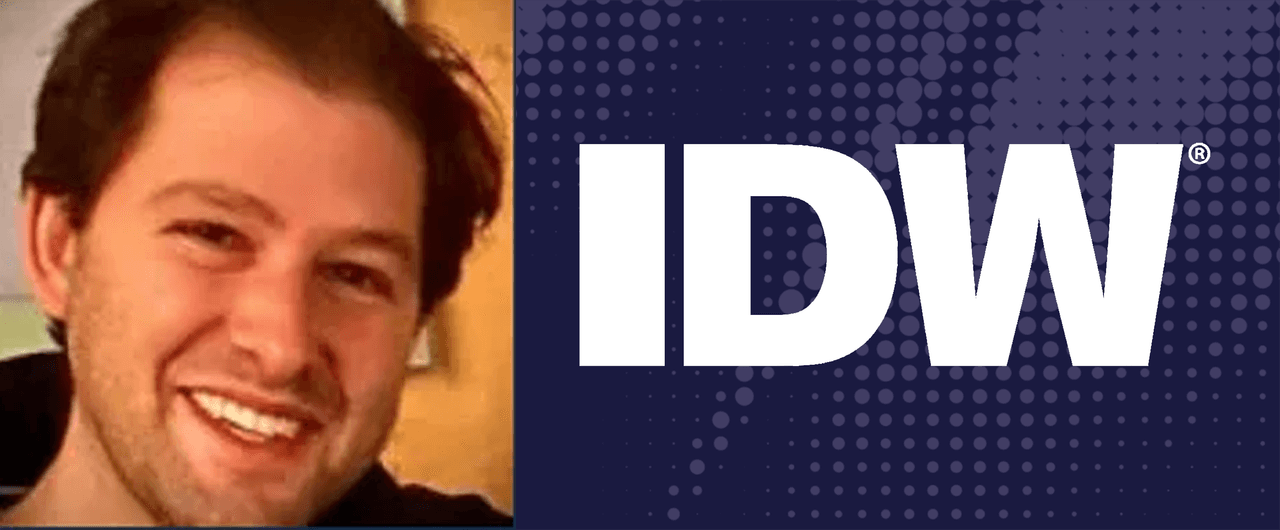
Even in an industry with a flair for theatrics, Davidi Jonas’s arrival as CEO of IDW Media Holdings (the parent company of IDW Publishing and IDW Entertinmant) could be called dramatic, and not for the reasons he may have intended. The announcement on April 27 that Jonas was replacing outgoing CEO Allan Grafman came amid a blitz of layoffs at the financially embattled company, with some 39% of the staff removed over the course of a single day, and the company’s stock de-listed from publicly-traded exchanges. It was an inauspicious debut for a figure that few comic readers had heard of prior to his new role.

Jonas came to IDW by way of IDT Corporation, a company founded by his father Howard Jonas which purchased a majority stake in IDW in 2007 prior to spinning it back off into an independent company. The younger Jonas’s pre-IDW business history was clouded by some amount of scandal, as he had only recently settled a $12.5 million lawsuit filed by shareholders around business dealings involving IDT and another Jonas-owned company, Straight Path Communications.
If none of this suggested a particularly comprehensive training for a comics publisher and burgeoning media producer, Jonas would be the first to say so – and, indeed, frequently has been in the days following his newfound assumption of leadership at IDW. In the weeks following the company’s layoffs, Jonas has presented an outgoing and communicative face to those warily curious about the direction and future of the company, expressing an optimistic vision of what he believes will be a more streamlined and better-positioned player in the comic market and beyond.
Recently, as Popverse reported on developments in IDW’s staff changes, we had the chance to speak with Davidi Jonas about his goals for IDW, his process leading up to and following the drastic layoffs, his background and education in comics as a field, and his understanding of where IDW can go from here. This interview was conducted in May 2023, and portions of this interview appeared in our previous reporting, but what follows is a much longer and more revealing discussion with one of the new, key players in the comic scene.
Popverse: During the IDW layoffs, a lot of senior management was let go. What was the intention of the layoffs, and the thinking behind the people who were let go, and those who were kept with the company?
Davidi Jonas: It was kind of three things. One was related to the reality of the financial situation. Going from fiscal Q1 to Q2, the company had a tremendous loss. From Q4 [2022] to Q1 [2023], the company lost I think it was $600,000 or $700,000. That wasn’t the scary moment. Part of that was beause there were some one-time revenue hits that were able to remediate the negative performance in the quarter. But we haven’t put out our Q2 numbers yet, but when we put out the initial press release regarding the reduction and the delisting [from the New York Stock Exchange], we did put out the capital on-hand at the company before paying out severance and related costs. And we went from having about $9.4 million to under $6 million in a quarter. Based on that run rate, the company was on a path to insolvency in a matter of two to three quarters.
So one of the objectives was just to figure out how to staunch the capital bleeding. Two was figuring out culture: what’s the right culture for the company in terms of who’s being kept and who’s going, and trying to hit that reset button on the culture side. And then three, which is sort of what I’ve spoken about previously, was figuring out bottoms-up, what are the functionalities and skillsets that we want the company to have going forward, and to retool the organization to have alignment between the different groups in the company, and making sure we have the skillsets?
So, doubling down on our digital capability and putting a team in place for that. Putting more of a focus on direct-to-consumer engagement, and fan engagement, and live events. So it wasn’t really a question of the company is top-heavy: if the people at the top were creating the most value in the organization, I think it would be hard to consider having them depart from the [organization] because they create too much value. A lot of the people that stayed on at IDW are on the higher end of the pay scale as far as employees go, but we felt those people we kept on are the ones that are going to provide long-term value, be the right culture fit, and provide the utility and skillsets that are going to give IDW the best chance of success.
When you say that you felt the company was on a path to insolvency because of the drop between Q1 and Q2, was that your own assessment, or had you heard that in consultation with others?
I certainly heard that in talking to the finance team within IDW, and just looking at the numbers. I could see what the revenue projections were for different divisions. I could see which of the projections were 'pie in the sky' and unlikely. I could see the overhead costs for IDW Media Holdings; I could see the overhead costs for IDW Entertainment. And I could see some of the revenue projections for IDW Publishing that maybe felt like they were out of reach. And within that I could see the cost structure for the [organization]. And you just take the numbers of what was going to come in, and what was going to flow out in terms of cost for the company versus inflow of capital, and the company was on a path to insolvency. I certainly did the math to come to the conclusion, but it wasn’t my opinion alone. It was widely shared by people who understood the finances of the company.
Can you comment on who those other people were that shared the assessment?
This is certainly something that executive management within the company prior to their departure were having a conversation about with the Board as soon as we got involved. The first Board meeting [of the new Board of Directors that included Jonas] was March 30 [2023]. And following that Board meeting, the Board basically said, “Look, it’s very clear that the company is on a crash course, and if we don’t change course very soon, we’re concerned that this company is going to get to a point where there’s no capital resources, and we’re going to have to either declare bankruptcy, or get into a position where we’re raising capital in such a diluted fashion to shareholders that it’s almost equivalent to our equity-holders to going into bankruptcy and wiping out their equity. 'So I’d say basically everyone at the upper level of leadership, including people who are no longer in the company, were part of that conversation. I think there were probably differences of opinion among people and leadership. Ultimately, the Board decided on the path we chose.
Was it during that March 30 meeting that the Board determined a wholesale change was going to be needed?
You know, it’s hard for me to say if it was at the Board’s first meeting. We were appointed to the Board on March 30, and had our first Board meeting on March 30. So that was our first meeting as a Board, and [our first] opportunity to engagement with management and get a sense of the company. So I don’t want to say at that meeting we already engaged in that conversation, because I think we were still digesting information. I had been myself preparing for the Board meeting, and already had a deeper sense of what the systemic issues were. So I think at the end of the Board meeting, it was more, 'Okay, we need to put time on the calendar to immediately address these financial issues, and what should be the organization of the company going forward.'
So I’d say maybe the conversation began at that point in time, and really picked up in earnest in maybe the second or third week in April, roughly. I mean, everything happened rather quickly. And again, the reason for the rapidity is because just on a monthly basis, on a weekly basis, the company was hemorrhaging capital and putting shareholders in a precarious position.
People in the comics industry don’t know you as well as they would like to. I know you come with a business background, but what is your interest in comics, and movies, and TV?
I think there’s a few ways to answer that. One is that business is business. You know, leveraging intellectual property assets in litigation, or creating value out of wireless spectrum assets, or working on software as a service versus being in comics and working with retail and direct-to-consumer – at the end of the day, business is business.
With regard to something in comics that really appealed to me? I love storytelling. My background is that I was a rabbi. And I find that being able to use storytelling as a way to engage with people, and to share in life’s most meaningful moments [is] a big part of what I was drawn to in the rabbinate. And I think comic books, entertainment, [and] the people who work in the industry and who work for IDW are trying to connect with a community, and give meaning and inspiration to people’s lives, and give entertainment, and excitement, and fun. And those are things that just resonate with me. And I feel like there’s a lot of really good things that we can do using publishing as a platform to create great values, and build real community, and connect with a wide and diverse community.
So for me, I like the modality of it. Could I have seen myself getting into some other form of media to do that kind of work? For sure. I think I got involved in IDW originally just as a board member thinking it would be a little bit more of a fiduciary and maybe cushy kind of job, of just making sure that the company’s moving in the right direction, but not needing to have hands-on, day-to-day involvement. When I realized how complex the situation was, I decided to jump all-in. And I think the Board was appreciative that that was a decision I made, because I don’t know that there were many alternatives. And I think the board is confident in my leadership.
But you know, now that I’m in it, I love it. I mean, I don’t think that when I decided to get more involved I knew how much I was going to enjoy it: getting to work with the team, and really get to hold, and touch, and experience the creative and different ways we can create fan engagement, and really excite and delight fans. I’m having a lot of fun. I’d say in a way, maybe I lucked into the position, but now that I’m fully invested, I’m having a lot of fun doing it.
But you weren’t a longtime comic fan who dreamed of being able to work in comics specifically prior to this?
No, no, no. In a way, I wish I was. I think people have a way of putting a nice spin on situations, so I have a bunch of people who tell me, 'I think it’s great that you’re not from the industry, and you bring a fresh, new perspective.'
And I don’t really know. But I do not come to comics from having, like, a fanboy experience of growing up or falling in love with certain people in the comics industry. I think I’ve had a disadvantage of not knowing the lingo yet, not having grown up in it. People will drop names of creators or artists that I’m not familiar with.
And I’m still learning to appreciate the celebrity value and the skills and contributions that people have made to the industry. With every day that goes by, I’m like, “Wow, I didn’t realize how big an impact that person made.” But every day is fun, because it’s going to be a learning experience. And I guess I’m coming with fresh eyes and a fresh appreciation. And thankfully, I have a great team of people that are giving me an education.
Who have you been turning to at the company to educate you?
Look, I’m a bit of a reader, so I try to get my hands on everything I can. So I’ve read a bunch of books about comics, and a bunch of online articles, just to get familiar with the industry. Mostly I’d say I’m reading what we publish – so, spending a lot of time just going through the catalog, from Originals, to licensed [books], to Top Shelf, and kind of getting a sense of the voice of what we’re putting out.
And then thankfully I’ve had the opportunity internally to get brought up to speed on the world of comics from – you know, I think I said in another interview, “I feel like I’m walking in Monument Park in Yankee Stadium.” You know, I’m talking to Chris Staros, Scott Dunbier, Heather Antos, Charles Beacham, Jamie Rich, Mark Doyle, David Marriotte, Riley Farmer. We have some incredibly talented people in the [organization], and people are giving me – I don’t know if I’d call it a crash course so much as a PhD in comics, because they’re at such a high level.
But it’s certainly been a wonderful learning experience because they not only understand what they’re working on, but they understand the industry and the history. So having that broad perspective from people who have been doing it for 30 years, and then people who are much less than that, and kind of getting the historical but also the current perspective. And then also just on the business of comics, and the sales and marketing and different techniques the competitors are doing. So I’m trying to be a bit of a sponge, and soak it up wherever I can get it.
Can you say who the people were who helped you figure out the very difficult decision of who would stay at the company, and who would be let go?
I think it was certainly a board decision. At the end of the day, at think the board were the ones who were making this decision at the highest level and putting it into action. In terms of getting perspective, it’s a difficult spot when you’re making decisions like this from a distance, because it’s hard to really get into the company and try to suss out the information from a broad group of people, because it could put the entire company on edge and create an environment of fear and anxiety. And that’s certainly not something I’d want to put people through. So there were people that were in leadership, and who I think were going to be in future leadership that were most involved in these considerations, but I couldn’t really say it was this one person, or that one person. And I don’t think that there was any personal animus or anything like that.
I was very clear from the outset that what’s most important is to have the right organizational structure to be able to execute on our strategy. And I repeated many, many times to different groups within the company that this really has to be as much as possible an objective decision-making process, and people shouldn’t be trying to push this person out because there’s a personal situation, or protect this person because they have some kind of personal affiliation or relationship. It really has to be as much as possible trying to act in the best interest of the company and the shareholders.
Do I know that we made all the right decisions? Of course I don’t. There’s no way to know that without living in alternate realities. Like I said, it’s hard to make perfect decisions without perfect information. And so there was certainly reliance on leadership within the company. I trust their people. I trust that they were giving us the right guidance. Is it possible that we made mistakes? I’d say yeah, and that if we made mistakes, that’s on me. It was hard for me to try and get all the information, and be thoughtful about the decisions that we were making. We did the best we could.
Do I think that there were some incredibly talented people that were let go in the company? Absolutely. I think these people are going to go on to have great careers. And I expect that they’ll be competitors to us at some point, and we’ll have to contend with that. And, you know, I wish them the best in their future endeavors. And at the same time, I see the team that we do have, and I see the organization, and it’s hard for me to imagine what a better organization would look like.
I think the team did an excellent job of putting together a team, and day to day they are just doing an excellent job collaborating, aligning, talking, moving product forward, moving forward on new forms on engagement, moving on digital, moving on live-to-consumer, moving on getting our publishing schedule continuing to be on schedule, dealing with licensors, creators. No one’s dropping any balls. So I’d say the only thing I don’t know is the alternative reality would look like. I do know what reality today looks like. And based on reality today, I think the guidance we got was quite excellent, because the team we have is superb and doing a great job.
Can you talk a little bit about why you felt the company needed a new publisher in place of former IDW PublisherNachie Marsham? Why did you feel there needed to be a change at that top level after Marsham’s years with the company?
I have the highest respect for Nachie as a person and as a professional. I really like Nachie, and I think he’s very talented. In terms of the decision, part of it is a culture question. Part of it is an alignment with organizational goals and skills that people bring to bear, and we felt that the people that were coming into leadership would be a better fit to execute on those goals.
What about the changes in sales and marketing, because obviously some of the biggest moves happened there.
Like I said, a lot of it was based on conversations within the company and within leadership, and figuring out where we thought there were real opportunities for the company to grow and excel. And that was one of the areas where we thought there was a lot of room for growth, and kind of hitting the reset button. Some of that is based on the way that sales and marketing were being done in terms of the outlets for sales, and marketing channels, and engagement with the retailers, engagement with booksellers – things that we kind of felt needed a fresh approach. And some of it was based on the siloed operational structure of IDW before the Board made this decision, and realizing that it’s hard to ask an entire group of people within a company to change the way in which they operate after they’ve been doing that for a number of years. And it was a larger team than I felt made sense from a bottoms-up analysis.
So all of those things put together coalesced into a decision that the right thing to do was hit the reset button and realize that there’s some incredibly talented people that are not going to be part of IDW. And the conscious choice of rebuilding and starting with a fresh, new approach.
What were some of those channels that you felt weren’t being exploited at IDW?
One, for instance, is commitment and relationship-building with the retailers in the independent comic market, independent comic store owners. That wasn’t something that hadn’t been a top priority for the sales and marketing team. In terms of how we do marketing, and where we put our marketing, and how we connect with fans, I felt that there was a disconnect between where our fans are on social media on Instagram, on TikTok, Facebook, [and] Twitter, and the level of focus and capital allocation toward those channels.

What about what you were saying about the company being “siloed"? I know you’ve mentioned that before, so in what way was communication not happening between departments?
I look at the creative process as being somewhat cradle to grave: there has to be a real ownership and responsibility for the relationship that the creative team has. So when you bring a licensor or a partner in, or when you bring a creator to do an Original, there’s a relationship there. There’s a responsibility there. So the creative team, let’s say on the editorial side, works really closely in alignment with our partners, with the creators, and licensors to create the best storytelling. And then, in a traditional siloed work environment, we kind of lob it over [and] give the final floppy of the comic or the book and say, “This is the book, can you please go and do the sales and marketing for it.”
And I think there was a disconnect between the engagement that the creative team was having, and the level of commitment or expectation of sales and successful marketing, to be able to look at our partners and say, “Yes, we’re doing our very best to find an audience for this book and to create that authentic engagement.” When we can’t look at our partners and tell them that we’re doing our very best, I think that puts the company in a tough spot. And part of the reason for that was because of the siloed nature of the work, where you just can’t have the same level of commitment if you’re not part of an earlier stage in the process.
And that’s one of the things that we’re trying to change at IDW, where people that are involved in the sales and the marketing, and having relationships with the retailers – you know, that is kind of the end cycle of the sales process. We want them engaged from an earlier stage: not just getting the finished product, but understanding the product as it’s going through conception, and knowing the creative partners that we work with, and having a relationship with them, and feeling also that sense of ownership. And then also creating that more direct connection and continuity between the editorial team and the sales team, and continuing to make sure that we’re doing our very best by our partners.
I know a lot of the team was let go on the publicity side, and we ended up reaching out to you directly because at that point, there wasn’t any PR team that we could find. Can you say anything about bringing on new hires in that department?
I don’t know how specific we can get. I can tell you that we didn’t decide to stop doing sales and marketing. We decided to rebuild. So we’ve already brought a couple of people in to start rebuilding that team. We’ve deployed a bunch of people within the company that we gelt could create value on the sales and marketing side. So they’re doing some additional roles in addition to what they’ve been doing in the past. And we’re continuing to bring in talent to flesh out that team.
At this point, is your feeling that you want to re-staff the company at the same level that it was before the layoffs?
No, I think it was oversized. I think the company was out of alignment in terms of the level of staffing and the size of the different groups. For instance, I’m at the corporate level. When I was coming into the conversation, let’s say in the middle of March to the end of March, the corporate team was much bigger and also much more expensive. I don’t see the value in having a large corporate team. I think this should be a streamlined organization, and that I as the CEO need to be directly involved and engaged in the lines of business in Entertainment and Publishing.
You know, if you go back and look at the size of the company 10 years ago when we were doing the same amount of revenue in a more challenging circumstance for the company – the company wasn’t as mature; there were not as many dynamic distribution channels at the time; PRH wasn’t an option. It was just dealing with Diamond on the direct market. Internet sales, ecommerce, digital: these things were just kind of in their infancy. At that time, they had 45, 46 people, and were still doing about $25-26 million in revenue. So I just think the company was oversized in the last few years, and that showed on the balance sheet. I think we want to keep it at a lean, mean fighting shape.
There have also been a lot of staff changes on the IDW Entertainment side. What are your plans to move forward in that area?
Just to take a step back and look at some of the franchises that IDW has been able to get onto streaming channels and cable channels, you know, some of those streaming and cable shows have done quite qell critically and in terms of fan engagement. And on the whole, I don’t think that IDW was creating the maximal opportunity for fans to engage with the franchises and mediums that we had the rights to. And that’s something that I want to change going forward, and to a degree retrospectively. I think there’s still an opportunity to create fan engagement and show love and appreciation for fans of Wynona Earp, for fans of Locke and Key.
I think when we talk about Entertainment, we have to recognize that Entertainment is one spoke on the wheel. And we have a responsibility to our creative partners that we’re bringing to Entertainment to make sure that when we have the iron striking that we need to strike again and again, to be able to maximize that moment in time where fans really are engaged and excited, and want additional modalities and opportunities to engage with the franchise. So, like I said, part of that is retrospective, and you’ll see hopefully some of that going forward on titles that have already gone to screen.
And in terms of titles that we have, we have a lot of titles: not three or four, but more like 10, 20, and maybe even more than that, that are in process in Hollywood where they’re under option or are under consideration. We’re continuing to put forward new titles, new originals, and almost all of them are in partnership: we’re doing these on a partnership basis, whether it’s a profit sharing arrangement, or a shared producer credit arrangement with our creative partners. And it has redundant value in terms of bringing the fans back to the original IP that was created in print.
So I’d say we’re not slowing down on Entertainment. We’re planning to pick up steam, and hopefully will have shows and movies that are going to go into production. I can’t take the bull by the horns if we’re not making the decision, and at this point we don’t have the capital resources to make the decision to greenlight those shows, or to debt finance the production. So at this point those decisions are in the hands of partners from studios and from content creation companies. So we’re reliant on their timeline and on their buying predilections and habits, and what they want at a particular moment in time. Thankfully we have a really broad catalog of IP, and a really compelling catalog of IP, and a strong sales team. I do think in the future you're going to see more shows from IDW.
I just want to ask one more thing, because we’ve heard from a lot of the employees who were let go from the company, and a lot of them were obviously taken off-guard by these decisions. And I’m wondering if you have anything that you would say to them now, or that you have said to them about your decisions.
Thank you for that question. Most of the employees who were let go, I never had the good fortune of getting to meet in person and develop a personal relationship. The few that I did, I did try to reach out to them, and wish them well, and let them know that on the personal and a professional level that I like them, and I respect them, and I hope that we'll have opportunities in the future to cross paths in a collaborative way. For the people that were let go, look, it’s an awful decision. And I feel like I can't really give you the proper words now because it's going to sound like I'm just reading off a sheet.
I can tell you, I lost sleep. I lost appetite. It's a completely shitty feeling to be in a position to make a choice about people’s livelihoods, you know? People have told me about employees that moved across the country. I wasn't aware of all those facts, but it's awful. It’s a truly terrible decision to have to make, but I can tell you why the decision was made, which is: if we wouldn’t have made the hard choices, the company would have had the ability to employ 82 people for another nine months. And that would have been terribly tragic, because that would mean that an entire company would potentially lose its ability to provide for themselves and for their families, and to have fun at work.
And making the hard choice that we made, I think that we're going to continue to have the ability to employ, whether it's 50, 45, 55, whatever that magic number is at any given point in time. But I'd say I'm confident that we have around the right number of staff. I think we'll have the ability to have a company that's going to be successful for decades to come. And it's an awful decision. If I could say anything to the people that were let go, I would say I’m sorry. I feel badly. And I hope they don’t begrudge me, but I would understand if they do. I don't know that all the right decisions were made. And if they feel that we made mistakes in certain choices, they very well might be right. I have no way of knowing.
I hope that I one day look back and say, “Man, that was a really foolish decision to let that person go, because they’re so valuable, and such a great industry participant.” And that’s my wish for them: that they give me heartache in the future by being great competitors, and hopefully along the way we get to become friends.
Follow Popverse for upcoming event coverage and news
Find out how we conduct our review by reading our review policy
Let Popverse be your tour guide through the wilderness of pop culture
Sign in and let us help you find your new favorite thing.





Comments
Want to join the discussion? Please activate your account first.
Visit Reedpop ID if you need to resend the confirmation email.