If you click on a link and make a purchase we may receive a small commission. Read our editorial policy.
Kickstarter's comics director speaks on the successes in 2022, and challenges ahead for the company and crowdfunding in general
Inside the successes and challenges of Kickstarter's comics division with director of publishing & comics outreach Oriana Leckert

One of the biggest successes in the past decade for comics (and in creative endeavors in general) has been crowdfunding, and Kickstarter is almost synonymous with said movement. But the pandemic, supply chain issues, and the company's announced plans to be involved in the highly-suspect world of blockchain are bound to have affected the bottom line for Kickstarter comics, yes?
No, not really.
For the comics section of Kickstarter, 2021 was the best year ever - and 2022 is tracking to be similarly successful. According to Kickstarter's director of publishing & comics outreach Oriana Leckert, Kickstarter comics campaigns have raised over $5.5 million in the first quarter of 2022 - less than a $100,000 difference than in Q1 of 2021. The first quarter of 2022 has had some previous Kickstarter success stories return such as Let's Play and Stand Still. Stay Silent, as well as some new faces such as Kolchak: The Night Stalker and Arsene Lupin, Gentleman Thief.
Popverse spoke with Kickstarter's Oriana Leckert to dig into the story of Kickstarter Comics in 2022 so far, as well as the factors that are pushing and pulling it along. In the conversation, we cover Kickstarter's decision to get into blockchain, the rise of ancillary fulfillment companies in a Kickstarter ecosystem, and what goes into curating what should be a Kickstarter project.
We've just passed the halfway mark of 2022, and in the past, Kickstarter has been very transparent about statistics of what's happening inside the company. 2021 was Kickstarter's best year ever - so how is 2022 so far?
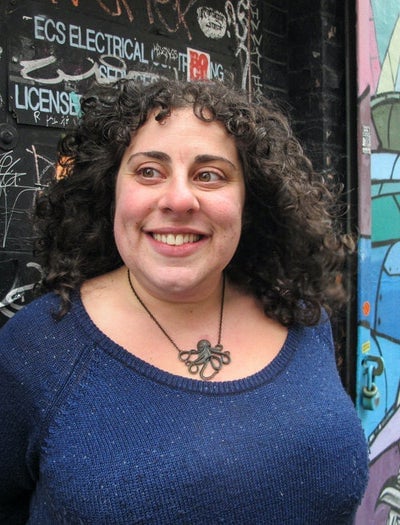
Oriana Leckert: My purview is #KickstarterReads — publishing, comics, and journalism — and in those categories, we’re tracking to do just as well or slightly better than 2021.
Since Kickstarter campaigns run for about a month, we won’t have full H1 data until the end of July, but as of June 1st, we’ve had 3,628 projects launched (there were 6,778 total in 2021), and the success rate is 62%, the same as it was last year.
We also look at the success rate for projects with at least 25 backers, which is a strong predictor of crowdfunding success as it indicates creators who are reaching beyond their inner circle. Sitewide, that success rate is currently 78%; in publishing, comics, and journalism, it’s 84%, and looking at just comics, it’s an astounding 87%.
Comics have been the Kickstarter category with the highest success rate for years now. Is that still the case? If so, why do you think that is?
I’m delighted to confirm that it’s still the case, for the sixth year in a row. I think there are two main reasons for this: the savviness and originality of Kickstarter comics creators and the support and dedication of Kickstarter Comics backers.
Comics has always had a strong DIY spirit, and concepts like crowdfunding and self-publishing have much less stigma here than in, say, traditional book publishing. Additionally, books and comics have relatively low manufacturing costs and relatively simple production processes, making it a category with a low barrier to entry for both creators and backers.
And I can’t over-emphasize the passion of the Kickstarter Comics community, which is filled with writers, readers, and artists who are just tirelessly working to uplift one another all the time.
Let's look beyond the success rate, to audience retention: do you keep stats on how Kickstarter creators' second campaigns do compared to their first?

I’m so glad you asked! This is another area where Comics is incredibly strong: 51% of successful Kickstarter comics creators launch a second project within 12 months, which is tied with games for our highest category relaunch rate. And look at this fantastic success rate growth:
- 1 project: 64%
- 2 projects: 74%
- 3 projects: 79%
- 4 projects: 82%
- 5 projects: 84%
- 10 projects: 89%
- 15 projects: 90%
- 20 projects: 92%
From the stats you've given me, Q1 2022 has 12 more successful comic projects than Q1 2021, but they raised $86,000 less. What do you see in that disparity?
In the scheme of things, I’d say that’s not a huge disparity, and that there’s not much to read into it for the category as a whole. One fewer BOOM! Studios or Lorenzo Etherington or Brian Pullido campaign, or even one that happens in Q2 vs. Q1, can make a much bigger difference than that to our quarterly numbers.
As with many things in life, Kickstarter seems to be about curating the best projects that have a chance at success for the platform. What goes into the review process these days, and has it changed?
My colleagues on Trust & Safety would have the most nuanced answer to that, but I don’t think our rules have or will change dramatically. Our platform is designed to help any creative project find its audience, so long as it’s free of hate speech, bigotry, or calls for violence, is presented honestly and clearly, and is designed to make something new to share with the world.

For the past few years, I've noticed the number of far-right and alt-right projects diminished at Kickstarter, with some of those going to other platforms. What is Kickstarter's stance on Comicsgate, Gamergate, etc, and those that create racist, transphobic, homophobic and misogynistic projects and their place on Kickstarter?
Kickstarter has a responsibility to ensure our platform is a safe space for all creators, especially those who have historically been marginalized, misrepresented, or silenced, and to do so as objectively and fairly as possible. So there is absolutely no home here for anyone who foments hate and cruelty toward those communities, or anyone else.
Seven months ago Kickstarter announced plans to use blockchain for a new open source protocol. The announcement led to some backlash amongst the Kickstarter user base and those surrounding it. How has that impacted the Kickstarter Reads community?
Kickstarter has a lot of ideas about how a new, decentralized protocol could help creators and backers, and the company still feels strongly that these new technologies are worth exploring. But tools are also only as good as what they're used to build. We know it’s our responsibility to make sure everything we do serves creators, backers, and the entire creative ecosystem, and that we are designing thoughtfully with full awareness of the challenges.

It’s clear we should have been ready to communicate that better to our community when we first shared our plans, and it’s on us to listen to our audiences closely before making any significant changes, to continue proving ourselves a reliable and trustworthy platform, and to ensure that creators and backers feel confident sticking with us for the long haul.
Speaking of long haul, If you've used Kickstarter for any significant length of time you're bound to be stung by a successful project that never fulfilled on their project. How does Kickstarter vet projects to help prevent that, and are there things Kickstarter can do/already does when they see something like that transpire?
More than 200,000 projects have been funded on Kickstarter, and the vast majority do complete their work as promised. But we try to be quite clear that not every project will go smoothly, and we’ve worked hard to articulate how trust works at Kickstarter.
We believe that it’s our responsibility to provide a safe and reliable platform, it’s creators’ responsibility to create and fulfill their projects and rewards, and it’s backers’ responsibility to make the choice to support any given creator or project — with the full understanding that Kickstarter is not a store and rewards are not explicitly guaranteed. This underpins a lot of our rules, such as not allowing excessive use of superlatives in project descriptions, not permitting creators to launch a new project before fulfilling their last one, and requiring that projects clearly articulate the risks & challenges that could stand in the way of completion.

Our Trust & Safety team also works very hard to weed out suspicious or problematic-seeming projects before they launch, and we have a robust reporting system for users to send in a tip if they believe a live project is making unreasonable claims.
Ultimately, we hope that everyone understands that when you use Kickstarter you’re not — or not just — purchasing a ready-made product; you’re joining someone on their creative journey, pledging with your dollars that you believe they will be able to complete it, and enthusiastically coming along for the ride as they do. We’re also extremely aware of the supply-chain disruptions, paper shortages, and shipping challenges impacting creators right now, so we hope that backers will extend a bit of extra grace and compassion for projects coming in later than expected (and we encourage creators to be transparent about why that’s happening).
With the success of Kickstarter, there's opened up opportunities for ancillary companies to help creators manage success - especially with back-end fulfillment companies. What does Kickstarter have in mind for its own back-end fulfillment enterprises in the future?
I’m not going to break any news for you here, sorry! But this is certainly something that’s being considered at the company level in a variety of ways, as Kickstarter is always looking to give our creators additional tools to help them succeed.
One of the most popular outside back-end fulfillment companies, BackerKit, is working on their own crowdfunding platform. How do you view that?
There are a lot of crowdfunding platforms out there. We’re certainly not the only game in town, and we’re not trying to be! Our goal is our mission, not market share. We believe that the more creative projects that come to life in this world, the better, and that every creator deserves to find the funding they need, using the platform that fits them best.
I’m obviously biased, but I strongly believe that Kickstarter is the best, most ethical platform for creative campaigns that are seeking project-based fixed funding, and that we have the strongest, most passionate network of backers waiting to support campaigns that launch on our site.
This shift in the competitive landscape has also helped push Kickstarter to refine our value proposition and take strides to be more responsive to our creator community, which we’ve demonstrated recently by announcing our very first Creator Council, introducing add-ons, improving our comment moderation tools, and fixing a persistent issue with locking rewards.
We also just released our 2021 Public Benefit Report, where we shared the ways we’ve demonstrated our company values in the past year, such as donating 5% of our after-tax profits to arts and music education and to organizations fighting to end systemic inequality, offering transparent reporting on our pay ratios and employee demographics, paying our fair share of taxes, renewing our Climate Neutral Certification, and launching two new foundational partnerships to provide funds to marginalized creators in an effort to create a more diverse and equitable artistic ecosystem.
The first meeting took place at the end of June , and we’re all tremendously excited to see what comes of this long-term, deep engagement with such an incredible group representing our vast and varied creator community. The council will meet every other month, and I truly cannot wait to see how their input, expertise, and knowledge will impact our company roadmap this year.
Going big picture here, have you noticed any particular trends on the comics front of Kickstarter campaigns?
I’ve seen a proliferation of fantasy projects lately, particularly drawing on things like mythology, history, and magick. In the runup to San Diego Comic Con, I happen to know that a handful of indie comics publishers are gearing up to launch some very exciting campaigns (stay tuned for those!).
And as we’re just coming to the end of Pride month, it’s been gratifying to see so many campaigns by and centering LGBTQIA+ voices, from Kat Calamia’s latest bisexual anthology to an erotic French webcomic collection to a Black queer horror story to a gay demon boy romance to experimental trans comics.
What do you see in the near-future for Kickstarter, for crowdfunding, and project creation as a whole?
Gosh, that’s a pretty huge question.
I guess I see the dizzying march of wildly ambitious and endlessly creative comics folks continuing to bring their beauties to our site, assembling and delighting their backers with their artistic aplomb, and successfully navigating the supply-chain chaos, COVID fallout, and every other obstacle in their paths to continue to build lives of artistic integrity surrounded by their enthusiastically supportive communities.
Art is crucial in times of crisis, and I see folks continuing to use their creativity to find both solutions and much-needed respite from the exceedingly difficult times we’re living through. That seems like the best we can hope for, right?
Speaking of amazing recent kickstarters, check out Popverse's interview with Jeehyung Lee all about the kickstarter project Gumaa: The Beginning of Her
Follow Popverse for upcoming event coverage and news
Find out how we conduct our review by reading our review policy
Let Popverse be your tour guide through the wilderness of pop culture
Sign in and let us help you find your new favorite thing.

Comments
Want to join the discussion? Please activate your account first.
Visit Reedpop ID if you need to resend the confirmation email.