If you click on a link and make a purchase we may receive a small commission. Read our editorial policy.
Metallic Rouge: Everything you need to know about your new favorite anime, according to the creators
In a roundtable interview with Popverse at Anime NYC, the creators of Metallic Rouge hyped their upcoming original anime series


For twenty five years, one of the premier anime studios in Japan has been BONES, the studio behind such enormously popular and highly influential anime as Fullmetal Alchemist, My Hero Academia, and Mob Psycho 100. BONES isn’t slowing down, poised to launch the new mecha anime series Metallic Rouge in January 2024, with international streaming available through Crunchyroll. Packed with themes of existence and identity, with plenty of fiery, hi-octane battles, Metallic Rouge is ready to become the biggest anime debut of 2024 and continue BONES’ legacy for another 20 years.
What is Metallic Rouge about?
An original property, not based on an existing manga or game, Metallic Rouge is set in a future where humanity has colonized and terraformed Mars, with androids obediently servicing people around the planet. The story follows an android girl named Rouge and her new friend Naomi as they contend with nine artificial humans who have their own malevolent plans for humanity and its future on Mars. This leads to epic battles between mechas, with Rouge possessing an awesome transformation that allows her to tap into her full potential and save the day.
In a roundtable interview at Anime NYC 2023 attended by Popverse, BONES President and Metallic Rouge producer Masahiko Minami, supervising director and series composition writer Yutaka Izubuchi, and music composer Taisei Iwasaki talked about the haunting tech noir aesthetic that brings the series to atmospheric life, the musical composition choices behind Metallic Rouge, and what fans can expect when Metallic Rouge premieres on Crunchyroll this January.
The influences behind Metallic Rouge
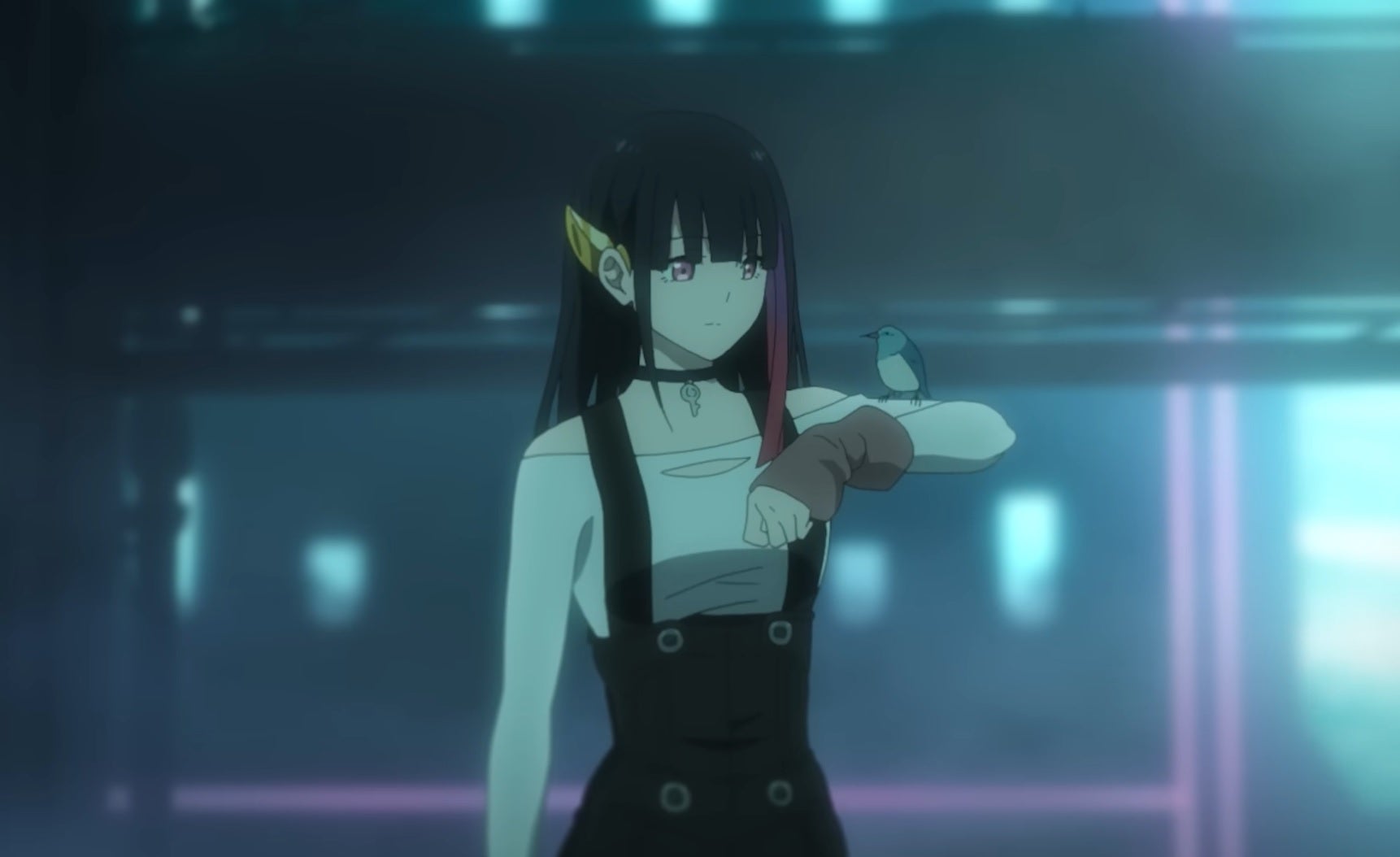
With the creative freedom afforded building an original property from the ground up, Metallic Rouge features a noticeable blend of influences, from spaghetti western allusions in the musical score to tokusatsu-inspired designs for the transformed characters as they battle each other. “The first thing we worked on was the chronological storyline, this is the history of the world as they know it,” Minami added. To give the story a more propulsive quality, two out of nine of the artificial humans are neutralized at the start of the series. With that history and background established, this allowed the creative team to “focus on a specific part of the story.”
“I had a visual in my mind that preceded all of this, of a boy watching what looked like stars coming down,” BONES President and Metallic Rouge producer Minami recalled about the inspiration behind Metallic Rouge. “That was the first contact of the human race with aliens and the first point in which this history begins. All of this are the consequences from this one image.”
“What we want to focus on is that this isn’t Mars as we know it today,” Minami observed in response to a question from Popverse about the moody tech noir environments of Metallic Rouge. “It’s been humanized for inhabitants of the human species and transformed as a habitable community. Although it’s not the red planet as we know it, there are elements of rouge and crimson. These are themes and Mars seemed like a very appropriate place to start, despite it no longer being the red planet as we think about it in our time.”
The themes behind Metallic Rouge
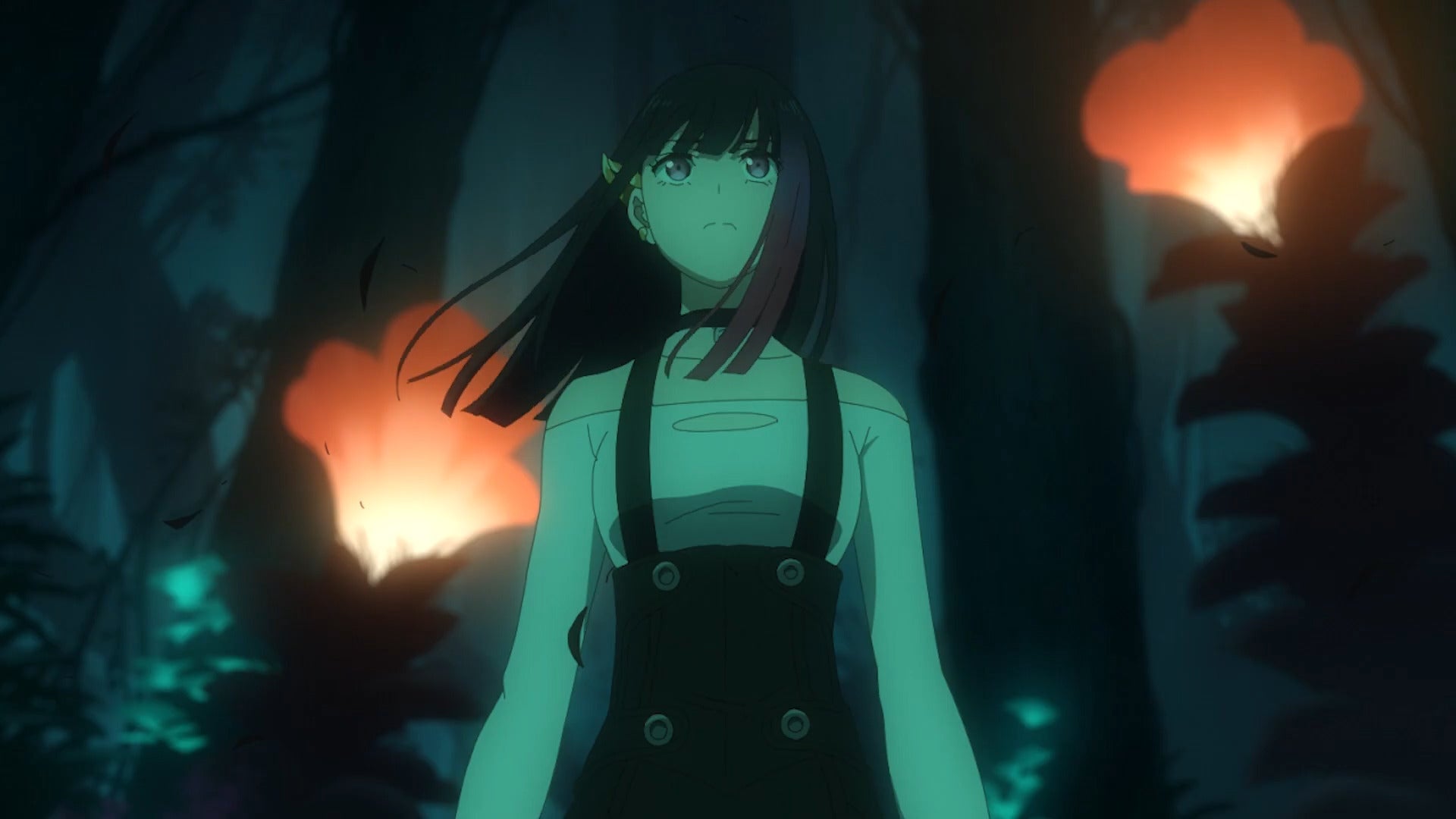
In terms of narrative themes, BONES President and Metallic Rouge producer Minami noted that “the core of our story is a post-war scenario.” The effects of this recent war that humanity weathered is a subtext throughout the story, filtered through a science fiction lens. This genre distinction allowed the creative team to incorporate “more challenging themes” than they could’ve in a more contemporary setting. “We were able to ask questions about social unrest in a way that wasn’t so personal. It gets to the core of cultural aspects: prejudice, segregation, all of these things that are much more challenging to discuss if you make it too personal.”
While Metallic Rouge comes out as Bones marks its 25 year anniversary, the creative team doesn’t see the new series as an overly commemorative piece to the studio’s history, nor do they feel beholden to the landmark anniversary. Instead, they see the 25 year mark as more of a window into a more expansive and successful future.
“It’s 25 years, but only a quarter of a century.” Izubuchi stated. “I really want to emphasize that this is a starting point. It’s not a milestone, but it really helps propel us to the next 25 years and much more beyond. This is a world that’s adapted for detective stories, you can fit in a mystery, add some elements of horror. It’s really forming the base foundation for many more decades to come of animation.”
With so much of Bones’ animated output containing prominent science fiction elements, supervising director and series composition writer Izubuchi felt like this was the perfect genre for the studio to work in, as it is “limited only by imagination” and “illustration makes anything possible.” Izubuchi noted, with a laugh, that this is also reflective of his past work with Sunrise, the anime studio behind Cowboy Bebop.
The characters in Metallic Rouge
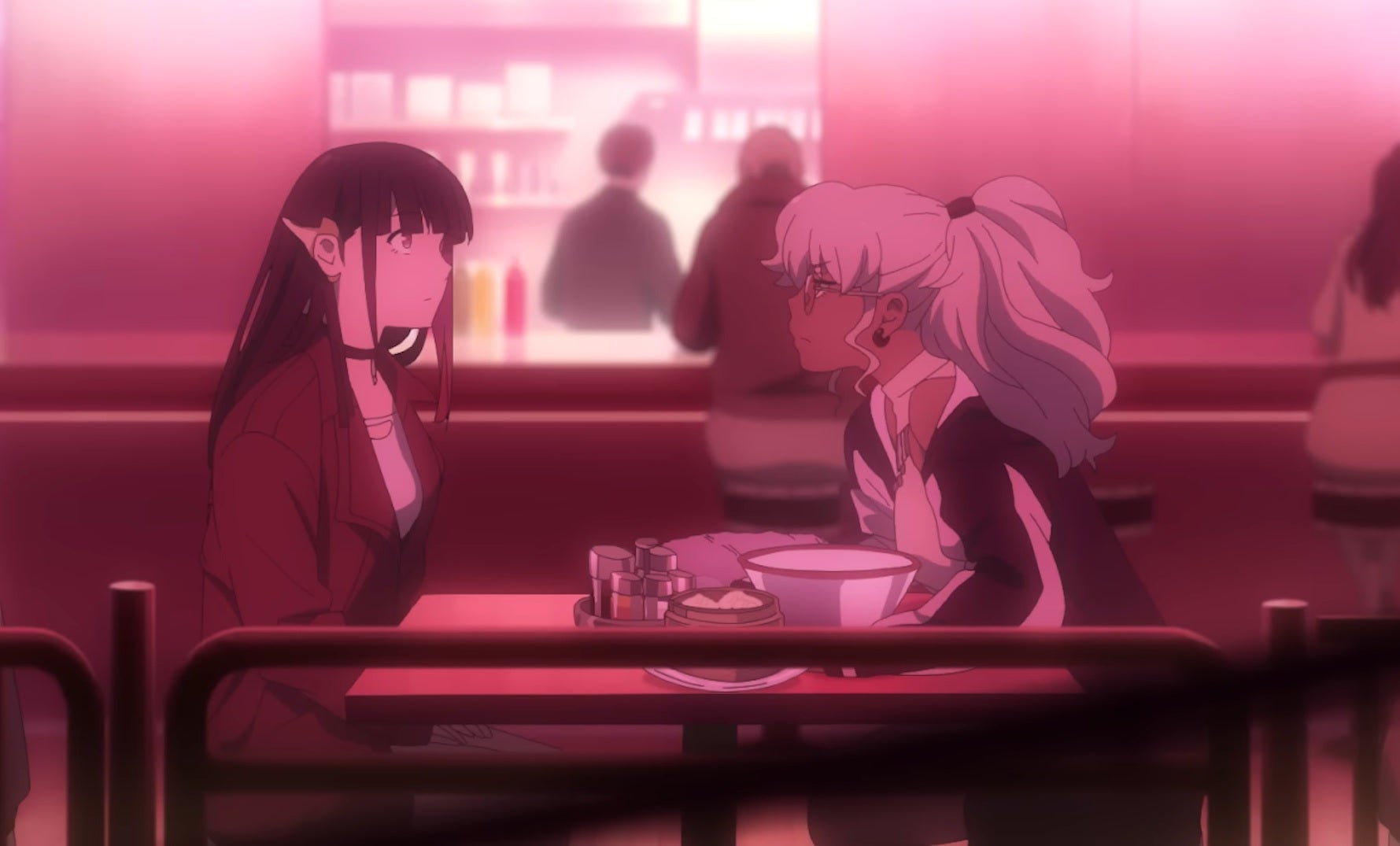
Metallic Rouge’s protagonist Rouge and her companion Naomi mark a unique aspect for the storytelling as the creators guide viewers through this bold vision of Mars. More than just someone for Rouge to play off of, Naomi's relationship with Rouge alleviated the tone for the series overall.
“Originally, this wasn’t a duo-buddy story, it was more of a single hero story,” Minami revealed when Popverse asked about the two characters’ dynamic. “But when we were conceiving the story, I wanted to add a little more dialogue for comedic relief. I wanted to have little moments of lightness, bring some fun and laughter. All of this could be made possible by having a duo story between the main characters so that we can have dialogue and interactions. This may be my first time to have female main characters, so it is definitely something that I’m enjoying myself in the process of creating it. This adds a new dimension by having it be a duo story.”
The music behind Metallic Rouge
For the music, composer Iwasaki was interested in figuring out what kind of music the inhabitants of this world would be listening to, including the jazz clubs seen throughout this community. By asking himself what the characters would themselves listen to, he was able to approach the composition for Metallic Rouge. Iwasaki found the composition to be a unique process. “Because it’s so expansive, it really does feel like a new beginning,” he added.
Iwasaki traveled the world while composing the score for Blood Blockade Battlefront but found, “regardless of cultural backgrounds, a good take is a good take.” During his travels, Iwasaki found something fundamental and universal in how humans recognized good music as good music. He maintained this idea of creating good music and “pursuing music I feel is best for us in the context of this world” in his creation of the score.
Music was a consciously important component in creating the world of Metallic Rouge, helping give the world and its characters a greater sense of standalone identity. The music highlights the inherent tragedy of the story, with Rouge forced to battle the artificial humans she grows close to personally. For this reason, the character Sara Fitzgerald is introduced as a singer, “as a way to add more emotions and more tools for us to pull the audience into the world that we’re creating.”
The aesthetic behind Metallic Rouge
Though the world and aesthetic of Metallic Rouge has clear tech noir sensibilities, it wasn’t consciously developed to evoke ‘80s cyberpunk, but instead create a feeling of relatability for the audience. “If it’s completely advanced and over-technologized, it could feel too foreign and too different,” Minami explained. “I have the option to make cars without tires, but it’s the tires that make the car. Those are the kinds of decisions I’m constantly making to make sure the world is not out of touch and that we’re able to connect with it.”
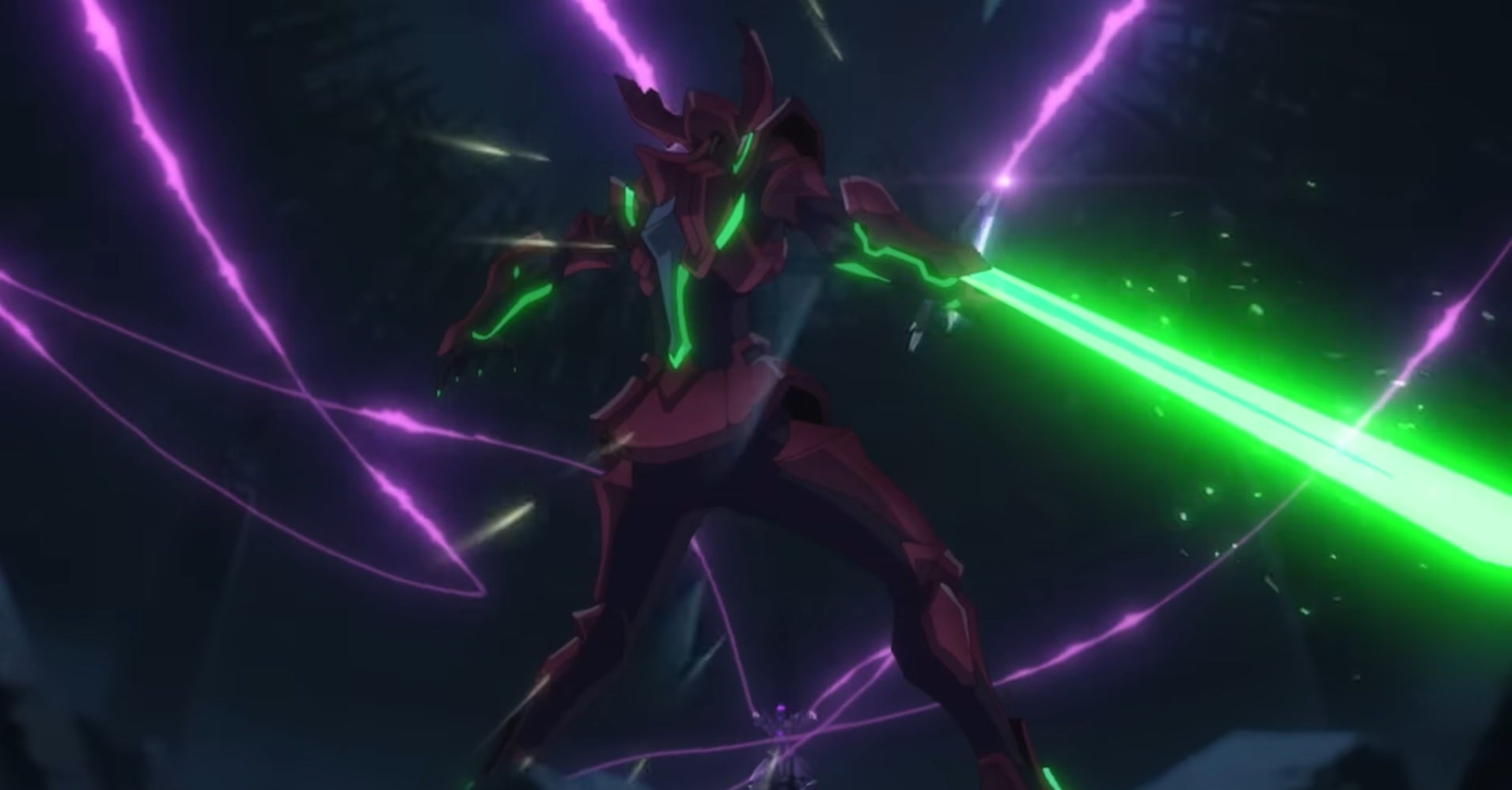
After watching the series premiere, Popverse was struck by the bombastic action sequences in Metallic Rouge, as Rouge and the artificial humans transform into their respective gladiator forms and battle each other across Mars. Popverse asked about how the creative team wanted to approach crafting such distinct fights, including adding an operatic quality to them with the music.
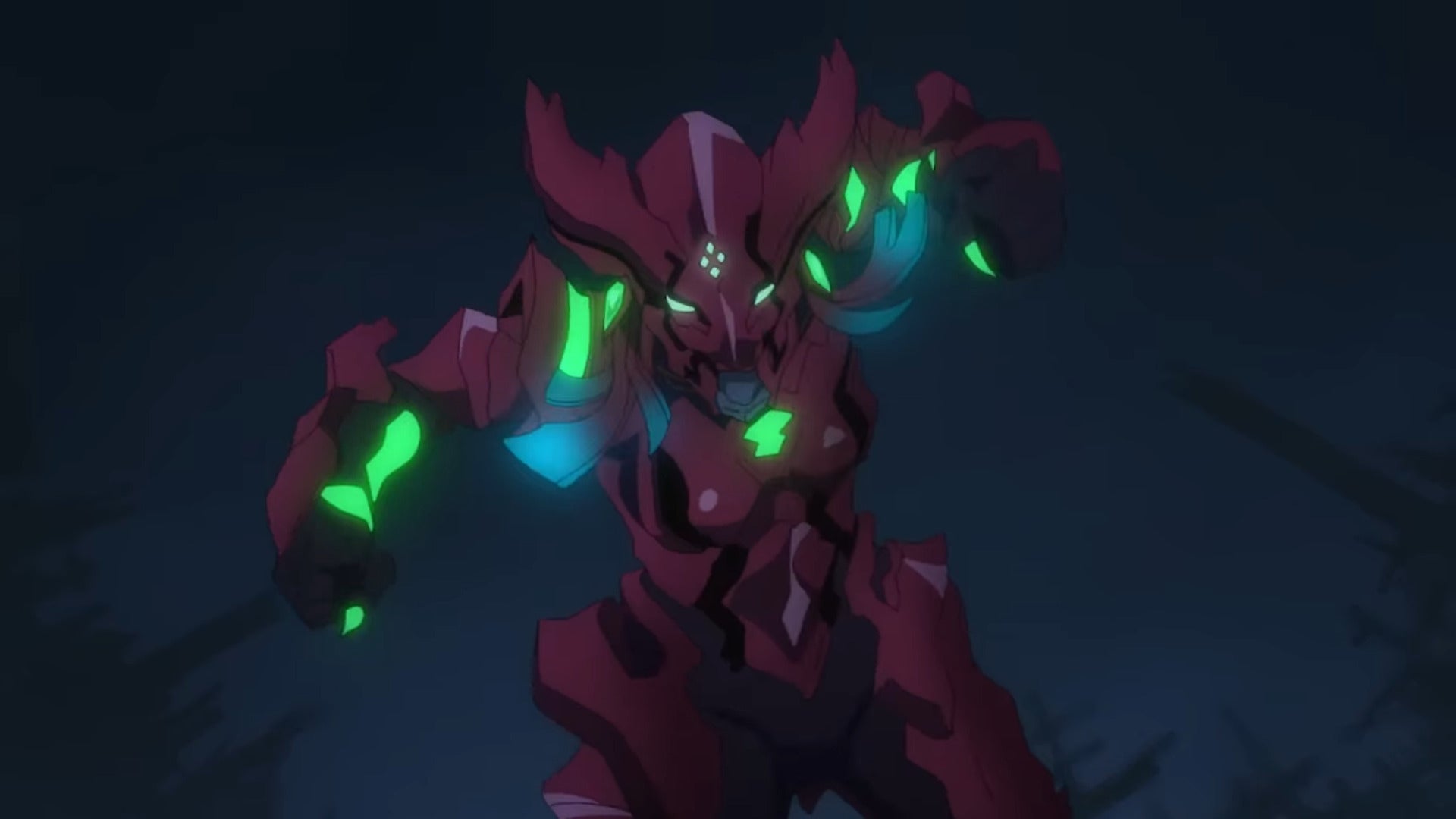
“One of the most important things in Japanese animation is the size of the robots,” Minami and Izubuchi smiled. “The bottom has to be seven meters, a Gundam has to be 18 meters, V-Gundams are a little smaller at 12 meters. These are the kinds of details we spent a lot of time on. The size of the gladiators was a big topic of discussion. Originally they were huge, but we talked about, if it’s bigger, that changes the perspective. From that transition point, we thought it would be interesting for them to have a different perspective or be at the same size, but have them look differently. That was a point of active discussion in terms of developing the concept of the gladiator.”
“One of the things that resulted in the gladiators being the size that they are was the ability to add speed,” Izubuchi and Minami continued. “When they get too big, that becomes an issue and they don’t move as quickly. The size that we are allows for this speed. What’s interesting also is that, in Japanese culture, we have ninjas. All ninjas have unique aspects to them, whether it’s a special attack or move, it adds to the choreography of battle sequences. All of these add to the uniqueness of each ninja character. What you’ll see in the gladiators is similar, with unique color per character and special associations. They’re all defined by unique aspects for each gladiator that’ll be interesting to focus on.”
“For the battle scenes, what I think about is what’s next, what follows the battle scenes,” Iwasaki adds, commenting on composing music for the action-packed sequences. “I want to add a level of anticipation. For a character as beautiful as Rouge, it was a very dynamic sound that you heard and the dynamic aspect is from what’s next, what’s after the battle. That’s something that I think about with the music composition. That goes back to the history, because it sounds like an older tune in the trailer and it’s actually the same melody arranged differently to the song that Sara sings. That aspect feels important to bring to the music, to bring the history to life. You feel there is a past to the music, a continuity that we’re bringing to the series and we hope you go back and enjoy some of these details.”
What fans can look forward to from Metallic Rouge
Minami felt, for viewers curious about the show, the appeal of the characters in Metallic Rouge are a great place to start, particularly the partnership between Rouge and Naomi, noting that “dynamic between the two is relatable regardless of where you’re coming from.” Their rapport will be able to pull new audiences into the world and, as it expands in the series, viewers will also want to expand their horizons throughout the anime medium.
Directed by Motonobu Hori, Metallic Rouge premieres January 2024 and will be available to stream on Crunchyroll.
Follow Popverse for upcoming event coverage and news
Find out how we conduct our review by reading our review policy
Let Popverse be your tour guide through the wilderness of pop culture
Sign in and let us help you find your new favorite thing.






Comments
Want to join the discussion? Please activate your account first.
Visit Reedpop ID if you need to resend the confirmation email.