If you click on a link and make a purchase we may receive a small commission. Read our editorial policy.
NYCC: ICv2 gives comic professionals a glance at the state of the comic book industry by the numbers.
A peek into this year's ICV2 Insider event at NYCC


When you say the word 'convention,' there are two very different pictures that can come to mind. The first, as far as Popverse is concerned, is the hall filled with thousands of fans in cosplay or with families, hoping to meet some of their favorite people in entertainment, witness the latest news firsthand, or collect exclusive merch. The other is a meeting of professionals within a specialized field looking to make connections with each other, get updates on the state of their industry, and prepare for the changes to come in a developing business landscape.
Most attendees may not realize this, but New York Comic Con is both. In years past, trade magazine publisher ICv2 has hosted an annual event at the convention every year to get professionals in the comic book industry up to speed on the latest state of the business and how to keep the direct market of comic book stores and the surging market of online retail in good health. The last 'ICv2 Insider' event was in 2019, but it’s finally found its way back to the River Pavilion in the Javits Center for 2022. The world has changed quite a lot since 2019, including the comic book industry, so there was plenty of ground to cover.
Seated between representatives from Forbes and Random House, we watched the lifeblood of the comic distribution industry applaud as ICv2 Chief Executive Officer Milton Griepp took the stage. Sponsorships by trading card distributor TCGPlayer, Kickstarts, and longtime ICv2 Insider partner Diamond Comics ensured that each would have time to say their piece and update us on their corners of the market.
Chedy Hampson, CEO of TCGPlayer, was the first to speak with an exciting announcement: starting this month, TCGPlayer will be rolling out tools for comic stores to order back issues of comic books to entire comic runs, in the name of better servicing the local comic shop consumer. Next year, TCGPlayer plans to expand those tools so retailers can order sports cards and video games. If there’s something a brick and mortar hobby store might be interested in stocking, TCGPlayer wants to have you covered.
Hampson turned the presentation back over to Milton Griepp, who gave us a PowerPoint presentation on the state of the industry.
ICv2’s State of the Industry
Here’s the headline: demand for comics is higher than ever, but thanks to recent global events, supply chains remain unreliable at every step of the process, from stock paper to moving trucks.

In 2021 alone, comic stores generated $2.1 billion in sales, a 6% growth rate over the previous year. Since the last ICv2 Insider talk in 2019, the comic industry has grown 33%.
The graphic novel format has been especially successful: up 76% since 2019, it now accounts for three fourths of the comic book business. 70% of that number is children’s graphic novels, meaning young readers are driving comic sales in numbers rarely seen before.
Manga sales in particular are spectacularly high. In 2021, the market has grown by 134%. ICv2 classifies comics in four categories: Manga, Kids, “Superhero” (their internal phrase for corporate-owned comics, like those from Marvel and DC), and “Author” (creator-owned comics). Of those four categories, manga is seeing the most rapid growth. The slowest is ICv2’s Superhero category, with a mere 25% growth. Still pretty impressive, in its own right.
Last year, manga accounted for 550 million dollars in sales. If there’s a peak on demand for manga, it’s yet to be realized – the only constraints at this point are supply.
As for digital, ICv2 can find it difficult to find accurate numbers on digital sales-- this will be a recurring motif throughout the talks – everyone, speakers and audience alike, seems to be frustrated by a lack of concrete sales data which the industry has enjoyed in years past, mostly due to consolidation through minimal distribution channels. According to ICv2, most believe Amazon now accounts for half of all comic sales, including digital.
Griepp uses an analogy of Einsteinian spacetime physics to explain the impact of the rise of the graphic novel. A large body changes the space around it. That’s what the graphic novel business has done. Book channels are dominating a lot of publishing decisions based on what they think will do well in that channel. “It’s altered the shape of the space and the gravity of what’s flowing through the book system,” he says.
But graphic novels aren’t the only heavy planetary body in the comic system. Today, more new comics are being created for digital consumption than any other format. Digital first comics from Marvel, DC, Comixology. Comics on social media, WEBTOON, creator websites and Patreons are all changing the way readers interact with comics.

Over the pandemic, despite inflation hitting disposable income, comic stores across the country are on the rise. The comic business is not usually affected by macroeconomic conditions, ICv2 reports, as comics provide escapism and fosters collectivism during dire times. Griepp’s biggest news was a relief to everyone in the room: all of the new customers that came in during COVID are sticking around, and remain a source of repeat business. “Not necessarily Wednesday warriors,” Griepp says, referring to the comic collectors who show up to buy the new releases every week, but the post-COVID crowd remains dependable.
ICv2 reports that while comics as a whole are seeing growth, few specific titles this year are seeing explosive success. One exception is IDW’s Teenage Mutant Ninja Turtles: The Last Ronin, which has proven to be a crossover hit, catching on in a way other books this year haven’t.
Griepp finishes his presentation with an announcement of a special program next year for next year’s ICv2 Insider talks: 2023 will be the 50th anniversary of the founding of the direct market which restructured comic distribution to specialized comic book stores, and ICv2 will be celebrating that innovation and everything that’s grown from it in the year to come.
With that, Griepp cedes the stage to one of the biggest emerging forces in comics today, a discussion of the Korean company WEBTOON. David Lee, manager of WEBTOON’s US content team, takes the stage with moderator Rob Salkowitz, writer for ICv2, Forbes, and other professional publications.
The Rise of WEBTOON
Salkowitz introduces WEBTOON, a webcomic platform application taking the world by storm since 2011, and making headway into US markets over the past few years. WEBTOON brings with it many new voices into the comic industry,new alliances, and lots of money. “Keep in mind that 2 billion dollar figure you heard earlier,” Salkowitz tells us, “When you hear about what WEBTOON is getting.”
With great humility, David Lee thanks the audience for the opportunity to speak to so many industry professionals about what WEBTOON does.

Lee’s strategy for penetrating the US market has been developing for 8 years. The first 3 years in the US were focused on cultivating creators. The second quarter was focused on user growth, through investments in promotion on larger online platforms. In the third quarter, focus shifted to monetization, through models perfected in Japanese and Korean webcomic markets. Now, WEBTOON is attempting to make inroads into the larger Western comic industry. They’ve already begun this process by adapting some of their most popular WEBTOON series into graphic novels, and partnering with DC to produce multiple comics based on DC Comics properties.
WEBTOON is being published in 10 languages, with 89 million monthly active users. That’s when Lee hits us with the numbers. Compared to comic retailers’ 2.1 billion US dollars in sales through 2021, WEBTOON alone has generated 900 million US dollars in sales online. Lee claims that if we include all of WEBTOON’s affiliates and subsidiaries, that brings the number to well over a billion.
WEBTOON has a unique audience, skewing 60-65% female. In terms of genre, WEBTOON has a group they consider “The Big 4”: romance, action, horror/thriller/mystery/suspense, and slice-of-life. What makes Webtoon’s audience particularly interesting in current market position is the popularity of fantasy romance titles. In larger media, Lee explains, when we think fantasy, we tend to see fantasy action, but fantasy romance brings in the largest part of the audience to WEBTOON. Slice of life and comedy does very well too. A great example of this Lee provides is their first comic partnership with DC, Batman: Wayne Family Adventures, which takes a traditionally action-oriented title and gives it the slice-of-life treatment – to colossal success. Batman: Wayne Family Adventures has generated nearly 60 million views, with over 1 million subscribers just in English. It’s been translated into multiple languages.
Through their internal publishing division, WEBTOON Unscrolled, WEBTOON seeks to start publishing physical copies of their own original content, but for the time being rely on partnerships with established distributors.
Like western comics, WEBTOON is already making a major impact on adaptive media. Lee claims that in Korea, half of the new Korean drama programs on television are adapted from WEBTOON comics. One was recently adapted into a major box office success in China. In the coming years, WEBTOON seeks to make a similar impact in the US, but for now is focusing their efforts on publishing.
“People always ask if I’m here to disrupt the industry,” Lee says. “I don’t know what that means. But WEBTOON is here to add to the industry, and help it grow.”
Kickstarter and the New World of Crowdfunding
ICv2’s next speaker is Oriana Leckert, Director of Publishing and Comics Outreach at Kickstarter. She’s joined by Heidi McDonald, writer for The Beat and Publisher’s Weekly.
Leckert tells us that 2020 was Kickstarter’s best year ever in comics and publishing and games, until that record was broken in 2021… and chances are good that 2022 will break that record again. In fact, this is the sixth year in a row that comics on Kickstarter have grown.
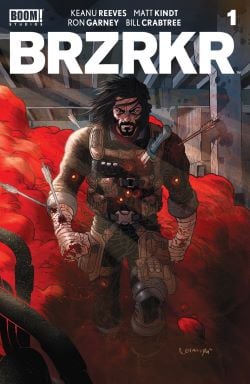
Leckert gives us some figures: to date, comics creators have run 23,000 successful projects, generating 178 million dollars. And for comics, success comes relatively easy: comic book Kickstarter projects have a success rate of 79%, more than double the site average for all other fields. 87% of Kickstarter comic projects receive at least 25 individual backers, a major milestone in Kickstarter’s bookkeeping for a project to be taken seriously. 51% of creators have launched a second project within 12 months of their first campaign, a number rivaled only by video game projects. Working with major celebrities breaking into the comics medium like Brandon Sanderson and Keanu Reeves has been a huge boon, but independent teams have been enjoying success as well.
To her credit, Heidi McDonald then prompts Leckert to address the elephant in Kickstarter’s room: the controversial announcement last year that they would be moving their service to the blockchain.
“These decisions are all made way high above my head,” Leckert notes. But she tells us that Kickstarter is very aware of the public backlash to the announcement, and are making efforts to listen better to creators and ensure they’re the most ethical platform available. Leckert clarifies that their seed investment is meant to be an investigation towards the potential of commiting to Blockchain, as opposed to a definite move. Ultimately, Leckert stresses, their business is about the projects, not themselves.
“Kickstarter is more interested in mission than market share,” she says.
Working with retailers has presented unique challenges for Kickstarter. They don’t have a way to track who backs projects at retail tiers. Despite demand from the professional audience, Kickstarter currently has no database or catalog of fulfilled orders to share with retailers. Leckert shifts onus to the retailers themselves, stating that the most important thing for their business is to know their audience.
When prompted, Leckert says the most important aspect of launching a successful Kickstarter campaign is making sure ambition matches your reach. “If you have a dozen followers on Twitter, don’t try to fund a 600,000 dollar project. People put a lot of emphasis on the ‘funding’ part of crowdfunding, and not enough on the ‘crowd.’”
“As much as 75% of your backers are coming from your audience,” Leckert says. As it turns out, making it to Kickstarter’s front page of ‘Projects We Love’ doesn’t make that big a difference on a project’s success rate. It all depends on you.
If you’re looking to follow recent publishing success trends, however, Leckert has a few tips. She’s just spent the past year trying to cultivate a market for romance novels, but it’s manga and webcomics that are seeing the biggest growth.
Lunar vs. Diamond
The final speakers, joining Milton Griepp himself on stage, are Christina Merkler and Chris Powell. Merkler represents Lunar Distribution, which has been DC’s distribution partner since 2020. Powell represents Diamond Comic Distributors, which has been shipping comics to the direct market for 40 years.
Diamond and Lunar both report bull markets, with many new comic stores opening in 2021. Throughout their conversation, Diamond and Lunar appear to be taking different tactics to the changing market: Diamond is seeking to diversify, providing everything a retailer might need in much the same way TCGPlayer professed at the start of today’s talks. Lunar is focusing on servicing comic book sales alone. It’s a typical generalist versus specialist dichotomy, perhaps informed by Diamond’s many established decades in the business.
The biggest challenge factor in comic distribution is no surprise: the rising costs of business. “Everyone is paying people twice what they were paying them three years ago,” Merkler says. Growth is still happening, but not at the same level as it was in 2021.
“We’re not just competing with other comic shops,” Merkler explains. “We have to compete with streaming media, and games.” To stay relevant requires convenience and a valuable comic purchasing experience for the consumer.
“I wonder if the idea of a monthly catalog hasn’t outlived its usefulness,” Griepp prompts. In the current market, orders are placed on a weekly basis. Should that evolve into something new?
Powell isn’t ready to give up on the monthly catalog. “We have over 30,000 subscribers,” he says. While not everything fits into the traditional publishing cycle, they’ve been able to make adjustments for the projects which don’t. As an example, Powell cites the boutique ‘Frank Miller Presents’ publisher, which doesn’t quite adhere to normal distribution.
Merkler, as a newer distributor, doesn’t seem as attached. She places emphasis on granting more versatile and accessible digital tools to retailers for ordering comics. “The book market does this 6 months in advance,” she reminds us. “Comics do it in two.”
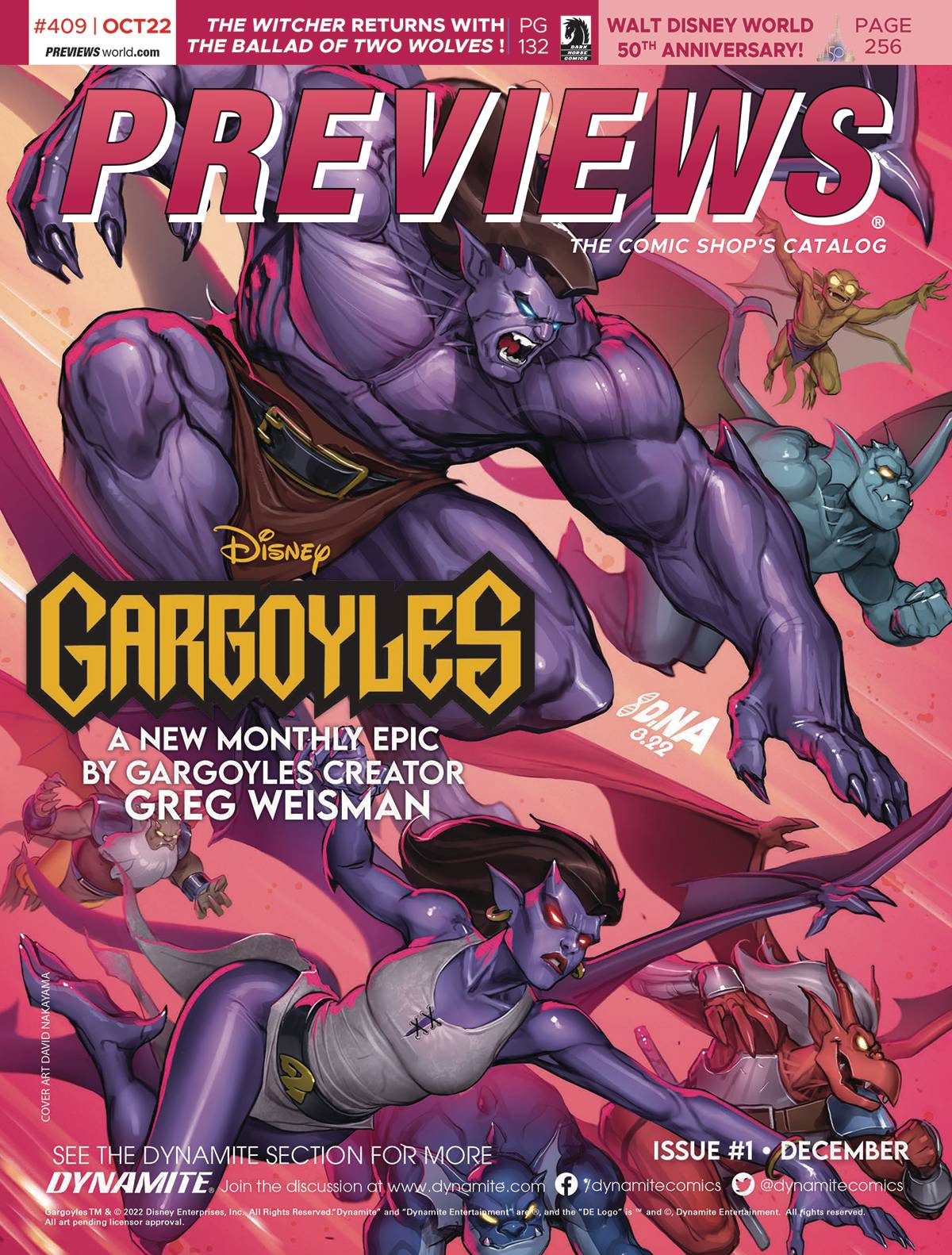
“Customers are going to buy Batman no matter what, if they buy Batman,” Merkler says. But as it stands, the monthly catalog does help more independent comic creators grow, so ultimately it’s something she can support.
Griepp asks how comic stores can adapt to take preorders at a rate in advance competitive to online retailers like Amazon.
“Many are,” Merkler says. DC’s graphic novels and omnibuses, like traditional books, are solicited at least 6 months ahead of publication. Powell emphasizes the need for publishers to get that data in as early as possible to get it into a catalog.
Before opening up the floor to questions, Diamond and Lunar deliver their mission statements for the future. Powell sees the direct market as a community hub, where comics are part of a larger whole. Not every comic retailer wants to diversify into other products, but it’s a move that Diamond encourages.
Lunar disagrees. “We support diversification,” Merkler says, “But at the same time if you’re really good at one thing, stick with it.”
The entire audience, as it turns out, wants the same thing: a return to standardized sales charts. Since DC’s split to distribution with Lunar, among digital retail based factors, it’s been difficult to get figures on how well a comic actually sells. Is there no going back to reliable data?
Powell confesses that getting that data back to where it once was may be challenging. It’s complicated by the fact that some parties want to share sales data, and some don’t. Powell and Merkler do agree on one point, though: far more important than sale data is sell-through data – which is to say, the number of comics which are actually sold to customers, and not kept or returned by retailers. Even without accounting for decentralization of data, incentives like chase and variant covers, and the dawn of many publishers’ returnability programs, have been making sales data as we know it, even by pre-Lunar standards, nonrepresentational to the point of irrelevancy.
But for all the chaos, what that unclear data really represents is that every retailer does business their own way. It’s the spirit of retail independence at work.
“The beauty of the direct market is that we all do business the way we want to do it,” Merkel says.
With that, the talks conclude, and the professionals retire to a happy hour social. As for me, I make my way out of the River Pavillion just after directing a lost ice delivery guy to the open bar. I’m feeling severely underdressed for this very grown-up affair.
Besides, I have to get ready for the Vox Machina panel later. The ‘other’ convention awaits.
Marjorie Liu unpicks the mysteries behind The Night Eaters: She Eats The Night
About New York Comic Con 2022
Dates
-
Location
New York City
USA
Follow Popverse for upcoming event coverage and news
Find out how we conduct our review by reading our review policy
Let Popverse be your tour guide through the wilderness of pop culture
Sign in and let us help you find your new favorite thing.











Comments
Want to join the discussion? Please activate your account first.
Visit Reedpop ID if you need to resend the confirmation email.