If you click on a link and make a purchase we may receive a small commission. Read our editorial policy.
Sarah’s Scribbles creator Sarah Andersen reflects on over a decade of webcomics success
From the perennially popular Sarah’s Scribbles to the bestselling Fangs, Sarah Andersen reveals the origins of her beloved webcomics

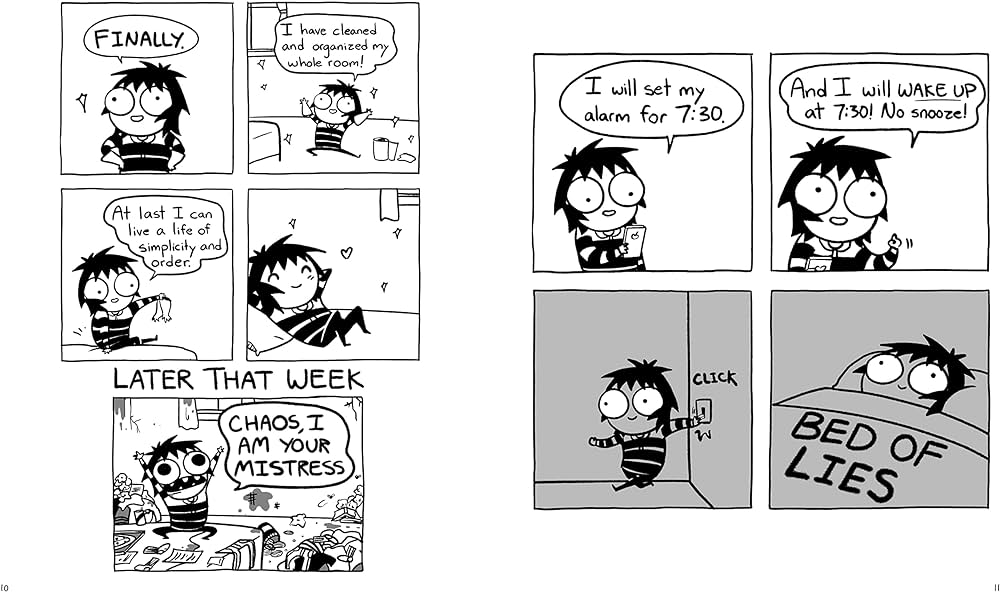
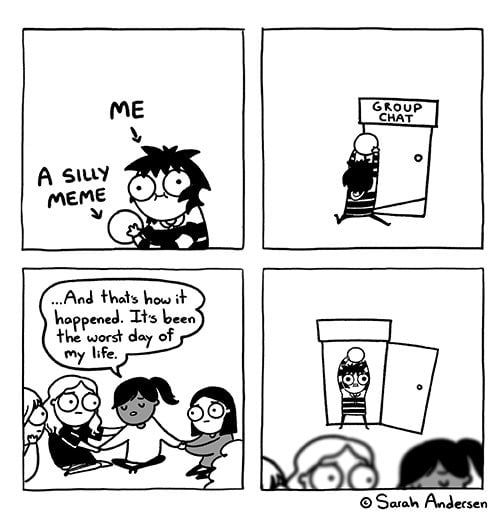
If you’ve been active at all on major social media platforms in the past several years, there is a more than likely chance that you’ve seen the work of New York Times bestselling cartoonist Sarah Andersen. After launching the webcomics series Sarah’s Scribbles in 2011, the regularly updated slice-of-life comedy strip has become a bonafide viral phenomenon, earning millions of readers worldwide through numerous online platforms, including Tapas and Andersen’s own website. Sarah’s Scribbles is a semi-autobiographical look at the trials and tribulations of millennial adulthood, contending with the challenge of keeping it together with the expectations of modern society through the eyes of her black-haired, expressive protagonist.
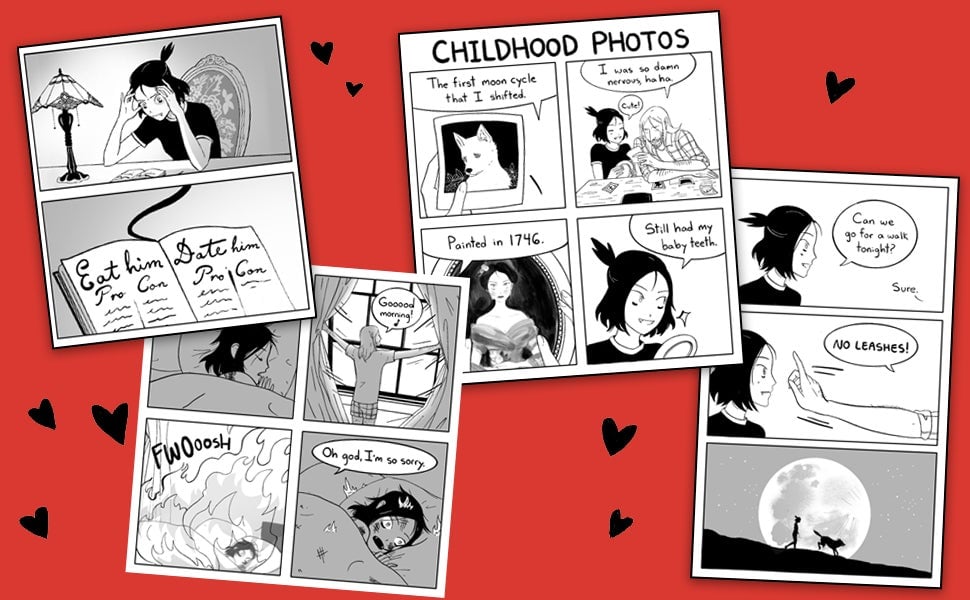
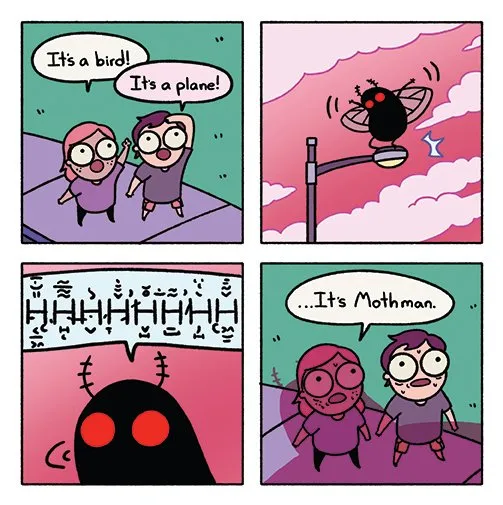
In addition to Sarah’s Scribbles, Andersen published the widely well-received horror romance webcomic Fangs, drawing from her deep of the vampire sub-genre as a vampire finds love with a werewolf. Andersen’s love of the macabre and paranormal has also branched into the popular webcomic series Cryptid Club, which covers all manner of monsters with Andersen’s signature sense of humor. And Sarah’s Scribbles remains a constant presence, with four print collections of the series, a fifth on the way, and a whole wave of merchandise while the series itself continues to be updated by new strips written and illustrated by Andersen.
In an exclusive interview with Popverse, Sarah Andersen reflects on her long, rewarding career in webcomics, shares the origins and inspirations behind her popular comic titles, and weighs in on the impact of artificial intelligence and text-to-image generators on the comics industry as a whole.
Popverse: You’ve been doing Sarah’s Scribbles since you were in college. What keeps it creatively fulfilling for you to keep coming back and doing more?
Sarah Andersen: I think life keeps changing. There’s always something to talk about and write about. I think the early Sarah’s Scribbles are so different from the ones that appear today. For example, today I write more about stuff like turning 30 and writing about generational differences. Back then, I was writing about things like missing my alarm clock and not taking care of myself properly. I feel like it has the potential to be a lifelong thing because there’s always something to say.
I’ve spoken to Meredith Gran about Octopus Pie and she referred to that story as a portrait of her 20s. Was there ever a thought to stop Sarah’s Scribbles as you got close to 30?
I think there were more thoughts and continuing thoughts that I want to work on different things while keeping Sarah’s Scribbles alive. In my late 20s, I wrote two new series, Fangs and Cryptid Club. I think seeing that I could write something new and have it received well changed my trajectory. In the future, I think there’ll probably be a lot more of that, a lot more different creative works, as opposed to just writing Sarah’s Scribbles.
In my early 20s, I thought “This is it! This is the thing I do!” But now I see myself as a more versatile comic artist.
What was it about creating Fangs? The art style is reminiscent of Edward Gorey and it’s this coming-of-age story for a 300-year-old vampire?
That work is actually the style and the tone that was much closer to the work that I was doing in art school. I was studying illustrations and I was always drawn to vintage illustrations and more macabre things. That doesn’t really come out much in Sarah’s Scribbles, but I always had this side to me that was more interested in a goth-y and elegant look for my artwork.
I had this idea that started with a vampire and werewolf talking in a bar. I really felt like I’d be able to go back to my education and use a different style. The heart of the series has always been with me for a long time, but it was never realized and people didn’t see it until I created that work.
With so many vampire stories, from ‘Salem’s Lot to Bram Stoker out there, how did you want to approach the vampire sub-genre?
I love the vampire sub-genre! The thing about the vampire sub-genre is that it seems to change every 10 years or so. When I was in high school, I really loved Anne Rice’s vampires, I was super into the extravagance of that. I loved the idea that a vampire is so versatile and can become what we want it to be or what we need. It started off incredibly scary and maybe got a bit more charming with Dracula and, eventually, vampires became these objects of desire.
They contain multitudes, and I loved that. As a writer, I could create my own ideal version of a vampire because the history is so extensive and keeps changing.
What was it about going beyond vampires and a wider exploration of the paranormal with Cryptid Club?
I really thought Fangs would be much smaller than it was, and I thought it was going to be a passion project. But when I saw people receive it well, I thought that I could write about all these things that I love or that I’m fascinated with, that aren’t necessarily as immediately relatable as Sarah’s Scribbles. Fangs really opened up my world, in terms of writing, so I was like “Next! I want to write about something else that I love!”
For me, that was cryptids. I’ve always had a lifelong love and fascination with cryptids. There was so much lore and history to draw from. I felt like I could be guided by my own interests and fascinations as opposed to just creating something that was relatable, and that’s where Cryptid Club came from.
How was it getting on the New York Times Best Seller list? More than any award, that objectively proves your books have sold significantly.
It was a total shock because the online release for Fangs was extremely limited. I sold the exclusive rights to a site called Tapas, and it only appeared in one place. It didn’t have what I thought was the viralness of Sarah’s Scribbles. But even just the fact that it was in one place and not traveling around as much as Sarah’s Scribbles, people connected to it.
Sarah’s Scribbles has never made the New York Times Best Seller List, so when Fangs made the Best Seller List from a small corner on the internet, it just floored me. It was huge for me and so validating. I have to go back and check the numbers, but I think, to this day, Fangs is my bestselling work.
When people come up to my booth at conventions, they’re always shocked. They’re like “Oh, you’re the same one that did Fangs?!” The online virality of Sarah’s Scribbles always makes people associate me with Sarah’s Scribbles, but I also have Fangs. Things like the New York Times Best Sellers list is thanks to all the readers and people who got the book. I was just floored with gratitude, it was amazing!
With something as self-reflective as Sarah’s Scribbles or even venturing into the heart of darkness with Fangs, how is it working with that much personal vulnerability in your stories?
There’s some freedom when I write a book. Whenever I do a Sarah’s Scribbles book, I put in 20 new comics [where] I don’t have the internet’s immediate response hovering over my shoulder. I feel like Fangs is a deeply vulnerable book, at least in terms of what I’m willing to share. I just think just having the book format and not necessarily needing to create a viral hit with every comic I wrote for that was really important.
But at the same time, for all my series, I think vulnerability is at the heart of it and why it works. [laughs] I’m constantly working with that.
Do you find it cathartic?
Yeah! I find it cathartic when I write about something and it’s something that I think people will not connect to. I find this whole world, for me, opens up, when a comic is successful and people go “that happens to me too” or “I feel that way too.” I think the heart of why I’m a cartoonist is this shared aspect, where I can share or write about something that I love and open up and then the participation of people sharing their own feelings and experiences back at me. It’s why I’m a cartoonist in the first place.
While there’s a level of separation from the fans when working in webcomics, how is it attending the con scene and interacting with your readers directly?
It’s crazy! The first time I did a con is still such a vivid memory to me, the first con I did post-book publication when it mattered. [laughs] I was shocked, and I remembered my hands were shaking because I couldn’t believe that people would come up to my table and buy my work. I still sometimes worry that I’m a bit awkward in person because I don’t always know how to respond to it, but it’s an amazing thing that I’m very grateful for.
You’ve been doing this a long time. You’re an elder stateswoman in the webcomics scene now, Sarah. How has the digital landscape changed since you’ve started?
I was 19 and in art school at the time, and I remember that we had a textbook that would basically tell us how to monetize art. There was a section on webcomics and the summary was basically like “Don’t do webcomics. You will not make money.” [laughs] This was 2010 or 2011, and there were successful webcomics, like xkcd and The Oatmeal, but there was not a structure or hope for how one could turn a webcomic into an actual career.
Now, it is still chaotic, but I see a lot more stability for people making webcomics as a career through selling merch and books and through Patreon. There’s a definite path now, even if it’s still difficult. Through that, I think webcomics have really exploded and blossomed, there’s like a million now! [laughs] Back in 2010, there was a handful of successful webcomics and now, I can’t even keep up because there are so many.
Have you been able to predict what webcomic strips go viral or is it still a surprise what catches on and gets a life of its own?
It’s tough because sometimes I’ll write something and I’ll have this [feeling] that something connects here and other times, it’ll feel really random. Some of my most successful comics have been ones that were uploaded from the scrap pile because I had a different deadline or something and, to my shock, went viral. There’s an instinct kind of there, but the internet is really random as well. There’s a lot to do with the algorithms changing. There will always be an element to webcomics that’s unpredictable in what takes off.
One major change in recent years has come with the advent of artificial intelligence and generated artwork. You’ve been vocal about A.I. in the past, how do you feel about this seismic topic in regard to art?
If you’ve done any research into me, you know that I have a pretty strong stance against how text-to-image generators were created. Right now, I’m part of a large group of artists who are basically advocating these companies and the generators for what we call the three C’s: Credit, consent, and compensation. That is how I and a lot of other artists believe would be the right way to coexist with A.I. I want to be able to say whether my work is being used and, if it’s being used, I want credit and compensation. I think that’s totally fair.
It’s been a very rollercoaster year since they appeared on the scene in a big mainstream way. I would encourage artists to not get hopeless, and I would encourage young people to not give up on learning art traditionally because of text-to-image generators because, whether you want to do art for a career or yourself, there’s a huge amount of personal information and learning that is needed to make art on your own. Those pieces are extremely important in what you create.
Your brain is completely different from a generator that uses large swathes of data to create something new, it’s a completely different process. That human process, to me, is extremely special and vital. I encourage artists to keep up the fight and keep drawing with their pens. [laughs]

Across the growing plethora of webcomics, what do you think it is that really makes your work stand out?
I’ve always been introverted and had trouble with communicating directly person-to-person. I’ve always felt my most clear and understandable when I write something. I feel like my comics are an effort to extend a hand and communicate an idea, a concept, or something that I care about to the viewer. I do that very genuinely. Whatever people think of my work, my effort really comes from my own passions and desires.
I hope that comes through, and I believe people can see how much love and care I put into it and how important to me it is to be able to do this. I would sum that up as - I have a genuine passion for it.
Sarah, the latest Sarah’s Scribbles collection, Oddball came out last November. What are you working on now?
I’m currently working on a new collection that does not have a date yet. It’ll probably be out next November, and the title will likely be Adulthood Is a Gift. It follows the format of the other collections, where I write 20 new ones and include the best of the ones that have appeared online, so 80 strong ones from the internet. It’s a callback to the first book, which was called Adulthood Is a Myth.
Adulthood Is a Gift is a bigger reflection on what I think of adulthood now as someone who’s over 30. In the back part of it, there is an essay section where I reflect on what I have learned as an adult and a cartoonist. I write a little about it and it’s a way to round out the first book with the body of work that I’ve produced thus far.
To keep up with the latest Sarah’s Scribbles, please check out Sarah Andersen’s website, updated regularly with new Sarah’s Scribbles comic strips. To purchase Sarah’s Scribbles’ collections, Fangs, Cryptid Club, and more, please check out Sarah Andersen’s online store.
Want to know what's coming up next in pop culture? Check out Popverse's guides to:
Follow Popverse for upcoming event coverage and news
Find out how we conduct our review by reading our review policy
Let Popverse be your tour guide through the wilderness of pop culture
Sign in and let us help you find your new favorite thing.
Comments
Want to join the discussion? Please activate your account first.
Visit Reedpop ID if you need to resend the confirmation email.