If you click on a link and make a purchase we may receive a small commission. Read our editorial policy.
Inside the secrets and lies of Marvel Comics' Secret Invasion with its creator Brian Michael Bendis
15 years later, Brian Michael Bendis looks back on the Secret Invasion legacy.
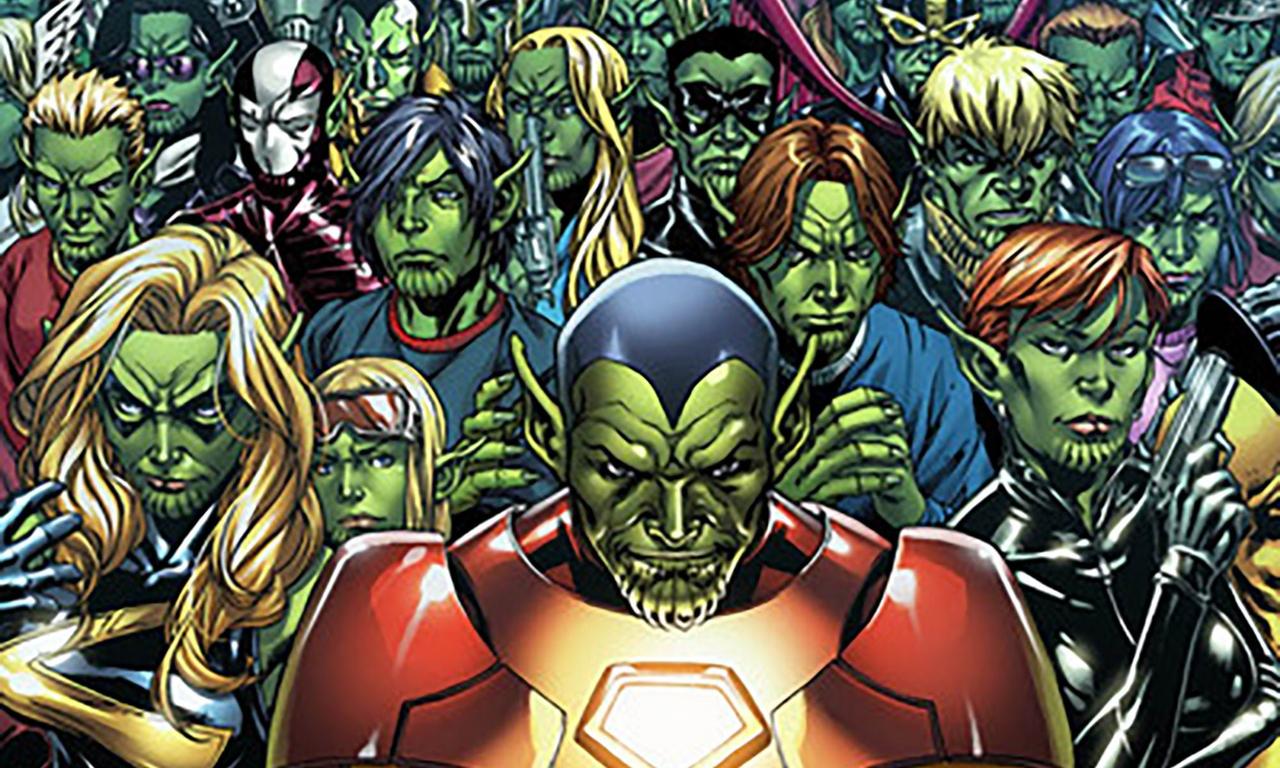
It was 2008, and Brian Michael Bendis was keeping a secret. For the past four years, the writer behind Marvel Comics’ top-selling Avengers franchise – and then-Marvl-editor-in-chief Joe Quesada’s choice for, in his word, “MVP” among the company’s writers – had been hiding sleeper agents in plain sight among Marvel’s heroes. From the moment he took the helm on Marvel’s flagship title, Bendis, with the willing collaboration of his editors, had substituted a select group of key characters with shapeshifting Skrulls: the better to reveal them, with a shocking lack of advance warning, almost half a decade later.
The result was 2008’s Secret Invasion, an event series written by Bendis and drawn by Leniel Francis Yu with the scratchy, moody atmosphere of a '1970’s'70s conspiracy thriller, which imagined the central premise of Invasion of the Body Snatchers transplanted into the superheroic Marvel Universe. Coming a year after the mammoth sales of the Civil War miniseries, at the apex of the era of event-driven summer crossovers, Secret Invasion arrived at a moment when fan interest, editorial experience, and a thriving online comic book culture were combining into a heady brew of pop culture.
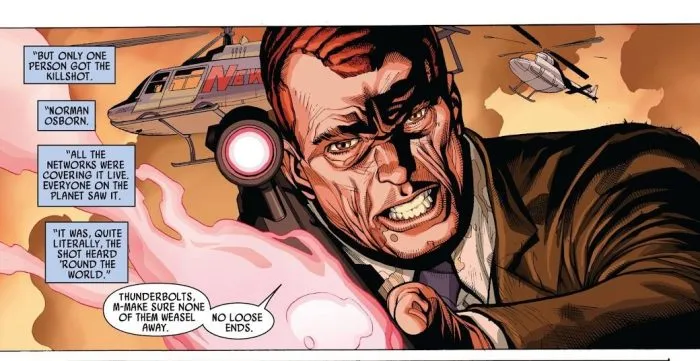
And from the moment the series hit the shelves, it inspired an almost equal measure of sales, enthusiasm, and furious controversy. First, because of its capacity to inspire first obsessive speculation and then appalled response as to the identity of the hidden Skrulls. Second, because of its shock ending, which saw the villainous Norman Osborn (better know to readers as Spider-Man foe the Green Goblin) delivering the final shot to defeat the Skrull invaders, and becoming embraced as a hero and political leader by the American public.
And third, not least, because the story’s political overtones (which involved sleeper cells of hidden aliens walking among humans, and introduced a new element of a zealous religious faith driving Skrull militancy) seemed to draw from the language, discussions, and scandals of George W. Bush-era headlines. Nor, in the 15 years since the story’s conclusion, has that interest or controversy abated. This month, Disney+ debuted its Secret Invasion TV series, taking the same central premise, and setting it in the context of the Marvel Cinematic Universe – albeit updated with some additional modern flavor.
The time therefore seemed right to sit down with Brian Michael Bendis to revisit the planning, politics, and retrospective legacy of one of his hallmark story arcs. Bendis’s reflections were candid, revealing, and sometimes surprising: a decade and a half on, the writer has few secrets left to keep.
Popverse: Brian, Secret Invasion was one of the earliest ideas you had when you first took over the Avengers series in 2005. Can you talk about some of the influences you were drawing from for the story?

Brian Michael Bendis: I had gone to a Marvel retreat where I ended up getting the Avengers franchise. It was not something I was planning on doing, but we were going around the table and talking about why things are being published, and what they're supposed to mean, and what they're supposed to be. And we got to Avengers, and me and Mark [Millar] started talking smack about what we thought it should be. And I ended up with the job, and that was both very exciting and very alarming to me, because team books themselves are their own language, and a language that I had worried that I had not yet conquered, but it was desperate to do so.
So I went back to my room in New York and literally wrote down a list of what I will do with the Avengers. And some of it, looking back now, it's quite [a lot of] hubris: like, years and years of planning. But one of them was that from the very first issue, we in editorial will know that some of these characters are Skrulls. And wouldn't it be cool if, by issue #50 -- and that's the arrogant part -- by issue #50, we reveal it's been a secret invasion the whole time.
This idea came about from a few places. Number one, like the Purple Man in Jessica Jones, who had been for years kind of relegated as a c-level, joke villain like the Armadillo or something. And anytime there's a villain that's c-list or a punchline, I immediately start to look at what's really there. And with the Purple Man it was very easy, because mind control -- you know, that's terrifying. He can make you do whatever he wants. That's not funny. That's everyone's nightmare. And same thing with the Skrulls: what they can do if they choose to is terrifying. It’s like a million Mystiques [from the X-Men].
But I am aware it's a shared universe, and these characters are shared among multiple titles. Most of the characters in New Avengers have a solo title, and we'll have to really plan around that, and make sure everyone's on-board. No one wants to get a call that says, 'Hey, that [character] you've been writing for three years? It's really a Skrull. Sorry we didn't tell you.' I didn't want to do anything like that to my fellow creators.
But looking at [influences] like Invasion of the Body Snatchers, or there was one called The Hidden in the '80s with Kyle MacLachlan that probably didn't age well but at the time it was quite an inventive '80s [movie], kind of like Buckaroo Banzai.
It did feel to me like you were getting back to the very earliest Skrull stories, which had much more of a dangerous element because they were drawing from the Cold War science fiction of that era.
'How do I know my neighbor is really my neighbor' is the kind of '50s allegory that a lot of those movies had, so yeah, that’s it. So if we’re in Avengers Tower, and two of them might be Skrulls, they’ve already won, right? That was the impulse that went into this, and you’re right. And that allegory never went away: there’s always an us-vs.-them scenario somewhere in our civilization, whether there’s anything behind it or not. We live with it right now.
You talked about how a key part of the plot was that the Skrulls were going to be infiltrating Marvel superheroes. So how early on in your planning did you actually identify who those heroes were going to be?
There was a lot of leaking going on around that time. Civil War was out, and House of M had already come out. So the era of events had returned, which was quite grand and fun for those of us building them. But there was a lot of leaking going on. It was a bummer, because they’re not national security secrets. They’re just storylines, and you’re ruining them for people! Like, this storyline literally has the word 'secret' in the title, and we would like to keep it a secret as long as possible. That’s the fun of it.
So we kept it very tight, is my point. For those of you coming up in the business: if you want to know how to keep a secret? Don’t tell anybody! Then it won’t leak. It happened in my business: someone was literally running around telling everyone the secret of their story, and then was horrified that it leaked. Well, you told everyone you knew!
It is kind of remarkable, though, because it seems like there was an astonishing amount of secrecy that Marvel was able to keep around its big reveals in that era.
Well, they locked it down. We wanted to mic drop you a couple of times, and the only way to do that is to keep it a secret. Joe [Quesada, then-Editor in Chief of Marvel] particularly, if he felt there was a leak, he found a way to put his thumb in the leak. And there were a couple of times he leaked a couple of fake stories to certain people, and if that story leaked, we knew it was that person. That happened a couple of times – I think my favorite is 'Uncle Ben is alive.' He only told one person Uncle Ben was alive, and it ended up on the internet.
But we kept it tight; we kept it to ourselves. And [editor] Tom Brevoort, very smartly, started the conversation of, 'We have to be very diligent about how many Skrull reveals and who they are, because it’s a bit. And if you repeat a bit over and over, no matter how great the bit is, it gets boring.' There are comedian friends of mine who have expressed an opinion that, you know what doesn’t make a joke funnier? A joke line repeated. No one laughs harder the 10th time they’ve heard it.
And also, a lesson I learned in art school – it’s a little dark, but it’s true. Our teacher showed us one of the first filmed atomic bomb tests. It wasn’t Hiroshima or anything; it wasn’t terrible like that. But here was an atomic bomb blowing up, and if you’ve ever seen it, it’s haunting: it goes on for a while. You sit there watching a slow mushroom cloud building, and you can’t help but think about man’s inhumanity to man. Why do we need this? Why are we capable of this? It’s terrifying; it’s a horrible thing. And then our teacher showed it to us seven more times in a row. Just sat in class and made us watch it seven more times. And by the fourth time, people are looking at their phones. They’re talking amongst themselves. That’s terrifying the first time we saw it; by the fourth, fifth, sixth, seventh time, people were downright bored. They’re making jokes. And the lesson was: don’t repeat the bit over and over again. No matter how great it is, and how powerful a moment it is, if you repeat it a million times, you will lose your power.
And again, not to connect something so terrible and so real, but the lesson of that was applied immediately to, 'Let’s pick our Skrulls carefully, and not tell anybody else.' And also, we had to pick people who the other creators would agree with. Like, if it’s going to be Tony Stark, well, we should call the Iron Man writer and talk to them about it. So slowly but surely, we started planning which Skrulls it would be.
And also, Tom’s point was, House of M did very well, but Civil War did amazing, and every book near that book got a bump. So everyone [at Marvel] is a little horned up from that experience, and everyone hears next summer is Secret Invasion. So they want to be part of it, and they want a big Skrull reveal in their book. And that’s when Tom said, 'Yeah, we can’t do this 45 times. We have 45 requests for characters to be revealed as a Skrull, so [books] could get that Secret Invasion bump, and what a fun way to fuck your story.'
Also, there were a couple of people who were looking for an out to their story that they may not have had, and, 'Oh, it’s a Skrull! My story writes itself!' So we had to be careful about who was dropping Skrulls where, and it had to be approved by Tom.
So Tom Brevoort became the Skrull Cop?
100%. It was all him, and he took it very seriously. And it was again him who brought up that if we overdo this, literally by the end of issue #2, people will be bored of this. So we have to make it not the bit. Like, yeah, the Skrulls are revealed, and once they’re revealed, we have to pivot to another kind of storyline. And I thought that was smart and great, and it really helped.
So we kept the list [of Skrulls] tight. I forget the list; it was about superheroes. It wasn’t too many. And also, there were other things going on in the Marvel Universe that made the storyline really feel like it was the right move. And you don’t always feel that way while you’re doing it, you know? I remember all the planning was coming together, and I wrote down, 'No one is the villain of their story. The Skrulls are not the villain of this story.' They do not see what they’re doing as villainous; they’re not moustache-twirling. They are here for a reason. What’s that reason? What do they need? They need Earth. Why? Because they think it’s theirs. Why?
And then, without, any input from me or anybody, DnA [writers Dan Abnett and Andy Lanning] use the Annihilation Wave to wipe out the Skrull homeworld, and that’s all the motivation I needed. So that was just a free gift that was given to me. I would have had to do something equally terrible in the pages of Avengers – it would have been a reveal in, like, the third act of Secret Invasion. But instead it was just there for all the audience to see. And I was so grateful for it, because it seemed like it wasn’t me architecting it: it felt like a genuine natural disaster that happened to the Skrulls, and they had to make a choice. I don’t know, it just felt more real to me, like, 'Oh, yeah, I’m not making this up. That really happened. The Skrull’s world is gone.' And that helped us.
It's one of those moments where it reads like writers are really making use of a connected universe, and using the toys available in the sandbox.
Well, we were also being rewarded for this behavior. Like, from Dissassembled all the way through House of M and Civil War, it was the connective threads between the books the internet was applauding every day. Even if the storyline was frustrating them, there was a lot of planning going on, and you could feel it as a fan, and we were getting a lot of positive feedback about that. And, again, a lot of that was Tom, just to give credit where it’s due. I’m home throwing fireballs at him, and he’s just handling it, you know?
The other part of it that was interesting was, what do we get at the end? That was Joe’s mandate as editor-in-chief. Any time you pitch a story, 'Okay, great story. What do we get out of it?' By the time we got to Secret Invasion, I could plan my event answering those questions before he threw them out there. Like, I could already hear him, and Tom, and Dan Buckley, and everybody else's voice in my head.
So you already knew the endgame, in terms of what storylines it was already going to open up for the line?
I definitely said that it's got to get so big that the villains turn to the heroes and go, 'Yeah, we're in, because no Earth is bad for business.' And also, wouldn’t it be interesting if one of the villains got the kill shot; got the heroic moment. Like, one of them was just the right asshole, in the right place, at the right time, which has happened historically. In almost every country in the world there’s a moment where in any other scenario this person would be seen as a monster, but they did what needed to be done.
And it also took the moral dynamic away from the heroes, right? Like, I don't have to worry about which superhero is going to kill the Skrull Queen if it’s Norman Osborn. And the world sees it. It's the shot heard around the world, and everyone's like, 'That's our asshole! Norman Osborn! We love this guy.' And him getting the keys to Avengers Mansion. And all of that as well I put into a very early story document. And my feedback from Joe was, 'I like that idea more than I like Secret Invasion.' He was into Secret Invasion: he agreed to it, he approved it, but it wasn’t his genre. But Norman coming in and starting what would be the Dark Reign – Joe was so into Dark Reign. And he felt like, what a great idea that has to be earned, and Secret Invasion was [the way to earn it]. So I had my opening, and I had my closing, and that, for storytellers, is a lot.
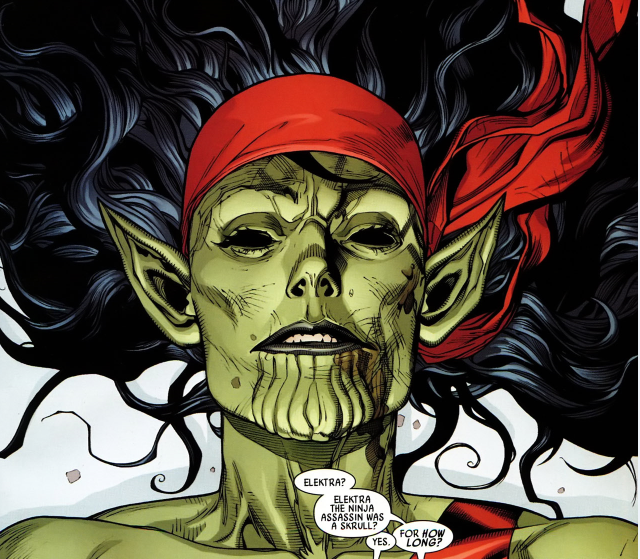
To go back to the question of identifying who the Skrull reveals were going to be, you have two figures who end up being particularly key to the story in Elektra and Spider-Woman. How early on did you figure out what you were going to do with those characters.
Very early. The Spider-Woman in New Avengers #1, I was originally like, 'Well, don’t tell the artist, and they won’t have to work around it or pretend that we want them to play it straight.' Like, if David Finch thinks this is Jessica Drew, he'll draw Jessica Drew, and that benefits us, right?
You don’t want any sign that you’re winking at the audience beforehand.
Yes. Because once the Skrull reveals started, the winking was nonstop. We were having, like, Jessica Jones’ kid looking at the camera. So, again, we kept it tight. Elektra wasn't being used anywhere other than Daredevil, which at the time [of New Avengers #1] I was writing. And nobody cared about Jessica Drew but me. And also, oh my God, I was so excited, because I knew that the ending would be [that] Jessica Drew comes out, and in grand Chris Claremont Jessica Drew form, is livid, oh my God. Everything went sideways for her, and it’s just like a '1960’'60s revenge thriller, you know?
And also, we had taken such care to make sure that Secret Invasion wasn't the same as Civil War. Like, it was very different, and all the beats were different. Because sometimes when something's a big giant hit like that, [the tendancy is] just, 'Do it again, do it again, do it again.' So this one offered us an opportunity to try a different kind of summer event, with a different kind of theme, that also allowed all the heroes to smash into each other. You still get Spider-Man punching Spider-Man, but one of them is just not Spider-Man. So that got to be a lot of fun for us.
What was interesting was, it was for a long time still a storyline that was going to happen only in the pages of New Avengers. I thought, honestly, it was just hubris to consider it to be anywhere else. This is my book; it’s my idea. But after Civil War, I believe Dan Buckley just turned to me at the retreat and goes, "This is our next summer. So just get it into your head." And I remember fighting back the urge to argue about it, because he's basically saying, 'We're going to put the whole company behind your story. You're going to get all the marketing. You're going to get all the fun stuff. So sit down and do more work and earn that.'
But it’s got to feel like a blessing and a curse, right?
It’s mostly a blessing. The biggest difference between Secret Invasion and Civil War, on top of genre, is that you can pick up Civil War #1: most of the story happens in [that issue]. Incident, the line is drawn, sides are planted, and we’re off to the races. And all you need to read Civil War is Civil War #1-8. But for Secret Invasion, we will have been starting this inside the pages of New Avengers for a while, and now not only New Avengers but also Mighty Avengers. So I have to make sure the audience has now been primed, but the story itself is self-contained, so when you open Secret Invasion #1, you don’t feel like, 'Oh, I missed everything? The inciting incident happened when Elektra hit the floor?'
So I actually applied some of the storytelling philosophy I was building in Powers, a creator-owned book I do with Mike Oeming, where the storyline opens with the superheroes already dead. Like, the superhero died, and we have to investigate it, right? So that became the inciting incident that got us to a bigger storyline.
That’s really interesting. So, essentially, everything that you had been setting up in the Avengers books becomes the cold open in a Homicide: Life on the Street episode.
Yeah, right. And the other thing was that a lot of the marketing, and sales, and other things that go into an event were at the top of their game for Secret Invasion, so I felt I had this incredible machine behind me. And in fact, about a year ago, I was talking to people at Marvel and they said something nice to me about the TV show that was coming. And I said, I’m so happy, because I remember Secret Invasion being a year or two of everyone being at the top of their game. Everyone was just on the same page, and looking to kick ass.
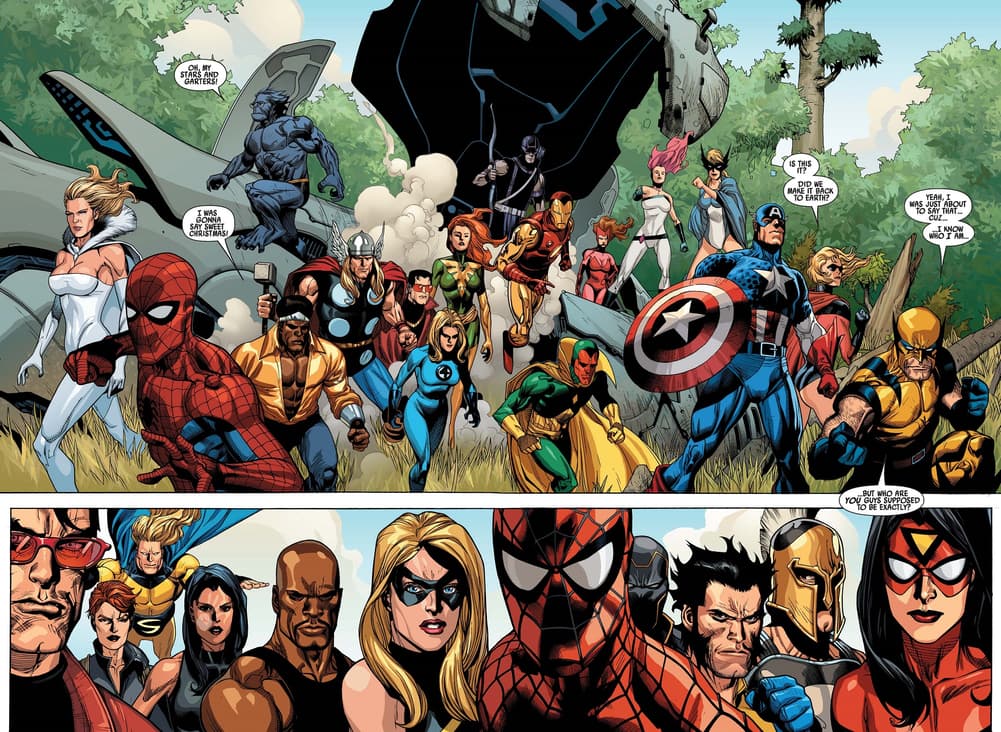
How much thought and intention did you put into the marketing aspect of Secret Invasion? And I’m wondering, because you came from a background in indie comics, so you must have come in with experience as your own marketer.
Yeah. Anyone who publishes their own comics, you have to have kind of multiple personalities. There’s the person that makes it, and the person that sells it, and the person that sells it has to pretend that the person who makes it isn’t wrestling with ego and how many mistakes they made, you know? So that was a big part of it. But part of what developed with Civil War was, we were talking about how interesting – again, I’m going to sound very old to some people. But back in the aughts, the discourse on the internet was all over the place. And it was fascinating to us that they were arguing about stuff even after we told them the end of the story – they still argue about it. And how interesting that is, and how the arguments can be sometimes very captivating, and very elevating, and sometimes they’re very base and shitty. And wouldn’t it be interesting if we could find a way to engage that discourse in a positive way?
And that’s where 'whose side are you on' [the tagline for Civil War] was said out loud in the room. And, boy, that is just something you can take to the internet about, right? Whose side are you on, Cap or Tony’s, is a conversation that went throughout Civil War, after Civil War, into the movie Civil War, and still goes on today in some dark recesses of the Internet. So we knew that was part of our tool set, that we have to engage the audience on a new level. And instead of whose side are you on, it’s 'well, who do you trust?' And I remember the third person who saw this on the internet wrote, “Not you, Bendis!” And then I was, like, 'Okay, we’re off to the races. That’s out of the way.'
So that was on some level an equal question. It wasn’t theoretical – like, 'whose side are you on' is an argument you can have about that story forever and ever, and never be wrong. This one is, we turn the cards over and you find out if you’re wrong or right.
But going back to Tom’s earlier note, we said, if we say 'who do you trust,' we have to be trustworthy. We can’t change our story along the lines of what the internet thinks is happening or will happen. That’s us keeping a promise, and if we tell our story correctly, we’re putting out enough information where the audience can have fun with the trust issue, and not be frustrated with the trust issue. If I give out 85 hints that it's Tony, and the whole time it was Wonder Man, I'm an asshole, right? But if there's enough out there for people to go digging and diving and looking for things that could be or aren't there, and also include some red herrings…
You really do have to play by murder mystery rules, where you’re allowed to add red herrings, but the clues to the real answer have to be there the whole time. You can’t change them as you go.
There are some comic creators who have pivoted when the Internet caught them, and it never goes well. But I'm so grateful for having witnessed that. I won't say who, but I had seen a couple of people change their ending because they wanted to win the Internet. And they didn't. It cannot be done.
We talked about how one of your goals was to restore the urgency and feeling of relevance to Skrull fiction. And there was some controversy at the time and since about the way Secret Invasion did or didn’t acknowledge the politics of the Bush era, circa 2007 and 2008. So I’m wondering about your own response to that, and your own thinking at the time.
I saw some back-and-forth about the TV show having a similar conversation, about where we are today versus where we were back then. So I think my answer is to just let the work speak for itself. There are certain things, just living in the world in the moment, that you can't avoid, and you have something to say about it. And it feels very real – you almost feel obligated to go there. And then certain times you’re like, 'You know what? I would like this to read as clearly 10 years from now as it does today. Let's just keep politics out of it. It's not a political idea other than it's an idea that turns political in the real world, right? So just tell the story and let people read into it whatever they'll read into it.'
And I guess just because I'm such a nerd of an age, I have watched people throw all kinds of politics on the Star Wars and the Matrix, and watched those conversations evolve over decades. Remember, Star Wars came out of Watergate, supposedly. And it’s so interesting. But I do think that if you get even a whiff of us lecturing about something, it’s death to the story.
It doesn’t feel like a message story in the sense Green Lantern/Green Arrow, but…
[Laughs] Oh, I don’t know. Drugs are bad.
But there’s an air of politics around Secret Invasion. It’s drawing from the terminology and zeitgeist of 2008, even if it’s not specifically trying to state a message about 2008, if that makes sense.
Well, it's very funny, because often people refer to the Dark Avengers -- which is the fallout of Secret Invasion – people say, 'Wow, Bendis, you saw this coming down the street. These assholes are being charged.' And I hear it from all walks of life. Like a fan of this person, a fan of that person, they both see Norman Osborn. So, yeah, I wasn’t pointing a finger at anybody other than that we, as a society, tend to nominate and elect people to lead us that don't always have our best interest at heart, even if they look right in the camera and say it. That's the only political idea that's there, but I really think it’s a sociological idea more than it's about politics. I see it as more about who we are as a people.
That’s interesting, because it means that to the extent there was any kind of political angle to the story, it’s not really directed against the Skrulls as infiltrators; it’s directed against Norman Osborn and the public who embraces him.
The Skrulls are desperate refugees with a deep belief that they're doing the right thing, and have a great deal of power to make it happen. That’s what that is, full stop. Now, again, I know that some of these words seem political to people. That's not how my brain works. It's just not how I see that.
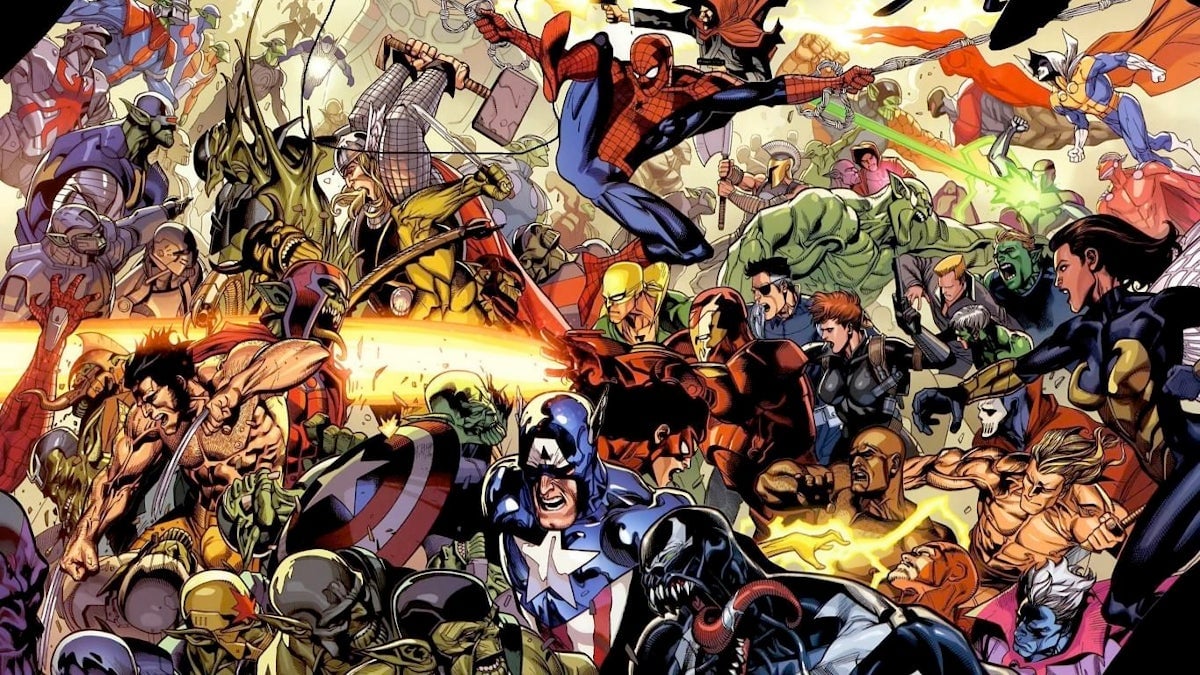
Was it a conscious decision of Marvel during that era to bring that air of relevance and urgency back to the stories they were doing?
You're dancing around the word 'lecturing' a little bit, and that's what we desperately were trying to avoid at every turn. Because number one, no one likes to be lectured, ever. And you know who likes to be lectured the least? People who agree with you.
I don’t think 'lecturing' is the knock the story got. I think, to the extent that it was criticized then or now, it was for a sense of bringing in the politics of the era without properly lecturing or making enough of an argument.
Okay. We’re asking questions, and you can have fun with those questions. If we ask a question and give you a lousy answer, you go, 'Oh, that answers that.' But we’re not in the answer business. We're putting ideas out there, right? And there will be a winner and a loser, and there's probably going to be some bittersweetness to either side. So, yeah, I don't mind that critique. I like that critique, because that's where we're coming from. Like, the Marvel Universe is the real world on some level, right? So it has to be believable on a certain level. But once Captain America turns to the reader and goes, 'You know…', we’ve lost the thread.
So at the time, were you heartened by the reaction Secret Invasion got? Were you surprised by it?
First of all, it was all the responses. I get all the reactions. I can’t say there was any comic storyline, particularly a summer event, that’s universally beloved by every single person that’s read it. I was relieved by the Skrull reveals, I remember was my big takeaway. I was really nervous about that Elektra body hitting the floor, because if no one liked it, I didn’t have any other plan-B. Like, if you guys don’t like this, we’ve got a long road ahead of us. So the Skrull hit the floor, some fans got excited, some fans got worried, some fans were furious, and then they had quite a few months to argue amongst themselves or to reconsider their feelings.
I literally got to watch people in front of me online change their mind about things. Throughout the entire buildup, and then the eight months, which was really 10 months, of the event itself. So it was a couple of years of all of the emotions coming at me all the time, day and night, from all over the world. So to answer your question, that is the absolute greatest thing that could happen to an author. You cared. And also, I think it was so different from Civil War that people were grateful. It was like, 'Oh, you're giving us a big hoo-ha, but not the one we already saw.'
It is impressive, looking back, that this was a period when Marvel was doing one big summer crossover after another, but they don’t feel like they repeat the same beats for at least four or five crossovers in a row.
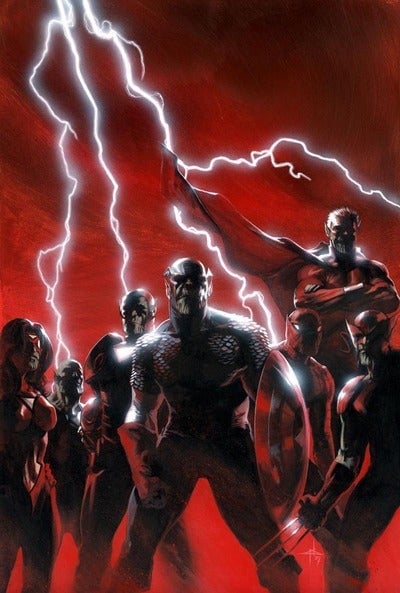
Well, I was the one that said, 'Why didn’t you do Civil War 2? Why didn’t you do Secret Invasion 2?' Like, we’re trilogy babies, why aren’t we trilogy-ing the shit out of everything? So, that’s why I ended up doing Civil War 2, but I think I made it almost a decade [after the first Civil War came out]. And it had a legitimately different story to tell, which was part of the thing: that by eight years from [Civil War], the Marvel Universe had shifted so much, and the players had shifted so much, and now we have Miles [Morales] and Kamala [Khan]. We had a generational reason to tell a different Civil War story.
So with Secret Invasion, we had our prelude story, and we had our first issue, and a lot of time to cook, and a lot of time to plan. A lot of time to really look at what's the weakest reveal, what's the lamest piece. And that part – I say this out loud for people who are trying their own storylines – sometimes it’s taking that extra time, and really making a chessboard and laying it out, and seeing where all the pieces can really make a difference.
It's interesting that you consciously seemed to resist the easy choices for Skrull reveals. For example, people were assuming, or even demanding, that Tony Stark would turn out to be a Skrull, and that would explain why everyone hates him now after Civil War.
Well, going back to what we were talking about earlier, it was Tom who said, 'This isn’t a story Magic Eraser. This isn’t ‘Oh, I fucked up my story? It’s a Skrull. I fixed it.’ That’s not what we’re doing, and if you do that, I’m not going to approve the storyline, because that would be the weakest version of it.' And you can easily imagine, with a lesser editorial hand, this flying off the rails of greed, particularly after Civil War.
It must have been giving Tom Brevoort ulcers, with his knowledge and background of Marvel continuity.
Just working with me for as long as he had gave him those kind of ulcers. But truthfully, our different mindsets along those lines brought about great collaboration between us, and what he cares about and what I care about don’t always overlap. Great: that means a lot of things are being taken care of.
Looking back on it now, as the TV show comes out, what’s your retrospective assessment of Secret Invasion? Are you happy with the way it turned out? Would you change anything if you could?
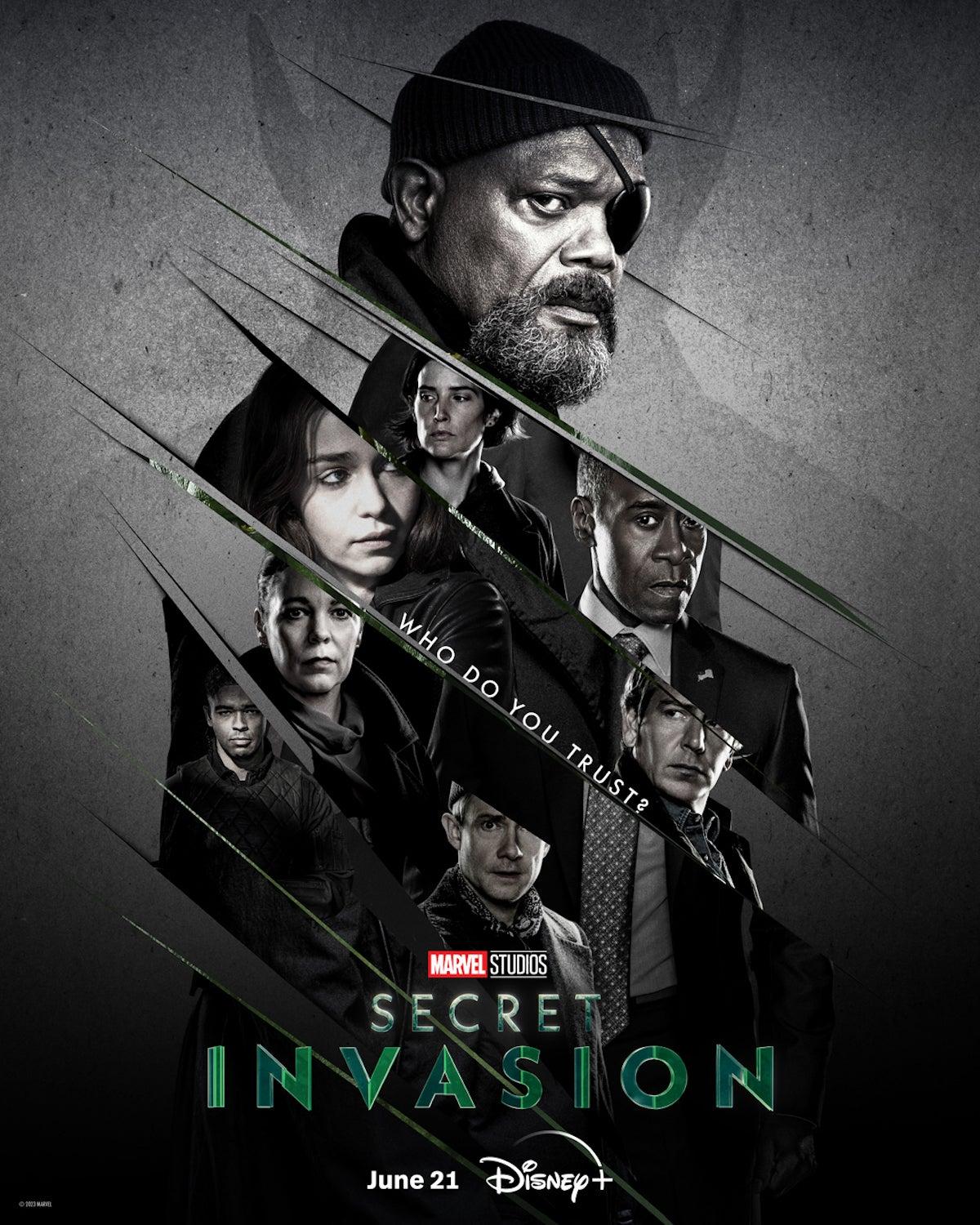
Probably yes. That’s why I don’t actually look at it, other than seeing the art online, and going, 'Man, that’s a good-looking book.' But I tend not to look back, because I’m a different writer. It’s a different Marvel Universe. And even looking at the TV show – just, by the way, I’m loving the show – and knowing that the show is fully in the space of what inspired us. Like, they’re not doing hero vs. hero, but there’s an Invasion of the Body Snatchers in the Marvel Universe: that was the original tag of the pitch document.
I tend to beat myself up over things a great deal, but what I’ve tried to do with age is, if everyone’s enjoying it, just let them fucking enjoy it and shut up, and go do something else. And right now, this week, there’s thousands of people reading Secret Invasion, some for the first time, some revisiting it, and they’re really liking it. So that makes me feel good about the choices, because they seem to be aging well.
And that’s always one of the worries you have. And some ideas have to age better with time. And I think by not lecturing, and not being overtly political at the time and in that moment, that people can read it today and it feels very fresh and of the moment they’re reading it. If you don’t lecture, you can really have a storyline stand for longer than its shelf life. And that’s kind of great.
And also, I like what a meal it is. It’s a real meal. If you just want to read the miniseries, great, and if you want to keep going, we’ve got like four or five more trades that are going to knock your socks off. And I love that we turned over all our cards: we really planned it, and we really revealed them, and by the time you were done, we had shown you everything we had to show you. There’s nothing cheeky about that kind of story delivery, so now when you read it all, it’s all there. That part I’m really proud of.
Follow Popverse for upcoming event coverage and news
Find out how we conduct our review by reading our review policy
Let Popverse be your tour guide through the wilderness of pop culture
Sign in and let us help you find your new favorite thing.
Comments
Want to join the discussion? Please activate your account first.
Visit Reedpop ID if you need to resend the confirmation email.