If you click on a link and make a purchase we may receive a small commission. Read our editorial policy.
Deconstructing Spider-Man with writer Paul Jenkins
Paul Jenkins shares his favorite memories from his time on Spider-Man.
Popverse's top stories
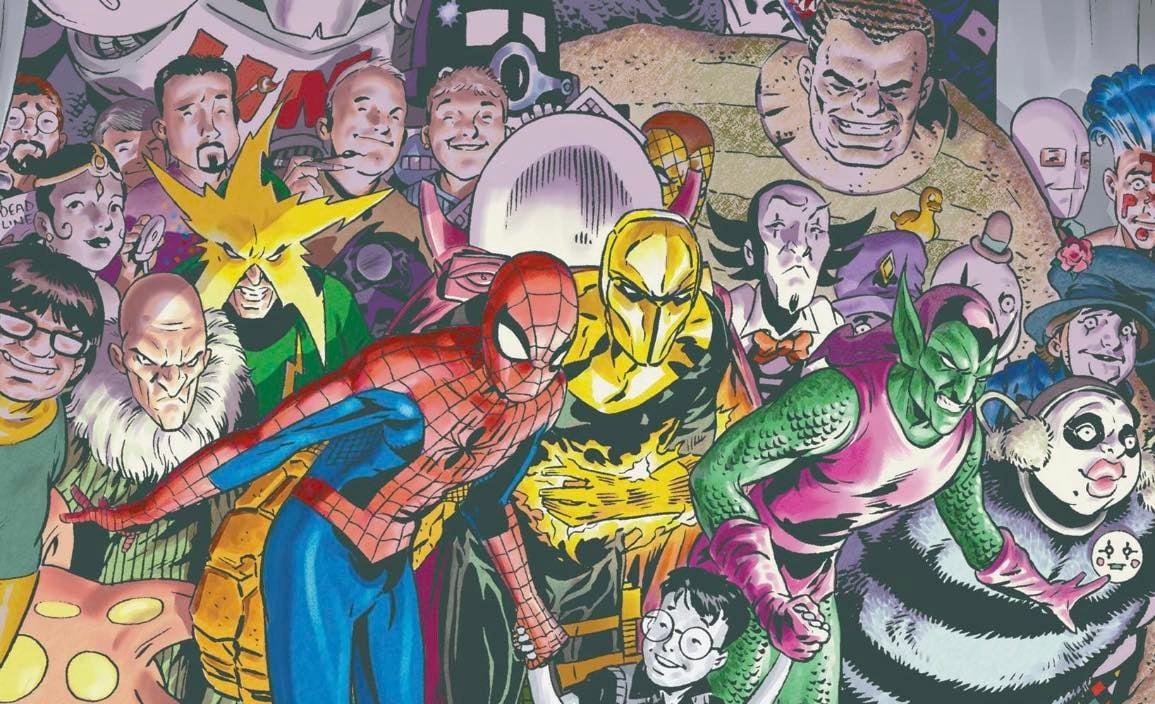
When it comes to Spider-Man, few people understand the heart of the character like Paul Jenkins. From 1999-2005 Jenkins wrote a series of classic stories exploring Peter Parker’s psyche. The run deconstructed Spider-Man’s relationship with humor and revealed the true motivation of his superhero banter. Jenkins wrote emotional stories about Uncle Ben, Peter’s parents, along with some other surprises. There were also oddball moments like Spider-Man battling a gang of mimes, a nude performance from Peter Parker, a suspicious dog, and a sentient piece of cheese named Kevin.
Popverse recently had a chance to sit down with Jenkins during a convention, and our conversation touched on his favorite memories from his six-year run, along with some behind-the-scenes insights. Jenkins spoke about Marvel’s early attempts to get rid of Spider-Man’s marriage to Mary Jane, and how they pressured him to give Peter organic web-shooters to match the Sam Raimi films. Throughout our interview, Jenkins couldn’t help but smile as he recalled his favorite stories. Jenkins had written these comics to touch readers’ hearts, and it was clear they still held a special place in his.
His first Spidey stories
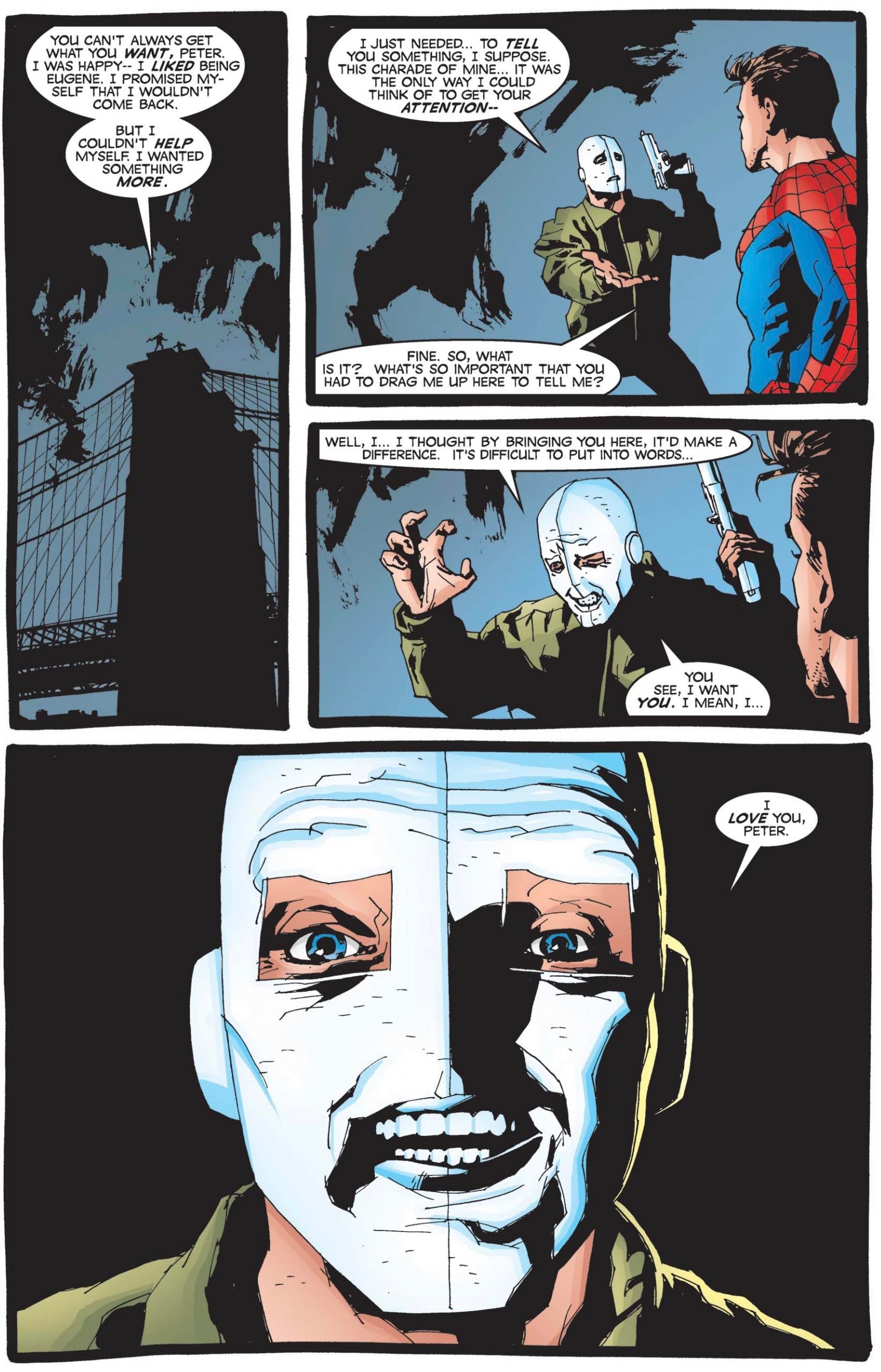
Popverse: One of your earliest Spider-Man storylines was a Chameleon arc in Webspinners that I loved. It ends with the Chameleon telling Peter that he loves him, and then falling off the Brooklyn Bridge. Was this a romantic love or more of a twisted and chaotic love?
Paul Jenkins: It was neither. The point was that the Chameleon had found himself in a mental health crisis because he felt like as a person, he didn't exist. And so, he was tying himself to other people's lives. And he realized that Peter’s life was just so interesting. His aunt was perfect. She was cooking her meatloaf and all the stuff that she does. The Chameleon was living this life and kind of impersonating Peter Parker and Spider-Man. I mean, I think he was the first villain that Spider-Man fought if I'm not incorrect.
He said, ‘I was your first.’ He knows about the tragedy of Gwen, and he knows all these things. And so when he says, ‘I love you,’ it was almost like he misspoke. He didn't know how to articulate ‘I love what you are, I love what you do, everything that you are, and everything you've become. I love your tragedies, I love your romances. I love all of it.’
When that happens, they both realize what's been said. and it's got kind of a gay undertone in a sense. And it's not meant that way, and they both start chuckling. The Chameleon has already decided to throw himself off the bridge. He doesn't think that he has anything to offer personally. And so, he says, ‘I'm so glad I could see you smile.’ And then tragically just jumps off the bridge. I think it was one of those moments that didn't have a real strong definition for that kind of love. It was more like, ‘I respect you and I want to be you.’
You had a moment in there I loved where he goes back to Amazing Spider Man #1 and says, ‘You called me a commie!’ In the reprints they had changed it to ‘buddy,’ but you brought the ‘commie’ back.
I did! He called him a commie, which is funny, because some of this stuff is so dated. I think that's a great comment from the Chameleon.
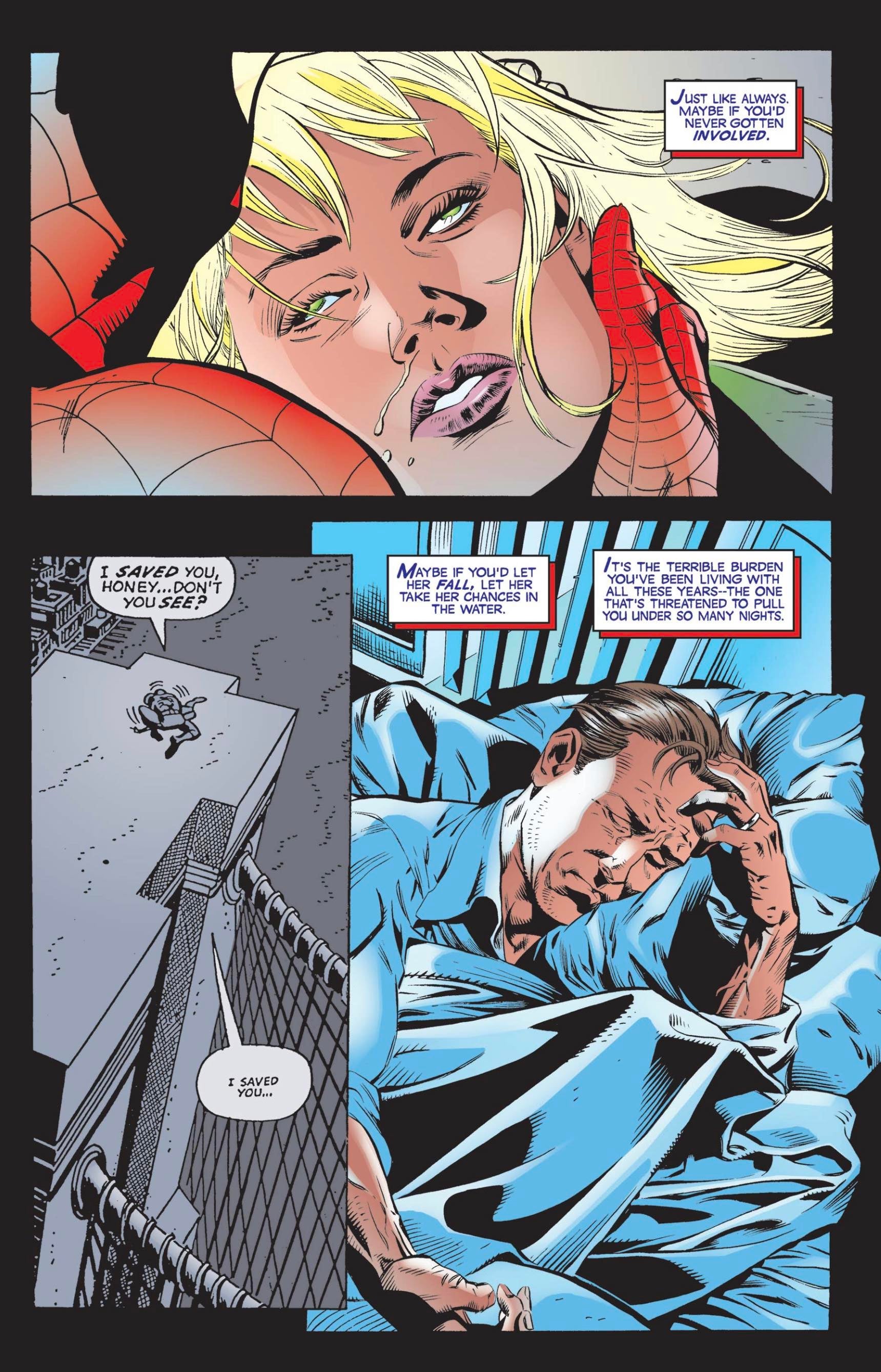
The Chameleon story ends with a wonderful epilogue of Peter wondering if he killed Gwen via whiplash from his webbing. That had been one of those unspoken things. Fans had discussed it, and the letters page discussed it, but Peter had never addressed that on-panel. Did you get any pushback from Marvel?
There's actually an interesting story behind those first three books. Ralph Macchio had asked me for two years if I was interested in writing Spider-Man, and I said no. I am only a story and character person, that's all I do. Anything that's an event or crossover, I don't really have an affinity for. I really have an affinity for things that are about us as people. And I couldn't work out what Spider-Man was, I didn't have an in.
I just didn't know what to say. And so, where that story (Webspinners #12) came about was, Peter had all these tragedies and all this stuff, and he was buried under the weight of what I thought was continuity. The Clone Saga, Gwen Stacy, Captain, Stacy, Uncle Ben, and all of these things had buried him. Even though Uncle Ben shaped them, even though Captain Stacy was like a surrogate father at times, of all of these losses, I always thought that Gwen was his true love.
He couldn't face it, and he didn't know how to look at it. And so, what we did in that story was we go back until we stripped away all these panels that were holding him down. They're like comic book panels. And he strips them away by thinking them through and then it's just him and the core villains. He's like, ‘This is where I want it to be. Why am I not here anymore?’ What I was doing personally was stripping away all this continuity I didn't understand. That's what the story was about. And then I got to the core of it, and he beats them, and at that moment Gwen comes out on the rooftop. And he says, ‘I want to stay here. I want to be with you.’ She says, ‘You can't. You've got to wake up.’
The Spider-Marriage, Barker the Dog, and Kevin the Cheese
Shortly after that, you became the writer for Peter Parker: Spider-Man. What made you change your mind?
Because I had done that story, and I stripped away all the extraneous stuff. I had said I didn't want to do it, because I didn't know how to do it. So, I said to Ralph Macchio, ‘Okay, now I can do it, because I understand it. I know what I'm writing, which is just absolute core stories. And frankly, there's going to be a lot of one-shots, because I love that.’
There were lots of fun one-shots, like the silent issue with the mimes.
I'll tell you how it came about. It's typical Marvel. Ralph says, ‘Great, I'm so happy to bring you on. You've got three weeks to hand in your first issue.’ And I'm like, ‘Yeah, of course you're behind schedule.’ I called Mark Buckingham, and this is like a core memory for me.
It's been announced that we're taking over Peter Parker: Spider-Man, and we're two British people, so it's on the front page of The Sun newspaper. I said, ‘Man, why do we ignore core stuff that makes a character work. And one thing that really makes this character work is he pisses off the villains.’ Doctor Octopus will never really beat him, because he's humorless, and Peter Parker has this sense of humor.
I wanted to look at that. The very first story we did was all about where he got his sense of humor - his Uncle Ben. While Bucky and I were on the phone plotting, he said ‘What if he fought a gang of mimes?’ And we just started cracking up. We were making up ideas that are just making us die with laughter.
We had this whole thing in the silent issue, where he traps them in a plexiglass factory. You never understand tragedy unless you put some comedy in it. Comedy is no good unless there's something sad and dark in it. And so, we were just mixing and matching and doing all these stories. You could get to the story of the Sandman, and he is just a person falling apart. The stuff we did with the Green Goblin, even now, is really core stuff.
They're still building on your stuff with the Green Goblin. On the subject of tragedy. when you came on the title, Mary Jane was presumed dead in a plane crash.
That was one of the reasons why I didn't want to take it over. Losing Gwen, and losing Captain Stacy, I didn't think that was anything. I didn't think it was interesting. What I thought was interesting, that they didn't think was interesting, was his relationship with Mary Jane. At the time, I was about to get married.
A lot of what I just wrote in their relationship was him and Mary Jane being a young couple that actually were not dysfunctional. I found that when I saw people writing them married, they would write them as if she was an angry shrew, and he was secretive guy that didn't tell her what he was doing. That's not what marriage is. Mine wasn't like that. I knew she was going to come back anyway, but I wanted to do the things that meant something.
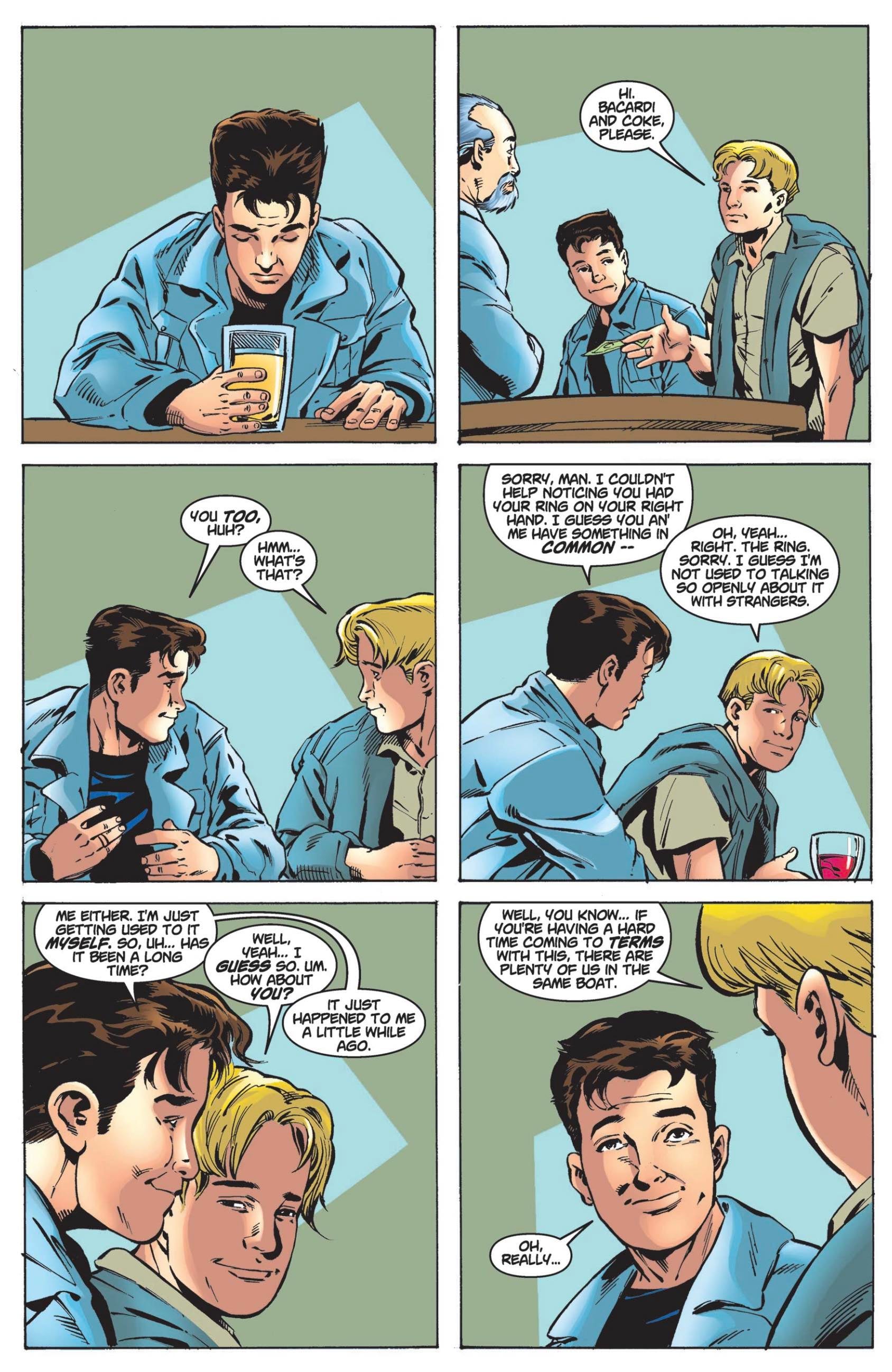
And even then, we did a bit of comedy as well. When Mary Jane was gone, there was actually a bit where he ends up talking to a guy in a bar. Peter thinks if you wear your wedding ring on your left ring finger it means you're a widower. He's talking to a guy, and he goes, ‘You too?’ He goes, ‘I guess.’ And they started talking. And he doesn't realize that the guy is wearing his ring on his right ring finger because he's gay. And so, they're having this conversation at cross purposes, and it's just like this funny little moment that we got in while he's feeling sorry for himself.
I remember that scene. I love moments like that where we get to live and breathe with the characters.
One of my favorite moments from that run is a bit where he's on his own. People loved the little piece of cheese that lived in his fridge.
Kevin!
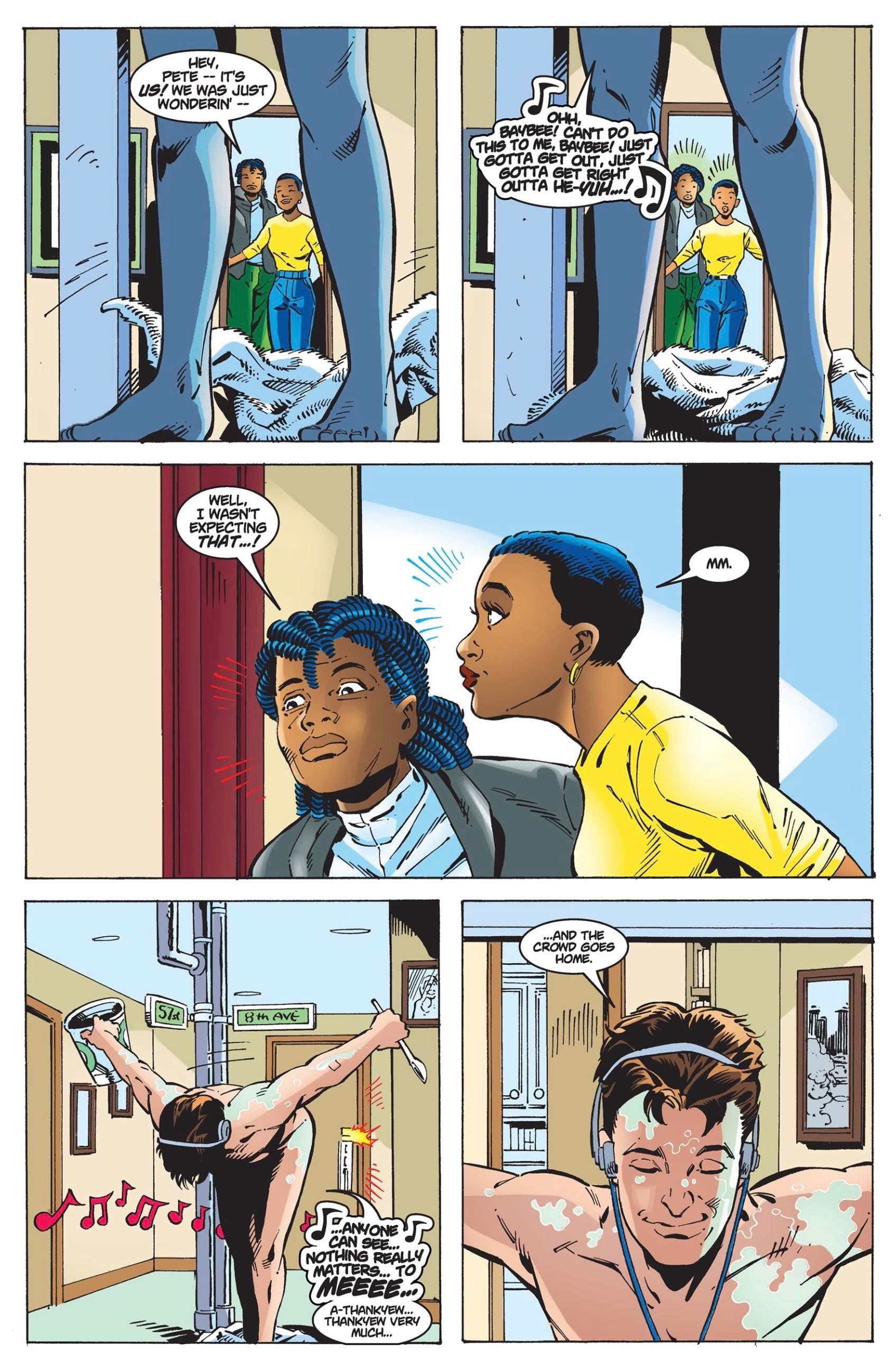
Kevin the cheese. Kevin was a sentient little piece of cheese. In the silent issue he's the only person who speaks and he speaks in a little expressive thing. There's one bit in another issue where Peter is in the apartment by himself. He's got a tub of ice cream. and he's singing Bohemian Rhapsody to himself dressed in a towe. Eventually he bends over to thank the imaginary audience, and his towel falls down. Glory and Randy walk in and they're like, ‘Okay, I didn't see that.’ And they just kind of shut the door. That little fun stuff, I got a sense that sometimes you need it. In some ways I feel like Marvel wouldn't come out with that stuff now, but that's a shame because it's what makes it real.
Spinning off that Mary Jane question, at the time when she was presumed dead in the plane crash, there were moments and Howard Mackie's run and your run where he was kind of getting close with Jill Stacy. Was there an idea with Marvel editorial to get them together?
Yeah, I think possibly. And we were nixing it. That's just like love triangle stuff that feels forced. His wife is dead, so let's see who's next? It just doesn't fit. I certainly was like, ‘I'm not going anywhere near that stuff.’ It's not worth it, and it doesn't do anything for the character.
And then Mary Jane was revealed to be alive, but then she immediately exited the titles again. Was Marvel hoping to transition the marriage away with that exit at the end of Howard Mackie's Amazing Spider-Man run?
They didn't want him to be married. My feeling on it was, he's married, so why don't we do it in a way that you haven't been doing it? My complaint about it would be they just made her into this like complaining and whining wife. That's not marriage. They made him a liar. That's not marriage. It was such a naive version of marriage.
It was almost like the marriage was written and designed by nerdy comic book people who don't know how to have a relationship with people, but my relationships are different. I do remember Marvel not wanting him to be married. But he was married, and so you have to do something crazy to get rid of it, which they did.
So as a kid, and I'm dating myself by saying that, I thought for sure Barker the dog was a Skrull. I thought there was something up with him. Was Barker just a dog?
He was a dog, but he was based on a dog that was in my neighborhood. The dog's name was Rock. We had a Welsh Pug called Colin. We would take Colin for a walk, and every day, we would go by Rock's backyard. Rock would flip out when he would see Colin. In the middle of his barking, he would run into his kennel, and you would hear these noises in there. And I'm like, ‘He's building something in there.’
One day, Rock jumped up on the fence, and the door came open and now he's just standing there, giant Rottweiler, us and Colin, and Rock doesn't know what to do. He just kind of like stood there frozen, and they walked away. So we based Barker off of him. I loved the fact that Barker was the only person that absolutely knew that Peter was Spider-Man.
Reimagining villains
You wrote two pivotal Green Goblin stories. The first was Peter Parker: Spider-Man #25 where Peter is locked in that room, and Norman tries to get him to take the Goblin serum. And then Death in the Family, which was a true classic.
The first one that we did is actually what they used for the first Sam Raimi film. They called me and said we're building off this. Raimi had read it and really liked it. Norman realized that his own son was just not what he wanted, but Peter was. A little bit like Chameleon, he saw who Peter Parker was. I'm really proud of that story.
I made up the reason why he was the Green Goblin. He was locked in a house, and in this house there was no electricity. I grew up in a house like this. These storms came over, and I slept in an attic, which was pretty terrifying for me. Because I'm an insomniac, I would be awake all night. And so, it wasn't the darkness that you were afraid of, it was the light going off.
And so, young Norman imagines he hears a goblin. He said, ‘I became not afraid of the dark but the light. When the light would go on, I would see the goblin standing right next to me.’ And that just blew him apart as a person. I think it gave him PTSD. The second Green Goblin story I did, the reason why I'm so proud of it is because there is this moment where they've had enough, and they sit down next to each other.
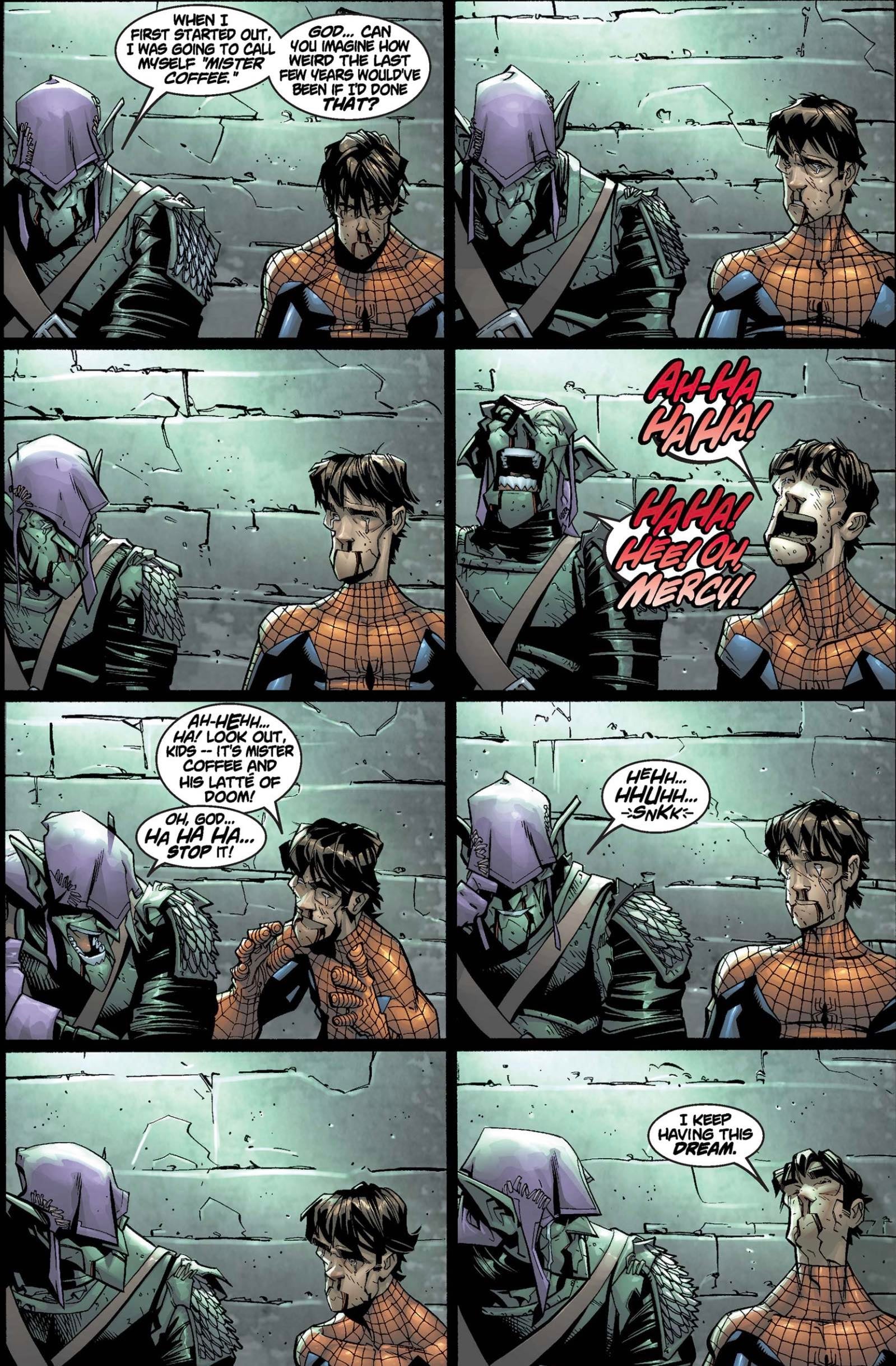
The Goblin says, ‘You know, I wasn't going to be the Green Goblin. I was originally going to call myself Mr. Coffee.’ And they just realize how absurd this whole thing is. They're dressed up in spandex, running around punching each other. He would have been called Mr. Coffee, and that would have been a terrible decision. And they crack up laughing.
And after having laughed, Peter looks at him and says, ‘You can't win. I had this dream. There is a plane crash, and my wife is in it, and every time I get to it, it's Gwen. She would never let me hate you. I won't do it, because she won't. So. you go ahead, kill my family, do whatever you like, Gwen won't let me hate you, and you lose.’ And he's right.
That was a strong moment when Peter walked away from Norman. From there, that led into you getting Spectacular Spider-Man. Why another title?
Joe Quesada called me up. And he was like, ‘Actually, we'd like to do 18 of these a year. It's like a cash cow. And we know that you're capable of it. You're prolific as a writer.’ They wanted to do one thing that was kind of weird, but I suppose it makes sense now. They always moaned to me about single issue stories. I would just say put five in a trade. They made me do five issue storylines. And they were like, ‘Can you do a story that would lead into the next film or the one after. Can you do a Venom story?’
I honestly think I can, so we did this Venom story, and people loved it. It gave a reason for the character. That's my style, the why of the story. It gave a reason for Eddie Brock to live and a reason for his motivations. I gave a fictional reason why the symbiote needed him. In researching I found out that adrenal cancer secretes adrenaline. And that creature fed on adrenaline, and there was no adrenaline like his.
It was making Eddie throw himself off buildings and stopping at the last moment, so he would secrete adrenaline. It was abusing him terribly, and that gave you an insight into why he was so messed up. You can tell from my work on Sentry, I think it's important to tell stories about mental health issues. I come from a family who deals with a lot of that stuff, and I think it's good for us to bring that into the conversation too.
You also gave Peter Parker organic web-shooters. You were the first one to do that in the mainstream comics. Was that an idea of yours, or was that passed down from editorial?
They asked me to do it. That's not the best use of me. ‘Can you give him organic web-shooters?’ Why? ‘Because we need to, because of the films.’ I asked them to tell me what we're doing it for, and they couldn't. I actually thought it was better when he didn't have them. To me that is filmmakers trying to put their stamp on the character, as if they created the character. I actually thought it was great that as a kid he was smart enough to build them.
Saying goodbye
Why did you leave Spectacular Spider-Man?
I wouldn't say that I felt like I've done it forever. I could probably do Spider-Man for another five years. It's an easy character to write. But at the time, I wanted to make sure that what I was saying meant something, and I wasn't sure if it was going to keep doing so.
There's a British comedy called Father Ted that was really funny. The guy who played the main character suddenly had a terrible aneurysm and died. And the creators have always said, ‘I'm so glad in some ways that happened. We love him, and we miss him. But if we kept going, we might have rehashed a bunch of the old jokes, and maybe it would have lost its luster.’ So. there's a moment where you understand that is enough for me, and that's what I did.
Are there any special memories from your time on Spider-Man that you would like to share? Something that you reflect on often?
It's all good. There is only so much that you can do in one section. I've said a lot of things with Spider Man. I was lucky enough that Bucky came back for my final issue. The first story of ours was about why he had a sense of humor. There's actually something in the last issue, that to me was so meaningful. We did something that had not been done before, we talked about his parents and what that meant to him.
He goes back to see Uncle Ben, basically Uncle Ben's ghost. And he's tired, and he's done a lot. And he's sort of saying, ‘I did this for you, Uncle Ben.’ And Uncle Ben says, ‘No, you didn't. You did it for your parents.’ They recall this time when he was in a school play, and he failed in front of his mom and dad. He couldn't do his lines, he got stage fright.
And so, everything he's ever done, all of these things, have just been to show them that he was worthwhile. That's something that I think is very human. I was really proud of that thing, because it really brought dimension to him that was hidden in who he is as a person.
Do you have any advice for Marvel about how to handle Spider-Man? What should they be doing differently?
I wouldn't want to give advice to any other writer or creator, because I think I have a different take. But I will say this, I think that what we succeeded in, I understood that it was about Peter Parker primarily, and then it was about Spider-Man. None of us have run around town punching bag guys dressed in spandex, but we have all had to sacrifice. I'm a parent. You have to sacrifice as a parent.
That's the story of Spider-Man. My advantage was that I very early on said who I thought Spider-Man was, and I stayed with that. Spider-Man is the guy that wakes up and he's got the flu, he's late for work, he sits in traffic for two hours, goes to work, the boss yells at him, he struggles through the day, sits for two more hours in traffic, gets home, his wife is upset, kids are in bed, and he goes to bed, and he gets up and does it all over again.
I actually always liked the part when Peter became a teacher for awhile. I think it was the ghost of Uncle Ben who says, "You would have always been Spider-Man, with a spider-bite or not. You would have been a teacher. You're always going to be there. That's who you are." I think once I realized that, it took real shape for me as a writer.
How did you feel when you saw Typeface, one of your creations, in Across the Spider-Verse?
I didn't know that was going to happen! It was funny. That character was created during that laughing phone call with Bucky. We said let's make the dumbest character we can think of, and make it intentionally silly, because we haven't had that for a while. Like the Big Wheel or something. His name was Typeface, and he throws letter-bombs, and he's got type on its face. It's stupid.
His name is Gordon Thomas. There's actually something behind that, I'd never said this before. If you look up Gordon Thomas on YouTube, he's a musician. He's kind of a bandleader, and he did the most atrocious music. He was like the worst musician. And he would be on the front of all of his records that he put out himself. His record label was Sam Hot Records, which is an anagram of Thomas.
And he would always hold a trombone. And there's no trombone on any of his records. I just thought Gordon Thomas was so goofy as a real person, and that's actually the name I chose for Typeface. Seeing him in Spider-Verse was great. I was excited.
You’ve spoken a lot about core memories during this interview. Are there any other core memories from your time on Spider-Man that you hold close to your heart?
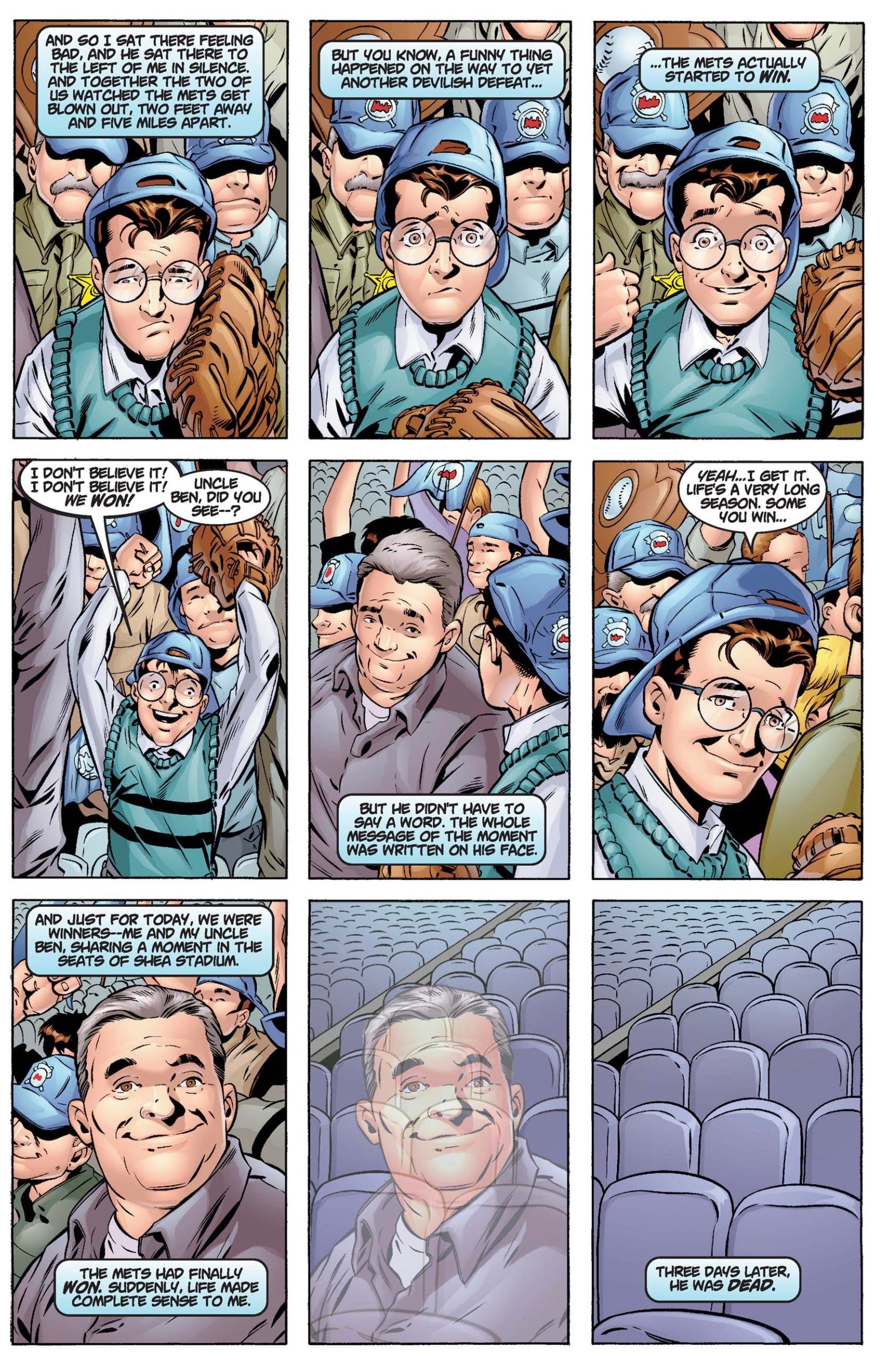
There's one issue I did about baseball. He goes to a baseball game on the anniversary of Uncle Ben's death. And I will tell you that has a very special meaning for me personally. It turns out that story has a lot of special meaning for almost everyone that reads it.
Being a Brit that lives in America, I have to often go home to Great Britain, when my family are going to pass away, but not when they're gone yet. So, I have to say goodbye and get on a plane. And for that issue, I got on a plane, I saw my grandfather in Wales, and I sat with him. And he was really closing down. He didn't want to live anymore. He just said ‘I'm old, and I'm tired, and I'm ready to go.’ And he wouldn't watch football with me, which is really unusual.
I said, ‘Hey granddad, how about one of those old London wartime songs you used to sing for me?’ He sang and it was such a connected memory for me and him. And I know that he was waiting for me to get there so he could die. We're in an old people's home, and it was visiting time. And as we started singing this old song, all of a sudden we hear this noise, and all the people around us are singing.
It was all the old people. There was an old lady, completely gone, and she was waiting for someone to show up who never came. She was just mouthing the words because it was built into them. And I realized, we connect to people because of shared experiences, like sports or Thanksgiving. And so, I wrote that entire issue on the plane, and he died right after.
That's really special because people come up, and they see what is in that book, and they say, ‘Oh my god, this made me think of me and my dad.’ The craziest part about that book is there's only one picture of him dressed as Spider-Man. There's only one panel, one page, and I only put it in because they told me to. But really, that's a story about Peter Parker and his father figure Uncle Ben. It doesn't even have Spider-Man in it, because that's not what Spider-Man is about. Spider-Man is about us. That's why he is such an enduring character.
Follow Popverse for upcoming event coverage and news
Find out how we conduct our review by reading our review policy
Let Popverse be your tour guide through the wilderness of pop culture
Sign in and let us help you find your new favorite thing.

Comments
Want to join the discussion? Please activate your account first.
Visit Reedpop ID if you need to resend the confirmation email.