If you click on a link and make a purchase we may receive a small commission. Read our editorial policy.
Steve Lieber Sure is Creating Some Content
An interview with Justice Society and Superman's Pal Jimmy Olsen artist Steve Lieber
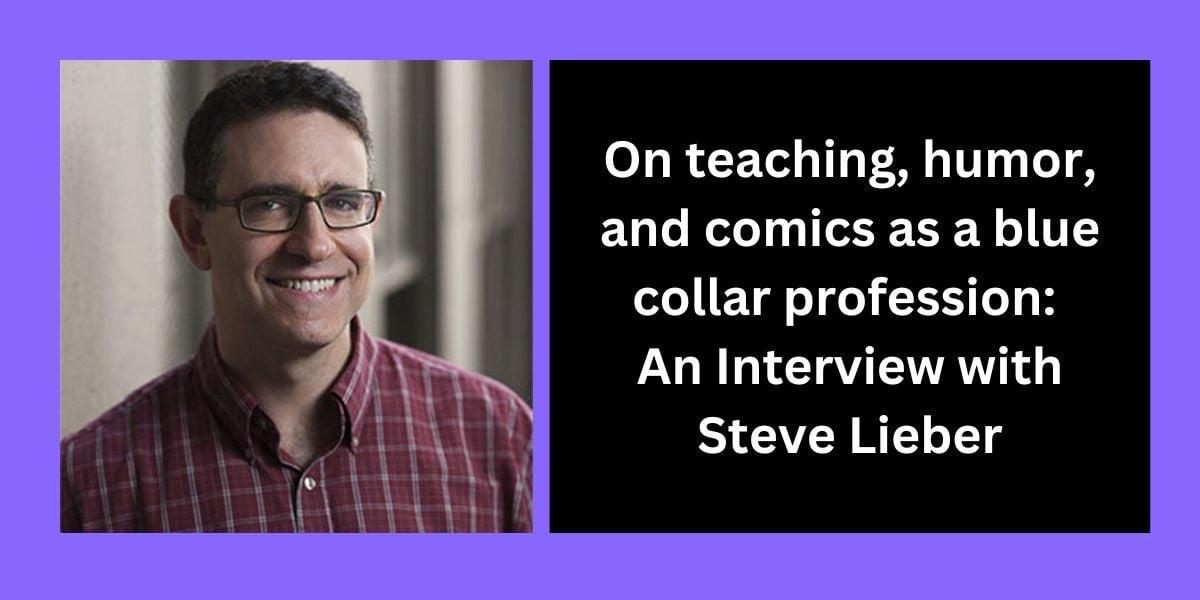

If you’ve been to a convention in the Pacific Northwest some time in the past few decades, there's a fair chance you’ve met Comics’ supportive accidental dad, Steve Lieber.
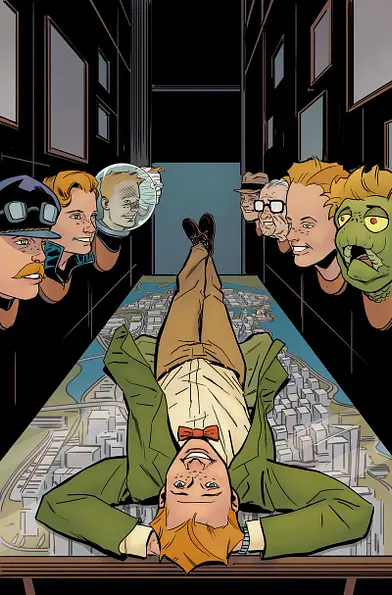
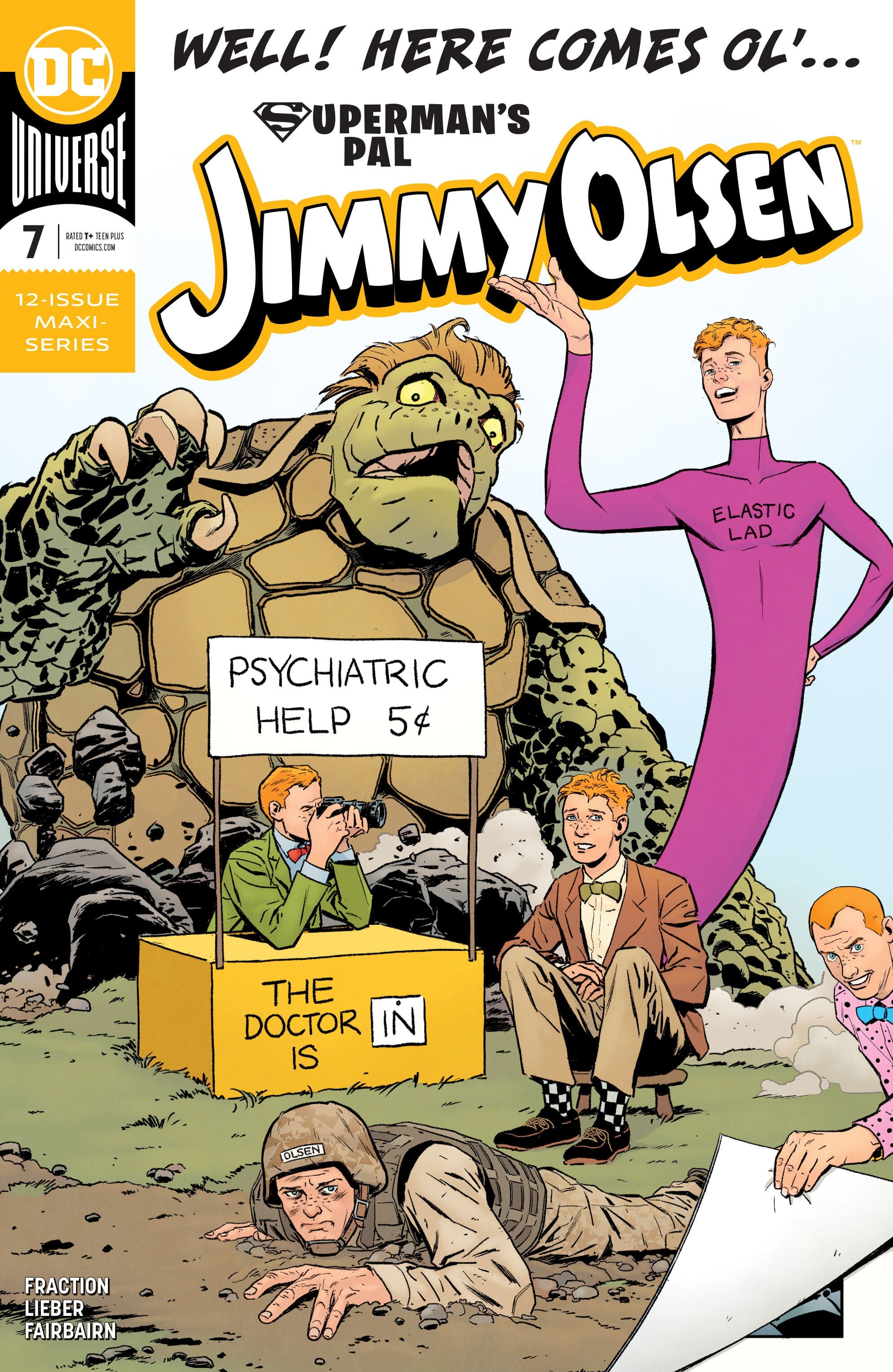
From beginnings that, according to him, start with no skill at all, to creating the pages of titles like Whiteout, Superman’s Pal Jimmy Olsen, Superior Foes of Spider-Man and DC Comics’ current run of Justice Society of America, as well as providing portfolio critique to young artists free of charge, there’s no denying that Lieber is a much-needed force for good in the comic sphere of today.
Popverse was able to catch up with Lieber at Fan Expo Portland over President’s Day weekend to dig into the roots, humor, and drive behind such a plentiful and generous career.
Popverse: You said that [Fan Expo Portland] is the first show that you've done since COVID. How's this going?
Steve Lieber: Oh, nightmarish. Really. I'm trying not to think about the possible consequences. [laughs] But it's helpful to scrape the barnacles off of my con table stuff. It’s funny, I have no sales pitches left anymore. I'm not trying to talk people into anything. If they want to come up and ask a question, I'm happy to answer it.
I used to be really outgoing and I'd pull people over to my table, "Hi, can I give you a free quick sketch? Let me tell you about this comic I'm working on." Now, I'm sitting back.
Sort of a 'Woah it's fine if you don't want to talk to me, possible plague-friend.'
It's appreciated even. Yeah. Between the stammer and the mumble thing I've got going, I've never been very good at making myself understood. You put a duckbill N95 on top of that and the [Portland] Unipiper playing Highland marches on top of that, and I just realize I’m not going to be making myself very audible.
You might have to recite all of this from memory because the recording will be so awful [laughs]
We’ll make it work, man. [laughs] So, okay, you’ve not been doing conventions since COVID, but you have been doing things like portfolio reviews at Books With Pictures here in Portland.
Absolutely. One of my favorite things in the world is to talk about the craft of making comics. I wasn't a natural at all when I started out – I had to learn. I wrote everything I know, which I think set me up to be a pretty good teacher. I think very systematically, so I can speak systematically about what people can do to fix problems in their work. When COVID happened, I missed doing that.
My studio, Helioscope, ran a mentorship program from 2005 until lockdown. Over that time, we cycled through, I think, 72 official mentees, plus a lot of other artists who were just associated with the studio who I worked with. And I like talking with young artists. We had to shut the mentorship program down, and we haven't reopened it because we're not going to ask anybody to come to Portland, especially when we’re really only in the studio for two days a week or so.
I still wanted to teach. I reached out to Katie at Books with Pictures and said, "What would you think of me doing office hours?" It's gone great.
And Katie is just remarkably lovely, of course.
Yes, very much. Her whole thing as a shop owner is building communities, so it fit right into her mission, and I've had a great time. The portfolios have been all over the place. There's a few folks who actually want to do the traditional mainstream comics that I've been involved in most of my career. There've been folks who are taking classes and want another eye on their homework. A couple of folks who are really serious about small press stuff that I've been working with a lot and talking with outside of office hours as well.
It gets me fired up more than anything just to talk with someone about these things who really wants to engage and wants to learn. I love teaching. I've taught in a classroom environment a few times and that's awful. Oh shit it’s just terrible. [laughs]
[laughs] Is it too formal? Too stiff of an environment type of thing?
No, no, not like that. The students who are into it are great, but as with any class – particularly in the college level class – there's a few people who were there because they needed an elective. There is nothing I hate more than trying to teach something to someone who doesn't want to learn.
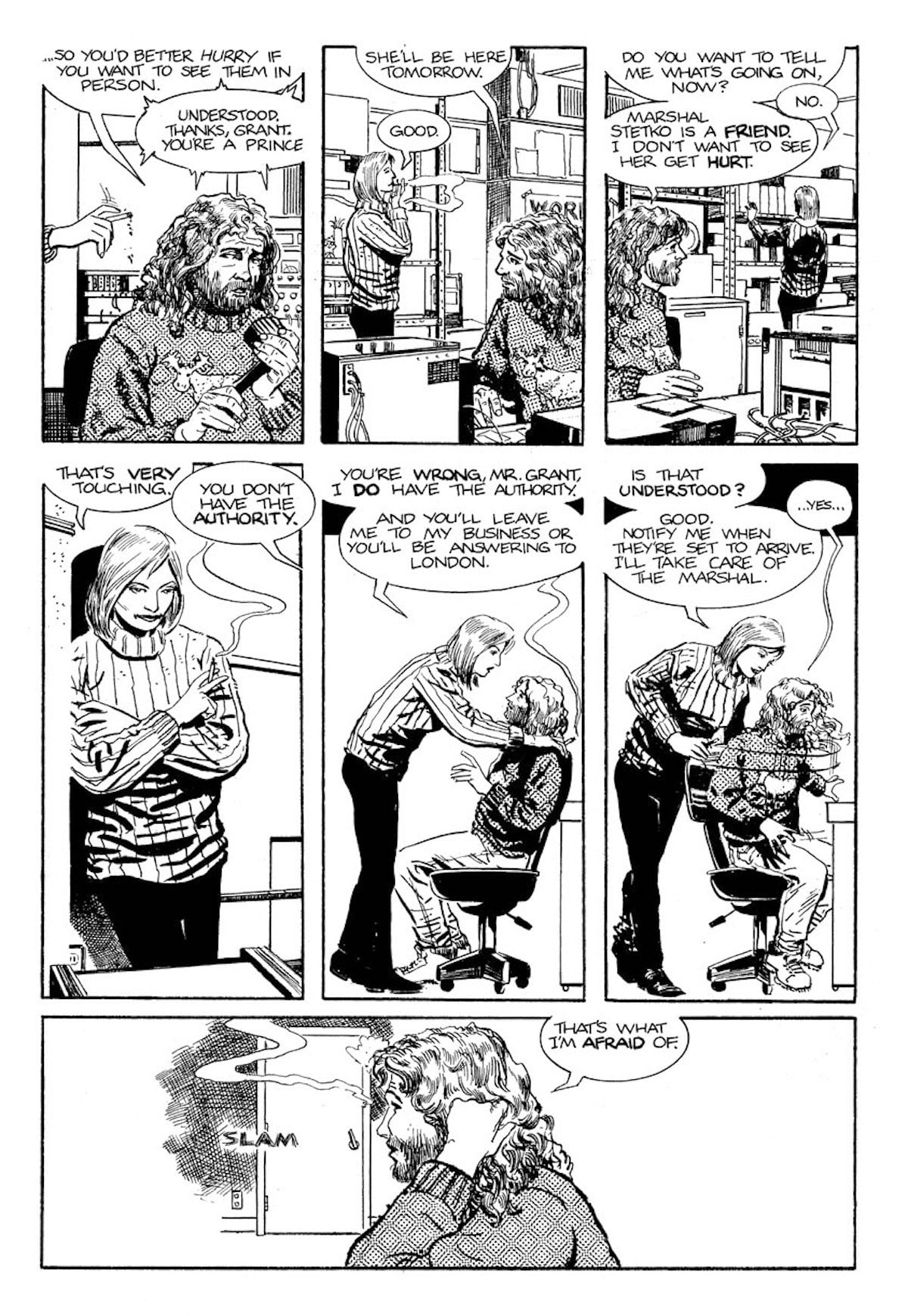
I did a guest lecturing thing at a prominent school that has a comics program. I won't name them to trash them or anything like that, but there were two students who really, really tried. The teacher actually assigned a script segment from Whiteout. It was a chunk of storytelling that I was already familiar with obviously, so I could actually critique with some insight. Everybody was trying to solve the same set of problems.
Like I said, a couple people really tried. One of them showed me some things in the text that I didn't see and found a really nice angle on it. I thought, that's interesting. That felt great. A few blew the assignment off and just hacked out something. One guy turned in pages that were literally drawn on paper from a lined spiral notebook with the little flanges still on the side, all of eight minutes of work per page that he did. Then, one student –and I'm taking this shit to my grave – swiped ME. He laid a sheet of office paper on top of the comic book and he traced my work and signed my name.
Oh my GOD. You’re kidding me.
Nope.
Well I’ll tell you, that certainly takes a particular kind of balls and audacity [laughs]
I mean, yeah. Do you think I would've recognized it? I don't know. Yeah. I looked at him and I thought, 'No, I'm not his teacher. I'm a guest lecturer. Do I lay into him?'
This is one of those, 'can you discipline other people's kids' sort of things.
[laughs] Exactly. But when I looked over, his jaw was actually hanging slack open and there was just a big wad chewing gum at the end of his tongue. What am I going to say? What is worth the energy? God. I just said, 'You just keep doing what you're doing there, buddy.' Yeah. The world will give you what you deserve.

Bless.
Yeah. I took that as a guide. Yeah, maybe you can get paid for teaching, but that's not the goal here.
I imagine the crossover between being a comic creator and also having to learn how to teach people how to critique it properly can be challenging in its own way. Is that difficult for you to navigate at all or does it make it easier to do both?
I find it easy because like I said, I wasn't natural. When I was 18 and started trying to make comics, I sucked. There were 18-year olds who were already working professionally for comics companies, and I didn't even know how perspective worked. I didn't know the first thing about constructing a human figure.
I was a smart kid and I was pompous enough to think that I was a lot better than I was, which is why the Kubert School was perfect for me. Imagine a guy with a top hat walking into the middle of a snowball fight.
[laughs]
It was, though! It was a bunch of wise cartoonists and teachers who had no patience for bullshit just knocking that top hat off my head, and it got my wrist off of my forehead and made me think of cartooning as a blue collar profession.
It's not the high brow thing that everybody assumes that it is?
No. I mean, well, I've been deeply poisoned by reading a lot of art criticism and John Berger and every issue of The Comics Journal I'd ever been able to get my hands on, and I had a lot of received ideas that were not supported by any actual human experience. Coming to it and learning to see it as a blue collar trade, it gave me a really useful point of view on how to make comics.
Since I had to assemble that knowledge from scratch, with the help of some very good instructors, it made me good at talking about this stuff. With 70 students in the mentorship program and all the portfolio reviews I've done over the years, I've seen every problem that there is to have in a portfolio. It makes me a good diagnostician.
Well there’s also room for you to bring back some of the values that we need more of in comics, right?
One thing that I like in particular about a lot of the books that you've worked on is that there's a sense of humor that's around. Honestly, it's not really something that you see in a lot of comics within probably the past decade or so, it's just letting comics be funny.
In coming to your point about you recognizing that it's a blue collar profession, do you think that letting comics be funny is a part of just letting loose and going, 'You know what? This doesn't have to be a serious thing all the time'?
I think so. Just trying to be entertaining. The action beats, I love them. I know how to do them. But I'm sitting next to Kevin Maguire here at the show, and I remember – everyone remembers – his work with the Justice League.
Talk about perfect comedy beats, right?
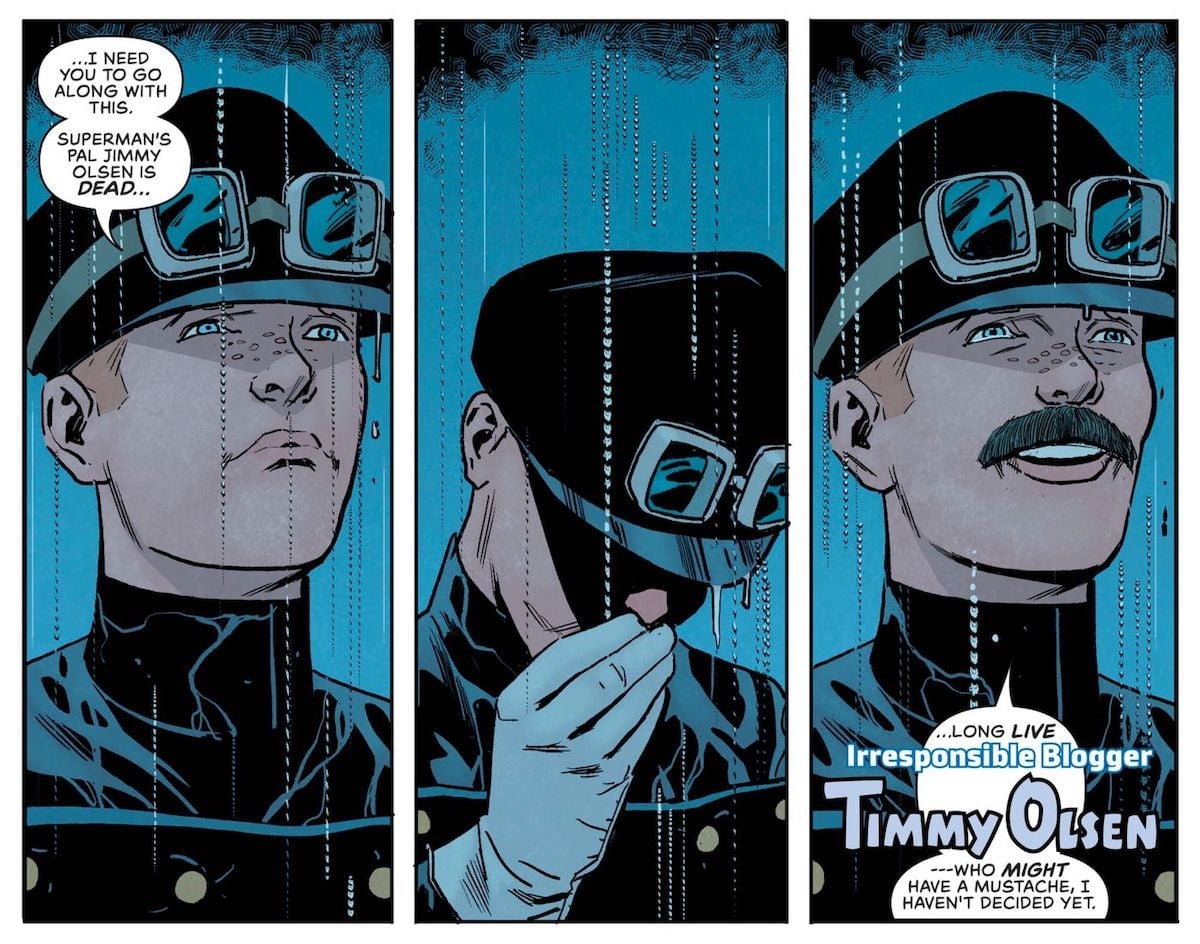
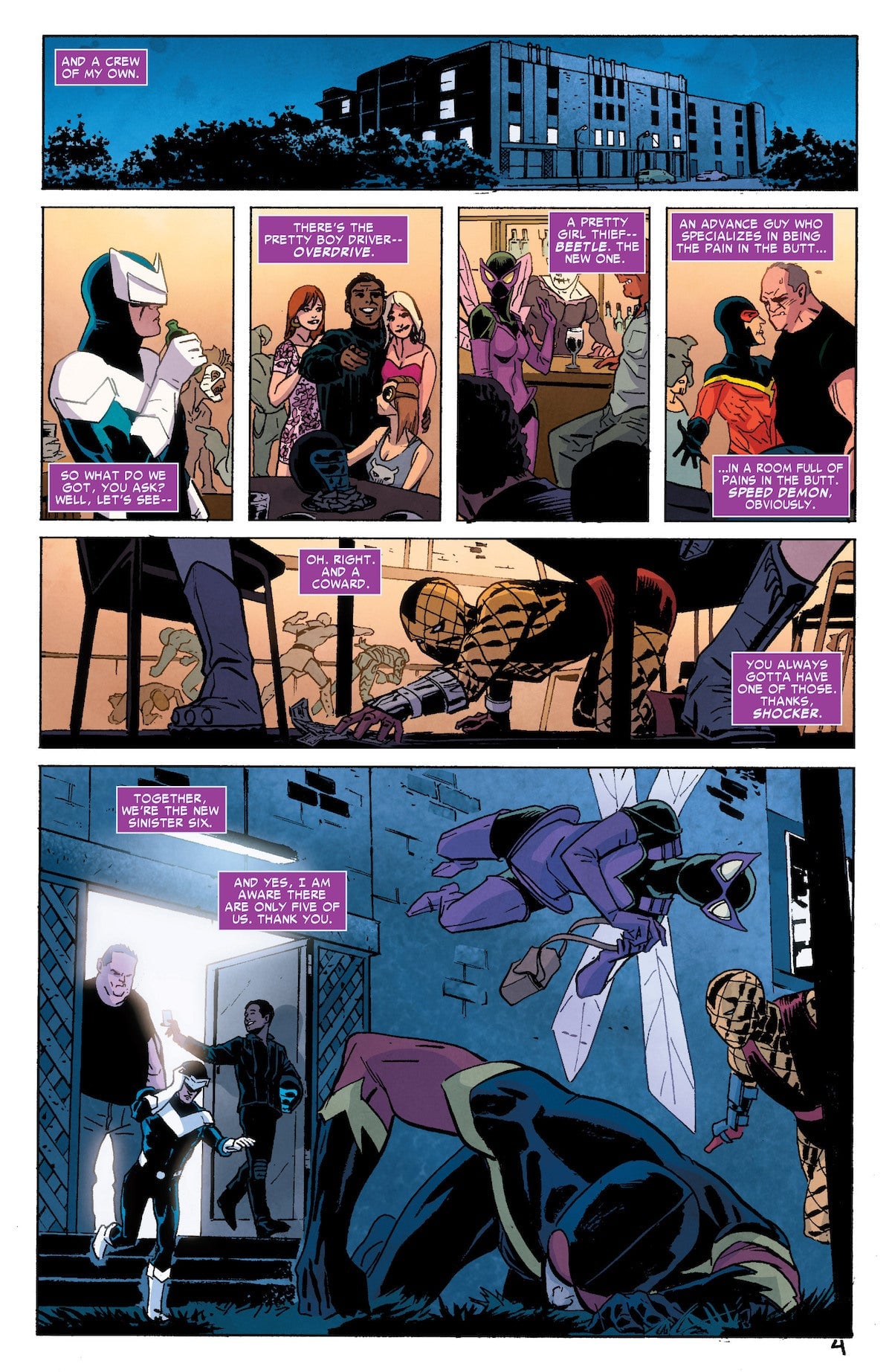
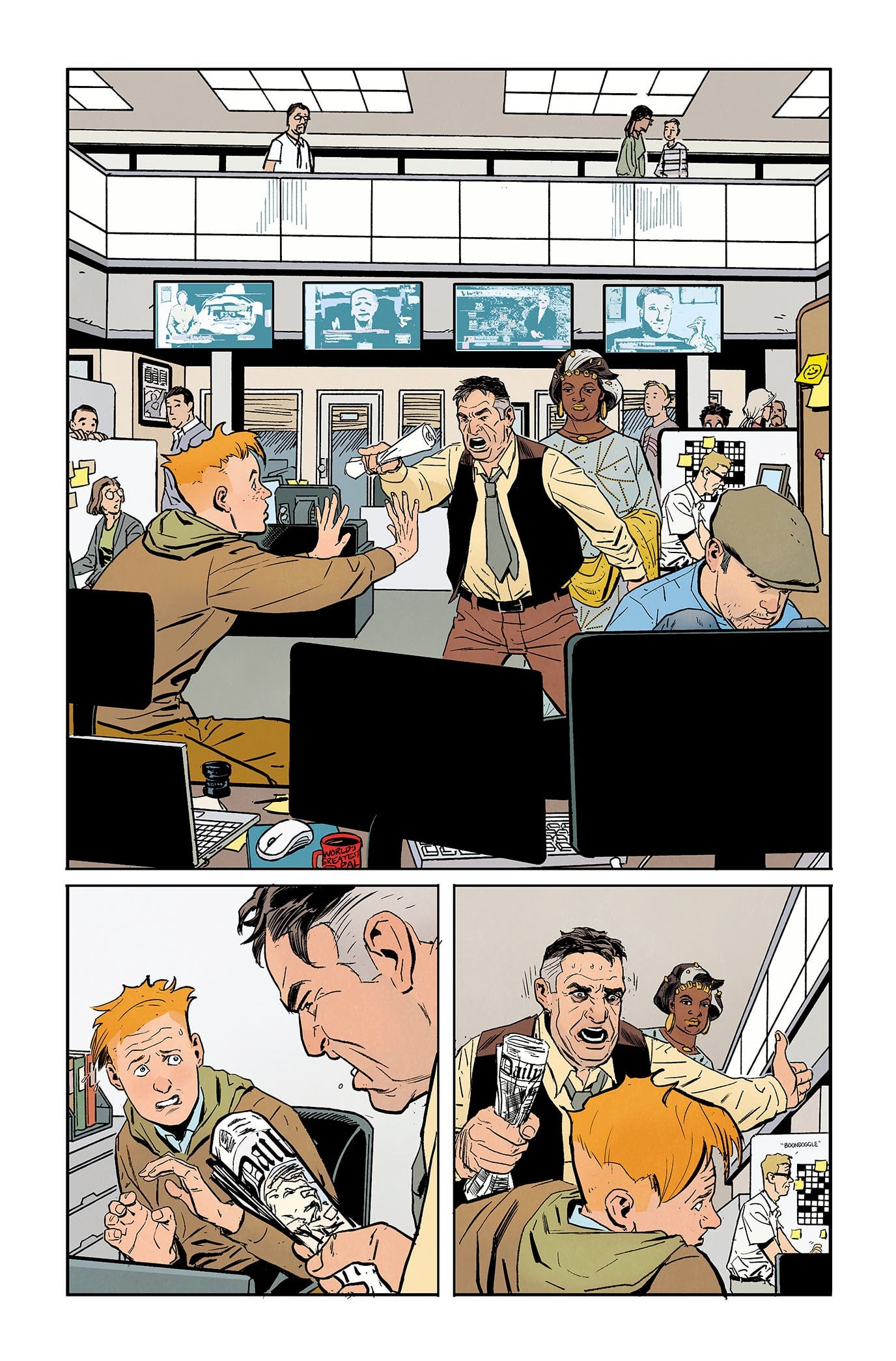
Yeah. Everyone remembers what a breath of fresh air his Justice League stuff was. Then, when I started getting into the comedy stuff, it wasn't intentional at all. I spent 20 years in comics as the guy who did depressing stories about people in prison. It was just dumb luck and being surrounded by some very funny people that made me start to work comedy into my work. With the [Matt] Fraction Hawkeye thing, that was one of my first chances to ever show that I could do anything funny. That led to Superior Foes of Spider-Man, which wasn't supposed to be a comedy book.
Wait, it wasn’t?
As far as I know, yeah, but Nick [Spencer] wrote in these really loose scripts and there were some beats in there, I thought, oh, 'I can get a laugh here. I know how to do this.' I put that in. He was never more than three pages ahead of me at any time-- he was responding to what I put in real time. He started writing funny, and I started coming up with funny bits just in the pictures and next thing you know, we had a sitcom.
But a lot of the urge to do that, it came from working around Erika Moen, Jeff Parker, Ben Dewey, Colleen Coover, some really talented, funny cartoonists. I wanted in on that. I don't want to draw the guy sitting behind the prison cell thinking about what he's done the rest of my career.
Is that a mental, emotional shift that you had to go through going from something that was more serious?
It wasn't something to go through. I wasn't sure I could do it, but it was definitely something I wanted to do because, again, I wanted to be entertaining.
That's such a subjective concept too – how to be entertaining in telling a comic story. I imagine that’s hard for some people to parse how to do.
I guess a lot of it's just my own taste. I like funny. I like reading funny. There's only a few approved ways to be funny in a mainstream comic, at least at that point. Someone like Simon Bisley was allowed to be funny because there's enough testosterone on the page to say, no, you're not compensating for anything, but you also weren't proving yourself to be lesser by laughing at a comic book. He was able to do it back in the day, and a couple of folks on the Vertigo side of things were able to as well, but within mainstream comics, man, funny was wrong and dangerous and jeopardized the importance of the material.
Or it was very wholesome, straight-laced, 'make sure it's funny for everybody' sort of thing, which is exhausting to try and keep up with, I'm sure. I've been friends with and sharing the studio with Jeff Parker forever, and he was always very good at sneaking humor into stuff and getting away with it. A lot of it was because he was working on the Marvel Adventures line.
Oh, those were great.
Yeah. They were done-in-one things, allegedly for a young reader's audience, but he got to do an issue where all the Avengers got turned into MODOKs. Or turned the Fantastic Four into a Chitty Chitty Bang Bang riff. “Dude, Where's My Car?” The best damn title. Yeah. I wanted in on that. I can be funny too. Put me in, coach!
So let’s tie that back to teaching – when you're trying to teach all of this stuff and how to approach all the different ways that you can come at comics and humor and drama, how do you teach people to be curious about that?
I can't.
And that’s the end of the interview! [laughs]
Bye, folks! Thanks for coming! Yeah. No, I think that's one of the reasons that I don't stand in front of a classroom and teach. I'm not producing lesson plans. What I'm doing is, you bring me what you're working on, tell me what your goals are and I'll give you a fresh and experienced pair of eyes to tell you ways to steer more closely to your goal.
That goes back to what I was saying about never wanting to teach anyone who doesn't want to be there. The folks I'm talking to have already produced the work, and that's why they've come down to Books with Pictures with their portfolios to get some words. Nine times out of 10, I can look at their stuff and I can see what they're shooting towards. If I'm confused about things, I'll ask them, "Who do you admire? What kind of tradition do you see yourself working in here? What's your goal for this piece?" Sometimes it's just, "Do you see this being published? Do you want to put this on the web?"
Then, there's so many different ways to critique a page. You could critique it from, whether it's achieving its goals as expressive art, whether it's solving storytelling problems, whether it's just graphically coherent and different folks require different things.
There's a fellow who has since joined our studio who was coming to some of the early ones, Stephen Pellnat, and Stephen has real stories in him. He's got a lot to say and there's a whole lot of life experience to come across, and he'd had some very good instructors, and really all I talked to him about was a combination of low level graphic choices. If this area wasn't as busy, you would draw the eye over to this area, which is the heart of this panel. Sometimes, I could talk to him about high level artistic goals. You offer the advice of someone who's been making comics for 30 years.
Other folks, I'm just trying to get into the trenches and solve problems with them. I can't tell what's going on between this panel and this panel. Tell me what's happening and then I'll grab a piece of paper and I'll do three or four thumbnails to show, okay, you can put the camera here, and that would show this character interacting with this character this way.
Sometimes, all people need to see is a couple of quick sketches to show how else could they have framed this moment because you do this long enough and you develop a camera in your brain that will whip around a scene 360 degrees to see it from every possible angle and then will just immediately seize on the one that accomplishes your goals. Until you have that, it's a lot of work to think of.
That's just all practice and time, I'm guessing.
Exactly. Yeah.
I know that [former Marvel Editor-In-Chief] Jim Shooter said something along the lines of how you should be able to look at a single panel and tell what is happening in the story in a single panel. What's your take on something like that because it seems similar to what it is that you're saying?
It's a guideline rather than a rule. Yeah, one of the things on the little critique list that I tell a lot of people is-- wait, I have to photo bomb people.
[Lieber puts our interview on pause to stand up, poking his head just into view of a crowd of cosplayers who have stopped in his aisle to take a group selfie]
[laughs] Spectacular.
This is how I hope to achieve immortality is just a thousand goofy faces behind cosplayers. It's my own sociopathy. [laughs] I got to fuck up somebody else's photographs. Anyway!
One of the things that I tell a lot of artists is to show their unlettered page to somebody who doesn't know the story they're trying to tell and have them tell the story back to you based on the pictures you showed me.
Oh, that's interesting.
It's the most depressing fucking thing in the world.
[laughs]
If you're new at this, you know the story. It's in your head. It's supposed to go in here through the page into their brains. Usually, it stops about three inches above the paper and never goes any further. It’s getting people to realize that this isn't an illustration that they're doing. It is a unit of story. It's a piece of graphics. I'll quote Howard Chaykin here: "It's a piece of graphic design in the service of narrative."
Ooh, that's a great way of putting that.
Yeah. It's not a way that the brain is wired to think. Especially if you're involved with the visual arts. You teach yourself to think of a picture as a window on the world that you fall in love with and you want to create an experience that people could explore this single image and with comics, if you do that, you fucked up. You've ruined everything. The purpose of a paragraph in a novel or story is to compel you to read the next paragraph. The purpose of a panel with a comic is to compel you to read the next panel. It takes a while to wire your brain to think that way.
Listen, there's some people that you could argue that still haven't figured that out that are still very, very successful.
I won't say 'in their defense' because they don't need me to defend them, but a lot of these people have much better careers than me.
Isn't that funny? Grim? I’m not sure. Your mileage may vary.
It's different. I mean, for some folks, a comic book, it's not a unit of story. It's a portfolio of images. It's a tapestry. It's a little trip through the museum and – God bless them – if that's what they're looking for in the work, then they should enjoy it.
It’s funny, I talk to people in comics a lot and all the different perspectives from artists and writers are fascinating when it comes to the craft of it. And I say this with the utmost love overall, but do you ever just sit down and think, “God, this job is stupid”?
[laughs]
I’m serious! Whether you're working on comics or you're talking about comics, you get down to talking about career paths and things like this and kind of go “This is the most ridiculous thing. What are we doing here?!" sort of thing.
Pretty much. It's why comics people tend to cluster and cling to other comics people, because if you're not inside of it a little bit, it sounds fucking neurotic. Why would you subject yourself to this?
Well, it's a job that tends to make everybody very, very happy in different degrees, and also, everybody's miserable somehow. Some of the most ridiculous people have the most successful careers. Some people who make the most incredible thing you've ever seen have no following at all. I don't think in any other industry, we really see that quite in the same way that you do in comics.
At least in other industries that really attract obsessives, there's the possibility of long-term rewards.
I mean, one of the harshest things I ever heard in my life was when Benjamin Dewey started coming to Helioscope and he was a great artist before he even broke into comics. He was a trade painter, terrifically talented illustrator, and he was also a working musician. I think he was in three different bands, all of which were performing regular gigs. He could play metal. He could play country. He could play blues. He could play rock. A really talented string player. He said that he wanted to shift his attention from music to comics because comics had a much better job security. I know.
…What?
I know.
That feels like a black hole of information to hear with my own ears.
[laughs] As he explained it, he came into his own as a musician just as the possibility of making a living by selling recordings of your music on CDs disappeared. He was doing the thing that a lot of working musicians do where the band would drive 90 minutes to play a 90-minute gig and drive 90 minutes back and everyone would get $20.
Yeah. I guess the “let’s get into a van, and let's do this” culture has disappeared, hasn’t it?
Yeah. Comics, it hasn't treated him anywhere near as well as he deserves, but it's treated him better than that.
Well, I mean, that's the good part of it being ridiculous then, I guess, right?
Exactly. At least with working in comics, it's something. It's something creative where people can go to make something happen, even if it's hardly ever as much as they deserve.
Dog Man 11: Everything you need to know about Dav Pilkey's new Dog Man book, Twenty Thousand Fleas Under The Sea
About Fan Expo
Dates
-
Follow Popverse for upcoming event coverage and news
Find out how we conduct our review by reading our review policy
Let Popverse be your tour guide through the wilderness of pop culture
Sign in and let us help you find your new favorite thing.









Comments
Want to join the discussion? Please activate your account first.
Visit Reedpop ID if you need to resend the confirmation email.