If you click on a link and make a purchase we may receive a small commission. Read our editorial policy.
The Rings of Power cast and crew breakdown Season 2’s epic multi-episode battle (including THAT death scene)
Sauron actor Charlie Vickers, director Charlotte Brändström,and more talk about Lord of the Rings: Rings of Power season 2 finale.
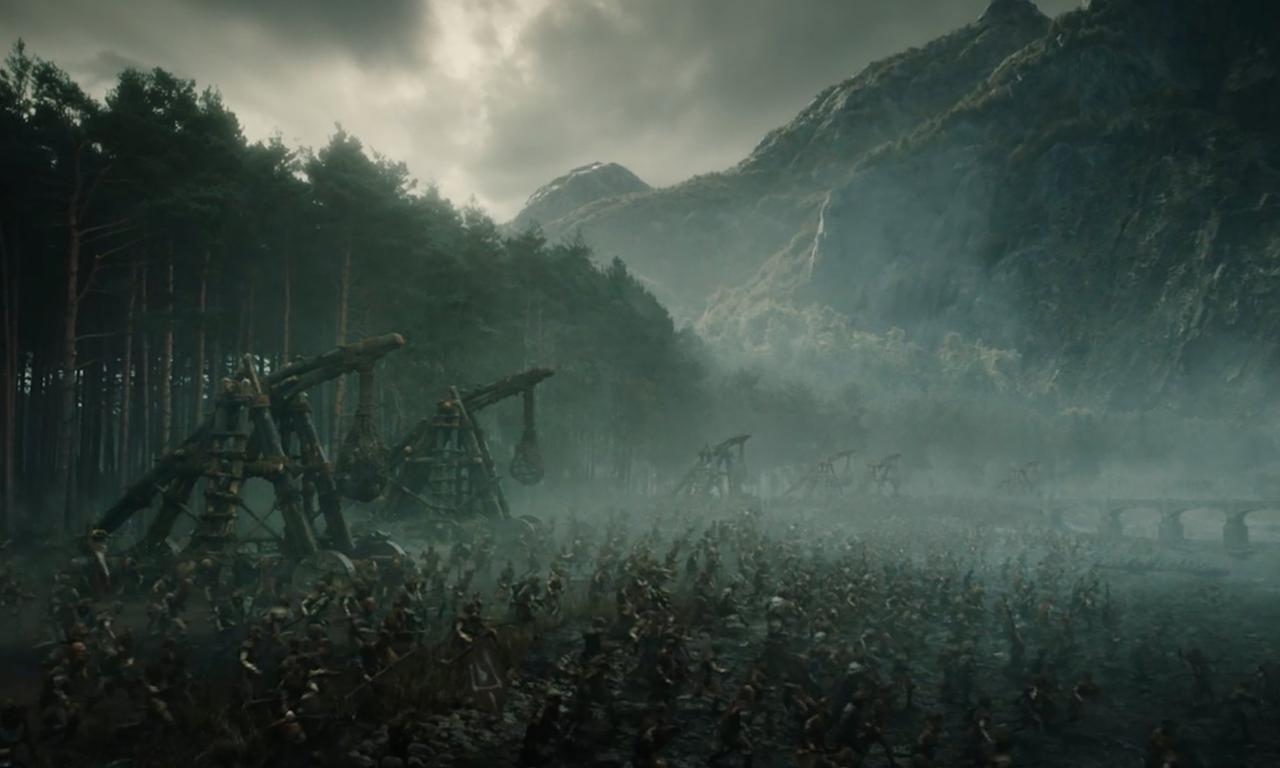

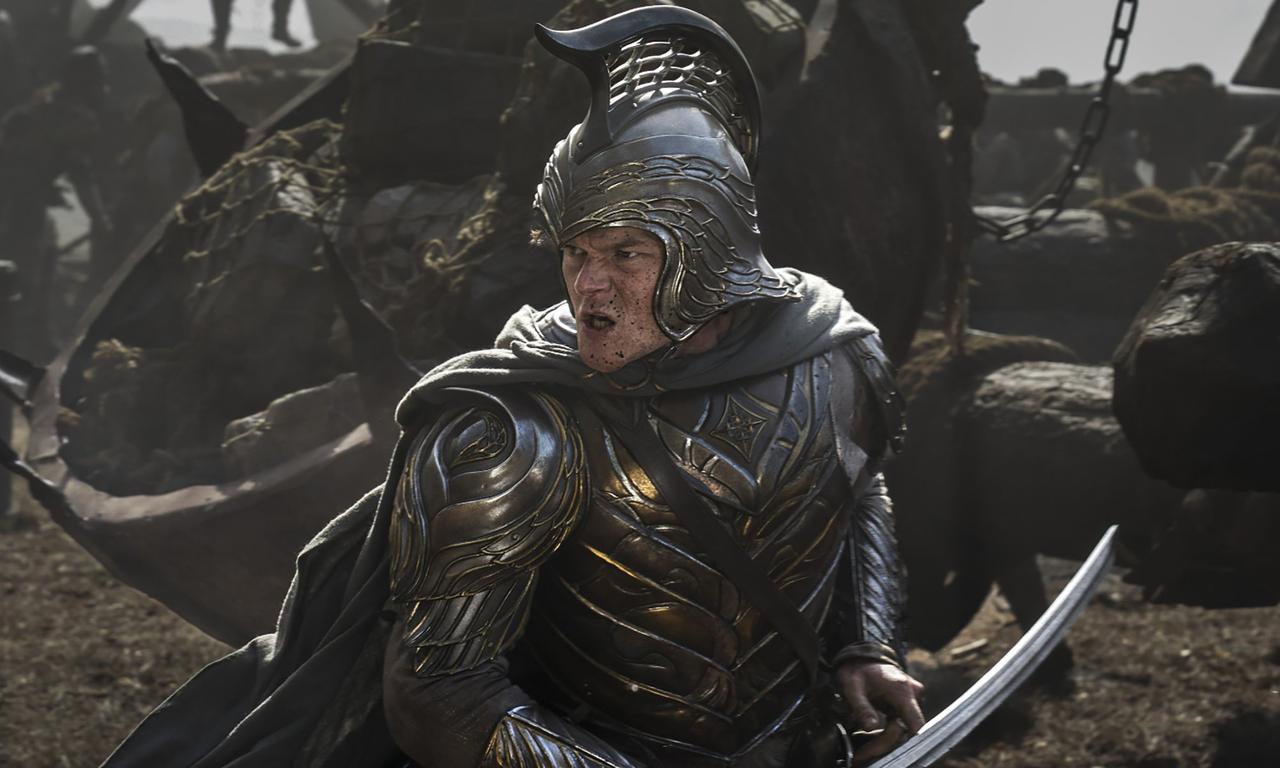
The Lord of the Rings: The Rings of Power has done blockbuster action scenes before, but none of them compares to Season 2’s multi-episode epic, the Siege of Eregion.
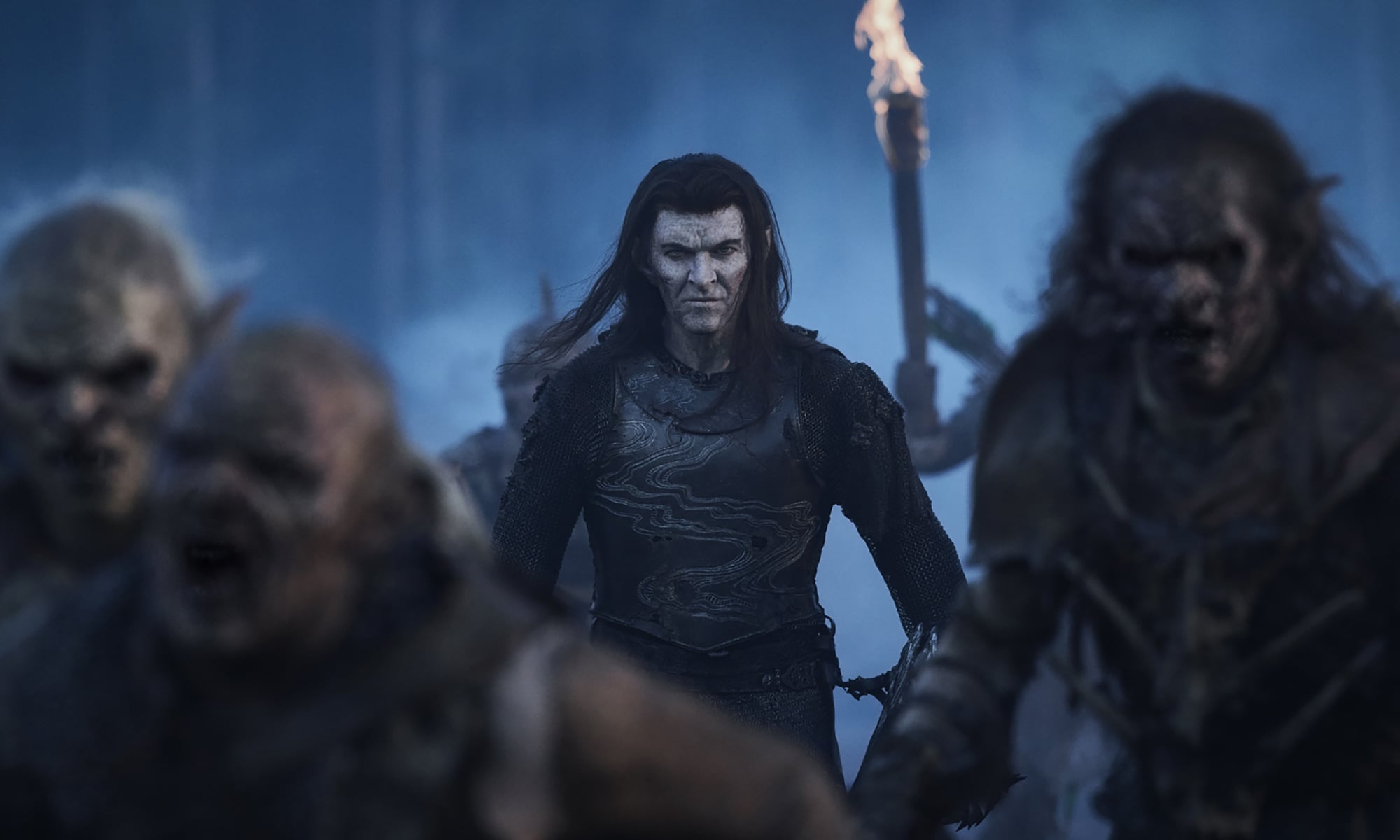
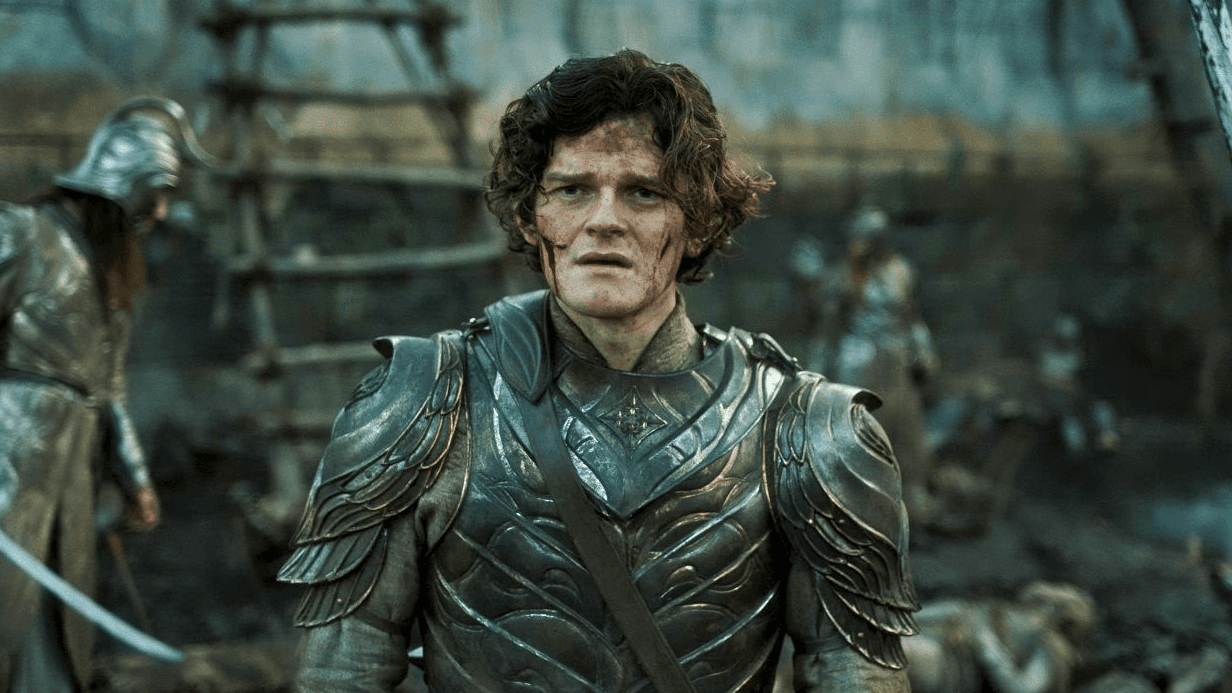
Adar and his Mordor orcs are at the gates, with only Elrond and his elven warriors to hold them back. Should Elrond fail, Eregion will fall – and Middle-earth will never be the same. Meanwhile, dark lord in disguise Sauron and elf-smith Celebrimbor engage in battle of wills inside the city’s walls, the outcome of which will likewise have world-changing consequences.
Over the course of several sessions, Popverse caught up with several Rings of Power cast and crew members – our own virtual Council of Elrond, if you like – to break down the Siege of Eregion, including the performances, cinematography, stunts, prosthetics, music, and more!
Note: This interview contains major spoilers for The Rings of Power Season 2, Episode 8, and has been edited for length and clarity.
Popverse: The Siege of Eregion is a major battle in Tolkien's canon. What excited you the most about bringing it to life in live-action? And what was the most daunting aspect?
Charlotte Brändström (Director): I always like battles. What makes it difficult [is that] I always try see how I can do things that haven't been done before, and how I can keep it personal – give it a perspective and keep it personal. From what point of view was I going to get into [the siege]? I think the fact that we had the battle of the minds going on at the same time inside the forge between Sauron and Celebrimbor helped a lot, because we were cutting back and forth between the two so that was great.
And then it was also about constantly telling the story and understanding the progression. Because, obviously, everyone's purpose was to hold out the whole night and wait for Durin, and that's why I feel it's a very big moment at the end of Episode 7 when [Elrond] realises Durin isn’t coming and he loses all desire, all his will to fight. He just gives up somehow; he just sits there and sees all the other elves get slaughtered. So, I feel like creating emotional moments, creating personal moments in the battle is always what I'm looking for.
That was probably the biggest challenge: where are they and are they going to work and how to shoot [them]? And then it was also the mud, the time, the night. [Cinematographer] Alex [Disenhof] had to light these huge sets. I remember when the sun was supposed to come up at the end of [Episode 7] at the beginning of the day, that was also something [challenging], because we needed to make sure that we had finished shooting the battle when the sun was coming up for real and he can tell you, it wasn’t easy.
Charlie Vickers (Sauron): I think it's always daunting when there's something that people care a lot about because you want them to feel like it's been done justice, and that's also the most exciting part of it, too. I was incredibly excited to see how the images in my mind, this thing that I read [could be brought to life]. And in the same way, there's all these scenes with Sauron and Celebrimbor that happen concurrently in the show and filming them was really exciting. Kind of the intimate moments, while there's this huge battle going on outside.
Vic Armstrong (Second Unit Director & Stunt Coordinator): All battles you feel have been done before. We know this one is very story-orientated, and I'm still going back to Season 1 that I did when we were in New Zealand. So, the thing that excited me about [the Siege of Eregion] was to try and make it look different [from Season 1] and also the fact of how we shot it, and the complications of orcs with incredibly time-consuming makeup.
You know, I've done a huge amount of battles over the years, even going back to ‘72 when I was a young man, I did the last British charge in Omdurman in Young Winston with 300 horses. I did The Four Feathers; I had 1800 people and horses and camels. Over the years I've done lots of big battles. But this was big in as much as we had a horse charge, which leads into a hand-to-hand [sequence] in the forest, which leads to going through a muddy river and getting stuck in quicksand, to then battling [on the] ramparts and trying to break into the ramparts and people firing down from above.
So, it's quite a nice mixture, actually, of all sorts of genre action. That’s the exciting part for me, the variance. People often ask me, “What's the hardest stunt you've ever done? And I say, “Being original.” Everything's been done before, so you have to try and give an original take to it. Otherwise people go, “Oh yeah, oh yeah.”
Building on that originality point, we've seen huge armies of orcs descend on Middle-earth cities before. How did you keep things fresh for Season 2's big battle?
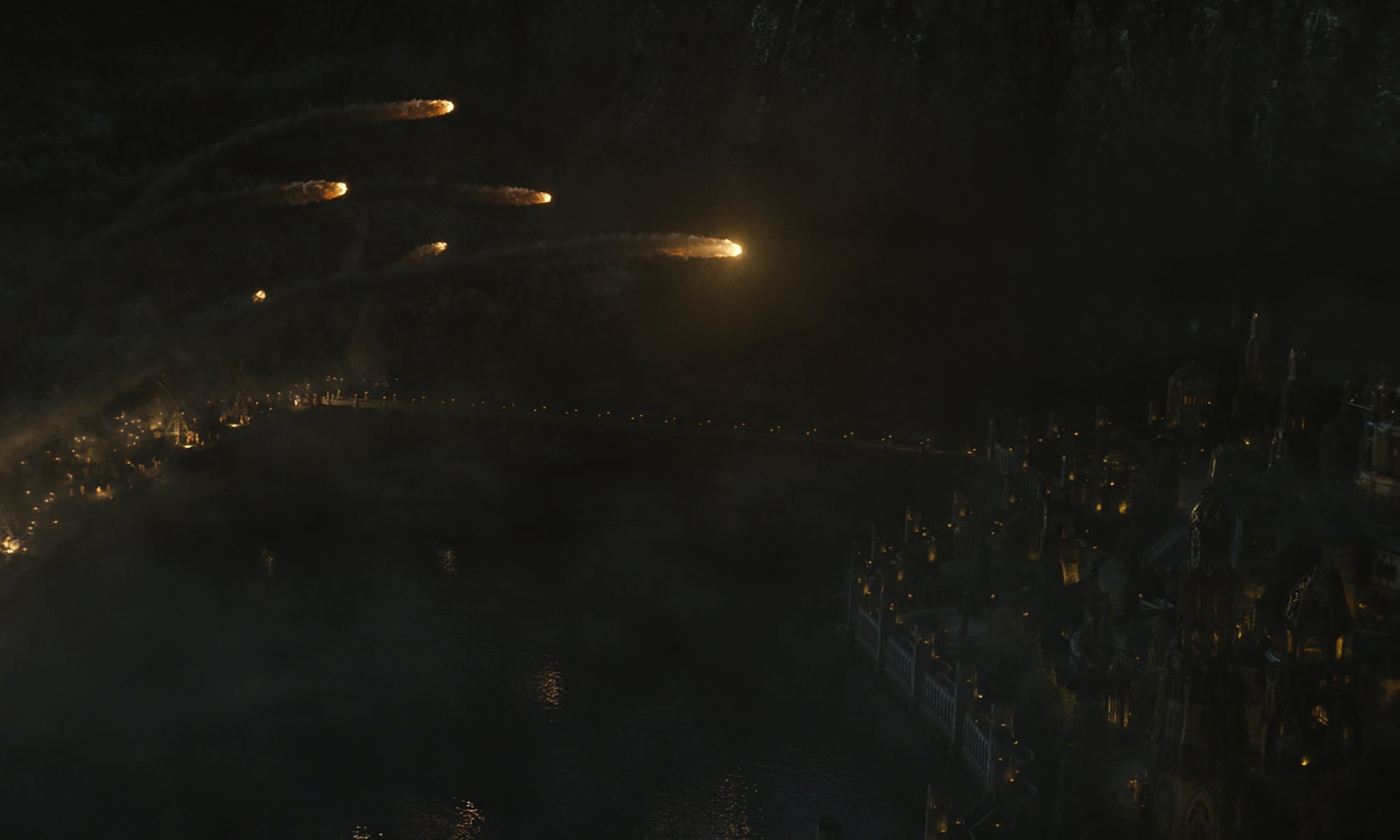
Alex Disenhof (Cinematographer): In terms of visually, again, we talked a lot about perspective, so it was about where the camera was in relation to our characters, right? So, Elrond has a huge part on the ground in this battle and we wanted to play as much with him as we could when we were on the ground. You experience it more from his perspective than anything else. So, you're not just getting a bunch of random shots of people slashing at each other, but instead you're following a story. Then, in terms of lighting the kind of fiery landscape – they've been pummeling the city with these fireballs for a long time and letting that lead the look and kind of creating a hellscape, in a way, was the goal.
And again, with the story, the way the script was written was that the dawn comes, the sun rises, there's supposed to be this moment of what you think will be hope, which obviously turns upside down on our heroes. Achieving that was a real challenge visually, because we did shoot it during the night and then we scheduled a few shots for the actual dawn, and then we built this enormous lighting rig to create this sunrise, which we also had to shoot just at the right time. It was the biggest light you've probably ever seen in your life to get that thing right. And, I think visually, it works.
Vic Armstrong: You've got a time zone on it. You're shooting at night. Filthy weather. And we're actually shooting in real locations, so that mud was real mud. We could take all that into consideration. And I think then the variance comes in the action and what weapons you're using, where we put as much flame as I was allowed to in this [set piece]. Because otherwise, it's just people at the bottom of the castle shouting at the people at the top of the castle, “Come on, I'm gonna break in there!” So, we wanted fireballs and retaliation and rocks flying in, and it's just trying to – silly as it sounds – make it logistic. If you were going to break that into that castle, what would you do?
And you try to keep the line as honest as you can. You know, I've done a lot of [Bond movies] and I've done the first three Indiana Jones [movies] and we always say, “When you're dealing with Bond or Indy or somebody like that, you take the truth and you stretch it 15 to 20% and people buy it, because of the hero value of the character.” And I think it's the same with this: you stretch 15-20% because of the value of the fantasy aspect of it, if you like. But at the same time, people want to believe that it’s true, and [if] somebody falls and they hit the ground hard, you want them to be hurt. If people get struck, you want them to feel pain. Not like DC [superheroes] where [it’s] just bash, bash, bash, bash, bash and they get up and bounce back again with no pain.
All those little silly little things which, when you break down and talk about them sound a bit silly, but you try and dial all those sorts of things into it to try and keep it fresh.
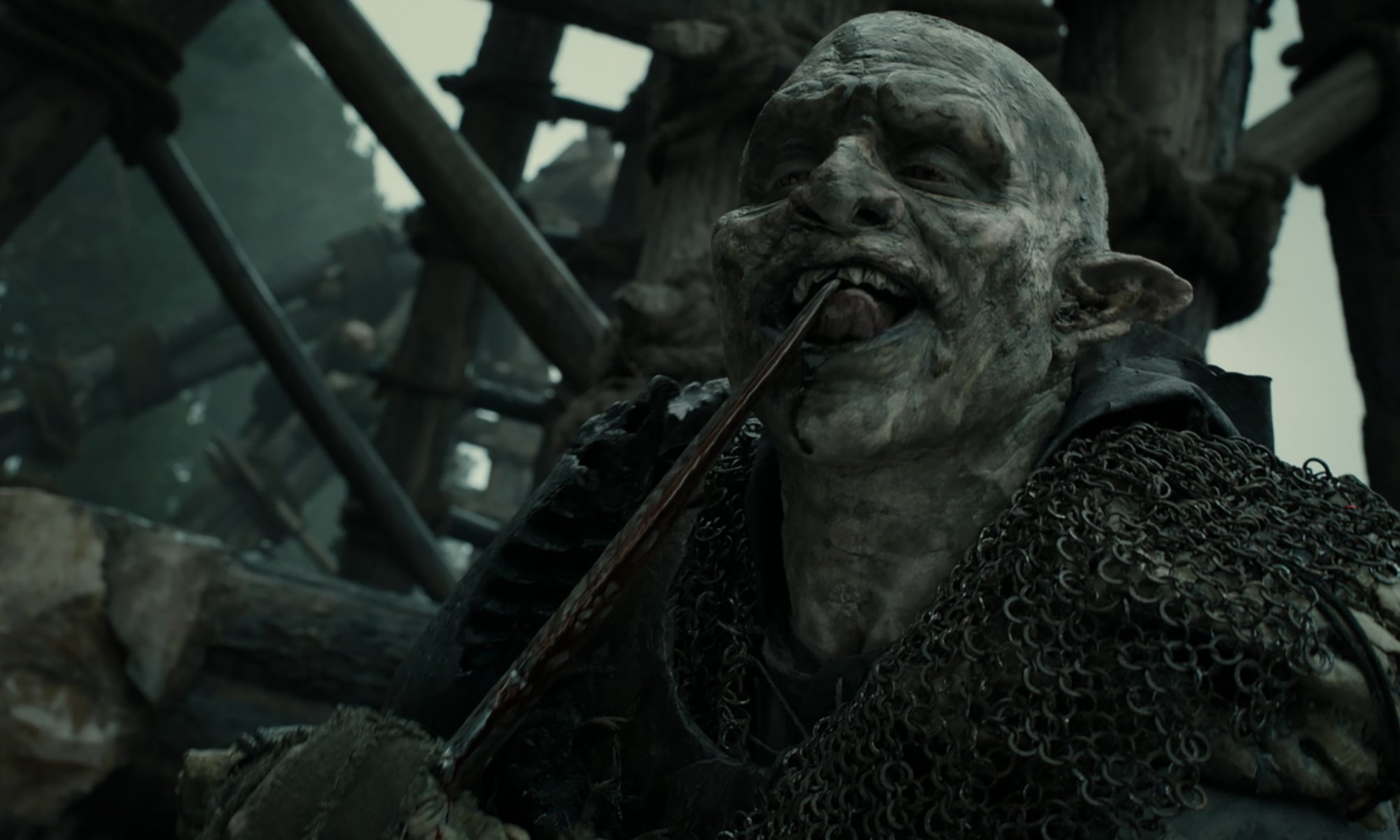
Barrie Gower: Keeping things fresh is – I mean, the great thing for us is, well, we didn't work on the first season of Rings of Power. This is our [prosthetics department’s] first season on Season 2. So, we were able to use a lot of the information from Season 1, what Wētā Workshop achieved with all the creatures and makeup effects and we used that as a springboard, which we had to take into account. We had to have a level of continuity with what's already been established.
But we also looked at the history of Lord of the Rings, and we looked at a lot of illustrations from [illustrators and conceptual artists] Alan Lee and John Howe [and] looked at a lot of the practical effects that were achieved in the original trilogy of films that Wētā Workshop did, as well. That kind of drove the actual techniques and the manner in which we approach doing these makeups, because prosthetic materials have advanced quite a lot, especially over the last 20 to 25 years. So, as a benchmark, we used to use a product called foam latex, which is a very lightweight, opaque, almost like an upholstery foam, which we would make all these beautiful, malleable prosthetics out of, which would move on the face. But in the last 15 to 20 years, we started using silicone appliances; there's a translucent base to the prosthetic and you can tint them any color you like, and you can get a very realistic human skintones.
In the first season of The Rings of Power I think Wētā used silicone for their main orc makeups and for Season 2 we had a series of hero orc characters who had dialogue. They were front and center in-camera and we did probably about 10 to 12 characters which were bespoke silicone makeups. But one thing we wanted to change it from Season 1, we worked very closely with the visual effects supervisor Jason Smith, who said it would be great for the director to have the opportunity to have a horde of orcs in front of him or her and be able to bring some which were mid or back [of frame forward].
So, we came up with an idea for our mid-ground orcs. We sculpted about 10 to 15 different makeups, prosthetics, varying shapes and sizes over different slightly different-sized human heads, and we split the makeups up into separate appliances, like a cowl, balaclava, forehead, face with the nose, chin, ears, different things. We had a jigsaw puzzle of all these different sculptures, but we could take the forehead from one and the cheeks from another, and the cowl from another, and we could assemble just a multitude of hero orcs.
We cast all the makeups in foam latex, which was the original material used for the Lord of the Rings trilogy. And we found that we could just devise hundreds and hundreds of looks. I think in the end we created around about 1500 orc makeups for Season 2, the majority of which were for this great battle […] it was great because we would be watching rushes or we'd be watching the monitor throughout the day, and Charlotte […] was able to bring these guys front and centre and we just had rows of them like snarling and drooling all this black goo in front of camera.
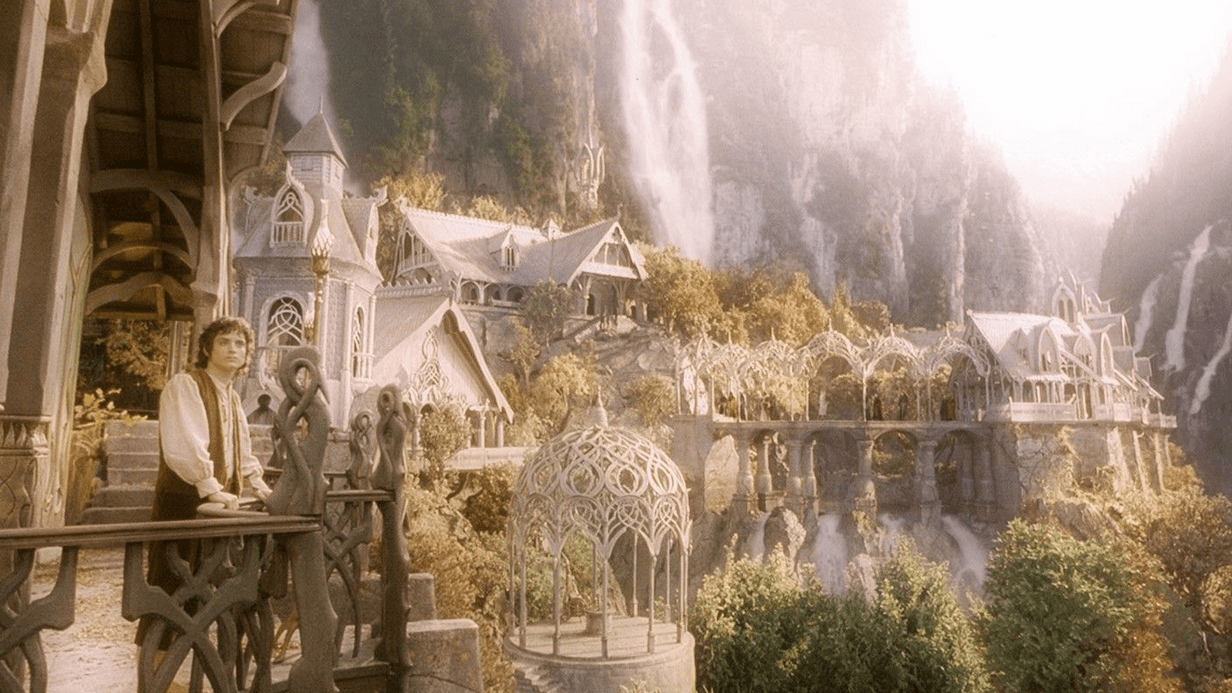
Bear McCreary: There are many things that make this siege at Eregion special. One of the first things I did was establish a feeling for Eregion itself. Eregion is sophisticated and artistic. Yes, it is a stronghold. There's a wall and a defendable position with the river. But ultimately, it’s filled with a bunch of artists, smiths, and painters, and philosophers. So, I wrote a theme for Eregion that we hear all throughout this season, including in some really key sequences, where it's important for us to understand the soul of this place and what it means to Celebrimbor.
And it is so beautiful and delicate and thoughtful that it is the perfect foil to the music of the orcs, which itself is quite nuanced. There's the orc march, “Nampat.” You have the orcs chanting this rhythm that is very specific to Adar. And there's an Adar melody that you hear; it's in a whispered Indian flute called a bansuri, but it's also in giant brass. I mean, it's sort of Adar-centric, but there's also elements particular just to the orcs.
You also have Sauron's theme, because he's pulling the strings here. Sauron's theme motors through a lot of this, including times when the orcs are approaching, because what we're telling the audience is not that the orcs are with Sauron – quite the opposite – but that it's his machinations, his plan. You have Elrond's theme which used to be very thoughtful and diplomatic and emotional in the first season, now arising as the theme of a mighty hero.
And as if all of that isn't enough, I decided to up the ante even further when Damrod enters. I see this giant troll walk out and just start brutalizing everybody out on the battlefield and having just put out my own metal record, The Singularity, working with Jens Kidman from Meshuggah, I just kept hearing his voice. I thought this troll needs his own theme and not only his own theme, like, his own song. And I ended up writing an extreme metal song for this troll that became the basis of the cue that ended up being [over] the end credits in one of these episodes.
So, you can see how there's significant thematic elements, and a couple of others as well. I mean, there's 'Where the Shadows Lie' – the Fiona Apple song from last season, which unofficially, or officially, became Celebrimbor's theme. It's the theme for crafting rings that comes into play as we're in the forge, so it's a very dynamic experience. You have, essentially, a one-on-one boxing match that's psychological with [Sauron alias] Annatar and Celebrimbor, and that's been set up for multiple episodes. That's happening in the ring, at the center of all this.
The external forces become more and more powerful and ultimately, all this comes to a head when our other characters enter the fray. You have themes for Galadriel, for Arondir, for the dwarves all come bursting in. So, it's a symphonic soup of material and I think that that is one of the things that differentiates it because it goes on with so many different chapters and we get to break away into these little, almost, like, one-on-one events. We’re with Elrond for a while, we're with Annatar and Celebrimbor. We're with Adar and Glûg, his right-hand man; there's tension there.
I was just so inspired by what we're talking about: the last three-and-a-half episodes of the season, almost half the season, is this event. So, I had laid the groundwork for all of this […] All those seeds were planted. It was time to grow.
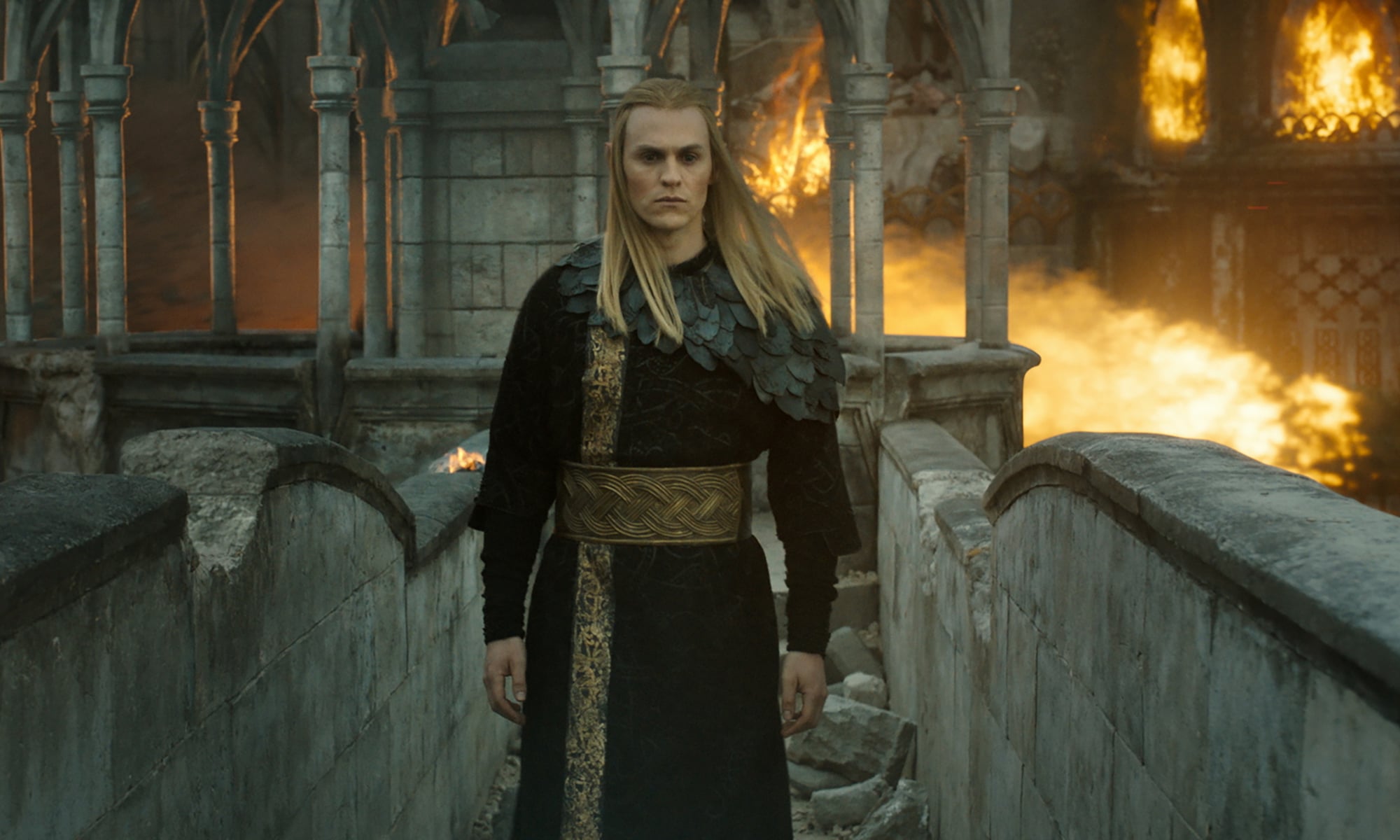
As several people have already noted, something that very clearly sets the Siege of Eregion apart from other Middle-earth warfare is the battle of wills between Sauron and Celebrimbor unfolding alongside the actual fighting. That must have been both challenging and rewarding to play, Charlie?
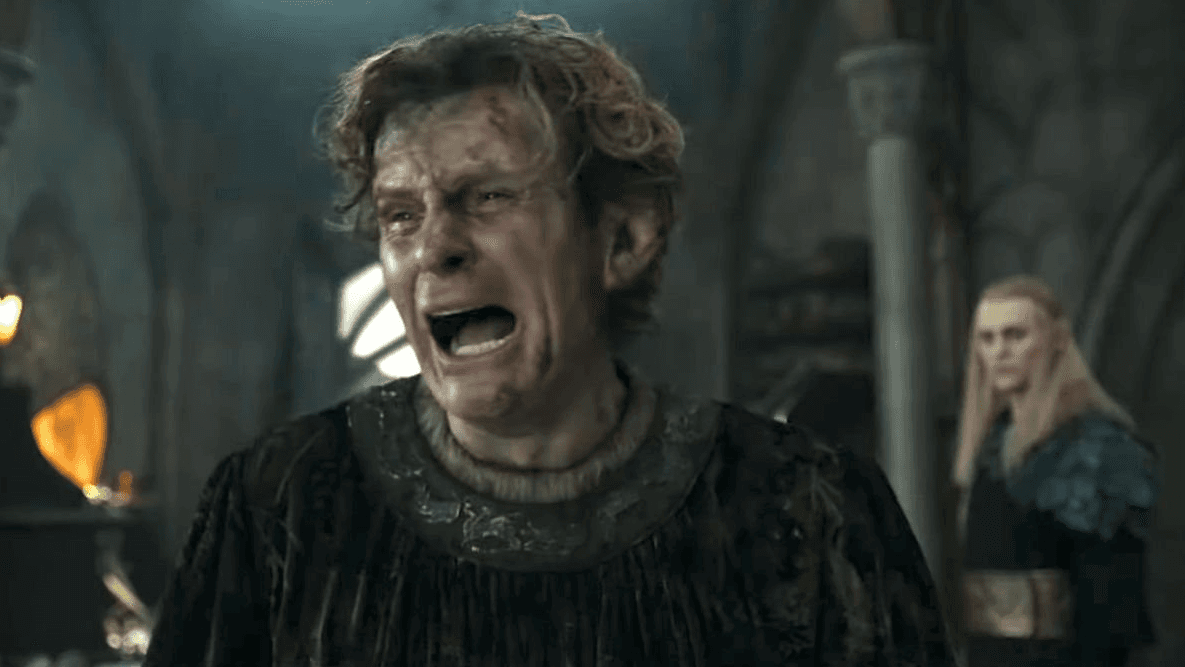
Charlie Vickers: Yeah, it was really special. And I think for [Celebrimbor actor Charles Edwards and I], the last scene we filmed – the scene where Celebrimbor dies – was kind of like the farewell to this really special period of filming that we'd had in the room that had gone on for a really long time. It was a long scene, really daunting. There were huge emotional twists and turns, and it was quite cathartic in a way for both of us with huge, almost Shakespearean stakes and drama. So, it was a real pleasure to film. And I saw [the finished version of Celebrimbor’s death scene] for the first time last night; it was very cool to see.
And was it tricky maintaining tension (and interest) with such an extended set piece, as Charlotte touched on earlier? Not to mention giving all our heroes and villains their time to shine, even with three episodes up your sleeve?
Vic Armstrong: You do have to give everybody their 15 minutes of fame, if you like. You're gonna get all the background [action] and all the big stuff going, but at the same time, you can't forget about the pointed end with the actors in it, and each actor and what their character is representing in the [show]. So yeah, it's a juggling act with all of that, and then when you get the orcs [in a scene], they're going into wardrobe probably four or five hours before they're gonna appear on the set.
And then you've only got a few hours working with them before they have to go back out again and get all this incredible, fantastic-looking makeup taken off and you have another batch coming in. You have to keep refreshing all your orcs and pick your camera angles so you don't see the where the orcs aren’t, as it were, because you can't have 100 orcs [in-camera], otherwise, you'd probably have 700 people making them up; that's the sort of ratio.
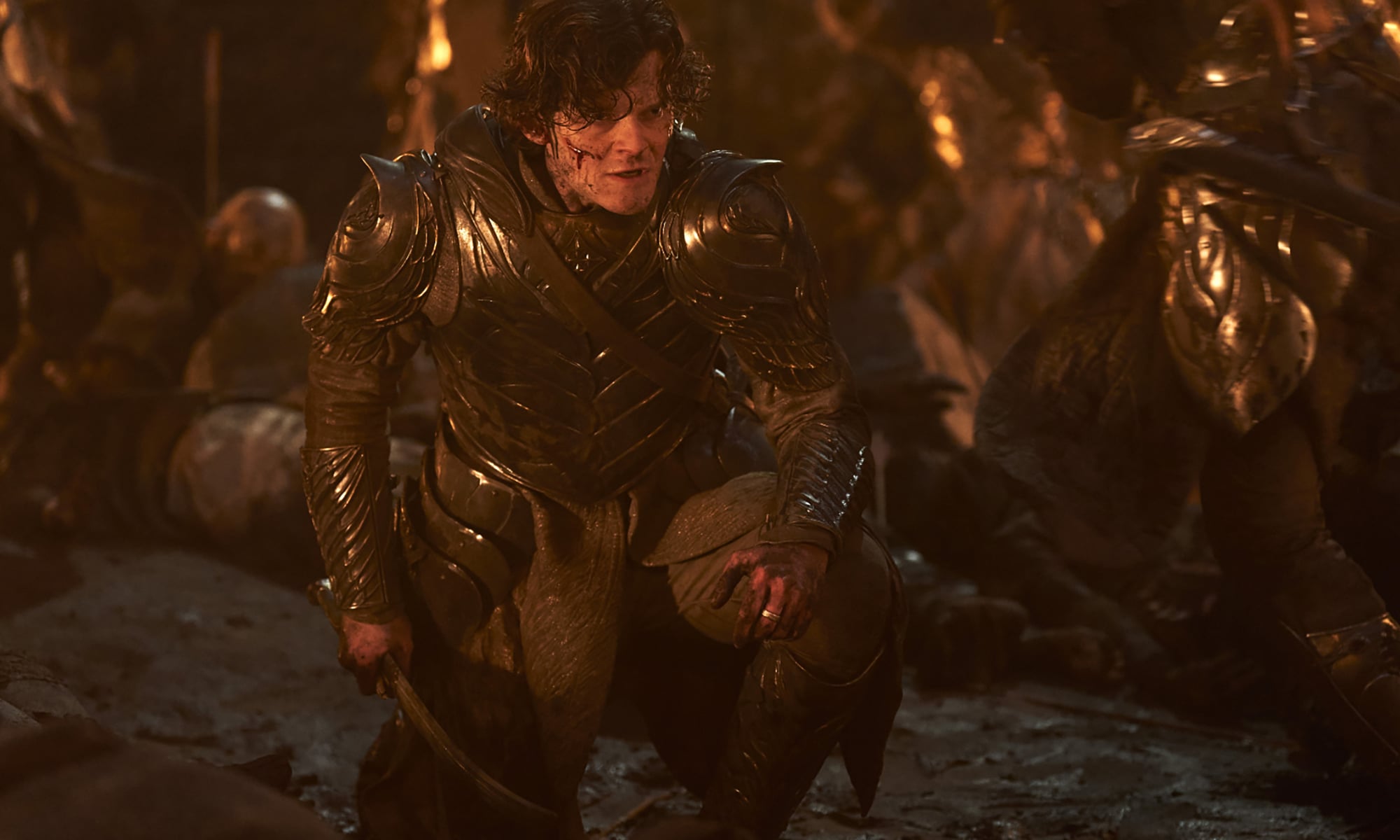
So, all sorts of logistics go into it, but at the same time, you're quite right, you're going to make your stars [look like] shiny stars. Robert [Aramayo], Elrond was fabulous [in the Siege scenes]. We got him riding, we got him charging in. Everybody was terrific. They all buckled down to their job and put up with the mud and the rain. And they're hanging about because, you know, I might get an actor on the set and 20 orcs I know I'm going to lose in half an hour, 45 minutes. I've got to shoot them out as much as I can. So, we keep the actors hanging around a bit longer.
Bear McCreary: You reminded me, I forgot one of the most important themes in the [Siege of Eregion] sequence, in the whole battle, it's called “Nolwa Mahta,” which is an Elvish word that roughly translates to ‘brave warrior.’ It was a cue that I wrote in Season 1 when Galadriel is chasing Adar on horseback. It wasn't a theme, it was just cue, but it just turned out really good. Like, better than I intended it to be. It was catchy and felt really heroic.
Then, six months after I wrote that I had the chance to write a Comic-Con overture to announce the show at Comic-Con in 2022 with a full orchestra. I thought, “What do I open with? Galadriel’s theme, Sauron's theme, the Stranger? And then I thought, “Actually, I think the horse chase cue is the best thing to open with, it's the best fanfare I wrote.” I couldn't believe it, but I did it and it was always nodding at me. Like, is that a theme? It's not just a horse chase cue. It must have some meaning.
Well, you hear it again on the title card of [Season 2, Episode 1]. In Season 2, we open with this big, cold open smash cut to the title. I was like, “It's just calling to me. There it is again.” It became a huge component of the score in the battle sequences, when I recognised it really is a theme for elven heroism on a grand scale. So, when Elrond is charging in with the [warriors on horseback], you hear it again. You hear it in tragic statements as the battle starts to not go their way. It became a very useful device to be able to lay the groundwork to create a foundation that is, like, elven heroism and [the concept that] the fate of elven lives is at stake now.
On top of that, I can put all these other themes, right? But that really became the canvas upon which I painted. And I would love to say when I wrote that theme in Season 1, I was thinking ahead, but I wasn't. It was just one of those happy accidents.
Which moment in the Siege of Eregion – whether it's a bit of fight choreography or a character beat – are you most proud of?
Charlotte Brändström: I love in Episode 8 the [continuous, one-take shot] we did. We actually were able to pull off a two-and-a-half-minute action shot up and down the roof and all these people swarming the city. In one shot, we accomplished that. I think that was something that I was pretty proud of. Otherwise, there were a lot of moments, a lot of great moments in there.
Charlie Vickers: My answer would be that scene, the Celebrimbor death scene, because of how challenging it was. We had to work through a lot, both of us. There was a lot of dialogue and a lot of physicality that the scene required, as well. There was a lot of leaps, twists, and turns and so many different parts to it. And watching it all come together into one flowing scene, that was quite gripping. We both watched [the death scene] last night and I felt really proud looking back at that as kind of putting the button on the end of this really special journey that we've had together, Charlie and I.
Alex Disenhof: Yeah, I think [the one-take shot] was a big one for me too. It was the collaborative effort of every department coming together for this one shot. And being able to keep the audience’s attention for that long and having the movement of the action happen and develop was fun to dream up and then put into action, it was cool to see.
Vic Armstrong: [Mine is] about character, I think. Real, real drama. There's a marvelous wide moment when you see across the muddy river, and you see Eregion in the background, and horses get bogged down into the quicksand, and they start panicking. That's when the riders get off, and that's why when they get to Eregion there's very few horses there, apart from when [High King Gil-galad] comes in at the end.
So, I love that shot. It's a great scale shot, plus I love, obviously, the thundering horses as there’s nothing as exciting as the hoof beats and thundering up and past. And I took a lot of time trying to shoot it in an interesting manner and camera-wise, because charges – I've done thousands of charges or hundreds of charges, and thousands of charges have been done [on film] over the years – so if you shoot them differently, they will look different. I had special cameras there that shoot 360° which we had in amongst the charge and all sorts of things like that. So, I'm proud of the charge, I must say.
Barrie Gower: Probably the scale. When you have a sequence like the battle, that was probably at the peak of the shoot where we probably had three to four main units shooting at any one time. The main location was shot in a woodland area west of London, but we also shot on green screen. We were shooting at two different film studios in west and north London, and we also had other locations elsewhere.
For us, I think we're most proud of being able to assemble a team of artists who are in multiple locations at any one time, and we're shooting day shoots, night shoots and dawn shoots and dusk shoots – and so much of this [work] is credit to my other half, Sarah, my wife. We run our company together and she coordinated and kind of oversaw this huge team of artists. We ended up with about 110 prosthetic artists, in the end, at the peak of the battle, and to generate the numbers that were required every day, we would start at about 3-3:30 AM.
We'd usually have two waves of prosthetic makeup. So, on any given day, we might have between 20 to 40 characters in four prosthetics. Then we could have 70 guys who had pull-over silicone masks for sort of mid-range [shots]. And then we had about 100 guys who just had these little cheap plastic masks that we'd actually made from other sculptures that were deep, deep, deep, far background [orcs]. They were shapes that actually, when you squinted, they look like orcs. And we call those ‘party masks.’
We could actually populate the battlefield with the best part of 200 or so characters. There was so much which was shot in camera and then Jason would record and do plates as well and be able to mass-duplicate [these performers with CGI]. But, you know, from a history of doing quite a few big battle sequences for things like Game of Thrones and stuff in the past, this was definitely the largest number of performers we've ever had at any one time, actually on set in, in makeups.
So, I’m proud of the scale, really. Sarah and I repeatedly said throughout the shoot, “If we can pull this off, my God, we could do anything.” We were just grateful we got through it.
Bear McCreary: Lord, I mean, I'm proud of the fact that I'm still standing, talking to you after having written 16, 17, within a rounding error of 18 hours of music over the last two years and change. The totality of that is something that I'm proud of, but it's not just that I did it, it's that I have survived it, right? Like, what doesn't kill you makes you stronger, man. And, truthfully, to get a little personal here, the first season was – I don't want to say it almost killed me, but it was extremely damaging on my mental, but especially physical, health. I just completely fell apart, man. I mean, I'm 45 now. I cannot get away with this anymore.
So, after Season 1 wrapped, I really got serious about working out and eating better and balancing the other things in my life. I wanted to play guitar. I wanted to spend more time with my kids and I just thought, “Look, I can't go nuclear on Lord of the Rings every time a season comes up, and bottom out and then come back up.” So, truthfully – and it's funny you got this out of me, haven't even talked about this before – but the thing I'm most proud of is that in Season 2, I still wrote every cue. I wrote nine hours of music again, but this time, I didn't bottom out, you know? I stayed in shape. I stayed connected to my family and I put out The Singularity.
And literally the day I finished [on Season 2], the last revision on the last cue in Episode 8 – the one that's on [the official soundtrack] called “The Sun Yet Shines” – I closed that session, I got in the car, I drove to the Fonda Theatre and I debuted my rock album with Slash and Buck Dharma from Blue Öyster Cult. Those things coexisted, right? So, I am proud of myself in that I set a goal for myself – I still want to write every cue in [the show], but I can't fall apart – and I did [it].
Finally, are there any Tolkien Easter eggs or other little details hidden in the Siege of Eregion that Lord of the Rings fans might not have picked up on, amid all the carnage?
Vic Armstrong: That’s a difficult one. There's some nice stuff when the orcs get into Eregion where people are shot and taken down. We use them mostly [as] throwaway shots, you know, so you don’t stick on it and feature it. But there's not that much hand-to-hand fighting per se. Apart from the big old [troll] when he comes in, but little things with Robert around the rams that smash the walls down – practical rams moving and things like that, and people jumping on him. But, in general, it's more broad screen stuff mass fighting.
Bear McCreary: It's going to get super nerdy, but somebody noticed [online] that the Eregion theme has the leap of an octave in it. Galadriel's has it. Númenor has it. It’s there because I wanted to create something. It implies nobility and might and strength and I put it there quite deliberately. In fact, I even worked with the showrunners; I moved it. I originally wrote it later in the theme and I think it was [co-showrunner] J.D. Payne who was like, “That's so great, put it earlier.” And we got into an argument about it, cuz I was like, “no, but it fits.”
But then I realised. like, “No, he's hearing the Galadriel thing, he's hearing the Númenor thing.” It's like, “Right, I should move that right up front, to sort of say, ‘This place has the nobility of Galadriel, the might of Númenor. It's something special that I save for themes that I really want to make an impact, and I was struck when somebody pointed that out, right? They heard it and pieced that together. So, that was really special.
Barrie Gower: Not necessarily. I think we may have spoken about Easter eggs quite early on, but I think the scenario was it was [about] quantity and it was making the numbers [of Orcs]. We did do, I think, a couple of nods [to Tolkien’s lore] in paint schemes and in some of the sculptures, there are a couple of nods to some of the orcs which are in the original trilogy.
I mean, not only did we have Season 1 to use as reference, but I had the greatest hits of all my favorite orc characters from the [movie] trilogy. I'm a huge fan of Wētā Workshop and [its co-founder] Richard Taylor and the incredible team he has there. I'm very close friends with a lot of their sculptors, as well.
I’m a big [Wētā] fanboy at heart. So, there were a lot of sculptures that they did and orcs they did for the trilogy, which we tried to have nods and little nuances towards, but I wouldn't say true Easter eggs as such. Maybe in Season 3.
Whether you're Shirefolk, Elven, Dwarven, or something else, there's a good reason to love Lord of the Rings. We do! With that in mind, we have a dragon's horde of goodies for you:
Follow Popverse for upcoming event coverage and news
Find out how we conduct our review by reading our review policy
Let Popverse be your tour guide through the wilderness of pop culture
Sign in and let us help you find your new favorite thing.





Comments
Want to join the discussion? Please activate your account first.
Visit Reedpop ID if you need to resend the confirmation email.