If you click on a link and make a purchase we may receive a small commission. Read our editorial policy.
Into the psychoverse: Yanick Paquette talks The Incal and euro influences
"It's a partnership of creation with the people reading trying to figure out the story you’re telling"
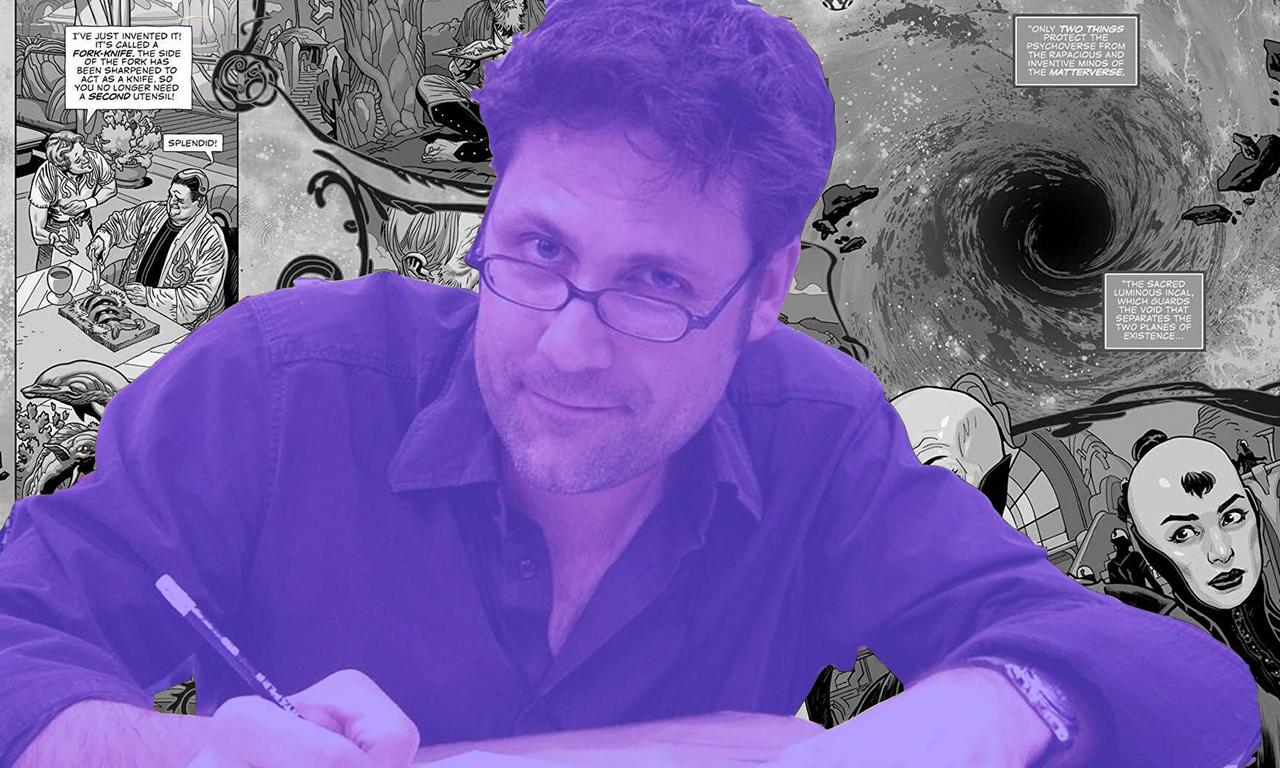
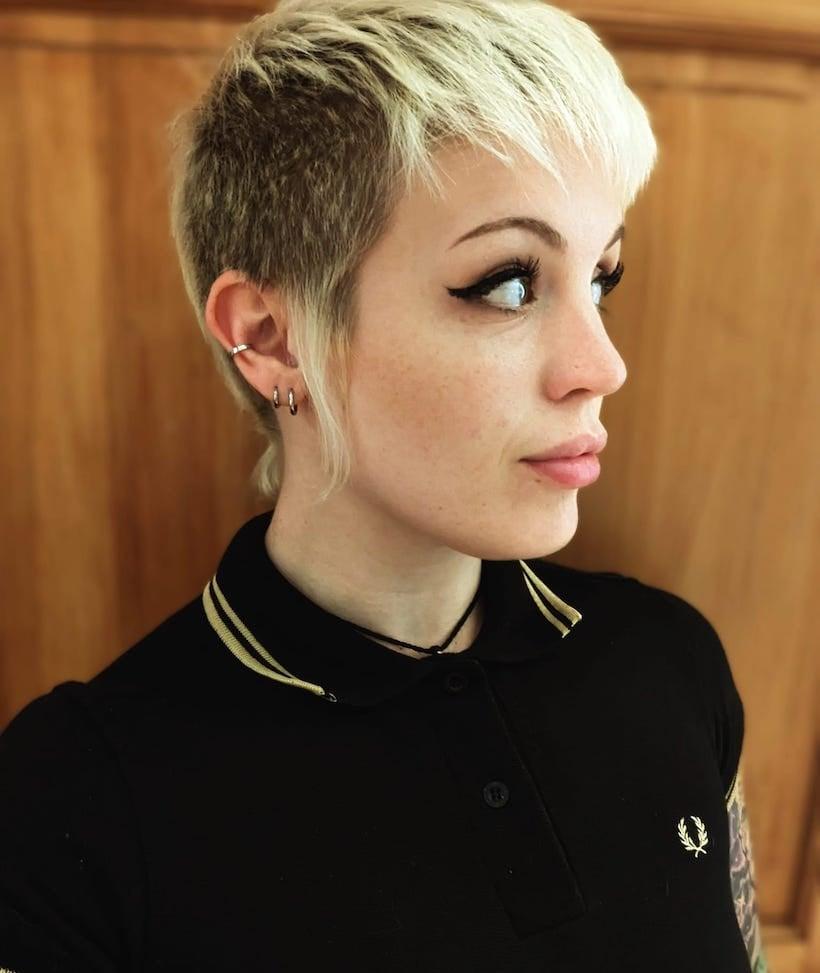
Whether you’re a Wonder Woman fan, a Swamp Thing follower, or a rare but loving devotee of Batman Incorporated, Yanick Paquette is inevitably someone whose art you’ve come across and – even more inevitably – utterly been in awe of.
With a career reaching back to humble beginning in 1994, Paquette’s style and gift for world building has seen a reach far beyond any Gotham or Themyscira, where he now finds himself in the deeply psychedelic world of Jodowrowky’s The Incal, and well beyond into new prospects. Fortunately, Popverse was able to sit down with Paquette during the delightful Fan Expo San Francisco, where Paquette offered insight into his split experience between American and European comics.
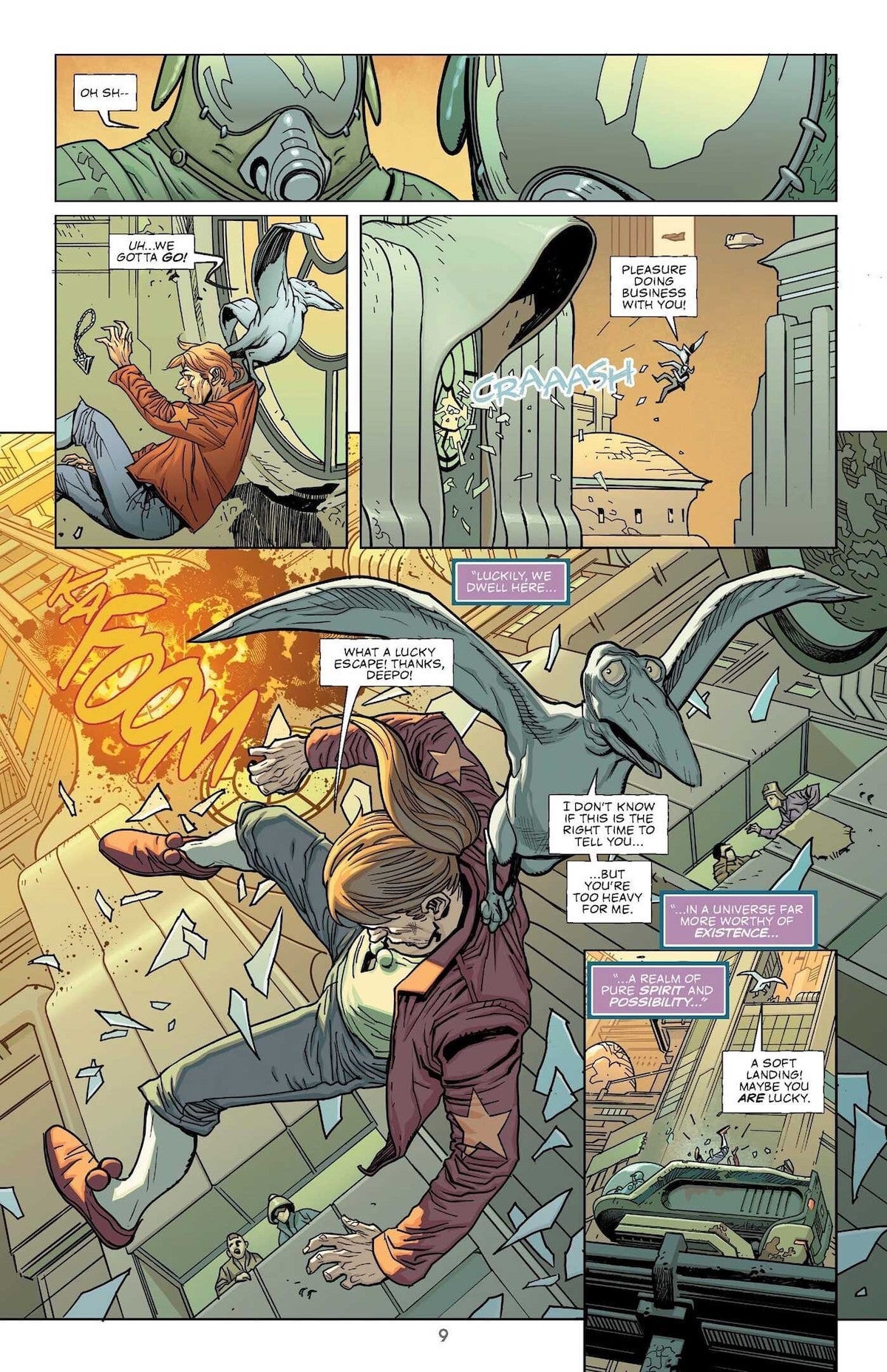
Popverse: Yanick, talk to me about where you're headed, because up until now you've been working on a lot of American IP; a lot of Wonder Woman and Swamp Thing and things like that. So what's it like doing something like, say, The Incal?
Yanick Paquette: Yeah. Well, Incal is also an IP, it's just for the European market, so in a way it's not like doing creator-owned, it's just a different thing. In my case, because I'm French-Canadian, I've been exposed to the European market — the French and the Belgium stuff — way before American comics. But when I started doing comics in the second half of the '90s, the American comic was so much more accessible because it was about the crash, but it was still getting absolutely crazy numbers. So when I officially decided I want to do this for a career, I looked at both markets as an option. In Quebec there's just no market…or at least at that time there wasn’t. Now there is some independent stuff — and they do some interesting things — but it's still a super small market. But at the time, Europe felt like maybe too demanding. They needed full fledged, complete artists. I was just a kid! I was still learning how to draw. The American market was in such a boom that they would hire anybody, kids or not, barely knowing how to draw, which is perfect for me. [laughs] That was me. So I ended up doing comics for the US, but I could has just as easily ended up in Europe in those first years.
So then what's your relationship like with Euro comics against something like you now-relationship with the American market?
Well the way I've learned comics is a bit like a concert pianist in that you have to be super proficient at sight reading anything. So you got a month, you get these crazy scenes to draw, and you need to be able to know your enemy so well in drawing horses and just knowing your skill so well that you can draw it everywhere and fast and with quality. While in Europe, I think it's more about your own voice, they're more into finding their own thing. But it turned out that chasing people around, that's the beauty of convention. By exploring you as an artist, it gives more peculiar, unique results, but also indulge in, I felt, some people would avoid difficult things, so they already mastered, and that will force your style. But to me as an American comic book artist, 'Oh, this is a weakness. They should be good at everything. And if you fail at drawing ears, then you should work hard at understanding the anatomy and mastering it.' Instead of, "I'm just going to do Mickey Mouse ears," or whatever. But now I’m a bit older of course.
You’ve had a chance to go around the block a few times [laughs]
[laughs] Exactly. I’ve been around more. I think my version of making comics is now somewhere between both worlds. In Europe, the rhythm is so different. Well, first of all, what I did in The Incal, I did it in a comic format even though it's a European IP. I've done the schedule, the format, the style. It's a bit hybrid, but it's very much pointing at comics as a product much more than what Moebius did, which is coming from the European market. But I spent, I think, five years drawing five pages, something like that. Most Europeans do 44 pages in a year.
Oh god the timetable between American comics and Euro comics is so vastly different, isn’t it?
Oh yeah. For American artists, it's 22 pages a month, which I'm not willing to do anymore because I'm too old but that's the transition. So straight from the gate, it's clear that we are expecting two different types of product. But I was envious about the idea of taking my time and doing the best I can. And in a way, I did that on Wonder Woman: Earth One because I was working with Grant and they didn't dare do any deadline or anything. So they were like, "Just do what you can, do your best work, and when it's done we'll publish it."
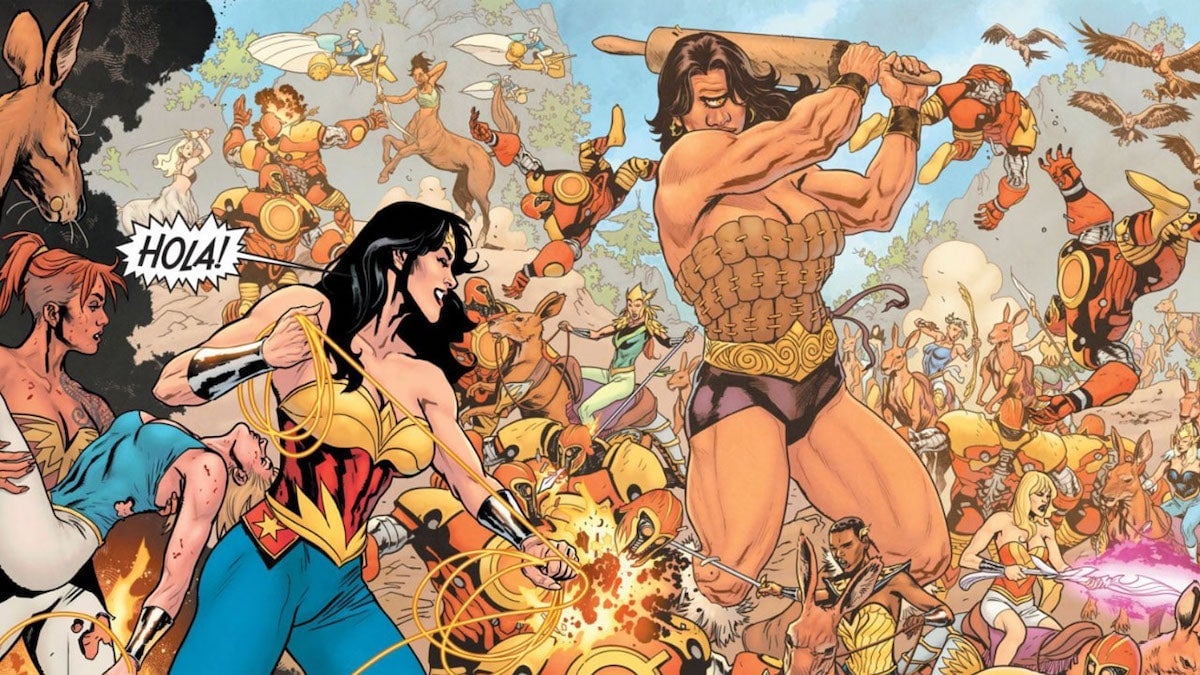
That must have been utterly magnificent to hear as an artist [laughs]
Oh, a dream. An absolute dream. Especially for me! I did Wonder Woman as my first monthly book…and people still like it now, but I was not happy with it.
Gonna need you to hush now because that entire series was GORGEOUS.
[laughs] I don't know. I was learning how to draw in front of everyone. This was my first monthly, so everything was a battle against time. And I had panic attacks — just a very bad memory of that period of time. And Adam Hughes was doing these crazy covers and I was doing these interiors, and it just felt like I couldn't compete in any way. Then all these years ago, this Wonder Woman: Earth One thing, which I have all the time in the world. So I'm like, 'Oh, now I can't really do my best.'
That sounds extremely rewarding, really.
I think you asked one question at some point, and now we're all over the place.
This is, famously, how my interviews go, don’t worry about it. [laughs]
[laughs] All right, good.
Let’s move on in that case to how you tackle themes and universes. The Incal has this weird blend of genres. What is it for you doing that kind of world building? 'Cause it is very bizarre, very big, and it's certainly not the world outside your window that you get with a DC or a Marvel comic. So from your perspective, as the artist, what is it like to have to create something with that much expanse?
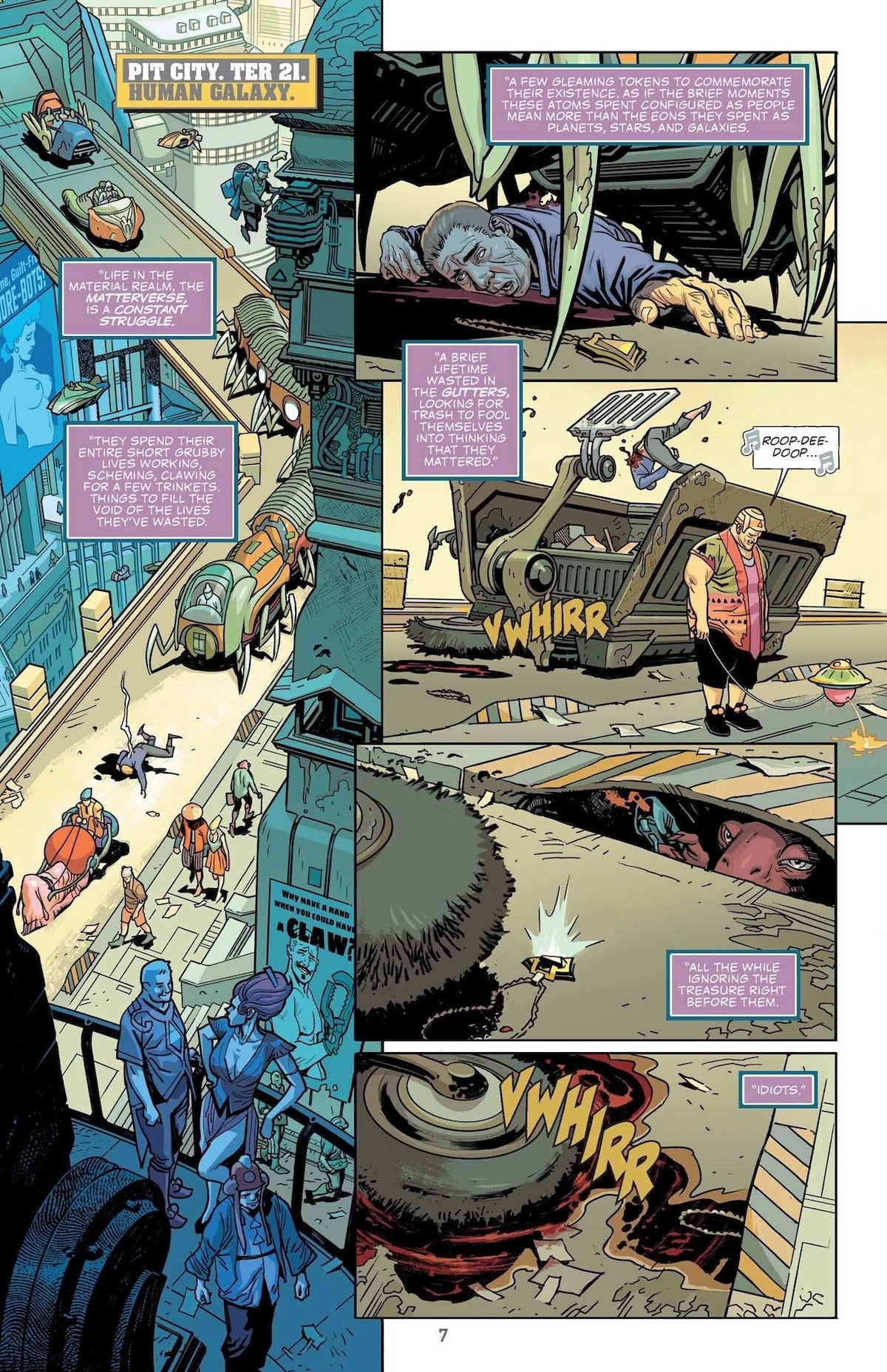
Yeah. Well, I always enjoyed this liberty of creating stuff on my own. Again, not to arc back again to Wonder Woman: Earth One, but we built a culture for the island with type of architecture, a type of technology. And that's the fun part: trying to build something different. In the case of The Incal, the most obvious difference is that humor is allowed. I guess it’s something weird to say, but American comics are very dramatic.
Oh I wouldn’t say that’s weird at all. That just seems factual!
Right, because if you're too ridiculous with Gotham, you break the sense of drama and brooding required. You get Harley Quinn, you get Deadpool and things like that, I suppose —
True, but even those are often relegated to being specifically 'humor comics'.
Yeah, they’re something out of the normal frame. With The Incal, though, it's welcome that people are dressed weird. And I remember the very first page I did, it's a page where it's just a scene in a street. I could do whatever I wanted, and I did this huge man walking this little robot that floats, and this robot is peeing like a dog. It's just to show the absurdity of this world of decadence where you have a robot, but you're forced to go outside every day so your robot can pee on things. It’s just a small detail, but it’s fun for me as a creator as well because that's not in the script. These are the little nuggets that I can't really do in a place like Gotham or in most of my serious books.
Did you get a lot of freedom to do that working with Mark Russell or did he feed you some of the detail and inspiration for what he was hoping to see?
No. Well again, a big difference with Europe — not maybe in general but in that specific case — is when I got in the project, Mark had already left. All the books were done.
Oh wow, I had no idea!
The five issues of scripts were on the table and I read them all in one day. It’s very different because in comics, I don't know why, but things are planned so shortsightedly that sometimes you work on pages and the script is not even finished in a single issue. I worked with Grant Morrison where they would send me 10 pages at a time and I would do my 10 pages and wait for the 10 more. It's nightmares of that nature. So [The Incal] was something different, I think, to see a project finished, you know exactly what's going on and then you can plan ahead.
Did that feel like you were boxed in at all at any point? Having things just sort of read and there in advance?
Well in my mind, you can plan ahead where you're going and you know where to put your energy. You might invest more in that one specific little aspect because it's coming to play a big role in the future if you know it's coming. So in that sense, it's fun. And Mark already packed his script with clever social commentary!
As he is wont to do!
Honestly! I've been a fan of Mark for a long time and we've worked together before — I did Flintstones covers and I did some covers for his series with Lex Luthor. But I knew his big things are religious, political, and social commentary— and so is The Incal.
For sure. It’s just a different take on those themes.
Yeah, it's a weird society; dysfunctional with strata of super crazy rich and the bottom of the barrel that's super poor in a shitty world. And there's also some esoteric aspect of religion embedded. So it's the perfect ingredient.
Now were you a fan of Alejandro Jodorowsky before you’d begun working on the story?
I was, yes! Although I'll be totally honest, sometimes I don't understand what's going on, which is not a bad thing.
It’s Jodorowsky — that’s only fair to assume for everyone, really.
[laughs] I'm also a fan of David Lynch for these specific reasons.
Oh yeah, no kidding!
[laughs] It all just confuses me, but in a good way. It makes me think about five days after I've seen a film like, 'What? What was that? What?' And that's interesting because it keeps me alive and alert to what I’m watching; it’s one of those things as artists, too, where you're almost welcoming the public to be part of the creative process because you give them random, weird blocks of Lego and then they can build their own things after that. So I'm a big fan of this kind of creativity, it's a partnership of creation with the people reading trying to figure out the story you’re telling.
It's funny because you’re not the first person I’ve talked to recently with that stance. But also it’s not really something that you see a lot in — well, bit of a blanket statement, I suppose — American comics anymore. Particularly from the bigger publishers. There’s just not as much work where people are meant to fill in the blanks for themselves. So it's really, really cool to see that kind of fiction being created still.
Yeah. I think people — and yes, I don't want to generalize — but maybe some creators are afraid of it. In cinema, I think, especially because it costs so much. That if you went to do 2001[:A Space Odyssey] now —
Oh god can you imagine? Don’t make the monkey’s paw curl any farther.
[laughs] Well imagine if someone did and the powers that be would come to Kubrick saying, 'We watched it, made no sense.' 'Change it.' 'Please explain.' Instead, for decades now, people are speculating, 'Oh, this is what it means.' And people have valid variation and contradictory variation on what it is. It’s all a good thing.
Which is what makes it so fun!
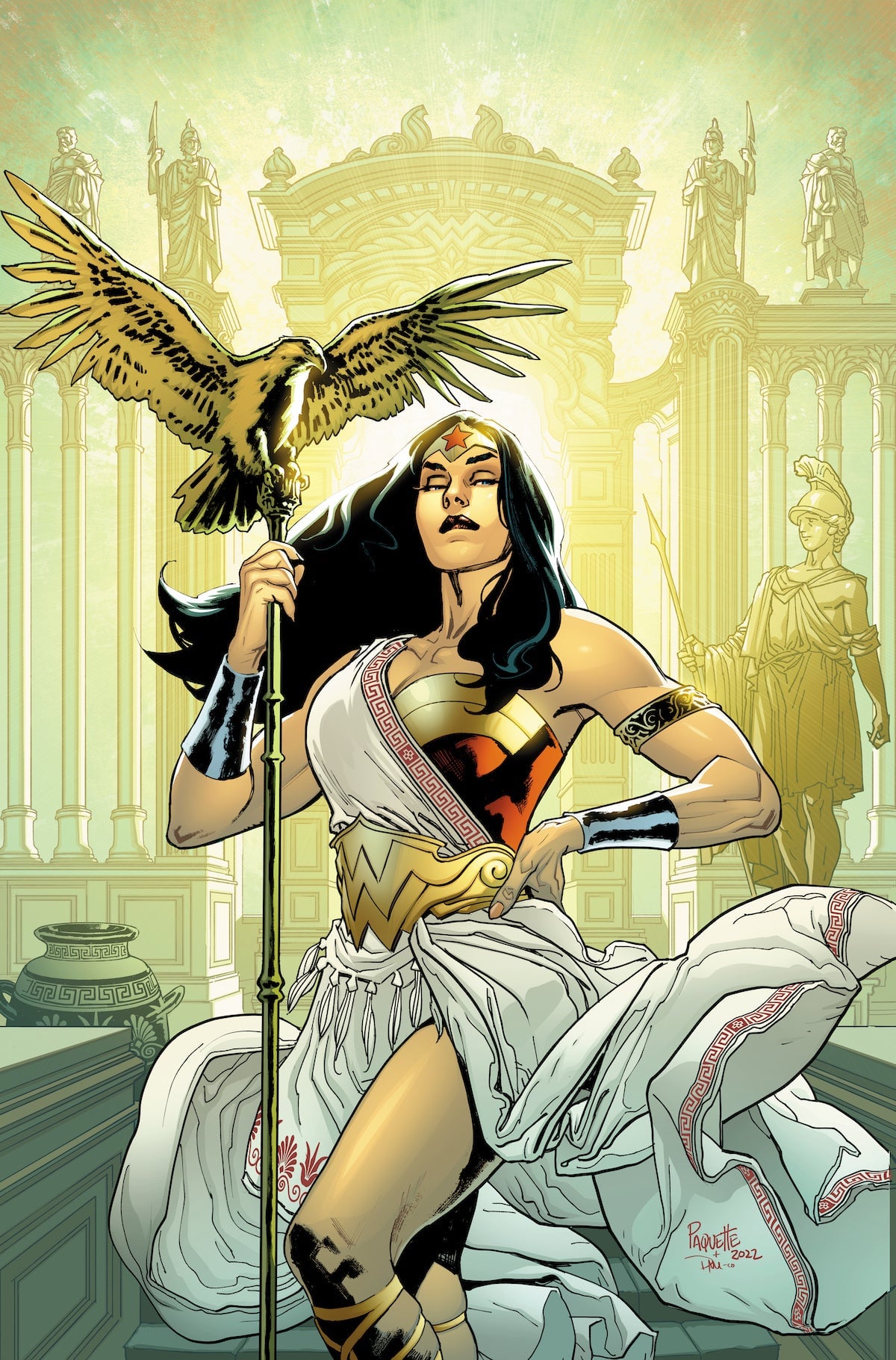
Right, exactly, it’s what makes it fun to watch or fun for things to read. But it's a risk you take as well. And Wonder: Woman Earth One — again, going back to her —Grant does that. Grant opens the door. They’re not all obviously clear in their message or intent all of the time, so it is open to interpretation. And in this day and age where people want to see drama everywhere, it’s easy for people to just automatically want to get mad at things. Some people are really receptive and assume that everybody has good faith. Other people assume the worst. And Wonder Woman Earth One — it's Wonder Woman and we're arching back the '40s where it's all about bondage and relationship and domination and stuff, which is very interesting and very strange and very not Wonder Woman of today with swords and fighting robots. So it's already not what people expect. And it's also open to interpretation. So some people did not interpret it with the good faith I was hoping for.
I remember a number of people having some very special relationships with it, yes. [laughs]
Right? And I was pissed because…I mean in order to be creative at all that’s a risk you have to take. And we did!
So then what’s next for you? What’s the next Yanick {aquette project that we get to look forward to?
Well, it's still a bit of a secret. I mean…I’m doing a lot of covers for everybody which is what makes me send a message that I'm not dead. [laughs] But I'm embarking on the long term side things.
What does that mean, exactly?
Well..it’s creator-owned, so that's all you know for now— and that it’s being done with somebody well-established. So I'm going to probably spend a year building enough momentum. And so I want to have enough books first under my belt that when I announce it, it's almost done, and then it's just ready to be what it’s meant to be.
I guess we’ll just have to be patient in that case!
Soon! In the future!
Want more engrossing conversations? Read our interview with Paquette's Wonder Woman: Earth One series Grant Morrison.
Follow Popverse for upcoming event coverage and news
Find out how we conduct our review by reading our review policy
Let Popverse be your tour guide through the wilderness of pop culture
Sign in and let us help you find your new favorite thing.

Comments
Want to join the discussion? Please activate your account first.
Visit Reedpop ID if you need to resend the confirmation email.