If you click on a link and make a purchase we may receive a small commission. Read our editorial policy.
Former DC publisher Dan DiDio talks about his DC past and his future with Frank Miller
Dan Didio chats with Popverse about the hopes for Frank Miller Presents

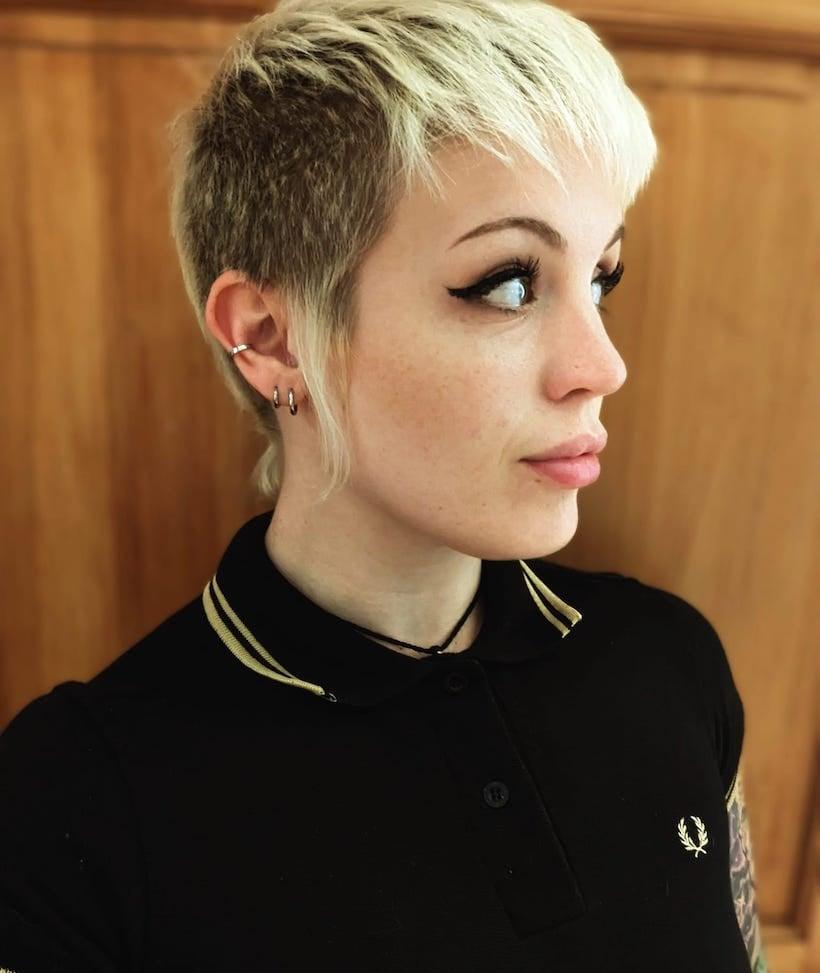
Among the annals of comics history, there’s obviously a few names that stand out when it comes to the publishing side of things. If you’ve been lucky enough to come on the roller coaster ride of comics publishing within the last 30 years or so, however, one of the first names that comes to mind is that of now co-founder of Frank Miller Presents and former DC Comics publisher, Dan Didio. Having stepped away from DC during the peak of the pandemic, Didio has moved on the grander dreams and, with a grin on his face behind is table at a Galaxy Con recently, was ready and happy to talk with Popverse about where those dreams are headed and how the past is something best left behind if we want to stay curious.
Popverse: How’ve you been, man? There’s been some major changes for you, so these shows must be a whole different monster.
Dan Didio: It's kind of weird. It's a completely different type of show for me now. At DC, you're there representing the company and you're there looking for the talent. You're trying to make sure everybody's okay. You're out there pushing a particular message and making sure that you're connecting with the fans and hearing what they have to say about your stuff.
Here, when you're working with Frank Miller Presents, even though people know me –and they definitely know Frank– we have to hand-sell our books. We have to make people aware of it, because if you put one or two books out every month, you get lost in the catalog. You know what I mean? There's a lot of product coming at you. We're on a bimonthly basis, so almost every time we put out a book, it's like a new series because people forgot about it because it's been two months! It's a long time. So for me, I've wanted to get to shows and meet with people I've never met before and tell them what we're doing. The response has been really great. The reviews have been good, too. The response overall has just been good. People seem to be liking what we're doing. Sales aren't where I want them to be yet but then again, we're five months old as a company.
That only makes sense though, right? It’s all still very fresh out of the package, so to speak.
Yeah. And we've got two issues out on Ronin. The third one should be out in about a month. The third issue of Ancient Enemies is out next week. Fourth issue of Pandora's out in a couple of weeks. So we got a motion right now. But again, it's an appreciative amount, product wise. We still have a long way to go.
How is being able to work on a passion project? I mean, I suppose DC was kind of a passion project for you in a way as well, but this is a smaller, more of the homegrown scale for sure. That’s definitely a different vibe.
Oh sure. If you look at it, my first five years at DC was a passion project for me, because when you come in, you have a particular idea — a particular vision that you're trying to drive — and you find the right people and you execute it. I can honestly say from Countdown to Infinite Crisis to the end of 52, the weekly series, is always going to be my sweet spot because that was the vision. You know what I mean? That was the plan. After that, you adapt and you grow and you change, and you're pulling from a lot of different directions and getting pulled into a lot of different directions and just trying to keep things on course then. But those first five years were great.
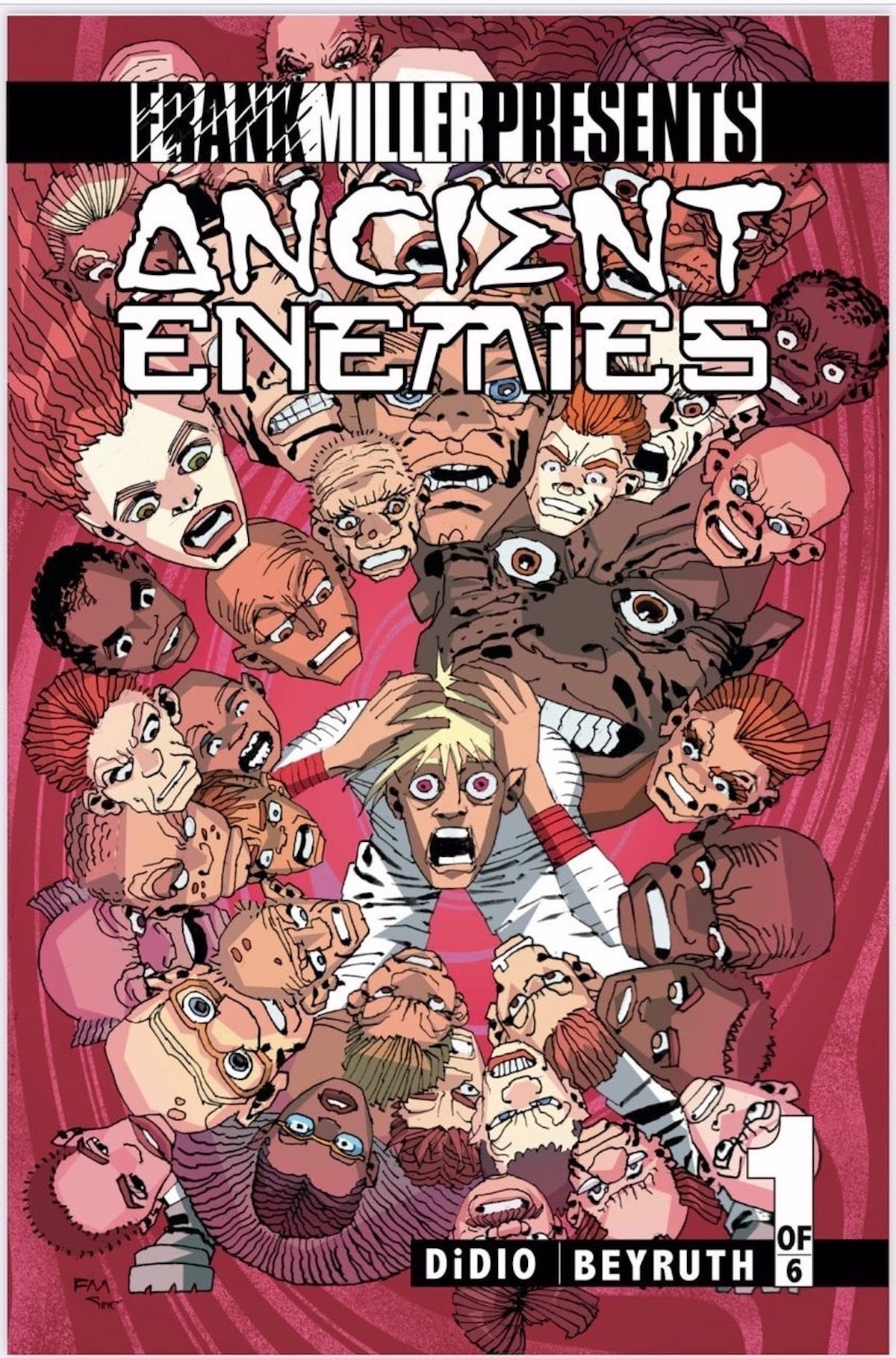
For me, strangely enough, I started Ancient Enemies because I just wanted a book to do, and I had an idea for a story and the more I wrote it, the more I loved it. That's been the fun part about it. And during the pandemic, I was starting on Ancient Enemies just as I was finishing up the novel I was working on. So I did a novel over a couple summers. It's all a blur. But I did a novel and I really had an idea for a concept for a book that I really wanted to execute – now that was a passion project, too. So it's interesting to be doing things that I really wanted to do, but never had the time to do before. But its nerve-wracking and it's scary because it's not what I'm known for. So you're operating out of your comfort zone and you're being judged for a completely different thing that you've been judged in the past.
How do you keep the drive going for all of this? I mean —
I enjoy it. God, I hate to say that but —
It’s just that simple!
Right! It's funny, if somebody wants to ask me, why do you read comics? What do you love comics for? I used to say, "I enjoy it. I love the stories. I love the worlds. I love the adventure. I love getting caught up in the fantasy of it. It's fun." Just like anything. I love the medium, I really do. And I'd worked in TV for a good 20 years before joining DC. But once I got into comics, I never had the desire to go back to television, because I was really working in the medium that I love the most.
So then what’s that shift like? Going from television to comics?
It’s not quite as big of a jump as you’d think! Or at least it wasn't, for me. First off, my background was operational, then I was in publicity with the soap opera. So I saw long term storytelling in the soap opera, so I listened to the meetings for that. Then I got into animation and we were working as visual stylists who had art and all that going. Then I worked at computer animation, which was great because the group of guys that I worked with, we all loved comics and we spoke comics as a shorthand.
Universal dork language.
[laughs] It really was, totally. This is a great moment where Brendan McCarthy, who was our art director — and what happens is we were trying to describe a specific world and we were all having a hard time and he's sketching it and we weren't getting what we want. And then there's a great moment where somebody screams "Dormammu! It's Dormamu's dimension!" And everybody goes, "Ah! yeah!" And then he jets there, he draws it, and it was perfect. That became our shorthand.
So, moving from that, to moving into comics, was an easy transition because not only that, but I also had a lot of friends already working in comics. I had worked with comic writers on my animated series, and I had done some writing for comics in the in-between, so it wasn't a transition. The transition was getting in the corporate environment and understanding how comics were made, most of them making them. And that took me a good, solid year to get a handle on it and to understand the DC culture. At the same time, you're trying to change the DC culture.
That’s definitely part of what you're known for —shifting that culture.
Yeah, and the goal was, I had the benefit of taking my first year to really learn the company, talk to all the different departments, trying to understand how everybody worked, and then reimagine it in a way that made sense. So after my first year, as I tell the story, after my first year, I was ready to go. It was very frustrating because it was a frustrating position, environment, just because of the way it was put together.
Like a really corporate type of thing?
Yeah. Well, it's one of those things where you're given some responsibility but no authority, and you have to ingrain yourself. And you have to get used to the situation. And also, I had no knowledge, so I really didn't want to be there spouting ideas without a basis of knowledge behind it. So what happened was I was actually thinking about going back into animation. I gave the publisher at the time, Paul Levitz, a breakdown of what I thought would be the best way to improve the company, based upon what I learned over the last year. And it was Paul's suggestion, putting me in the executive editor position as the choice, which I did not put myself in that job. I saw myself leaving. And there's that moment, I always said, I tell the story, I said, there's that moment where somebody offers you the job that you always dreamed you wanted as a kid. You know what I mean? It's that moment and you're like... I didn't see it coming. I was floored by his offer, because the truth be told, I was wildly unprepared for that job. You know what I mean? I didn't have the skill sets.
To be fair, it’s quite a lot.
It is. And everybody that was in editorial at the time, they all had previous assistant editor, writing, or drawing experience. I was minimal in that area. I had a lot of experience from so many other places, but not specific to comics. But the good part is there was a good staff in place and there were good people in place, that allowed me to take my ideas on how I saw it, and bring them to life, based upon the structure, how comics work. But we still argued and fought all the way through, but when it started to come together, it really started to work. And we were able to run that for quite a while and be successful with it.
So what is it like for you now, being in a position to have more writing under your belt then?
I always wanted to be a writer. There's this old TV show called The Odd Couple where Oscar Madison says – he was quoting some other author – and he says, "I hate writing, but love having written." I believe in that completely.
God, I understand that sentiment entirely. Right deep in my bones [laughs]
Right? I hate writing. But when it's complete, you feel good about it. And I just think of all the aggravation I have, and honestly, I laugh sometimes. I look at the books and they're actually... I like what I wrote, and I'm like, "Wow, I can't believe I actually wrote that." You know what I mean? It's like you kind of surprise yourself. But the good part is if you create characters that have a level of depth and you understand them, they almost start to take on a life of their own. And right now, working on Ancient Enemies, these characters are talking for me. I'm not really writing them anymore. They're sort of telling me what they're saying, which is good because it makes my job so much easier, I guess.
Well that's an aspect of good fiction, right? When the characters start speaking through you a little bit.
Yeah. And the funny part with Ancient Enemies in particular is, it's a very non-linear story. So it's a six part series, and I know how the whole story works, but I'm doing it back and forth, I'm crossing over a lot, and there's all these crazy little twists and turns that you pick up.If you read the whole thing together, it all makes sense and it's fun that way. At the end of my first issue, there's a fight that takes place on a bridge, but we open up the second issue, it's over and done – we see the aftermath of the fight. In the third issue, you see the fight on the bridge, but it's told from the point of view of a dash cam on a car. So it's the car, we're watching the car go up the bridge, the dash cam is capturing all the action, and you hear the people in the car reacting to what's going on on the bridge. And that's how I decided to tell the scene differently rather than just showing another superhero fight scene. I wanted to come at it from a completely different angle.
It's finding ways to tell the same story differently. Even one of my characters' origin, it's told completely through a body cam, because the character's name is The First Responder. This alien ship crashed, there's this major disaster, he's brought in to fight, basically see for survivors and all that. And we're seeing everything through his body cam until he gets captured and killed.
With things like this, having worked in animation, do you think about comics in the same way as storyboarding? I know there’s a bit of a fuss in some circles with comparing comics and storyboarding but I figured I’d ask anyway.
Well, if you want to see storyboarding, that's 52, the weekly series. That was actually storyboarded. That was the only way it could work, is to get one person to do layouts for the entire series or each issue. And then if you were in trouble because of the schedule, hand those sections out to different artists, but still have consistency in the storytelling. So Keith Giffen literally storyboarded 52 issues of that series so that other artists can maintain the consistency throughout the whole project. I always try to see skill sets in different areas and how they can apply. Basically my tool chest of ideas is always drawn from other jobs. Storyboarding comes from animation. The character story, character arcs, and crossing, all the character arcs come from the soap operas and you're always pulling from different areas to see how that works and see how it comes together.
Sure. And you pull all of these things from all these different hats that you've worn over the years, but just from a personal perspective, how do you stay curious enough to continue coming up with this kind of fiction?
The way you stay curious is never looking back.
Ohh. That’s a new one I’ve not heard.
Yeah. Always looking forward. After you do something, you put it away. You figure out what worked and what didn't work, of course, but you always go forward. I never want to revisit anything. And that's probably the thing that got me in trouble at DC because I always kept on pushing the envelope forward. The truth is, the past lives in collections now. The past doesn't go away. Everything exists. The DVDs or CDs or in trade paperbacks – everything exists. So if you're going to revisit the past, you're going to be constantly compared to it. So the only way you can do it is go forward and try to change it and find things that are interesting to you. Look for something different.
I used to tell people all the time at DC: pitch me a story, but if you're going to change something, tell me what other stories it gives us. So don't tell me something that gives me a beginning, middle, and end, and then go back to normal, and you think you changed everything, but you didn't because there's no lasting value. If you create a story that's dramatic and it can breed and give us more stories from it, we're in an ongoing business, that's the best way to be because we're constantly feeding the machine, in a way.
That’s how you build a legacy isn’t it?
Exactly, exactly. And that's always necessary. And I always say the greatest events and the greatest stories are the ones that have lasting implications throughout the line.
So it's you and Frank Miller doing this whole new publishing venture. So this is two people with legacies, trying to build another new legacy. So how's that vibe going?
You know what it is? It goes back to what I said: you leave DC comics, and where do you really go? If you want to go for someplace else, everything else feels like a lesser version of the same job. You don't want that. So you want to find a way to reinvent yourself in a way that challenges you in new directions. And for me, it's one thing to be the publisher and telling people what to do. It's another thing to actually do it. As a matter of fact – true story – I actually called a couple of people and I thanked them for the job that they did at DC, because they did it so well. You take it for granted and then when you try to do it yourself, you don't realize the level of intricacy and work that goes into their jobs. And you really appreciate what other people did, more.
Or the demands that you probably put on them at the time.
Oh, I'm terrible. I actually said I thanked them, and actually I apologized.
So what is it that you and Frank are kind of looking for, right now? Because actually, somebody came by Simon [Bisley]’s booth and was showing off her incredible portfolio to us and was like “Sorry, there's some pages missing because Dan DiDio took them from me.” [laughs]
It's, stylistically, Frank's trying to push everything forward. And what Frank really wants to do is about craft. He's talking craft all the time. We're always talking about “what is it that makes comics great? What is it that's in storytelling that should be there in everything, regardless of the art style or what it is?” It's just the basis of knowledge to tell a good story. And a lot of people are out there pushing themselves out in great new directions, great new looks, but unsupervised in a way that picks up bad habits and ultimately could weaken the story overall. So you want to build that foundation for the best storytelling. What Frank wants to do is sort of pass on his own legacy. He was trained by Neal Adams, and I think Neal's passing affected him in a way that made him feel like it was time to pass on the craft onto others, too, and mentor other people.
So a lot of what we're looking at is hopefully bringing in new artists as well as old artists and working together. But Frank's working with Philip Tan and working with Andy Kubert on The Dark Knight 3 and Philip Tan on Ronin. These are proven veterans with long, successful histories, but they're both picking up tricks from Frank along the way, on how he tells stories. It’s fascinating because I'm not an artist, so it's all magic to me. It's great to see these guys working together. And I have the same feelings about storytelling; about how we can do it. It's more about leading by example than sitting around and complaining about what works and what doesn't work anymore. Ultimately, when we go out there, we create Frank Miller Presents, one of two things happens. We're either successful and proven right about doing things that we believe in, should work, or we fail, but fail in the comfort of knowing we did what we wanted to do and no one else is to blame but ourselves.
What Frank and I are talking about – and this is very much Frank – Frank's a sponge. Even to this day, he's still a sponge, he's constantly pulling from European influences, he's constantly pulling from Asian influences, he's pulling from everywhere. And that's what it is, it's not about being manga, or being a European draftsman. It's about understanding what works in the draftsman style, understanding what works in the manga style, and amalgamating it into something that becomes very much your own. And that's when you win, is that you work in a style that takes all the successful aspects and finds a way to meld it together into one thing that you can deliver to your audience. And that's kind of what we're looking for.
Let’s wrap things up with you telling me a little bit more about Ancient Enemies.
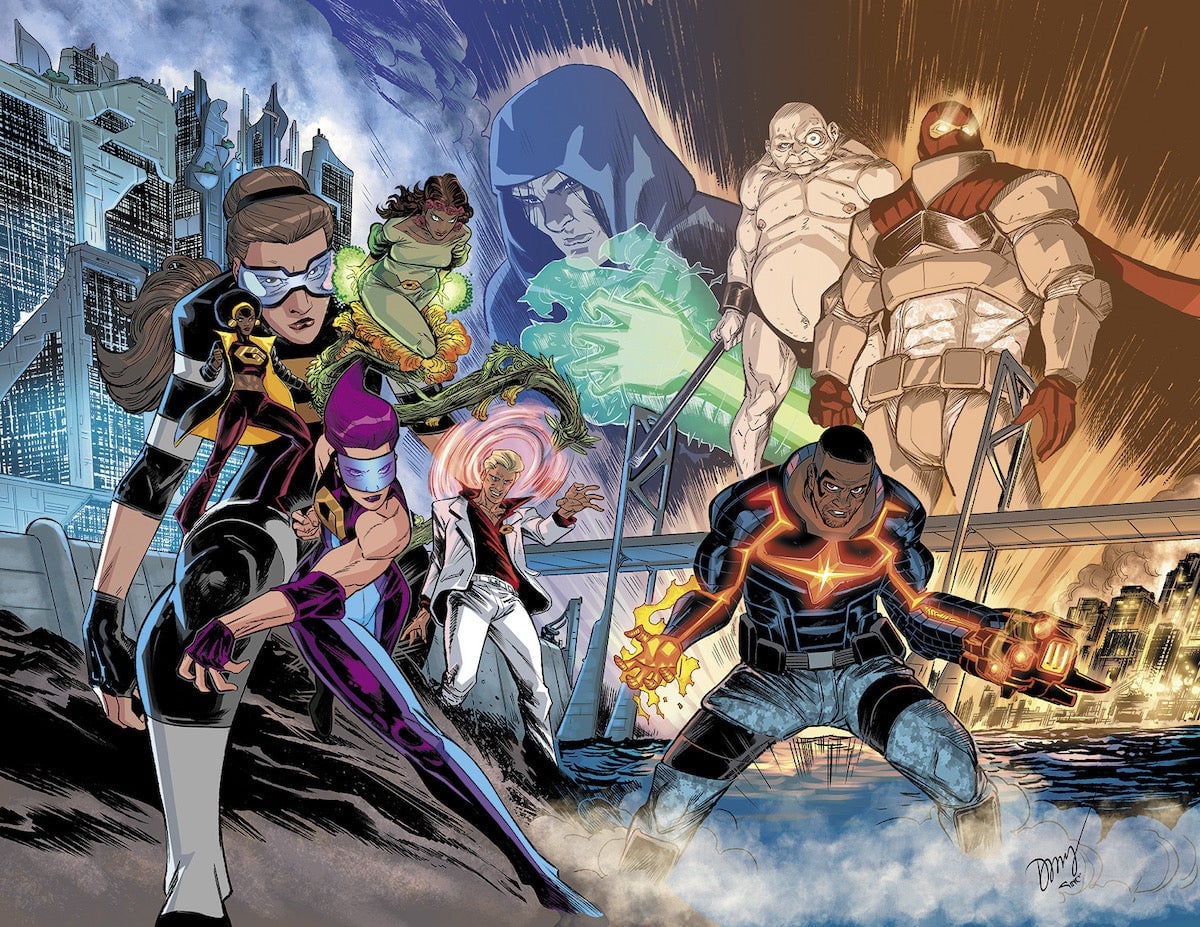
Look, for me, Ancient Enemies is a little bit of a class war. Look, if you look at the media and you love the medium today, there's two types of stories that play very big in the media today. There's the good people making horrible decisions and going horribly wrong in their life and becoming bad. Right? And then on the other side, there's these horrible people doing horrible things, but almost justifiable to the point that they seem heroic. That's your two stories. So you see Dexter on one side and Breaking Bad on the other. And that's become a paradigm for a lot of storytelling going, which means that the good versus evil isn't as clean anymore. Right?
There’s certainly more of a gray area, yeah.
And it's more about that gray. And it's not about us stopping the bad guy. It's not that case anymore. It's really about what decisions I make, and why I make them, and whether they help or hurt people, and who am I helping and hurting? Because every decision helps and hurts. So, ultimately, all my characters are out there making decisions in the story. And the big story is that there's two warring races that have beaten themselves ultimately to near level extinction, but they won't stop fighting because they hate each other so much. I love institutionalized hatred, because you don't even have to explain it, it's just always going to be there.
It's throughout history!
Yeah, exactly. It's throughout history. So these two worlds basically decided the only way they could solve this war is by taking one champion each, one-against-one championship, and the winner takes all. Wins the galaxy. Except both sides cheat. Because as my story would say, you think I would really put the fate of the galaxy in one person's hands? You're out of your mind.
So these two ships crash on Earth, create massive destruction on Earth, and then Earth starts to reform itself. America starts to reform itself around that, using the technology they pull. You see two cities rise, which is Americana, which is that pristine, beautiful city that is the vision of the future that is rotten to the core. And then you have Citadel, which is the worker class that has been beaten into lower down submission, but has the heart of gold that can win the day. So you have this class war going, you have this alien war going, and then you have everybody choosing sides, and then ultimately it becomes a distinction about what side is right and what side is wrong. You find out, there's no clear answer on this one. We're here to entertain. I'm not here to preach, so I'm going to present all sides of every argument and I'm going to let you guys fight it out. I'd rather push that in the best way possible.
That's sneaky-sneaky. What fun! Taking kind of a step away from the classic superhero message of clear right and wrong.
It is. And that's why, when you read Ancient Enemies, there's no heroes and villains. Everybody's just doing things. Some of the guys are brand new, so they do it really bad. They're really bad heroes. And of course, the most fun I have is that I created... One group is called The Greater Good, which is basically a corporation. So I get to have a lot of fun in corporate politics.
Getting to poke the bear a little bit.
Yeah. I get to poke the bear a little bit. [laughs] There's an arm team, which we called the Human Resources Department. And they're trying to stop people and say, "We have trauma units coming to deal with your pain, but if you decide to run, we're going to have to shoot you."
Spectacular.
It's a lot. And the best thing is: I’m having fun. I didn't realize how much fun I was having because what happens when you establish the origin, you're so focused on setting up the story and you want to make sure you set everybody up properly. Once you get into it, then you can start just playing with the characters and you see that person, you start to come alive. That's more important because they're not just delivering expositions, they're delivering personality and attitude. It’s all adding to the story. I have a brilliant artist in this guy, Danilo Beyruth, from Brazil. What's important about this book is that the art is so beautiful and he's such an amazing storyteller, it allows me to put better dialogue over it so I don't have to explain the situation. And then what I did is I sat down with Alex Sinclair, the colorist, and I asked him to make these books bright and visual.
Stepping out of the dark and contrasted and gritty for a while?
Yeah. I think also, a lot of computer coloring gets very muddy. And so I really wanted him to pull the brightness of the books and make it pop again. And Alex, to his credit, goes, "I have to relearn '90s coloring to make this book for you."
Yessss! I love that. Bring it back!
[laughs] Exactly. I worked in computer animation in mainframe, and just because you could do things with your computer, you shouldn't. You have to put limitations because sometimes the scope of what it does, can actually impede the creative process, not help it, because you could get too many options. And the same thing with coloring. Just because you have a million colors to choose from, doesn't mean you should put them on every page.
Couldn’t agree more.
It's more about getting and understanding the importance of the color; it’s understanding the importance of the storytelling, and the importance of the dialogue. That’s what this is all about — and what it should be all about: making a compelling story.
About GalaxyCon
Dates
-
Follow Popverse for upcoming event coverage and news
Find out how we conduct our review by reading our review policy
Let Popverse be your tour guide through the wilderness of pop culture
Sign in and let us help you find your new favorite thing.




Comments
Want to join the discussion? Please activate your account first.
Visit Reedpop ID if you need to resend the confirmation email.