If you click on a link and make a purchase we may receive a small commission. Read our editorial policy.
How Scott Lang saved Marvel's Ant-Man
Hank Pym drove the character of Ant-Man into the ground. But fifteen years later, writer David Michelinie came up with a new Ant-Man who saved not only the day but the character.
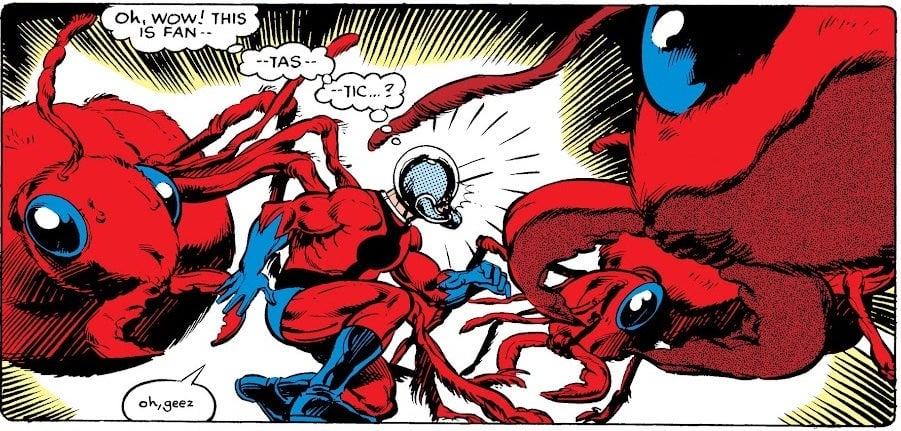
When Scott Lang became Ant-Man in 1979’s Marvel Premiere #47, he seemed like a strange choice to take on the role. The original Ant-Man Hank Pym was one of the world’s greatest geniuses, on the level of Reed Richards, Bruce Banner, and Tony Stark. Meanwhile though Scott Lang had been a brilliant electrical engineer, he was more recently an ex-con thrown in jail for using his talents to steal from people. He’s also a father with a sick daughter.
But as unusual as his background was, it turned out Scott Lang was exactly what Ant-Man needed.
The Hank Pym Problem
While some point to storylines that come decades after his origins as the moments that “broke” him as a character, in truth Hank Pym is a problem pretty much from his introduction in Tales to Astonish #27 in 1961. From that very first experiment, Pym regularly puts himself in totally unnecessary danger, and often to seriously negative consequences. He actually takes up the study of ants because upon shrinking for the first time they almost kill him. When he learns how to grow large he eventually gets stuck there, and later discovers his size-expansion is dangerous for his heart. An accident in another experiment will create a temporary psychotic break in him. At times he spends days locked in his lab working with a certain mania, only to emerge with results like Ultron, one of the Avengers’ most dangerous enemies.
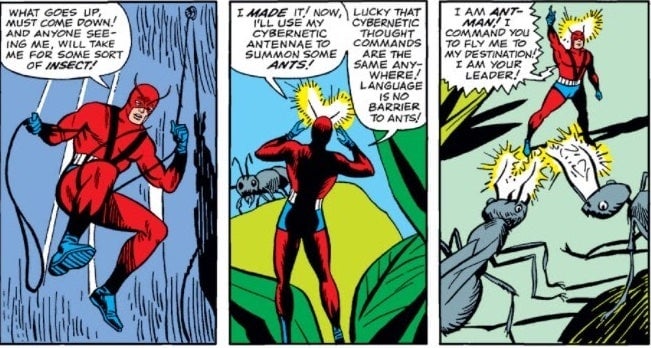
As Ant-Man, Pym also never seems to respect the ants themselves. Even as he discovers just how intelligent ants are, and comes up with a way of communicating with them, he mostly treats them as his servants. They are there to drive him around, to serve as a sort of message service for others who need him, and, most often, to cushion his landing when he launches himself from a catapult—his main and very silly method of transportation. Never once does he show any interest in whether his weight and velocity might hurt them.
After Janet van Dyne is introduced in issue #44 and Henry gives her the wings of a wasp so that she can join him in fighting crime, he immediately begins to treat her in the same cold way. He gives her orders, ridicules her interests in fashion and justifies his treatment by noting how young she is. The rest of their 20+ run on Tales to Astonish has their oft-tempestuous relationship as its through line. She’s in love with him but can’t get him to see her as a person; he can’t treat her as an equal even after he does eventually fall for her.
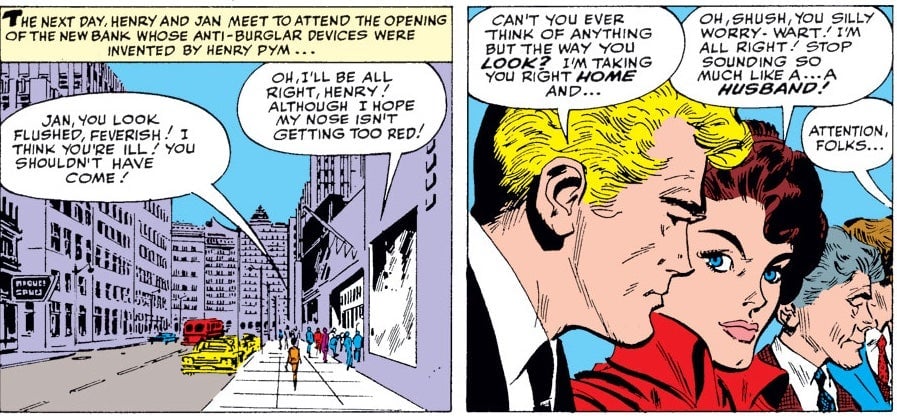
It may seem like this is just the time period in which Stan Lee and Jack Kirby are writing the characters. But Hank’s sexism is clearly identified as a trait of his; Janet calls it out regularly. His relationship with her is also poisoned from the start by the fact that she’s introduced in the same issue that we learn Hank had a previous wife, Maria, who was murdered when she attempted to escape from her home in the Soviet Union. Upon meeting Janet Hank immediately notes how much she looks like Maria.
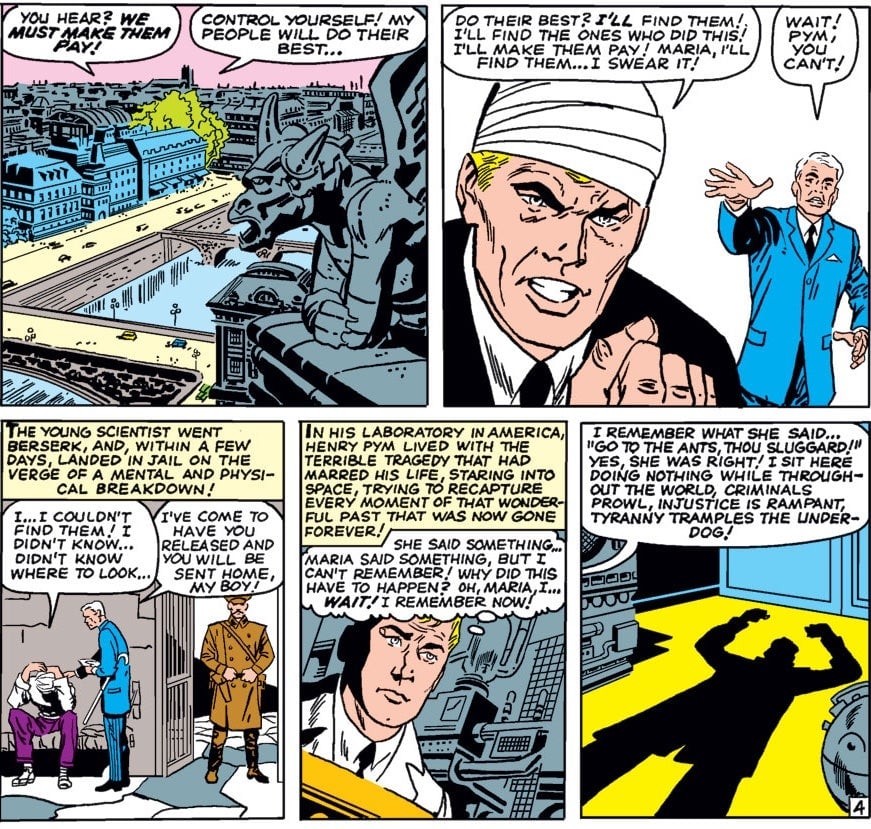
In issue 44 we also learn that Hank was so devastated by Maria’s death that he actually had a breakdown, in which he hallucinated that Maria told him to fight crime by studying ants. Kirby’s art, which features the shadow of Pym cast on the ground, fists clutched crazily in the air, captures what would come to be Hank’s other defining trait, an abiding and often violent mental instability.
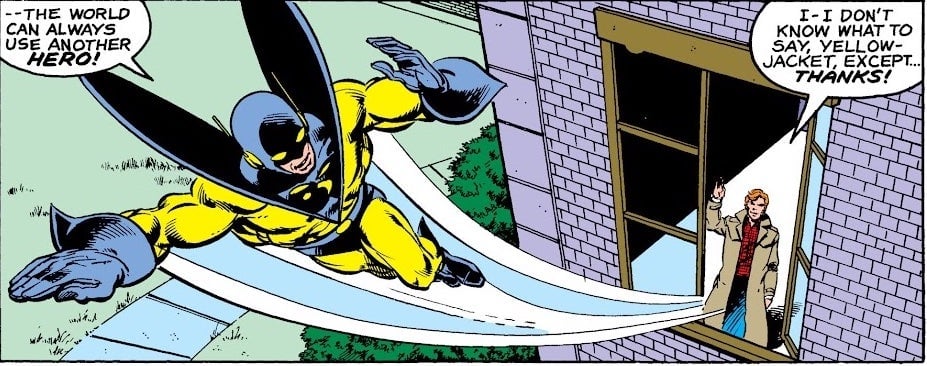
Over the course of his run as an Avenger, Pym frequently takes on new identities without any real explanation. In later years other characters will repeatedly point out how strange this is, and how concerned it makes them. His most enduring identity, Yellowjacket, was literally the result of a psychotic break which left him believing he was not Hank Pym at all but rather a cocksure antihero who murdered Hank, then showed up to brag to the Avengers and propose to Janet.
Each time Pym returns to the Avengers he gets anxious about his place there—not without reason; as an Avenger he created Ultron the sentient AI that would become one of the Avengers’ most dangerous enemies.
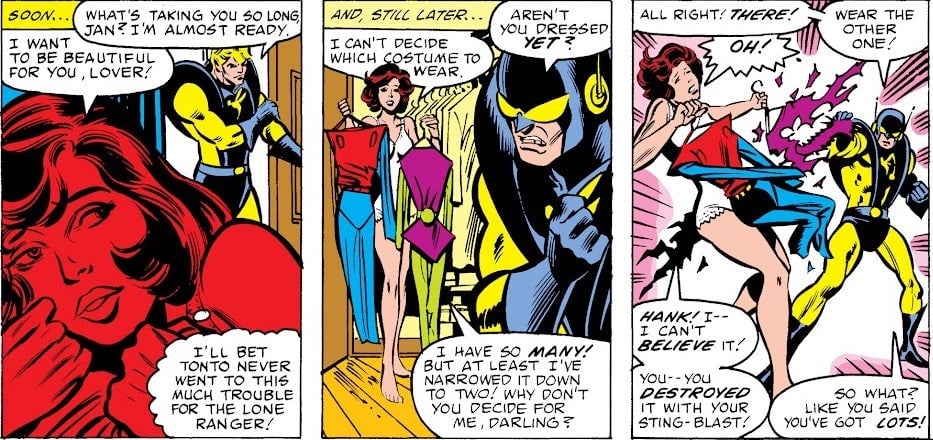
These elements coalesce in the notorious Avengers #212-213. Nervous once again about returning to the team, Hank grows more and more hostile toward Jan’s attempts to reassure him, shouting at her privately and publicly and also firing bursts of energy at her costume for being late, trying to slam her fist down on her when she’s in Wasp form, and finally slapping her in the face, leaving her with a black eye.
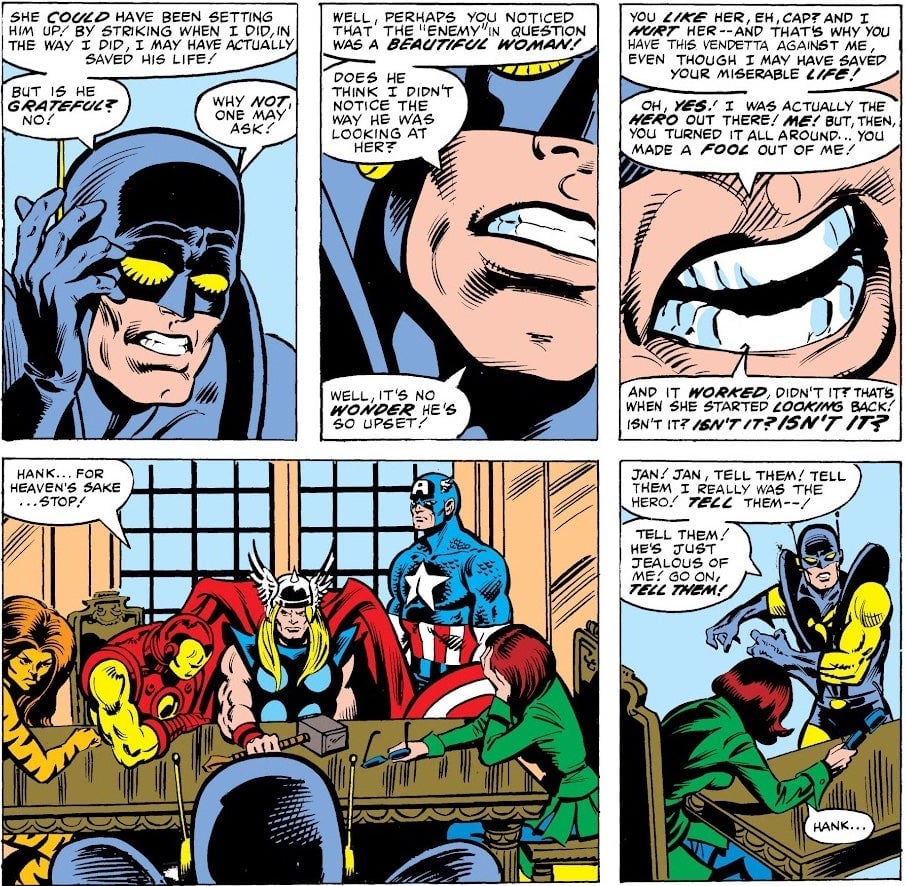
He also shot a woman the team was confronting without cause; and when questioned about it by Captain America he argued that Cap was only complaining because he was actually into her, then created a robot to attack the Avengers hoping he could save the day and keep his job. It’s all pretty awful; even Tony Stark feels uncomfortable. Ant-Man, to the Avengers (and maybe to the readers too), was a problem.
Scott Lang: A Happy Accident
In 1978, writer David Michelinie was writing Avengers, and he had an idea for a new character. “I always liked mini-characters, particularly the Atom at DC,” he recalls in a chat with Popverse. “I found myself with a little time in my schedule, noticed there wasn’t a current Ant-Man, and thought it might be fun to start a ‘new’ super hero from scratch.”
Most super heroes of the time had their powers thrust upon them. They had “a radioactive spider bite, a different color sun, [were] bathed in gamma radiation.” What would it be like, he wondered, to write a hero who instead sought out super powers and then had to figure out how to deal with them?
Out of these thoughts, Michelinie introduced Scott Lang, a former electrical engineer and thief who first appeared on a single page of Avengers #181 as an employee of Tony Stark sent to install a new security system at Avengers Mansion. A month later in Marvel Premiere #47-48, written by Michelinie and drawn by Avengers artist John Byrne, Michelinie told the story of how Lang left engineering to become a burglar for the thrill of it, then later went straight and worked for Stark.
But when his daughter Cassie developed an inoperable heart condition, Lang ended up robbing a fancy-looking house to try and make some quick money to hire muscle to rescue the one scientist in the world who might be able to save Cassie’s life from the man who had taken her prisoner. (Yeah, it’s a wee bit complicated. But as we’ll see, those details are also kind of mind-blowing.)
Similar to what happens in the 2015 film, in this storyline, Lang breaks into a house and discovers his mark is none other than Hank Pym. He ends up stealing Pym’s Ant-Man armor to enact his rescue plan.
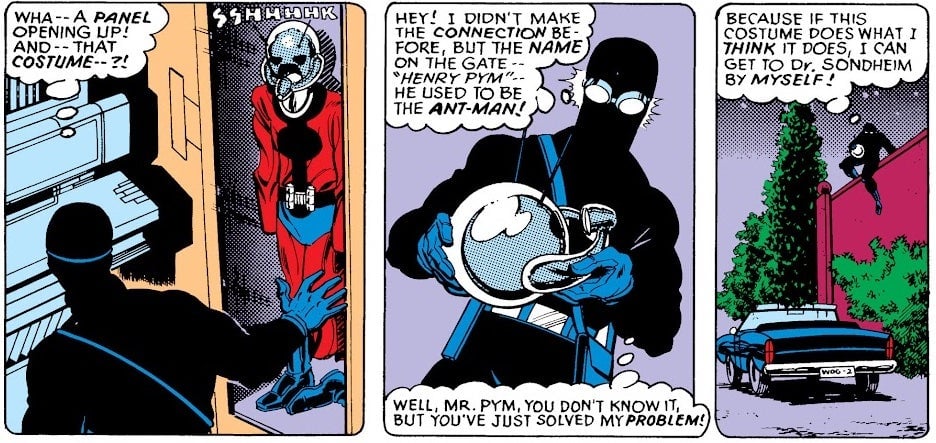
Right away, Michelinie gave Lang some traits that were new and fresh to the Ant-Man character. Where Pym treated the ants like servants, Lang has an affectionate camaraderie with them. He treats them as individuals, even refers to some of them by the names “Emma” and “Steed.” Michelinie says the playful reference to the classic British ‘Avengers’ Tv series’ characters “came from my fondness for movies and TV shows…. I also saw Scott as something of media buff.”
More importantly, Michelinie established Lang’s daughter Cassie as the driving motivation of his life. Almost no one in the Marvel universe had children of their own at the time—really just Magneto and Reed and Sue Richards——and those were hardly normal parent/child relationships. In part, says Michelinie, “I loved the idea of a kid whose parent was a super hero with a secret identity. It had to be difficult not telling other kids. Imagine a playground scuffle where a bully says, ‘Your dad’s a wimp! Mine could whoop him with one hand behind his back!’” What is Cassie to say to that? he wondered. “Oh yeah? Well my dad is…is…uh…oh, yeah?”
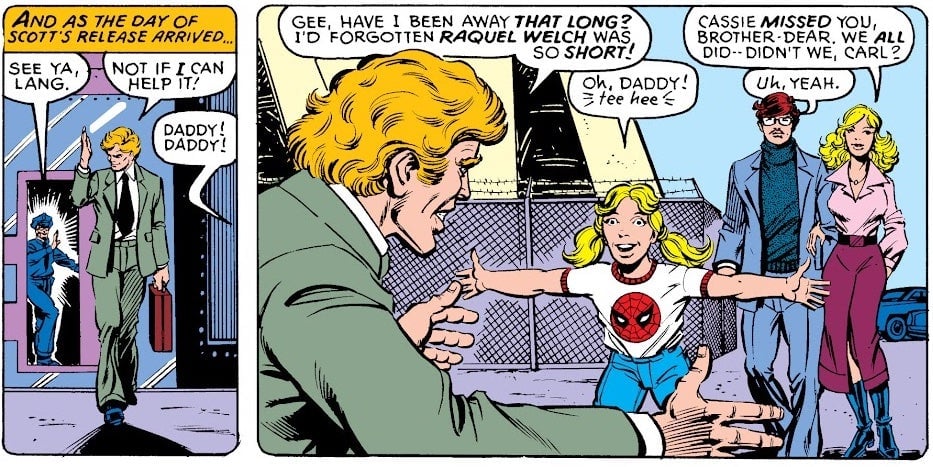
But he also loved putting that father/daughter relationship at the heart of their story. “I just wish I’d gotten more time to develop it,” he says. “I have to say I was very happy that the first movie, especially, got that relationship right.”
Having said all this, Michelinie did not see Lang as a way of renovating the Ant-Man property. “I didn’t pay much attention to Hank Pym or his Ant-Man days,” Michelinie admits. “I never thought of what I did as ‘fixing’ anything. I just wanted to generate and develop a character that would be fun to write and read.”
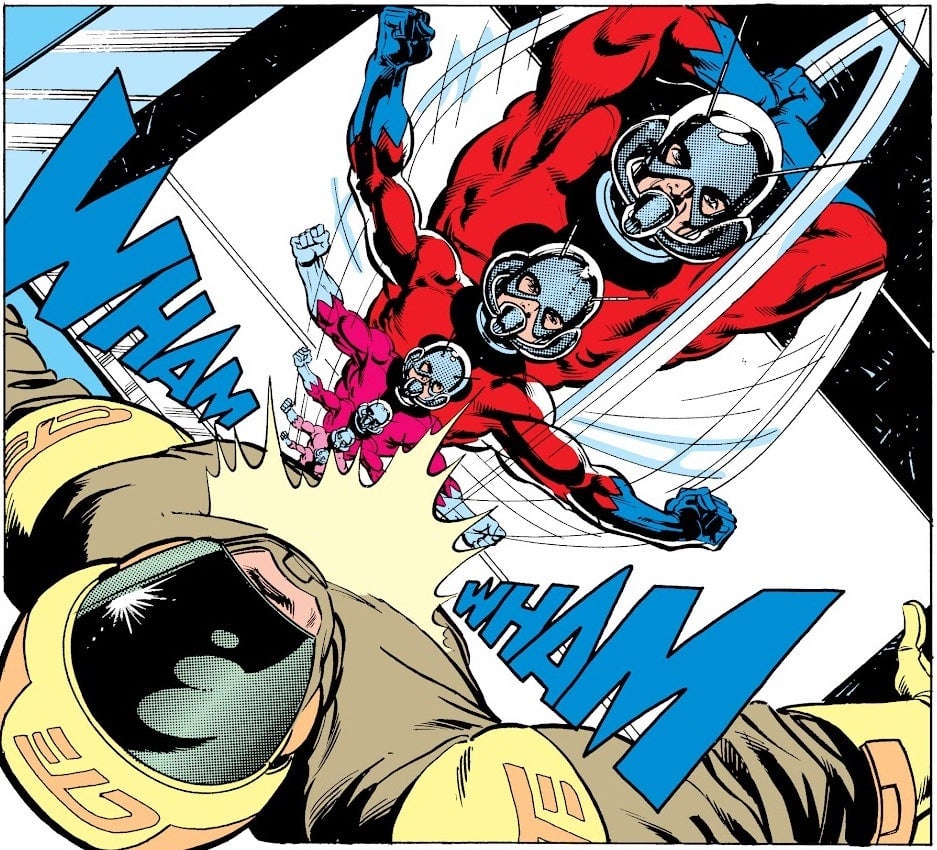
And yet intriguingly, the traits he gave Lang did indeed speak to some of Pym’s greatest deficits. As mentioned, where Pym never really seemed to appreciate the experience of being able to shrink and connect with insects, Lang definitely seems to enjoy being Ant-Man. In addition to treating the ants well, he’s constantly commenting on the things he’s discovering in the role. And John Byrne's art conveys well the energy and visual wonder of being Ant-Man.
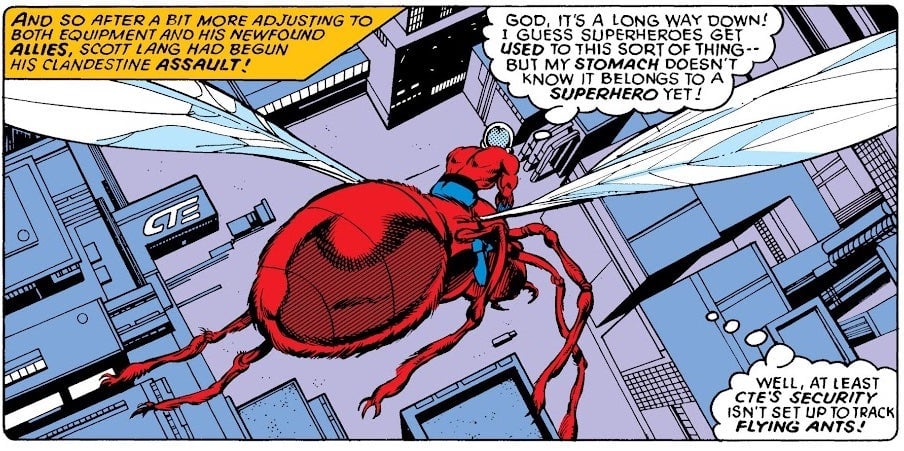
Also, where Pym was unstable and took foolish risks, Lang is presented from the start as someone who has spent years paying the consequences for his own immaturity. Michelinie depicts him as laser-focused on helping others and being a responsible adult; he returns to a life of crime only after he has exhausted every other way he can think of to save Cassie.
But by far the most significant thing about Lang in his origin story is that all of his important relationships are with women, and they’re each tremendously positive. He adores his daughter Cassie, and she him. His sister Ruth, who Michelinie presents as having taken care of Cassie while he was in jail, clearly cares for him, as well. (Later writers would introduce Scott’s ex-wife Peggy Rae.)
And then there’s Dr. Erica Sondheim, the surgeon that Lang sets out to rescue from workaholic businessman Darren Cross. In Marvel Premiere #48 we learn that Cross had been warned to slow down or his heart would fail. Instead he demanded untested technology be tried on him, which slowly mutated him into a huge monster who steals other people’s hearts to live.
You don’t even need to know that Cross refers to Sondheim as his property to hear the echoes of Hank Pym in the character.
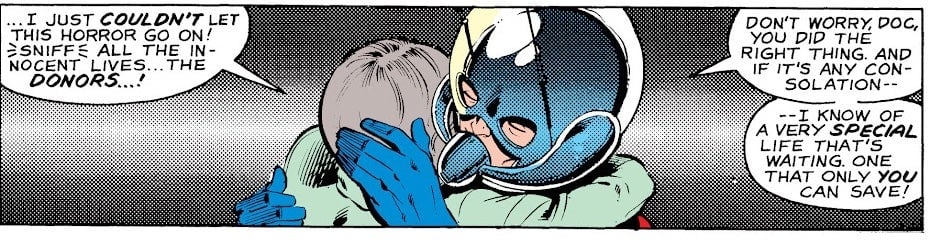
Michelinie might not have intended Scott Lang to be an answer or corrective to Hank Pym, but he certainly did offer one. And though Michelinie didn't get to write Lang for long, the character has continued on ever since in almost exactly the same form as Michelinie created him. Where Pym had four different identities in his first seven years as a characters, Lang has been Ant-Man for forty-five years at this point.
Of late, every few years some new creative team brings out a new Ant-Man series or miniseries. But none offer a radically new take on Lang. There’s no need. His powers may be some of the weirdest in all of Marvel, and when Henry Pym wore the helmet he might have been deeply disturbing, but today Ant-Man is one of Marvel’s relatable heroes. And that’s all because of Scott Lang, a normal guy who loves being a dad.
Follow Popverse for upcoming event coverage and news
Find out how we conduct our review by reading our review policy
Let Popverse be your tour guide through the wilderness of pop culture
Sign in and let us help you find your new favorite thing.





Comments
Want to join the discussion? Please activate your account first.
Visit Reedpop ID if you need to resend the confirmation email.