If you click on a link and make a purchase we may receive a small commission. Read our editorial policy.
Scaring meets caring with Kate Siegel & Mike Flanagan, the Hollywood (horror) couple behind Netflix's Fall of the House of Usher, Midnight Mass, more
The Hollywood (and horror) power couple Mike Flanagan and Kate Siegel, and the people behind the celebrity in Awe Talk.
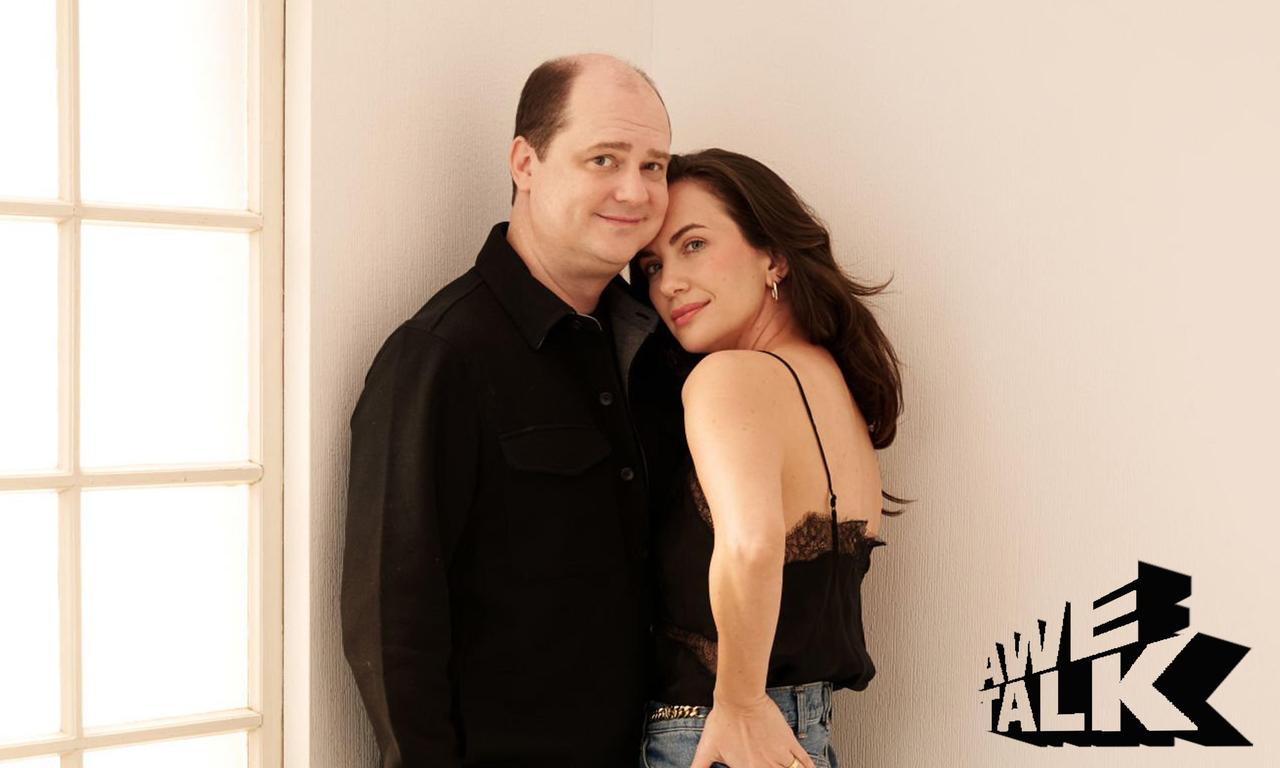
You find a certain camaraderie in the horror community. There's something to the idea of being scared together watching a movie that can bring people together - and the bonds formed have, at least for me, a way of holding you together. Writer/director Mike Flanagan and writer/director/actor Kate Siegel have created a bond with each other - and their growing ensemble of collaborators - that has given the world acclaimed horror projects including Fall of the House of Usher, Midnight Mass, The Midnight Club, The Haunting of Hill House, and The Haunting of Bly Manor. For the power couple that is Flanagan and Siegel, they're found that the family that scares together cares together.
In Popverse's inaugural edition of our interview series Awe Talk, I spoke with the duo about the bond that horror brings, their continued efforts to grow and evolve, one moment from Midnight Mass that has changed my life, and of course their upcoming projects such as The Life of Chuck and Blumhouse's The Exorcist. Enjoy.
Popverse: We saw you twice in 2024, for Emerald City Comic Con and then for New York Comic Con. What's it like getting out and meeting fans directly?
Kate Siegel: I know that Mike and I are fans of genre entertainment – we are horror fans first and foremost, so getting to interact with people with similar interests is invigorating. Since recent shows we’ve done like Midnight Mass and The Fall of the House of Usher happened during the pandemic, we didn’t get to do as much press as we traditionally do – and didn’t get to have those fan interactions we enjoy so much. So doing an event like New York Comic Con is great, because we get to talk with people to see how they responded to what we have done and how they have analyzed it.
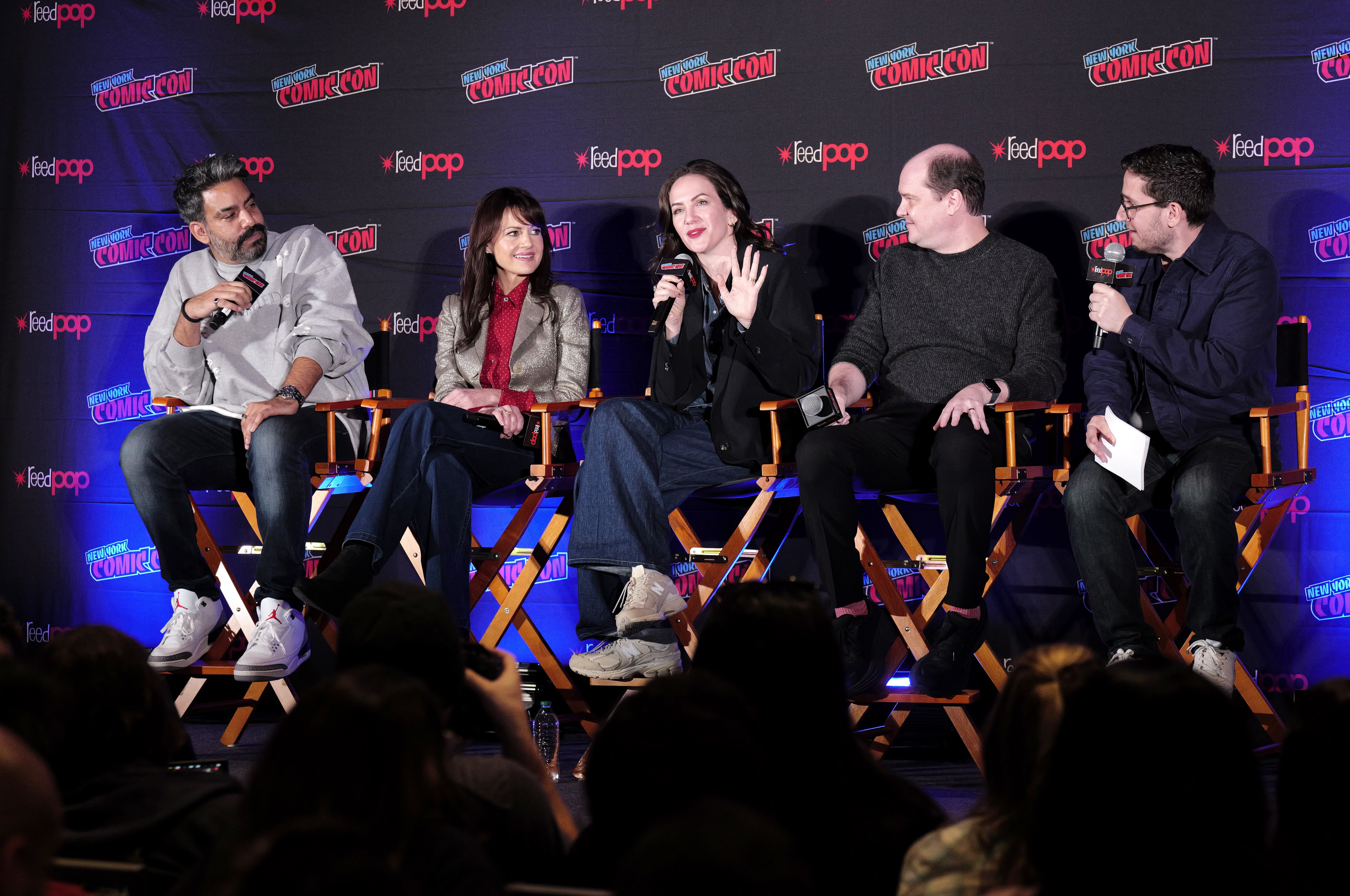
Mike Flanagan: Just to echo Kate, we both really seeing how work we’ve done can personally impact people. We have a general idea when people see our work, be it from reviews, ratings, box office numbers. But the anecdotal things, especially how it impacted people’s lives, is incredibly gratifying.
We're talking as Mike's Life of Chuck recently debuted at TIFF ahead of a 2025 release, and Kate's 'Stowaway' short debuted in V/H/S/Beyond. How does it feel to have these new projects?
Mike Flanagan: Life of Chuck is particularly fun for me, as it’s not a horror film at all. It’ll only expand the audience we’ll be reacting. It will be exciting to see some people who wouldn’t otherwise be familiar with our work as they don’t gravitate towards horror to come to this. It’s a bridge, and I’m excited.
Kate, you made your directing debut with ‘Stowaway,' a short in Shudder's V/H/S Beyond. How was it being creatively the person in charge, financially the one in charge, and also kind of being the team captain for your cast & crew?
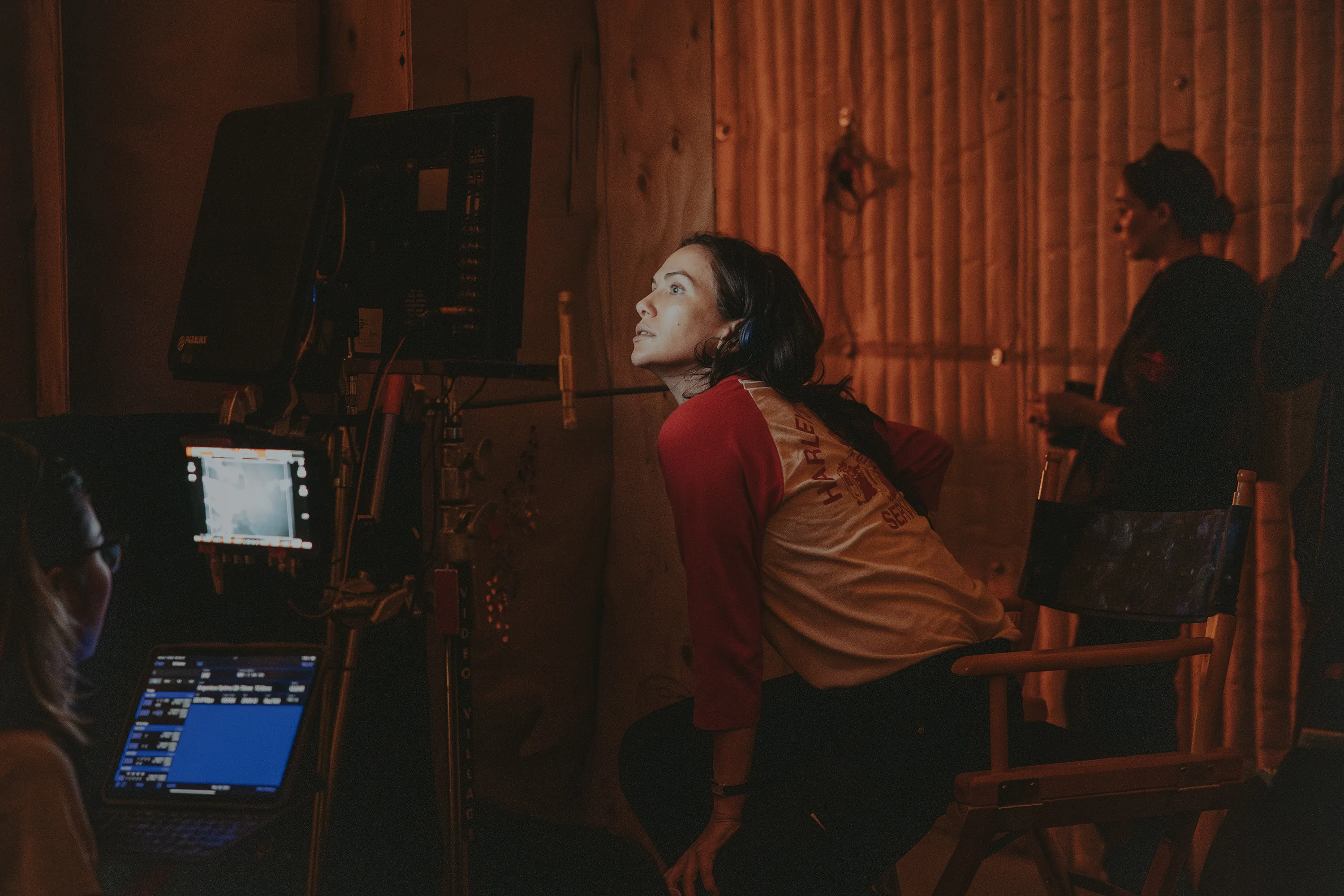
Kate Siegel: Honestly, it’s been a learning curve; one I’ve really enjoyed. I’ve found a lot of freedom being an actor part of a team – the acting department. We’re in a bubble, and there’s a certain intimacy to it. Directing requires certain skills, and I have an incredible role model with Mike; his organic leadership and kindness. Having that goal in mind, I aim to run a set the way a Flanagan set is run. It’s a lighthouse to the type of person I want to be as a director. It’s a fun thing.
Directing is also about being a team leader. When actors visualize a movie or TV show in their head and then show up on set, they’re at the service of the director. Directors have to have a vision for all the roles and be in a space to explain and collaborate with everyone. My goal is to keep everyone excited, to nuture kindness, and to inspire.
Kate, you co-wrote Hush before this, and now you’ve directed a short. Not that you need to have plans, but what are your ambitions on directing and writing? Or what do you like most about it?
Kate Siegel: I loved directing, and I hope to do so much more of it in the future. Collaborating with Mike is one of the greatest joys in my life, but I’m always looking. I dream of the time I can direct and Mike can produce, or vice-versa. It opens more doors for collaboration and more ways to get to work together.
I really enjoy how the two of you have created an ensemble cast for most of your projects, with returning faces in dramatically different roles. That’s something common in theater, and also in film with the works of Hitchcock to Scorcese, Tarantino, and Anderson. What does it bring out of you as a creator – for Mike you as a writer/director, and Kate you as an actor?
Mike Flanagan: It’s one of the great joys of writing to be able to think of an actor while you’re developing a character; especially if it's someone you know and trust, and you might get to see them present a new side of themselves you haven’t seen before. In The Fall of the House of Usher, I was very giddy to see Kate do something she hadn’t done on set; to see Michael Trucco unlike anything he’s played before, or nine different versions of Carla Gugino I tried throwing on the page. It’s fun to throw more and more challenging pitches at them, and see them consistently hit the fences over and over again. It feels very much like a theatre troupe and a family.
It’s also interesting when new people come up. Kate often acts as an ambassador and helps them get oriented and feel like a part of the group. There’s such a shorthand we’ve developed over so many years of shared history. When we work with new people, there’s a necessary period where people get to know each other, calibrate, and then new dynamics appear.
Kate Siegel: It’s also very fun. It’s like being part of a sports team that’s been working together for years. I know when I need to a set up for Rahul Kohli’s spike. We know each other, and communicate. And like Mike said, there’s a real sense of intimacy; we don’t just work together, but many are my closest friends. We develop that after hours and hours on set, waiting to be called. You talk about life, your dreams, and your hopes.
One of the things I realized is a Flanagan set has a rare level of trust and intimacy because of this. When I do pop into a new job and I don’t know the people already, I sometimes get confused that they’re not my best friends. That makes a Flanagan set even more magnetic, where trust is at the top of the list and you have a certain safety on the set that makes is open for take risks.

Kate, I have to ask about your ‘What happens when we die?’ monologue from Midnight Mass, with you and Zach Gilford. That legit gave me a nightmares to the point I couldn’t go back to sleep, but over time it’s turned into a Leonard Cohen-esque absolution on mortality for me. How was that scene, and the intercut elements, for you – at the time, and did it register with you more in retrospect?
Kate Siegel: It was such a beautiful piece of writing. When Mike handed that page out I just cried reading it. You are spot-on for Cohen – Leonard Cohen’s ‘Come Healing’ was such a huge part of the preparation for that monologue. Both Mike and I agree that my character Erin’s monology on what happens when we die is what we want our kids to hear from us when we die, as their dad and mom; something we are leaving behind. All of that helped me perform this with true gravitas. Mike put me in the perfect position to succeed. It was a very important day on set; we called it ‘Monologue Day.’
Popverse: Tell us about that day.
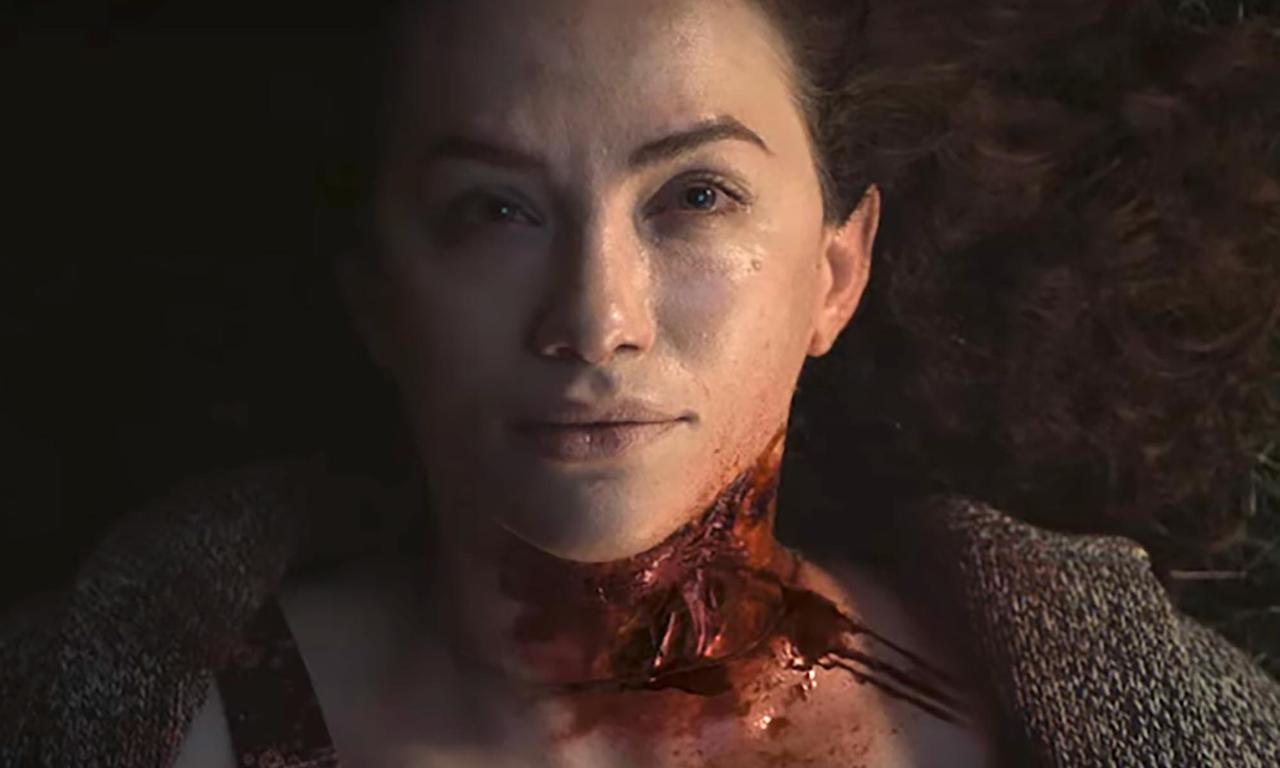
Kate Siegel: It was very meditative; it felt spiritual. We were creating something that had meaning to it. The long crane shot coming in close to me as Erin is dying after her throat was ripped out was the last scene I shot for Midnight Mass. Afterwards, I had a complete and total breakdown because I felt the weight come off me; it was our first production after the height of COVID, and the weight of all the expenses we had, and the changes in the world, and on set. In retrospect, it was a perfect storm; the harmony of the performance on Monologue Day and it being my last day, and for it to work so well in the show. At the time it felt unbearable, but I treasure it now.
Mike, how about you hearing that, being the person who wrote it all to begin with?
Mike Flanagan: Well, I was writing a version for this monoglue for about a decade. It very much reflects where I’ve settled on how I feel about life and death, and mortality. I knew when I was writing the script for that episode of the show that Kate was going to be delivering the monolgue. That gave me an additional layfer of safety, as I knew she would do what she does – elevating the script, and taking it to the place it wants to go.
I hear from a lot of fans who say they want to use that as a eulogy for their father or someone else close to them that died, or that a version of it was printed for a family funeral, or that it came to ming when they’d been wrestling with the grief following the death of a loved one.
How do you feel about that?
Mike Flanagan: It’s hard to describe the impact on me. I’m sure for Kate and everyone else you try to make a show that’s entertaining, but then make something that impacts life in a real way… This is one of the examples I hear about most from fans. It’s an honor for a very strange and uncomfortable thing to talk about being received in a good way.
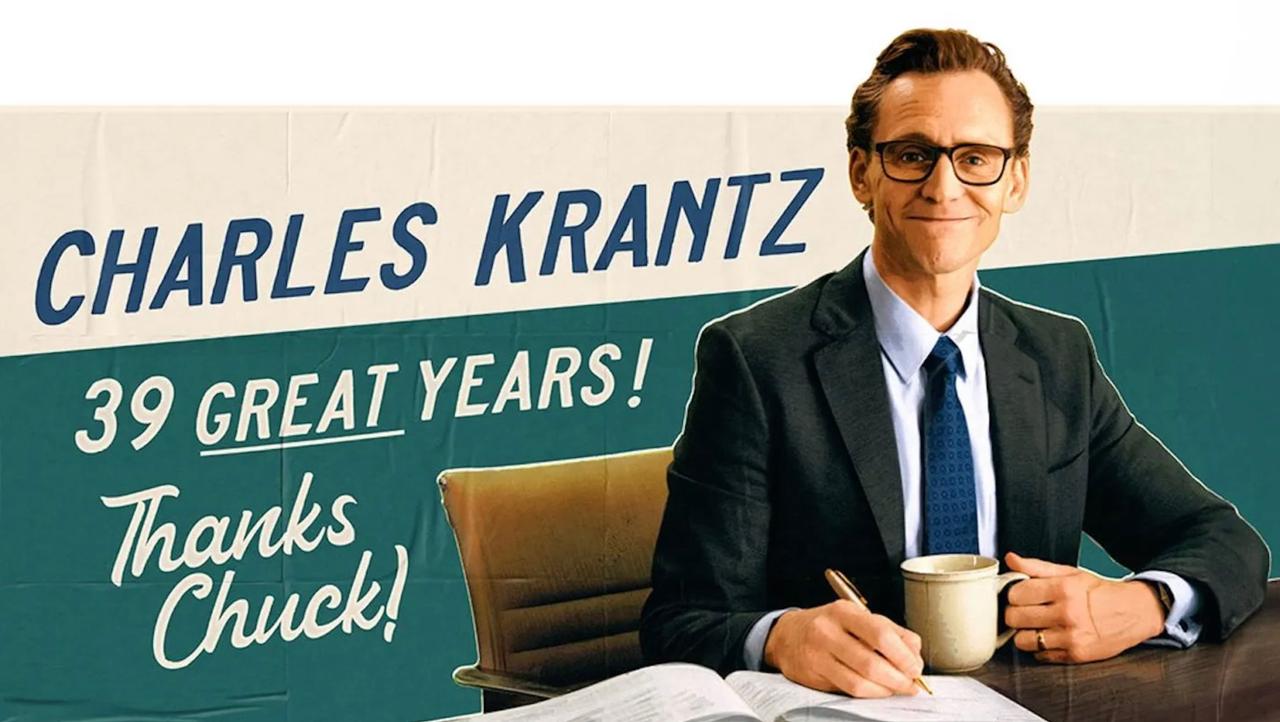
That leads me to my next question, about the upcoming Life of Chuck. The original novella again hits me about mortality, and about living in the moment – along with the creeping dread that we all here seem to thrill in. You’ve got Tom Hiddleston, Mark Hamill, Kate, and more. What would you say is your big aim with Life of Chuck?
Mike Flanagan: My aim is to just capture the joy I felt when reading it. I don’t think the movie has an element of dread in it. The Life of Chuck is one of the first things I’ve worked on that feels uncynical, and is about light and joy and life. There’s an element of mortality, but without melancholy or dread but rather as an equally beautiful corner of life.
What I’m so excited about is that when I first read this story I began imagining what a movie version would be. This is the one movie I wanted to exist in the world for our children. When people see the Life of Chuck, I hope it resonates in their hearts something beautiful as was in King’s original story. My goal is to try to capture that on screen.
I certainly have favorites of the movies I’ve been lucky enough to work on, but the Life of Chuck will likely always be my favorite movie; just the same way Midnight Mass holds my heart for television. Those are the two that come closest to me.
Does creating horror projects so over ever creep into your life, or get uncomfortable for you?
Mike Flanagan: For me, I find nothing frightening about working in horror. It’s quite the opposite! Horror has made me braver throughout my whole life. Working on the scariest stuff is the most fun. Darkness, blood… that’s when we’re giggling the most on set. It’s a really joyful thing to make horror, while it can be stressful to watch horror. But more than anything, I find it cathartic.
Kate Siegel: It’s a blast! Because we’re horror fans in general when we pull off a great scare or kill we high-five… it’s amazing!
Watching horror movies creates joy for me; it’s like watching a magician work. I think it does the opposite for me than most people when they watch horror.
Mike Flanagan: 100%. We’ve said to each other before; at a certain point, all you see is 1s and 0s to quote the Matrix. We become impossible to scare. Watching so much of it and then creating so much horror, you become so aware of the techniques and the tools that when you watch it you see how someone else is using the same LEGOs you’ve been building with. That makes it so exicting when you see someone break through and scare me; we’re both excited when someone scares us.
Kate Siegel: It’s so fun! And then when a horror movie does get us, it’s amazing to want to call up the creator and tell them – and in some cases we can.
Mike Flanagan: We reach out. We write.
Kate Siegel: I love the community aspect of horror; we’re the weirdos of Hollywood.
The two of you took part in a remake of Tommy Wiseau’s The Room that is in post-production now, with plans for all of the proceeds going to HIV/AIDS research organization amfAR. You two have been involved in adaptations before – some more direct, some more vibe based, but from what I read this is the most exacting adaptation you were ever part of. As adaptations of other things become more of the norm now, what have you learned about adapting something already known to people, but trying to not just be a cover song?
Mike Flanagan: That’s the eternal question of adaptations. You can only do it on a case-by-case and even a scene-by-scene basic. There’s no hard-and-fast rule, but generally what also helps is us being fans of the work. As a fan, we think ‘What the version of this book that I love? What would I like to see out of the movie or TV show?’ If you start from that perspective, you’re on the right path.
I promised only two questions about the Exorcist project, and here we go: Mike, given your upbringing in the Catholic Church and how you really grappled with that in Midnight Mass, what are the bits of the original film that sit with you especially hard that you’re anxious to tug at?
Mike Flanagan: I think the original film is a masterpiece because it, in my opinion, is more about a priest who has lost his fath than a devil/demon and a battle between good and evil. I’m always interested in the human story – it’s how I relate. My approach to my version of the Exorcist is radically different, but I can’t talk about it. We’re not rehashing the first movie or any of the others. That being said, I also think the original Exorcist is the scariest movie ever made; it’s a god-damned good scare.
Follow Popverse for upcoming event coverage and news
Find out how we conduct our review by reading our review policy
Let Popverse be your tour guide through the wilderness of pop culture
Sign in and let us help you find your new favorite thing.








Comments
Want to join the discussion? Please activate your account first.
Visit Reedpop ID if you need to resend the confirmation email.