If you click on a link and make a purchase we may receive a small commission. Read our editorial policy.
The real horror of The Conjuring 2 is a demon called Margaret Thatcher
The Conjuring 2's depiction of the Enfield poltergeist is firmly rooted within the rise of Thatcherism


Popverse's top stories
Part of the appeal of The Conjuring films is that they are period pieces, inspired by cases that Ed and Lorraine Warren took on during their careers as demonologists. The first two films are made by director James Wan, who remains arguably one of the most enthusiastic filmmakers in Hollywood today. Regardless of how you feel about Wan's filmmaking and The Conjuring films themselves, it's undeniable that Wan relishes in period-accurate needle drops and leaning into the cultural moment of the story's setting. And in The Conjuring 2, a film that dramatizes the 1977 Enfield poltergeist incident in north London, the most frightening force in the story isn't The Nun or the poltergeist itself, but Margaret Thatcher.
In case you need a refresher, because it's been ten years since The Conjuring 2 was released in theaters, the Enfield poltergeist incident took place at a council house - the UK's version of public housing - in London. Janet, one of the four children living in the council house, falls ill after playing with a ouija board, and begins experiencing supernatural phenomena around the house. That's when Ed and Lorraine Warren come to the rescue to exorcise the demons inside the home.
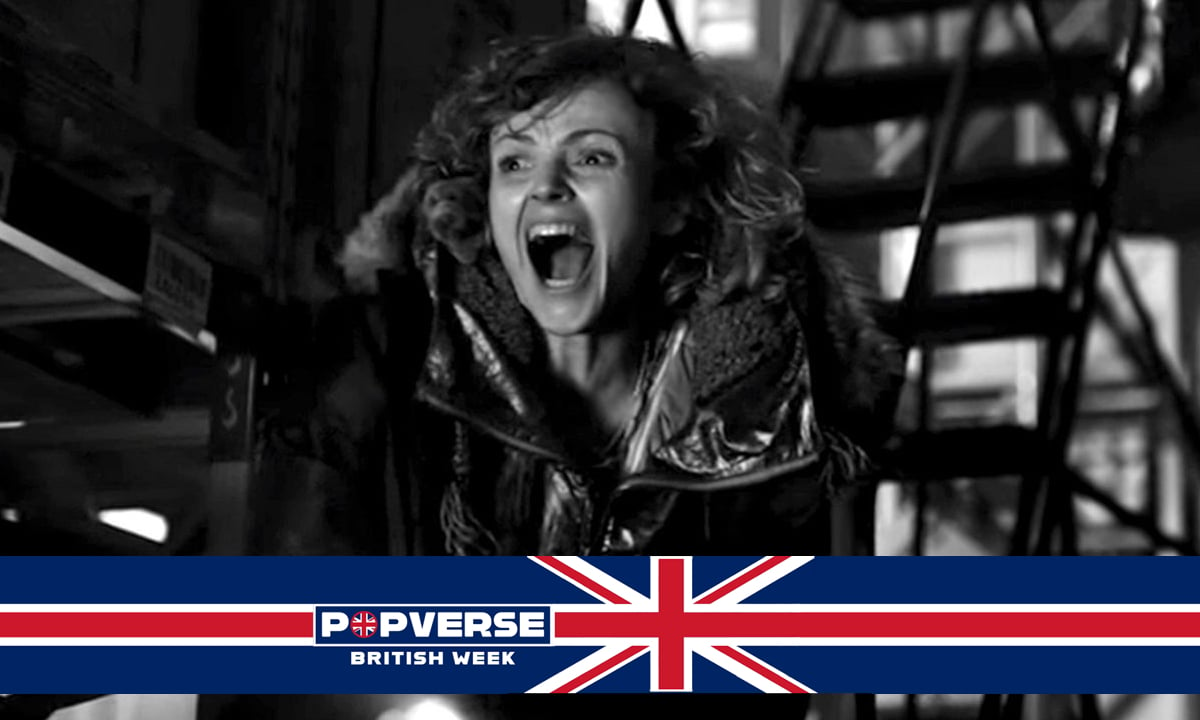
But hang on, where is Margaret Thatcher in the film? She's only in one scene, but it's one that's worth breaking down. In the scene, Janet is home alone and watching television in her living room. This innocuous scene turns unsettling, however, when the television mysteriously switches to other channels, eventually settling on the "Britain Awake" speech of then-Leader of the Conservative Party, Margaret Thatcher. It's then that Janet suspects that the television is being controlled by the ghost of the old man who lived in the house before her and her family, evident in the empty living room chair left behind by him. The TV erupts into static, and as Janet leans closer to the screen, the face of the old man suddenly appears next to it, screaming, "My house!" at her.
It's not an accident that Wan chose to include footage of Thatcher giving her in his spooky period film. And yes, The Conjuring 2 is a Hollywood religious horror movie that isn't afraid to get over-the-top to drive a point home about the terrifying threat of demons, but there's also a grounded historical reality in The Conjuring 2 that Wan is engaging with through the specter of Thatcher. By including Thatcher in the film's scares, Wan reminds us all of the real-life horror that was the privatization of social housing during Thatcherism.
Though Thatcher would not become Prime Minister for another two years, The Conjuring 2 is a story deeply haunted by her presence. First, let's remember what the creepy old man ghost said to Janet when she was just trying to watch her show: "my house." Walk with me here - I know I'm the latest in a long line of Irish wiseasses who use humor as a coping mechanism, but you don't have the scares of The Conjuring 2 without the historical subtext. The television scene between the poltergeist and Janet is, at its core, a territorial dispute literally mediated by Thatcher within the narrative progression of the scene. Janet's safety and peace is interrupted by the channel flipping to Thatcher, which then leads to the spooky old man screaming that her home isn't actually her home. The flame that accelerates Janet, and by extension, us as the audience, getting jumpscared by the poltergeist is Thatcher's speech.
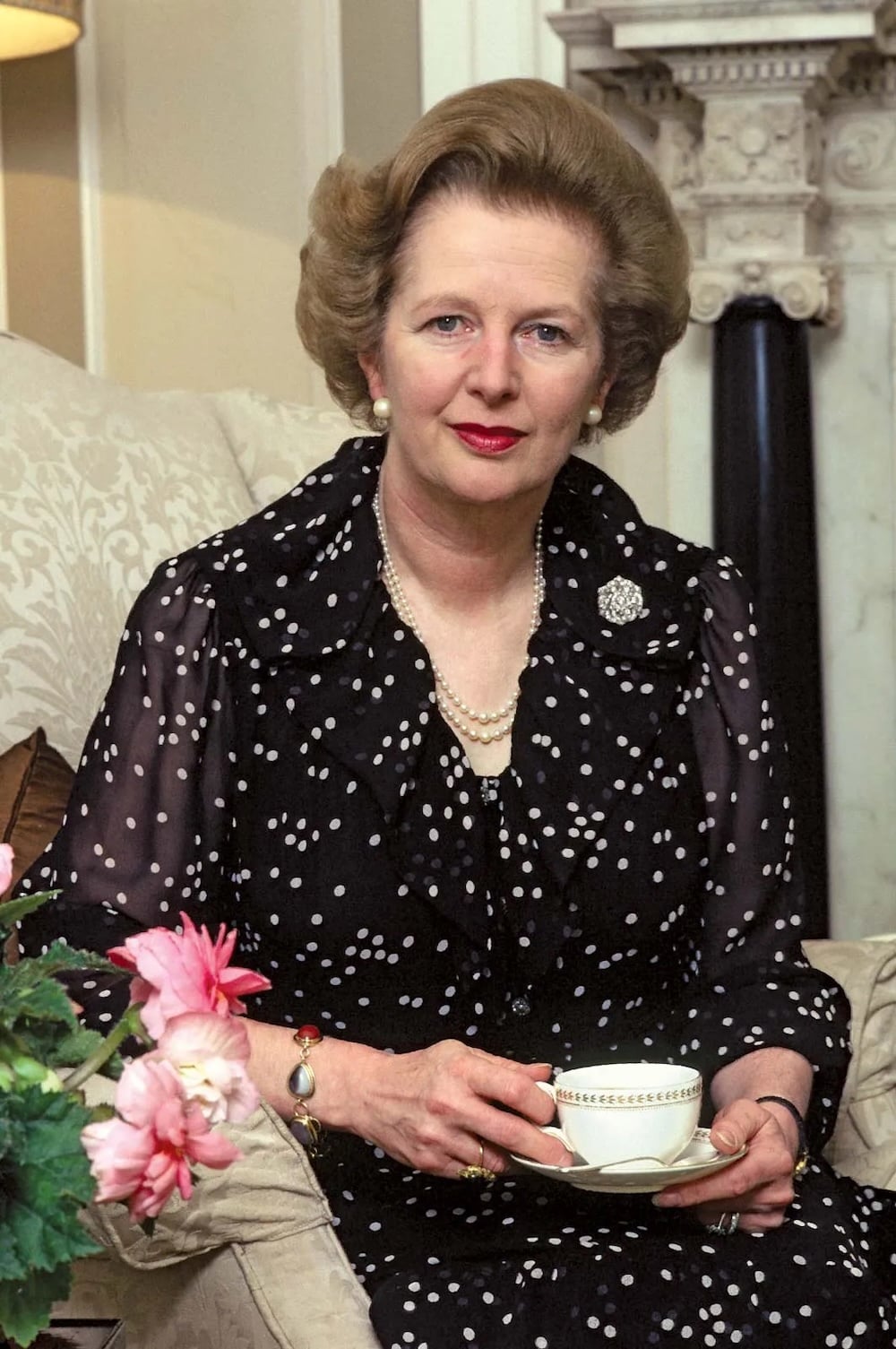
And while it may seem minor, the phrase "my house" is loaded when you take into consideration what's to come for social housing in Britain. Thatcher's housing policy is best exemplified by the Housing Act 1980, which gave tenants the "right to buy" their council house, and came with the catchy television slogan, "You can decide whether to turn your home into your house." The Act set the stage for further housing inequality in the UK, which Andy Beckett for The Guardian writes, "Right to buy, for all its appealingly inclusive rhetoric, was not a right available to all. Those who could not afford to exercise it tended to be lone parents, younger tenants, people living on their own, or Thatcherism’s economic losers: the unemployed or low-skilled."
As such, under Thatcher, the notion of "my house" became fraught as the Housing Act 1980 created a mirage of equality that obscured the country's troubling state of inequality. Let's also remember that Janet and her siblings were being raised by a single mother, thereby making the family one of the groups who did not benefit from the "right to buy" policy because they couldn't afford it. It's fitting, then, that an old male ghost would bellow about Janet's home being his "house" even from beyond the grave, because Janet and her family were not in the social nor the economic position to assert their "right" to call her Enfield council house their "house." The haunting is not purely within the supernatural realm, but the economic as well. And in effect, they have to call in Ed and Lorraine Warren to free themselves of nascent Thatcherism.
As the film continues, we see more and more how the poor condition of the house is a danger to Janet and her family, with one nail-biting scene being when Patrick Wilson's Ed Warren ventures into the house's flooded basement. Wan's commitment to showing the dilapidated state of the Enfield council house follows in the footsteps of filmmakers like Ken Loach, whose 1966 TV special, Cathy Come Home, raised the alarm on the British housing crisis. Sure, The Conjuring 2 is a Hollywood franchise film, but Wan doesn't lose sight of the existing canon that The Conjuring 2 is entering into because of its subject matter and setting. There aren't a whole lot of Hollywood religious horror movies that I can point to that demonstrate a spiritual kinship with a Ken Loach film.
After the first time I watched The Conjuring 2, I joked that Thatcher was the real demon haunting the house. But I wasn't being that hyperbolic, and I know that there are others out there who agree with me. Eleven years after the Enfield poltergeist incident, artist Dave McKean would paint a cover for DC Comics' Hellblazer #3 from 1988 where John Constantine walks past a wall with an image of Thatcher where her mouth grins with long, vampiric fangs. On a billboard on the cover, someone has penciled in the words "voting Tory can" over a smoking warning so that it reads, "voting Tory can seriously damage your health." Clearly, Thatcher being a demon was an accepted part of supernatural reality during a certain place and time.
Ey up, this was part of British Week here at Popverse. From what's at the cinema to what's on the telly, and even a bit of comics and games for you, here are the highlights:
About British Week
Dates
-
Follow Popverse for upcoming event coverage and news
Find out how we conduct our review by reading our review policy
Let Popverse be your tour guide through the wilderness of pop culture
Sign in and let us help you find your new favorite thing.









Comments
Want to join the discussion? Please activate your account first.
Visit Reedpop ID if you need to resend the confirmation email.