If you click on a link and make a purchase we may receive a small commission. Read our editorial policy.
Scott Snyder sizes up his creator-owned empire (and teases a return to superheroes)
In an interview at Baltimore Comic Con, Scott Snyder talks growing Best Jackett Press, launching DSTLRY, and more

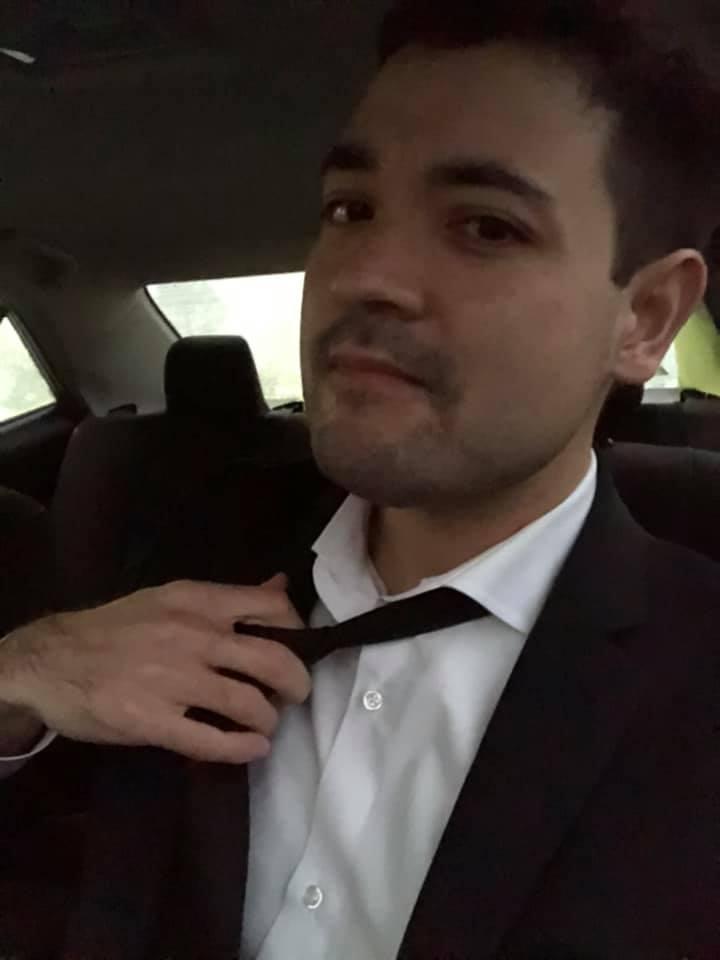
With a growing number of titles across five different publishers as part of his creator-owned publishing imprint Best Jackett Press, Scott Snyder is a very busy man. From an impressive line of comic book series initially published digitally through Comixology, including the Eisner Award-winning Barnstormers with co-creator Tula Lotay, to curating his own family of titles with IDW Publishing under the Dark Spaces banner, Snyder is covering a breadth of genres while maintaining his knack for engaging, tightly crafted storytelling. And on top of it all, Snyder is among the founding creators of the new publishing company DSTLRY, reuniting with former Comixology executives Chip Mosher and David Steinberger in a new venture for digital and print comics.
Apart from launching DSTLRY and expanding the Best Jacket Press line, there are have been changes to the comic book landscape in recent years that have affected everyone in the industry, including Snyder. Comixology saw widespread restructuring through its parent company Amazon less than a year after Snyder launched a line of Comixology Originals, starting with 2021’s We Have Demons with co-creator and longtime co-creator Greg Capullo. Meanwhile, ever since leaving DC Comics on amicable terms to focus on creator-owned work upon the completion of the crossover event Dark Nights: Death Metal in January 2021, there have been rumblings if and when Synder would return to licensed comic book work.
With all this going on, Popverse reached out to Snyder to talk about working for a variety of publishers and the types of stories he’s telling through Best Jackett Press, reflects on the changes to Comixology and the decision to help launch DSTLRY, and teases a possible return to the world of licensed superheroes in the near future.
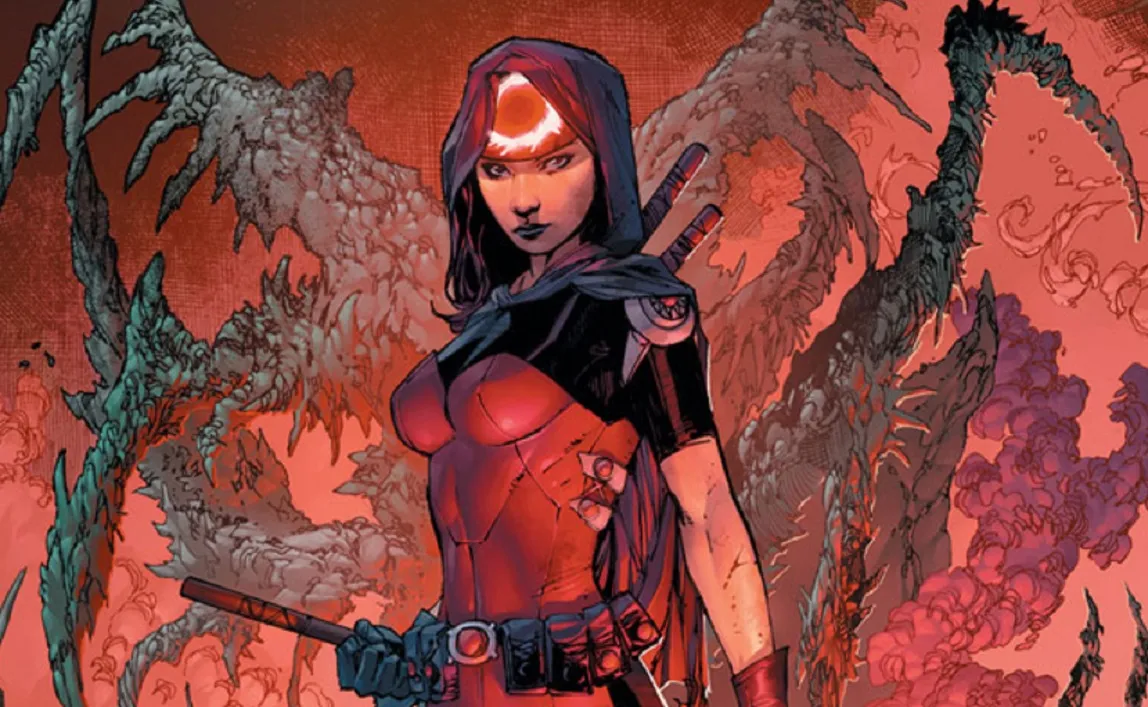
Popverse: You launched Best Jackett Press with titles like Nocterra and We Have Demons, books that are right in your creative wheelhouse. Now, you’re branching into different genres, with titles like Barnstormers, and presentation, like Book of Evil using prose. Was it always the intention to experiment more after the first year of Best Jackett books?
Scott Snyder: Yeah, 100%. When I pitched the whole plan of Best Jackett to the co-creators, to our editor Will Dennis, and to Comixology, the idea was to do a Year One that was almost the kind of books that would expect from me and my co-creators but for our first time doing creator-owned books together. It would be a book where you’d be like 'That’s a book that I think Greg Capullo and Scott or Francis Manapul and Scott or Francesco Francavilla and Scott would do.'
It was to show that these were going to be really fun and strong books, and then, the second do things you wouldn’t expect, to work with people that I hadn’t worked with before, such as Tula Lotay, Dan Panosian, Jamal Igle. It was also to work in genres that were less familiar, to do historical fiction, western horror, or do prose with Jock, things that have a very different material feel. It was always about starting in a comfort zone and moving further out as the line of Comixology books moved towards their conclusion.
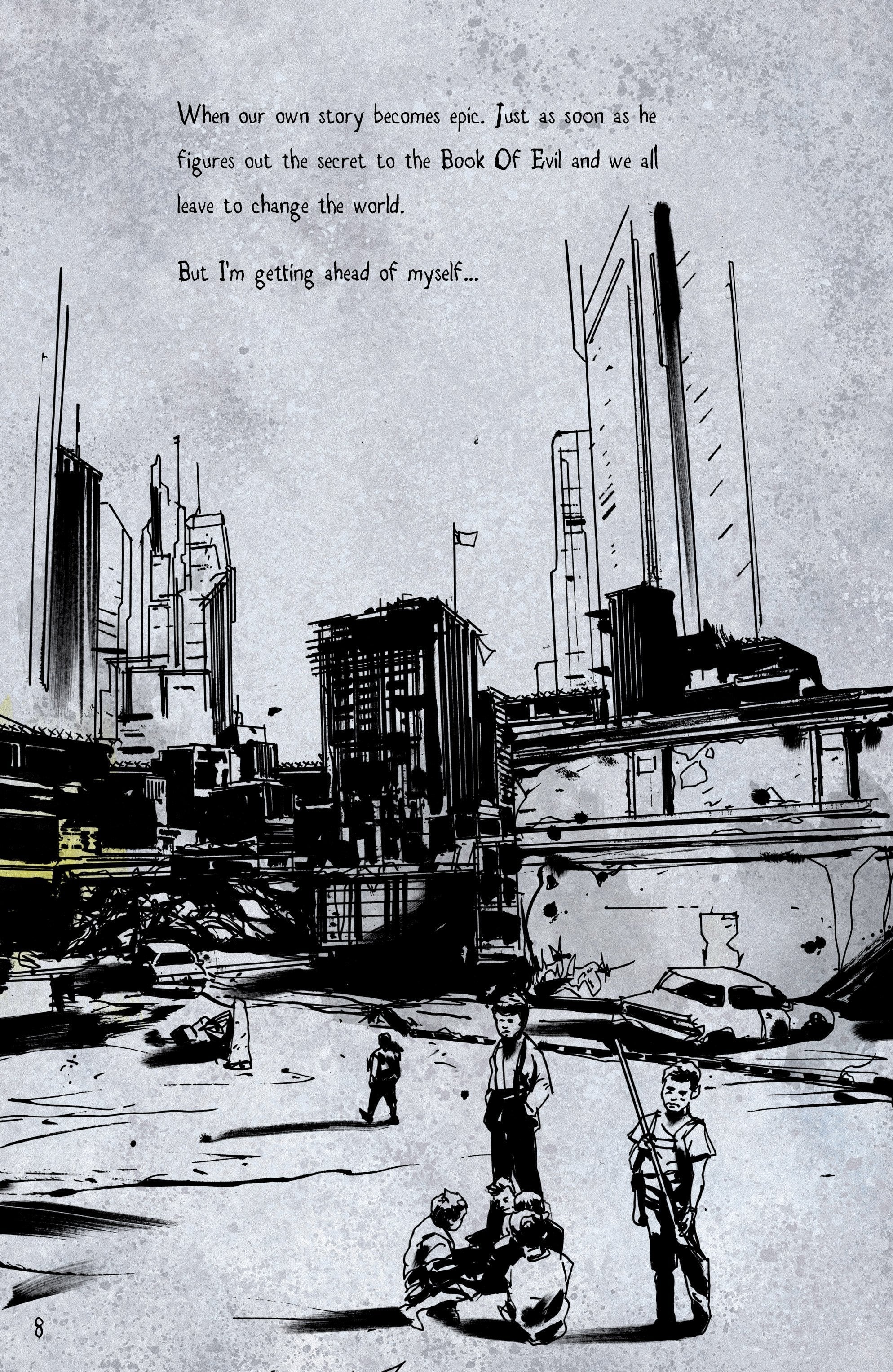
You’ve done prose short stories and, before you got into comics, you had taken a novel deal. With titles like After Death and Book of Evil, how is it leaning back into prose creatively?
When I did After Death, it was the hardest book that I had ever written, easily. Whenever somebody asks me what was the toughest book, that was the toughest book, both because it was very raw emotionally and the rawness of it were things that I had forgotten, having moved over from prose so long ago. You can’t go to an artist and say 'Can you draw this thing that I’m so afraid of and feel in my heart and repelled by, and you do the hard work of visualizing it?'
When you’re writing prose, you’re the artist so, on that level, you have to delve deeper and be immersed in the things that you’re uncomfortable with and bring them to life, which gave me a whole new respect for artists. [laughs] That zone was so difficult that there was a point halfway through where I told Jeff Lemire, “I don’t think I can finish the book. It’s really taxing emotionally and all of it.”
He sent me a page from the moment in the book that was going to be the prospective end of it because he knew the ending. I loved it so much that I had to finish the book. The first time I tried it, it was so scary to me, especially because I hadn’t done prose since I had done it professionally. With Book of Evil, I feel way more comfortable because I got through it the first time and I understand the challenges a lot better, I remember them.
It’s been a real joy, I like the fact that I’m thinking of art differently. I’m not thinking of art to pull the story up. I’m thinking of it to complement it this time. I’m thinking of it to say 'I’m describing this thing. Jock, can you show something that I didn’t mention or mentioned offhand in a way that a spot illustration would create nice texture and color on the page? Can you design a page that creates a feel by using stains, colors, and shapes?'
It’s a really different visual muscularity and I enjoy it a lot. Book of Evil I would definitely put with some of the best books that I’ve done. I love the book dearly.
One of the most surprising books you’ve done recently is Dark Spaces. On the surface, it’s a heist story set in a wildfire, but it’s led to its own line of spinoff titles. What was the nugget for that idea and directions it could go?
Mark Doyle was the first editor, him and wife now – they were on their first date at the time, Jeanine Schaefer – they were the ones who approached me when I was doing prose at a reading for a book that I was doing of literary writers writing short stories making up their own superheroes. They were the two who invited me into Marvel and DC, so Mark has been with me from the very beginning.
Mark edited American Vampire, Batman, and Dark Nights: Metal, and then he went over to IDW. When he went over there, he asked me if I wanted to be part of his IDW Originals line and I was like “I don’t know how to do it, Mark. I have so many books and I have a little room, but I don’t want to do just another book.”
He said “The idea would be for you to do an umbrella where they bring new talent to do this Dark Spaces thing, where they do dark stories that they’re passionate about.” I thought that was fun and an extension of some of the teaching that I do and all that and that I’d like to do that. He comes up with this idea and goes “What aren’t you writing?”
I go “The only thing I’m not doing anywhere are stories without any genre or supernatural aspect.” Everything I was doing was science fiction about a speculative future, monsters, superheroes, demons, whatever. There wasn’t anything that was a real-world, gritty, naturalistic potboiler psychological drama. I was like “What if this is the series where I do all of that and this will be my place to do a noir or a thriller?” and he was like “Let’s do it!”
It’s become this really fun zone. Our second book, Dark Spaces: Dungeon is with Hayden Sherman again, who I love. It’s my Silence of the Lambs-type story about a really elusive killer who’s been on the loose for 20-30 years and a detective who’s haunted his experiences as a child when he had a brush with this killer and is now hunting him. It’s a real-world, no supernatural, lockbox mystery and it’s a lot of fun.
That’s how it came about, above all, it was the excitement of getting to do a line where it would bring in new voices, like Che Grayson and Jeremy Lambert, allow them to do their stories and try to be a place where I can be young and exciting to myself by creating a box, which is no monsters, no superheroes, no sci-fi, and just ride with it. It’s been a lot of fun and I love it.

You’re doing books at Image Comics, you’ve got all these books at Comixology/Dark Horse Comics, and you’ve got Dark Spaces at IDW. How is it working with all these different publishers and what do you think for in a publisher in regard to doing a specific book there?
That’s a great question because we’re doing DSTLRY also. The way I’m trying to operate at this point in my career, sincerely, is that I like to work with publishers who have a bigger idea than just 'Will you do a book with us?' It’s more 'Do you think this will be a place to do a certain kind of book because it will also have some different kind of impact on comics?'
Comixology was like 'We really believe deeply that digital comics can be a place where people browse and will bring in new readers and subscription-based browsability, and physical issues where we can do bigger Dark Horse issues or 2-3 issues in one. It’ll make the physical something special and the digital a place where people can explore.'
My kids all read manga and also American comics that way. They love browsing digitally and then go to the store to buy it. I believed in it, I was like “This is a place where I get to do proof-of-concept big books and then experiment and show that, in my second year, this can be a place that, for one price of $4.99 a month, you can explore everything that I’m doing, from the most comfort food to the strangest, and get The Dark Knight Returns and Saga.” I very much believed in that.
Similarly with Mark Doyle, it was like 'Do you want to come over and create a pathway for other writers and artists?' And yes, I wanted to do that, that’s fun. With DSTLRY, it’s 'Do you want to come over and invest in a company where you have a share, Becky Cloonan has a share, James Tynion has a share, Jock has a share, Jamie McKelvie has a share, with all these writers and artists that I love?' Yes, it seems like a natural progression where we’re all betting on each other and have a stake in something and make really high-end print comics.
Everything I’ve tried to do in the last couple years has been about trying something that felt like it was a step for something that I believed as a test to see if this thing would work in comics and push comics forward in some small way towards a different possibility. And some things didn’t work.
I thought Comixology would absolutely work and the fact that Amazon sort of absorbed them and changed their format was really crushing. I still love the people over there and I would’ve stayed there forever, but the fact that they no longer have the same structure and robust presence in that way means that maybe you invest some things there and more things in another place.
Not because they wouldn’t do more books – I think I could stay there and keep doing it and am doing more stuff with them, but I want to try other things and see if a thing like DSTLRY will work, with comic creators betting on themselves, promoting a company together, and doing high-end, special-format comics for the first year, so let’s see if it works!
That’s the idea, to try things you think are good for the industry, are a good creative challenge, feel progressive because, otherwise, I’d just keep doing books at the same place over and over. Strategically, I think for any creators who are curious, diversifying is a good thing. Being in a couple different places right now I think is fun because they have different audiences and you don’t have all your eggs in one basket.

Chip Mosher was a major force behind your deal with Comixology and its rollout. What do you enjoy about working with Chip and following him to DSTLRY?
Chip never once did anything but believe in every book that I pitched. Barnstormers, for example, is not an easy sell. With Barnstormers, it was like 'Will you pay us good page rates to do a historical fiction book about barnstorming, with no serial killers, monsters, or superheroes? It’s six issues long, it’s set in 1919, and it’s about a romance?' Canary is a western that’s seven issues long, with cosmic horror that’s not conventional. Dudley Datson and the Forever Machine is an all-ages book.
Chip was like “If you believe in it, I believe in it.” He got us the money and the creative latitude to do it and do it right. He was adamant about having the books come out in print when said it was important to not just do digital. He let us work with Dark Horse to do single issues, which they didn’t hadn’t done. They hadn’t done single issues [from Comixology], it was all trade. I didn’t think a book with Capullo would be a good thing to release just as a trade and not single issues for retailers. It felt like it would be spitting at them to do digital and trade, so we wanted to do single issues with variant covers because we’re a direct market-heavy team.
He was extremely amenable to that and helped. Chip was always like “What do you think is best? What do you want to do?” I have tremendous respect for him and David Steinberger and I couldn’t have had a better time at Comixology. Had they really not reduced their whole infrastructure, I would’ve stayed there and kept doing everything there for a long time. I loved it.
In a lot of your work – Batman, Wytches, Severed – there’s a theme of ancient evil resurfacing to menace the characters. Dudley Datson is the opposite of that, with the ancient force humanity’s best hope. Was that thematic inversion a conscious one?
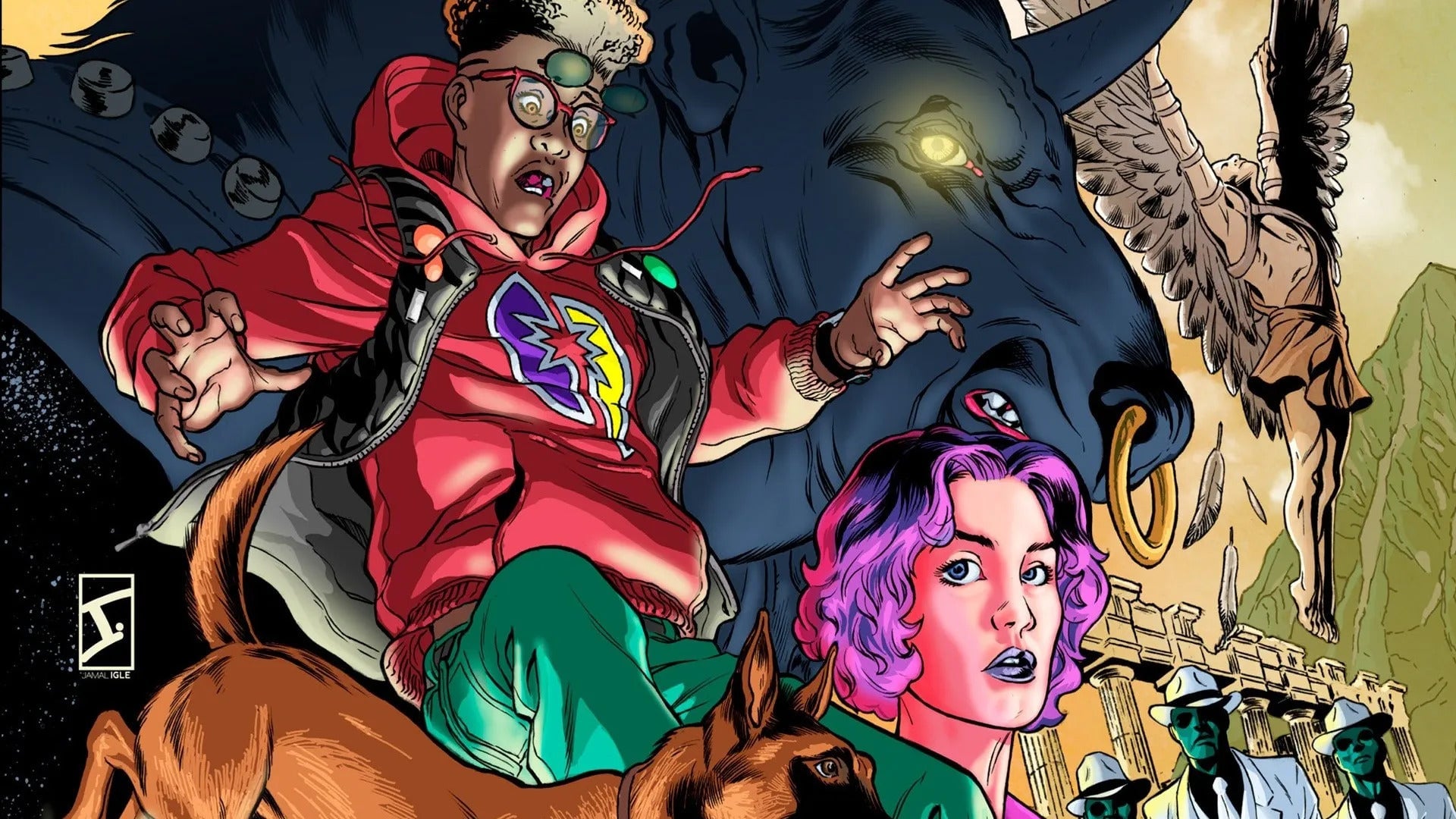
It was! The way I always start a creator-owned book is that I have the seed of an idea and, with Dudley Datson, it was “What if all inventors are part of a secret club that dates all the way back to ancient times, with the myth of Atlantis, the perpetual motion machine, Tesla, and all this stuff?” I pitched that to Jamal and I told him I wanted to do an all-ages book that’s about this kid who wants to invent something new and discovers there’s this chain or genealogy of hope and invention that makes them believe that they can do something that hasn’t been done and find a better way forward.
But that chain of invention tells them “You need to do it the way that we did it” and this kid feels like needs to do it his way. Jamal was like “That’s how I feel about my kid right now too.” We have kids the same age and we want them to find a better way of doing things than we did, to invent something we can’t think of because the systems have failed in that way. That was the impetus for it and then it became about how do we tell the most fun, bonkers cosmic adventure about a kid who believes in themself but not quite enough yet and finds faith that they might be the greatest inventor of all time; it’s fun.
The Court of Owls have been a steady presence in Batman multimedia adaptations for several years now. Across all their depictions, what is something you hope remains in all of them?
They’re generational power. With their history, they’re saying “You can’t change things. We are forever. There’s always been an Illuminati-like power structure and you have no chance of defeating us.” There’s a faceless, monolithic terror to them, that they’ve been pulling the strings forever. That, to me, is the fun of them, that sense that they’re insurmountable. There’s no leader that you can kill and get to the other side. They’re a systemic, entrenched terror and they’re faceless.
You don’t know who to plead to or fight and then the Talon comes and gets you, but the Talon isn’t the power. That’s what I love about them, that they’re like extremely powerful ghosts.
Do you know what you’re going to be doing this time next year?
I do, I know two big things. I will say this, I feel like I’ve gotten to do so many creator-owned books that were modular, I had all these ideas. Every year at DC, I fought for a carve-out for creator-owned books and I got it, but I never used it because I just didn’t have time. The last three years have been this burst where every idea is exciting and something I want to do. I’ve been really lucky to have partners creatively and editorially publishing-wise that have allowed that. We’ve had a lot of luck sales-wise and critically and I feel grateful. Everything we’ve taken out, we’ve had options and it’s been this incredible three years.
But I feel like I’m starting to miss longer, more immersive ongoing storytelling. I’m leaning into that both in the indie world and in superheroes. I’m starting to think that maybe it would be fun to decide who Wonder Woman fights today or, with Superman, what costume does he wear. This time next year, I can promise there’ll be a lot, there’ll be a couple giant things. I’m really proud of the books that we have coming out this year with DSTLRY, Comixology, Dark Horse, and IDW.
But seismically, I think we’ll be moving into a format that’s a little bit more long-form, both with indie and possibly with superheroes.
Do you know what you’ll be doing in five years?
That, I don’t know. I know I’m going to be in comics. I can promise you that I’m not looking to leave to do TV or whatever. I don’t know what I’ll be working on. I might be doing Wytches and nothing else, I might be doing 10 series, but I don’t know.
Want more? Read our guide to all of Scott Snyder's creator-owned work.
Follow Popverse for upcoming event coverage and news
Find out how we conduct our review by reading our review policy
Let Popverse be your tour guide through the wilderness of pop culture
Sign in and let us help you find your new favorite thing.


Comments
Want to join the discussion? Please activate your account first.
Visit Reedpop ID if you need to resend the confirmation email.