If you click on a link and make a purchase we may receive a small commission. Read our editorial policy.
Why comic book variant covers went from art experiment to sales strategy, and how a particular 1990 Hulk comic by Marvel set it all off
Ever wonder why there are so many variant covers of the same comic at your local comic book store? Marvel's longest-serving editor thinks it stems from the publisher's most Incredible character

Popverse's top stories
These days, just about every comic book publisher on the market puts a decent chunk of money into creating variant covers of their most anticipated (or perhaps best-selling) books. Of course, it wasn't always that way, and according to one industry veteran, the variant cover trend can actually be traced back to one particular comic featuring Marvel's own Grumpy Green Giant, The Incredible Hulk. And Tom Brevoort should know - he was part of the team that marketed it.
Brevoort was recently a guest on an episode of the Word Balloon Comics Podcast with host John Siuntres, during which longtime comics commentator Siuntres tried to get Brevoort's opinion on the state of collectale variant covers in the modern comics market. But since Brevoort's experience in the industry stretches back decades (he's Marvel's longest-serving editor, remember), what Siuntres did instead was open the door to a history lesson.
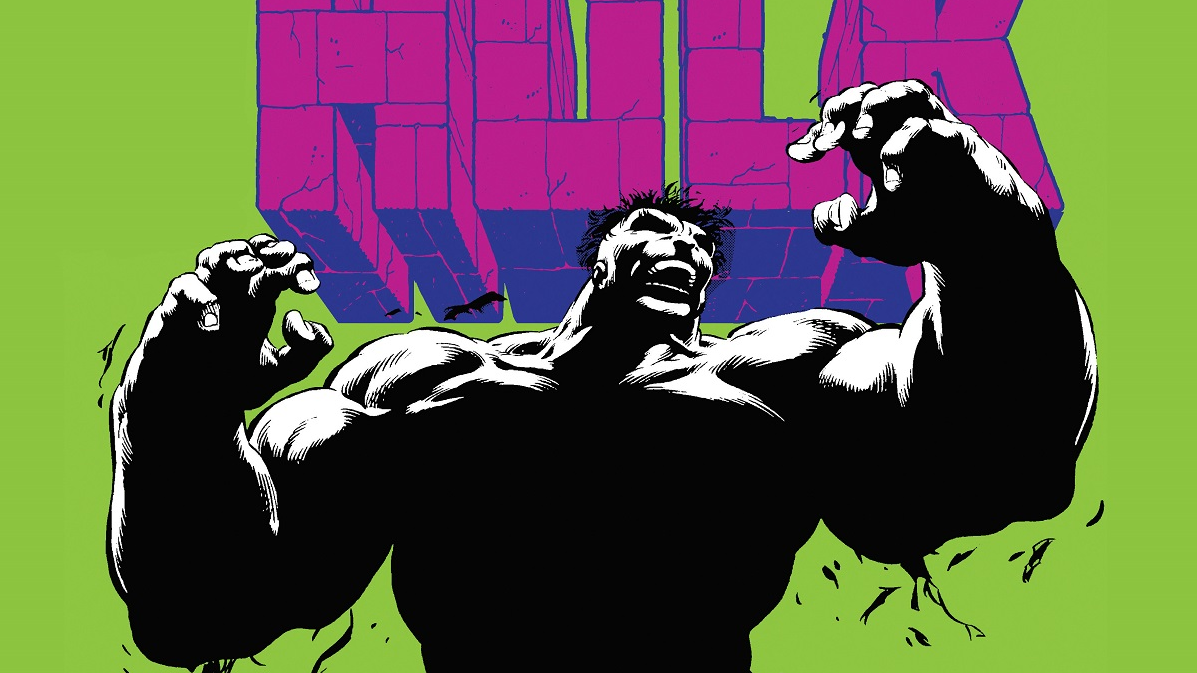
While Brevoort admits that "certainly, in the 90s, it became a gold rush," the impetus behind creating the first of what we'd come to think of as variant covers "started off, very much, with artistic intention." Specifically, the artistic intention was the one behind Hulk #377 (written by Peter David and drawn by Dale Keown) and its special, radioactive-green cover. Brevoort recounted the story of how that came to be as follows.
"We're doing this story," Brevoort recalled, "This special reuniting all the Hulks. We're going to have this new, intelligent, Dale Keown Hulk - what can we do to spotlight this? Well, what if we printed the cover with a green that you couldn't otherwise get on a comic book cover? A special green? That worked out so well and sold an enormous [amount of comics.]"
"Everything was selling fairly enormous numbers," Brevoort continued by admitting, "That was the pre-Image era of where all of the Image artists were working on Marvel books. Todd [McFarlane] was doing Spider-Man, Jim [Lee] was doing X-Men, Rob [Liefeld] was doing X-Force. The line was selling tremendously everywhere, and comics in general were selling really well. But even within that, the enhanced books tended to sell extremely well, and so after a certain point, it just became a program."
And it was also at this point, says the current X-Men editor, that variant covers became less of an artistic venture and more part of comics marketing.
Brevoort explained that the thinking was, "We'll do one of these every month as long as people like them, as long as we can come up with stuff. Then it became, 'Well, we'll do two every month.' At that point you're no longer servicing an artistic thing; you're going, 'Well, we need some kind of enhancement that works for this comic. At that point, you've kind of got the cart driving the horse a little bit."
Which is not to say that Brevoort is unhappy with the current state of variant covers. While he doesn't personally "need all the variants of the books," the editor comps to picking up variant covers when they appeal to him. And as for their future in the industry, Brevoort doesn't think variant covers are going anywhere, though he does foresee a kind of ebb and flow with how many get produced.
"The idea is that the marketplace corrects for itself," he concluded, "Which is to say - you do too much that people don't want, then retailers stop ordering them. By nature, you stop doing them because you can't sell them. And that works until something else comes up and people like that one, and there you go again."
Wise words, Tom.
Want more? Make sure you've read our list of all the best Marvel Comics stories of all time, and the most powerful Marvel Comics characters (yes, you can debate in the comments!).
Follow Popverse for upcoming event coverage and news
Find out how we conduct our review by reading our review policy
Let Popverse be your tour guide through the wilderness of pop culture
Sign in and let us help you find your new favorite thing.









Comments
Want to join the discussion? Please activate your account first.
Visit Reedpop ID if you need to resend the confirmation email.